Why "DAF System Supplier in Bolivia" Returns Truck Results — and What You Actually Need
A DAF (dissolved air flotation) system supplier in Bolivia should deliver skid-mounted units rated 4–300 m³/h with 90–97% TSS removal, containerized shipping for landlocked logistics, and documentation aligned to MMAyA Reglamento en Materia de Contaminación Hídrica under Ley 1333. Verified China-based OEMs like HydropureWater ship FOB Shanghai with 2026 CAPEX of $18K–$280K depending on flow rate and material of construction.
Most search results for "DAF" in 2026 still resolve to DAF Trucks N.V., the Benelux truck manufacturer that owns the acronym in commercial branding. For a wastewater engineer, the same three letters mean something entirely different: dissolved air flotation, a physical-chemical separation process that injects 10–80 μm micro-bubbles into a saturated recycle stream. Those bubbles attach to suspended solids, fats, oils, grease (FOG), and colloidal matter, lifting them to the surface where a skimmer removes the float layer. Properly designed, a dissolved air flotation system removes 90–97% of TSS and 85–95% of FOG in a single pass (HydropureWater internal test data, 2026). Bolivia's landlocked geography, mining-heavy industrial base, and Ley 1333 / MMAyA regulatory framework shape which configurations actually work here — and which suppliers can deliver them.
How to Read a DAF Supplier's Specification Sheet
Surface loading rate is the single most important number on any DAF data sheet, expressed in m³ of flow per m² of flotation surface per hour. Working range sits between 5–25 m/h; the DAF line operates at 10–20 m/h depending on influent TSS and target removal. Below 10 m/h you oversize the tank; above 20 m/h you risk solids carry-under and turbidity breakthrough.
Hydraulic retention time in the flotation zone should fall between 15–40 minutes — short enough to keep tank footprints reasonable, long enough for bubble-particle contact. Air-to-solids (A/S) ratio, by mass, runs 0.005–0.060; design target scales with influent TSS (a 2,000 mg/L pulp requires a higher A/S than a 200 mg/L food effluent). Recycle ratio — the percentage of clarified effluent routed back through the saturator — sits at 20–50% of throughput; higher recycle improves bubble density but consumes more pump energy. For background on how these parameters interact, see the DAF engineering process and selection guide.
Material of construction drives both durability and budget. SS304 covers most food and beverage service. SS316 is mandatory for chloride-bearing mining effluents common in Oruro and Potosí, where chloride can exceed 500 mg/L. FRP (fiberglass-reinforced plastic) is a lower-cost alternative for corrosive chemical service but is not food-grade. Micro-bubble size — confirmed by the saturator pressure and nozzle design — should land between 10–80 μm; smaller bubbles capture fine colloids more efficiently, but require higher saturator pressure (typically 4–6 bar) and tighter nozzle maintenance intervals.
DAF System: 13-Model Capacity Map (4–300 m³/h)
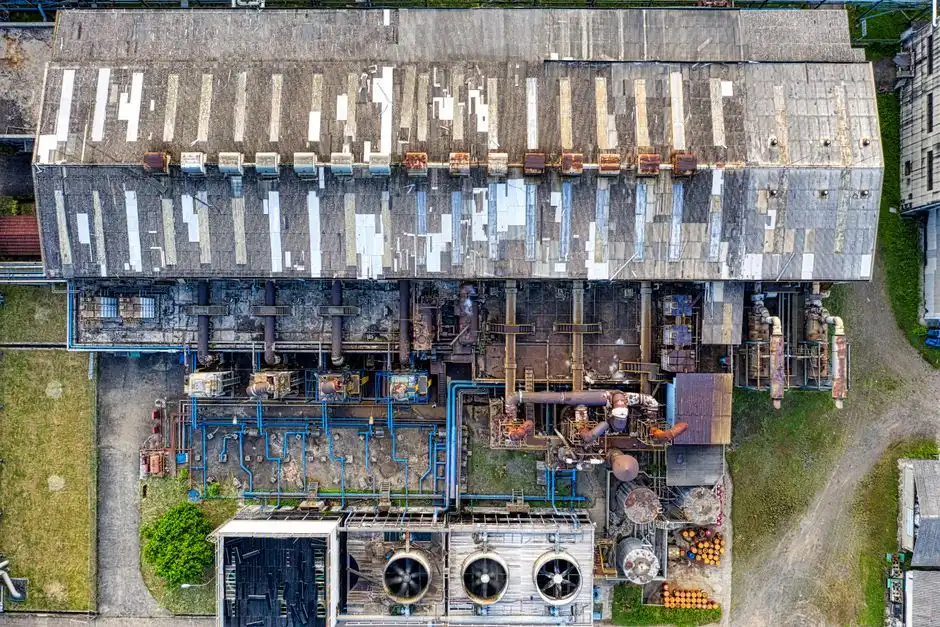
The DAF ladder covers 13 discrete capacity classes, letting a Bolivian plant engineer self-select a model before requesting a quote. Smaller units (DAF-1 to DAF-3, 4–15 m³/h) fit breweries, cheese plants, and small rendering facilities; mid-range (DAF-4 to DAF-7, 20–50 m³/h) covers tanneries and mid-volume food processors; upper-mid (DAF-8 to DAF-10, 60–150 m³/h) handles mining pre-treatment and industrial parks; the top tier (DAF-11 to DAF-13, 200–300 m³/h) is sized for municipal works and large agro-industrial clusters in Santa Cruz.
| Model | Flow (m³/h) | Typical Footprint (L×W, m) | Saturator Motor (kW) | Skid / Container | PLC Automation |
|---|---|---|---|---|---|
| DAF-1 | 4 | 3.0 × 1.2 | 1.5 | Skid | Basic (manual skimmer) |
| DAF-2 | 6–8 | 3.5 × 1.4 | 2.2 | Skid | Basic |
| DAF-3 | 10–15 | 4.0 × 1.6 | 3.0 | Skid | Basic |
| DAF-4 | 20–25 | 5.0 × 2.0 | 4.0 | Skid / 20' container | Mid (auto skimmer) |
| DAF-5 | 30–40 | 5.5 × 2.2 | 5.5 | 20' container | Mid |
| DAF-6 | 45–50 | 6.0 × 2.4 | 7.5 | 20' container | Mid |
| DAF-7 | 60–80 | 7.0 × 2.6 | 11 | 20' container | Mid / Full |
| DAF-8 | 90–100 | 8.0 × 2.8 | 15 | 40' container | Full |
| DAF-9 | 120–150 | 9.0 × 3.0 | 18.5 | 40' container | Full |
| DAF-10 | 180–200 | 10.0 × 3.2 | 22 | 40' container | Full |
| DAF-11 | 220–250 | 11.0 × 3.4 | 30 | Modular (multi-skid) | Full + remote I/O |
| DAF-12 | 270–280 | 12.0 × 3.6 | 37 | Modular | Full + SCADA |
| DAF-13 | 300 | 13.0 × 3.8 | 45 | Modular | Full + SCADA |
Skid and containerized packaging matters in Bolivia: there is no deepwater port, so oversized equipment must clear customs at Arica (Chile) or Matarani (Peru) and transit 700+ km over the Andes. Factory-integrated skids cut field erection time from 6–8 weeks to 10–14 days. For detailed sizing methodology, the DAF design guide for starch wastewater walks through a parallel agro-industry example with similar TSS profiles.
Bolivia Discharge Standards a DAF System Must Help You Meet
Ley 1333 del Medio Ambiente (1992) and the MMAyA Reglamento en Materia de Contaminación Hídrica remain the governing framework for industrial discharges into Bolivian receiving waters and municipal sewer systems. The regulation's Anexo 1 lists 17 parameters that apply to DAF-relevant effluents: TSS, BOD₅, COD, FOG, total nitrogen, total phosphorus, pH, temperature, and a metals panel (Pb, Cd, Cr, Hg, As) that is decisive for mining permits.
Typical discharge ceilings under the current MMAyA schedule are TSS ≤ 60 mg/L for discharges to body-water recipients and FOG ≤ 30 mg/L for discharges to municipal sewer; downstream biological polishing (MBR, SBR, or constructed wetlands) is commonly required to meet BOD₅ ≤ 50 mg/L. Verify these values against the most current MMAyA Anexo 1 revision before final spec freeze. A DAF unit alone does not guarantee compliance — it brings influent from 1,000–5,000 mg/L TSS down to 50–150 mg/L, which is the range a biological stage can finish economically. For high-metal mining effluent, pair DAF with an automatic chemical dosing system for coagulation, then route to a lamella clarifier.
Industry-Fit DAF Configurations for Bolivia
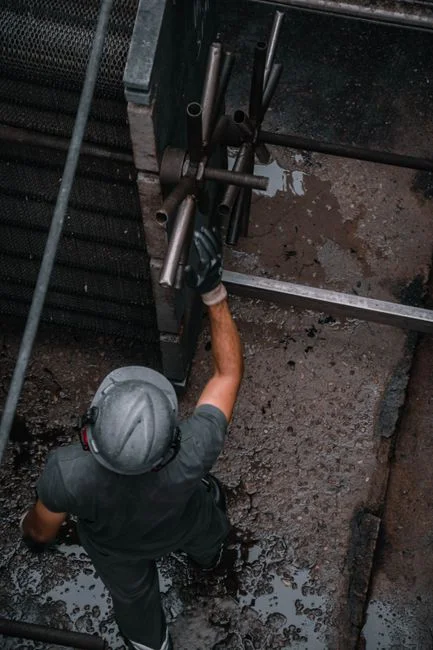
Mining operations in Oruro, Potosí, and Huanuni generate high-TSS, high-metal wastewater where DAF serves as the first separation step after pH adjustment. Pair the unit with a high-efficiency sedimentation tank (lamella clarifier) and coagulant dosing (typically 50–200 mg/L polyaluminum chloride) to lift TSS from 3,000–8,000 mg/L to under 200 mg/L, after which sulfide precipitation or ion exchange polishes the metals panel.
Food processing in Santa Cruz (soy, sunflower, sugar) and Cochabamba (dairy) generates wastewater dominated by FOG and protein. DAF alone removes 85–95% of FOG in this service, protecting downstream MBBR media from fouling. Brewery effluent in La Paz and Santa Cruz is low-strength (BOD₅ ~1,500 mg/L) but high-volume; the DAF-2 to DAF-5 model range (10–25 m³/h) covers a typical 50,000 hL/year plant. Tannery wastewater in La Paz and Cochabamba adds sulfide and chromium to the high-TSS profile — DAF functions as pre-treatment with pH adjustment before a biological stage handles chrome reduction and sulfide oxidation.
Head-to-Head: 5 Supplier Categories Sourcing Bolivia
No single sourcing channel fits every project. The table below compares the five main paths a Bolivian buyer encounters, from local integrators to direct China OEM.
| Supplier Category | Typical CAPEX (50 m³/h class) | Lead Time to Bolivia | Automation Level | Spanish Support | Best Fit |
|---|---|---|---|---|---|
| Local Bolivian integrator | $90K–$130K | 8–14 weeks | Basic / mid | Native | Small flows, fast retrofit, budget-constrained |
| LATAM regional rep (BR/AR/CL) | $110K–$170K | 6–10 weeks | Mid / full | Native | Mid-volume food & beverage, tariff-sensitive buyers |
| European OEM (e.g., Sigmadaf-class) | $180K–$260K | 12–18 weeks | Full + SCADA | Limited | Mining majors, multinational EHS audit standards |
| US OEM | $200K–$320K | 14–20 weeks (ocean routing) | Full + SCADA | Limited | EPA-aligned projects, audit-heavy clients |
| Direct China OEM (e.g., DAF Line) | $55K–$95K | 6–9 weeks (Shanghai → Arica → La Paz) | Mid to full, PLC/SCADA optional | English + Spanish via HQ | Cost-driven CAPEX, containerized logistics, standard spec |
European and US suppliers lead on automation and documentation depth; they are roughly 2–3× the CAPEX of direct China sourcing. LATAM regional reps sit in the middle on price and lead time, with the strongest Spanish-language after-sales. Local integrators win on speed and small-flow jobs but rarely offer PLC-class controls. Direct China OEM hits the lowest CAPEX, with the trade-off that the buyer must verify weld certification, FAT protocols, and Spanish O&M manuals before placing the order. For a broader dewatering comparison, the filter press supplier buyer's guide for sludge dewatering covers a parallel landlocked-market scenario.
2026 CAPEX, OPEX & Landed Cost in Bolivia
2026 ex-works China CAPEX runs $18K (DAF-1, 4 m³/h) to $280K (DAF-12, 270 m³/h); DAF-13 (300 m³/h) lands around $310K with full SCADA. Add sea freight Shanghai → Arica/Chile or Matarani/Peru, plus overland trucking to La Paz, El Alto, Santa Cruz, or Cochabamba: budget 18–28% of equipment value for combined logistics, including Andean overland and insurance (HydropureWater catalog and 2026 buyer guides). Bolivia applies 0% import tariff on capital wastewater treatment equipment under Andean Community HS 8421.21 — confirm with the current Aduana Nacional schedule before bid submission — but 13% IVA applies at customs.
OPEX is dominated by two line items. Saturator pump electricity runs 0.04–0.10 kWh per m³ treated, depending on system pressure and recycle ratio. Polymer (flocculant) consumption sits at 2–10 g/m³ for typical TSS ranges; coagulant demand for high-TSS mining or food effluent can push that to 15–25 g/m³. Skimmer and saturator nozzle maintenance should be budgeted at 2–4% of CAPEX annually for steady-state operation.
5-Step Procurement Checklist for Bolivia Projects
- Define the influent profile. Run 7-day composite sampling for TSS, FOG, BOD, COD, pH, temperature, and (for mining) metals. Without real numbers, sizing is guesswork.
- Match to a DAF model class with a 20% safety factor on flow. Peak wet-weather flows in Santa Cruz routinely exceed design average by 25–30%.
- Confirm material of construction. SS316 for chloride-bearing mining service above 200 mg/L Cl⁻; SS304 for standard food-grade. Document this in the RFQ, not after the order.
- Request FOB and CIF quotes with weld certs, FAT videos, and PLC program samples. A 2-minute video of the unit running at the supplier's shop is the cheapest insurance you can buy.
- Verify the supplier has shipped to Bolivia or an equivalent Andean market, and that Spanish-language O&M manuals are available. Ask for a reference contact in Cochabamba, La Paz, or a comparable landlocked environment.
Frequently Asked Questions
What does a DAF system cost in Bolivia in 2026?
Ex-works China CAPEX runs $18K–$310K depending on flow rate (4–300 m³/h). Landed cost in La Paz or Santa Cruz typically adds 18–28% for sea freight, Andean overland, insurance, and 13% IVA. Mining-grade SS316 construction and full SCADA packages sit at the top of each range.
How long does delivery take from China to Bolivia?
Standard lead time is 6–9 weeks: roughly 3–4 weeks Shanghai to Arica or Matarani by sea, then 10–14 days overland to La Paz, El Alto, or Santa Cruz. Add 3–4 weeks if the unit is engineered-to-order rather than selected from the standard DAF catalog.
Does a DAF system meet Bolivia MMAyA discharge limits on its own?
No. DAF as primary treatment typically achieves TSS 50–150 mg/L and FOG under 30 mg/L — meeting pre-treatment targets. Final compliance with BOD₅ ≤ 50 mg/L and metals ceilings under Ley 1333 usually requires downstream biological polishing (MBR, SBR) and, for mining, chemical precipitation.
How do I size a DAF unit for my facility?
Start with the average and peak flow in m³/h, the influent TSS in mg/L, and the target TSS in mg/L. Apply a 20% safety factor to flow. Match to the DAF model table above, then verify the saturator can deliver the required A/S ratio at your design recycle percentage. For a brewery at 15 m³/h average flow and 1,500 mg/L TSS, DAF-3 is the typical starting point.
What is the minimum order quantity for a DAF system from a China OEM?
One unit. Skid-mounted DAF-1 through DAF-10 ship as single skid or single container. DAF-11 through DAF-13 ship as modular multi-skid packages but are still sold as a single project. MOQ is one project, not a container count — though consolidating with chemical dosing or lamella clarifier orders can reduce per-unit logistics cost by 8–15%.