What Brewery Effluent Looks Like in Iraq — Influent Profile
Brewery wastewater in Iraq typically carries 2,000–6,000 mg/L COD, 1,500–3,500 mg/L BOD₅, 200–800 mg/L TSS, pH 3.5–7, and 25–40°C temperature because fermentation, mashing, and bottle-wash CIP streams all discharge into the same sewer. The hot ambient climate in Baghdad, Basra, and Erbil pushes reactor temperatures to 30–38°C year-round, which improves anaerobic kinetics by 20–30% compared with temperate references. A 1983 anaerobic benchmark (Springer, Biotechnology Letters) reported 89% COD and 92% BOD₅ removal at a 13.3 h HRT and 4.9 kg COD/m³·d loading rate; modern high-rate reactors exceed 90% COD removal on the same feed in roughly half the volume. Peak flows run 1.5–2× daily average because mashing is batch and CIP is intermittent, so flow equalization must be sized for at least 8–12 h HRT. Iraqi compliance parameters for the treated stream are COD ≤100 mg/L, BOD₅ ≤40 mg/L, TSS ≤60 mg/L, and pH 6–9 — confirmed against the Iraq MoE industrial discharge schedule for food and beverage plants.
| Parameter | Raw brewery wastewater (typical) | Iraq MoE discharge limit |
|---|---|---|
| COD | 2,000–6,000 mg/L | ≤100 mg/L |
| BOD₅ | 1,500–3,500 mg/L | ≤40 mg/L |
| TSS | 200–800 mg/L | ≤60 mg/L |
| pH | 3.5–7 | 6–9 |
| Temperature | 25–40°C (ambient Iraq 30–48°C summer) | ≤40°C recommended |
| Oil & grease | 50–300 mg/L | ≤10 mg/L |
| Total nitrogen | 20–80 mg/L | ≤50 mg/L |
Iraq Discharge Standards and Reuse Targets for Brewery Plants
The Iraq Ministry of Environment (MoE) sets industrial effluent limits at COD ≤100 mg/L, BOD₅ ≤40 mg/L, TSS ≤60 mg/L, oil & grease ≤10 mg/L, and pH 6–9 for food and beverage plants discharging to municipal sewer or surface water (Iraq MoE industrial effluent schedule, 2024/2025 amendment — verify with the latest gazette notice before procurement). Baghdad, Basra, and Erbil provincial environmental directorates can impose tighter local limits, especially for discharge to Tigris and Euphrates tributaries; an EPC contractor ignoring provincial directorate review risks permit rejection. Breweries that target water reuse for CIP, bottle rinsing, boiler feed, or landscape irrigation must hit WHO/FAO irrigation guidelines plus Iraqi potable reuse criteria — turbidity ≤2 NTU, fecal coliform ≤200 CFU/100 mL, and BOD₅ ≤10 mg/L for unrestricted irrigation. Non-compliance penalties in Iraq include administrative shutdown orders, daily fines, and revocation of operating licenses — a real export-license risk for breweries supplying international beer brands that audit supplier ESG performance. Design the plant against the strictest applicable limit, not the headline national number.
Full Process Train for a Brewery Effluent Treatment Plant in Iraq
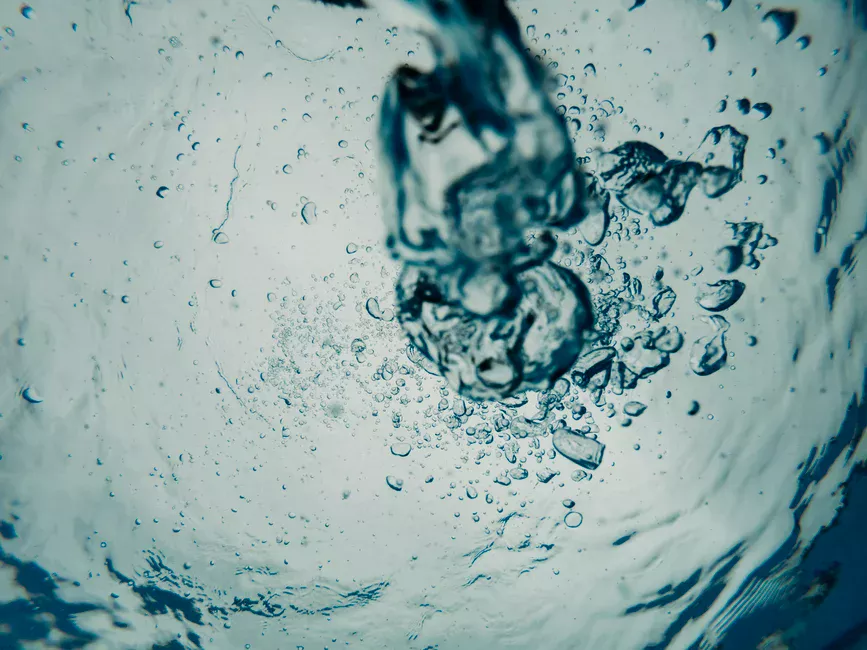
The 2026 standard process train for a brewery effluent treatment plant in Iraq runs in five stages: pretreatment, primary clarification, high-rate anaerobic, aerobic MBR polish, and disinfection. Each stage has a specific design envelope tuned for brewery wastewater characteristics and Iraqi ambient conditions.
- Pretreatment: rotary bar screen (5–10 mm aperture) for grain husks and label removal, grit chamber for bottle-wash sand, and a flow equalization tank sized for 8–12 h HRT with pH correction to 6.5–7.5 using sodium hydroxide dosing. Aeration mixing prevents septicity in the EQ basin during the 30–38°C Iraqi summer.
- Primary clarification: a DAF system for brewery pretreatment removes 80–95% of TSS, FOG, and yeast at hydraulic loading 5–20 m³/m²·h; the DAF product line covers 13 standard models from 4–300 m³/h, suitable for 50–2,000 m³/d brewery flows.
- Anaerobic stage: an IC (internal circulation) reactor preferred over UASB in Iraq because it accepts an OLR of 10–15 kg COD/m³·d versus 5–8 for UASB, runs at 30–38°C without supplemental heating, and produces biogas at 0.35–0.45 m³ per kg COD removed — a real OPEX credit.
- Aerobic MBR polish: an MBR membrane bioreactor for brewery effluent polish handles residual slowly-biodegradable COD at MLSS 8,000–12,000 mg/L, SRT 30–60 d, and HRT 8–14 h, delivering a stable permeate below 50 mg/L COD and 5 mg/L TSS. The MBR footprint is roughly one-third of conventional activated sludge at the same load.
- Disinfection & sludge: a chlorine dioxide generator for brewery effluent disinfection at 2–5 mg/L ClO₂ residual, or UV at 30–40 mJ/cm², with ClO₂ preferred in Iraq because it tolerates residual TSS better than UV after the MBR polish. Wasted AS and anaerobic sludge are dewatered with a plate-and-frame filter press for brewery sludge to 22–28% DS before offsite disposal.
| Stage | Equipment | Design parameter | Target removal |
|---|---|---|---|
| Pretreatment | Bar screen + grit + EQ | EQ HRT 8–12 h, pH 6.5–7.5 | Bulk solids removal |
| Primary | DAF | 5–20 m³/m²·h | 80–95% TSS, 70–85% FOG |
| Anaerobic | IC reactor | OLR 10–15 kg COD/m³·d, HRT 6–12 h | 85–90% COD |
| Aerobic | MBR | MLSS 8,000–12,000 mg/L, SRT 30–60 d | Effluent COD <50 mg/L, TSS <5 mg/L |
| Disinfection | ClO₂ or UV | ClO₂ 2–5 mg/L, UV 30–40 mJ/cm² | Fecal coliform <200 CFU/100 mL |
| Sludge | Filter press | 22–28% DS cake | Volume reduction ~80% |
Anaerobic Reactor Selection: UASB vs IC vs EGSB for Brewery Wastewater
The anaerobic reactor is the single biggest CAPEX and footprint decision in a brewery ETP. For a 2026 Iraqi brewery, the choice reduces to UASB, IC, or EGSB based on flow scale, influent TSS control, and ambient temperature tolerance. The 1983 Springer benchmark — HRT 13.3 h, OLR 4.9 kg COD/m³·d, 89% COD removal — represents the floor of what a well-operated high-rate reactor can do; modern IC and EGSB units hit similar removals in roughly half the volume at two to three times the loading. IC is the 2026 default for Iraqi breweries ≥100 m³/d because it accepts the 30–38°C ambient temperature without heating, tolerates brewery strength variability (BOD/COD ratio typically 0.6–0.7), and delivers biogas at 0.35–0.45 m³/kg COD removed — enough to offset 30–50% of plant electricity OPEX through a 100–200 kW CHP unit. For smaller breweries under 50 m³/d, UASB remains the most cost-effective and operationally simple option, accepting the trade-off of larger reactor volume and lower OLR. EGSB is the highest-performing option but its need for low influent TSS and a tall reactor tower make it a niche choice for greenfield sites with strict space constraints.
| Parameter | UASB | IC | EGSB |
|---|---|---|---|
| OLR (kg COD/m³·d) | 5–8 | 10–15 | 12–20 |
| HRT (h) | 12–24 | 6–12 | 4–8 |
| COD removal | 75–85% | 85–90% | 85–92% |
| Footprint | Large | Medium (compact) | Small (tall tower) |
| CAPEX (relative) | Low | Medium | High |
| Influent TSS requirement | <500 mg/L | <300 mg/L | <200 mg/L |
| Hot climate (30–38°C) tolerance | Good | Excellent | Good |
| Best fit | <50 m³/d breweries | 100–500 m³/d breweries (Iraq default) | Space-constrained greenfield |
Climate and Operating Considerations Specific to Iraq
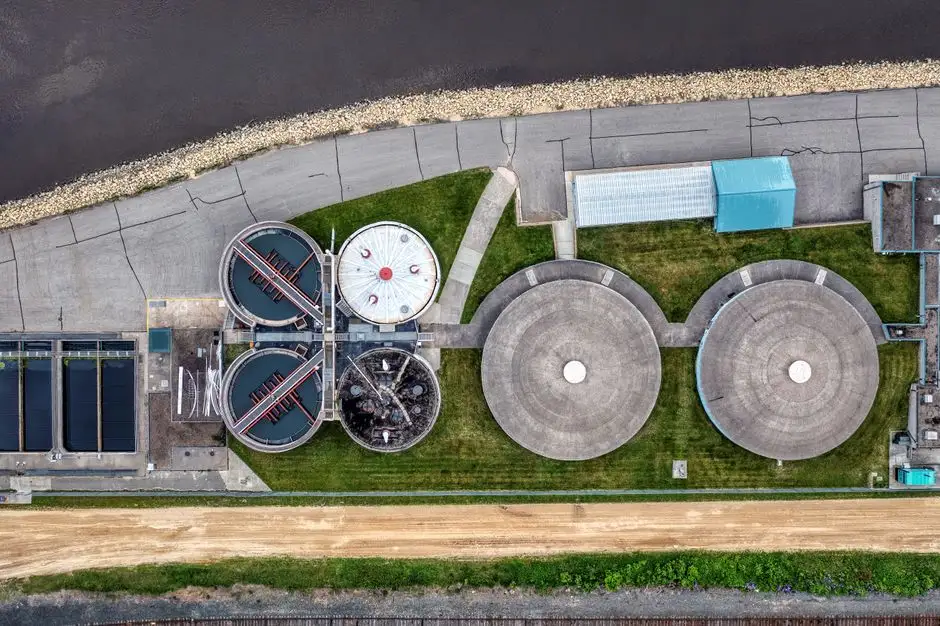
Iraqi ambient conditions introduce four design risks that temperate-climate brewery ETP references do not address. Summer ambient temperatures reach 30–48°C across Baghdad, Basra, and Erbil, while winter lows fall to 5–15°C; aerobic basin biology and anaerobic biogas storage both need covered, insulated reactors plus a small 4–8 h biogas holder to buffer diurnal swings. Dust storms — particularly the shamal winds of June–July — carry fine sand into uncovered equalization basins, so EQ tanks must be covered and a 1–3 mm fine screen must sit upstream of the IC reactor to protect the granular sludge bed. Grid power instability is normal in Iraq, with typical outages of 2–6 h; the plant must specify dual-power feeds plus a diesel genset sized at 200–500 kVA for a 200 m³/d brewery ETP to keep blowers, recycle pumps, and the MBR permeate pump running. Water scarcity is the strongest reuse driver: an MBR + RO polish train can recover 60–70% of the treated effluent as boiler feed or CIP loop makeup, dropping fresh-water draw by 50–80 m³/d for a 200 m³/d brewery.
2026 CAPEX and OPEX Benchmarks for an Iraqi Brewery ETP
Procurement committees in Iraq typically see two build formats in 2026 bid sheets: containerized/skid packages for fast-track breweries in Kurdistan and Basra, and civil-built plants for larger turnkey projects in Baghdad industrial zones. The cost spread is significant and directly tied to the build choice, not the process design. Containerized IC+MBR packages also ship 6–10 weeks faster than civil builds because the anaerobic and aerobic skids are factory-tested before delivery; this is the dominant 2026 procurement choice for new breweries targeting first-beer dates within 6–9 months of order. OPEX is dominated by electricity at 0.6–1.2 kWh/m³, primarily for blowers and the MBR permeate pump; chemical dosing runs 0.05–0.12 USD/m³, labor 0.04–0.08 USD/m³, and sludge disposal 0.02–0.05 USD/m³. A 200 m³/d plant producing 800–1,200 m³ biogas/d can install a 100–200 kW CHP unit to offset 30–50% of electricity OPEX, with a 2.5–4 year payback on the CHP premium.
| Plant size | Containerized/skid CAPEX (USD) | Civil-built CAPEX (USD) | Typical OPEX (USD/m³) |
|---|---|---|---|
| 50 m³/d | 280,000–420,000 | 1,200,000–1,800,000 | 0.45–0.75 |
| 100 m³/d | 420,000–550,000 | 1,800,000–2,600,000 | 0.40–0.65 |
| 200 m³/d | 550,000–650,000 | 2,600,000–3,500,000 | 0.35–0.55 |
| 500 m³/d (turnkey) | 1,800,000–2,800,000 | 2,500,000–6,000,000 | 0.30–0.50 |
Frequently Asked Questions
What is the Iraq MoE COD limit for brewery effluent discharge?
Iraq MoE industrial effluent limits for food and beverage plants require ≤100 mg/L COD, ≤40 mg/L BOD₅, ≤60 mg/L TSS, and pH 6–9; Baghdad, Basra, and Erbil provincial directorates may impose stricter local limits, especially for discharge to Tigris or Euphrates tributaries.
Which anaerobic reactor is best for a brewery in Iraq?
An IC (internal circulation) reactor is the 2026 default for Iraqi breweries ≥100 m³/d because it accepts 10–15 kg COD/m³·d OLR at 30–38°C without supplemental heating, delivers 85–90% COD removal, and produces 0.35–0.45 m³ biogas per kg COD removed for CHP use.
Why choose MBR over conventional activated sludge for brewery wastewater?
MBR runs at MLSS 8,000–12,000 mg/L with SRT 30–60 d, which handles the residual slowly-biodegradable COD that CAS struggles with; the MBR permeate stays below 50 mg/L COD and 5 mg/L TSS in roughly one-third the footprint of CAS, simplifying compliance with the Iraq MoE ≤60 mg/L TSS limit.
What is the typical CAPEX for a 200 m³/d brewery ETP in Iraq?
A 200 m³/d brewery effluent treatment plant in Iraq costs USD 550,000–650,000 in containerized form or USD 2.6–3.5 million as a civil build; containerized IC+MBR packages ship 6–10 weeks faster and are the dominant 2026 procurement choice for Kurdistan, Basra, and Baghdad.
How long does it take to deliver and commission a brewery ETP in Iraq?
A 200 m³/d containerized IC+MBR brewery ETP typically runs 14–22 weeks from purchase order to commissioned operation: 4–6 weeks design, 6–10 weeks fabrication and FAT, 2–3 weeks shipping to Umm Qasr or Kirkuk, and 2–3 weeks on-site erection, commissioning, and operator training.