Hotel & Resort Wastewater Characteristics in Erbil
A hotel or resort in Erbil, Iraq in 2026 needs a packaged biological treatment system — typically a buried A/O or MBR plant rated 50–80 L per guest-night — designed for BOD 250–400 mg/L, with effluent meeting Iraq EPA Instruction 3/2009 limits (BOD ≤40 mg/L, COD ≤150 mg/L) and integrated disinfection before reuse for landscape irrigation. MBR is preferred for properties above 80 keys or where water reuse exceeds 30% of demand.
Hospitality sewage is not domestic sewage at diluted concentration — it is a blended waste stream with sharp diurnal peaks, high organics from food service, and surfactant shocks from housekeeping. Typical influent parameters for an Erbil hotel run BOD 250–400 mg/L, COD 500–900 mg/L, TSS 200–350 mg/L, and FOG 50–150 mg/L when kitchen prep waste enters the stream. Laundry effluent contributes additional COD and persistent surfactants, while pool backwash adds periodic chlorine and pH swings. Without segregation, these combined loadings push a standard municipal STP outside its design envelope.
Erbil's climate and operational pattern intensify the problem. Water consumption per guest-night benchmarks at 0.3–0.8 m³ under UNWTO methodology, putting a 100-key resort at 30–80 m³/day average flow — but the 08:00–11:00 housekeeping cycle and weekend check-out surges drive a peaking factor of 1.8–2.2×. Design flow must accommodate that peak, not the average, or suspended solids wash straight through the clarifier during morning rush.
Pre-treatment protects the biological stage. A kitchen grease trap sized for at least 2,000 mg/L FOG reduction should be installed upstream of the STP; if influent FOG exceeds 100 mg/L, a DAF pre-treatment unit is required to knock oil and grease below 30 mg/L before aeration. Skipping this step causes filamentous bulking, scum layer buildup, and membrane fouling in MBR systems — the three failure modes we see most often in hospitality retrofits across MENA.
Iraq & Kurdistan Region Discharge Standards for Hotels in 2026
Iraq EPA Instruction No. 3 of 2009, as enforced by the Kurdistan Region Ministry of Environment, sets the binding effluent targets any hotel STP must hit before discharge or reuse. The limits are achievable with packaged biological treatment, but they are not negotiable: BOD ≤40 mg/L, COD ≤150 mg/L, TSS ≤60 mg/L, oil and grease ≤10 mg/L, pH 6–9, residual chlorine 0.5–1.5 mg/L, and fecal coliform ≤200 CFU/100 mL. Hotels that discharge into the Erbil municipal sewer network face an additional pre-treatment cap — FOG is typically held to 50 mg/L at the discharge point to protect the downstream Erbil wastewater treatment works, which is not designed for hospitality FOG spikes.
For 2024–2026, the KRI Ministry of Environment has tightened the policy stance on reuse: new resort developments above 50 keys are expected to reuse at least 30% of treated effluent for landscape irrigation, with developers submitting a Water Reuse Plan as part of the environmental impact assessment. The driver is Erbil's semi-arid climate — annual rainfall sits near 350–400 mm, and municipal supply is already stressed during summer peak. Detailed FOG discharge limits in 2026 are tracked in the global compliance guide for industrial oil and grease, which gives useful context on how the KRI limit compares to Saudi PME and UAE Federal Law 24. KRI limits are slightly more lenient on total nitrogen but stricter on FOG — a tradeoff that favors membrane-based polishing where TN targets can be hit through denitrification stages rather than chemical precipitation.
| Parameter | Iraq EPA Instruction 3/2009 (KRI enforced) | Municipal pre-treatment cap (Erbil sewer) | Typical reuse target |
|---|---|---|---|
| BOD | ≤40 mg/L | ≤200 mg/L | ≤10 mg/L |
| COD | ≤150 mg/L | ≤500 mg/L | ≤50 mg/L |
| TSS | ≤60 mg/L | ≤250 mg/L | ≤5 mg/L (MBR) / ≤10 mg/L (A/O + sand filter) |
| Oil & Grease | ≤10 mg/L | ≤50 mg/L | ≤2 mg/L for cooling-tower makeup |
| pH | 6–9 | 6–9 | 6.5–8.5 |
| Fecal coliform | ≤200 CFU/100 mL | — | ≤22 CFU/100 mL (WHO unrestricted irrigation) |
| Residual chlorine | 0.5–1.5 mg/L | — | ≤0.5 mg/L (irrigation), 0.5–1.0 mg/L (cooling) |
Four Treatment Architectures Compared for Erbil Hotels
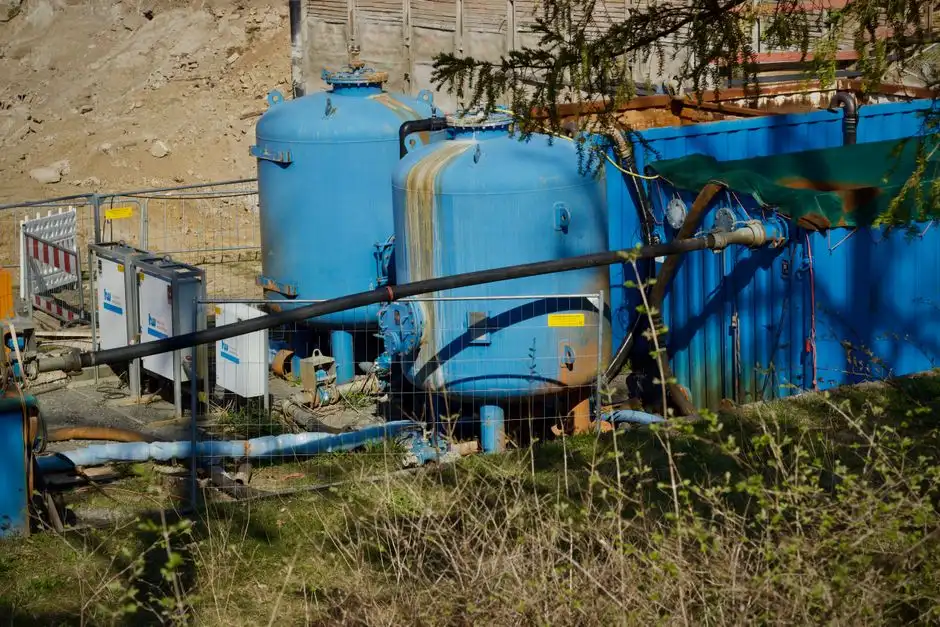
For a 50–500-key Erbil property, the practical decision sits between three engineered options and one natural option that rarely fits this region. The table below compares the four architectures on the parameters that drive specification: CAPEX per m³/day, OPEX per m³ treated, footprint, and reuse readiness.
| Architecture | Typical capacity | CAPEX (USD/m³/day) | OPEX (USD/m³ treated) | Effluent TSS | Reuse ready? | Best fit |
|---|---|---|---|---|---|---|
| Package A/O (WSZ-type) | 1–80 m³/h | $280–$520 | $0.18–$0.32 | 20–30 mg/L | Needs polishing (sand filter / lamella) | ≤80 keys, discharge-only |
| SBR | 5–50 m³/h | $400–$700 | $0.20–$0.34 | 15–25 mg/L | Needs polishing | 50–200 keys, variable occupancy |
| MBR | 3–100 m³/h | $650–$1,100 | $0.22–$0.38 | ≤5 mg/L | Yes — direct to irrigation / cooling | ≥80 keys, ≥30% reuse |
| Constructed wetland / vermifiltration | 1–20 m³/h | $150–$300 | $0.05–$0.12 | 15–40 mg/L | Variable | Not recommended for Erbil |
A buried package STP delivers A/O + sedimentation + chlorination in a single skid with no dedicated operator. It is the lowest CAPEX route and the right pick for properties under 80 keys with no reuse obligation, but the 20–30 mg/L TSS in the clarifier effluent is not reuse-grade — you will need a sand filter or a lamella clarifier for tertiary polishing if the developer plans to irrigate with it. SBR (Sequencing Batch Reactor) compresses equalization, biological treatment, and clarification into a single timed batch — footprint is roughly 30% smaller than continuous-flow A/O at the same load, and the system handles occupancy shock well. The trade-off is control complexity: decanter, swing-arm, and timer-driven aeration demand a more attentive operator and more points of failure during power cuts, which are not rare in KRI outside Erbil city center.
The MBR wastewater treatment system pairs activated sludge with submerged 0.1 μm PVDF membranes — the same MLSS as a conventional plant, but the membranes physically retain biomass and colloids, so the effluent is essentially TSS-free (≤5 mg/L, turbidity ≤2 NTU). That quality meets the KRI reuse target without polishing. CAPEX runs 60–100% higher than A/O at the same capacity, but OPEX is 20–30% lower once reuse value is monetized because you avoid the tertiary filtration step and the membranes reject the FOG that would otherwise bleed through a clarifier. Constructed wetlands and vermifiltration systems (the BioPod archetype from temperate climates) are not recommended for Erbil: 40°C+ summer temperatures, low humidity, and high seasonal occupancy variation collapse treatment performance below KRI discharge limits, and the land take is incompatible with dense resort footprints.
Sizing a Hotel Sewage Treatment Plant in Erbil
Sizing a hotel STP is a four-step calculation, and every step has a number worth sanity-checking against any vendor quote. The worked example below is for a 120-key resort at 60% average occupancy.
- Average daily flow (ADF): 120 keys × 0.6 occupancy × 0.5 m³/guest-night = 36 m³/day.
- Peak design flow: ADF × 2.0 peaking factor = 72 m³/day, or 3 m³/h continuous equivalent (10–13 m³/h instantaneous during 08:00–11:00 peak).
- BOD load: 120 keys × 0.04 kg BOD/guest-night = 4.8 kg BOD/day. For a package A/O at F/M 0.15–0.25 kg BOD/kg MLSS·day and MLSS 4,000 mg/L, aeration tank volume lands at 20–28 m³ — call it 24 m³. For MBR at higher MLSS (8,000–10,000 mg/L), the same load fits in 10–14 m³, which is where the 60% footprint saving comes from.
- Hydraulic retention time (HRT): A/O needs 8–10 hours against ADF, SBR needs 18–24 hours (because of the batch cycle), and MBR can run at 6–8 hours because suspended biomass is not lost during hydraulic surges.
Disinfection is sized at 5–10 mg/L chlorine dose for 30-minute contact, which on 36 m³/day means a 0.2–0.4 kg/day Cl₂ demand — well within the capacity of a packaged ClO2 disinfection generator sized for 50 g/h. For resorts pursuing higher-grade reuse (cooling-tower makeup, toilet flushing), dose ClO₂ at 1–2 mg/L and pair it with a contact tank sized for 20 minutes minimum.
Water Reuse, Sludge Handling & OPEX Recovery
Reuse is where the economics flip. In arid Erbil climate, hotels that pipe treated effluent to landscape irrigation, toilet flushing, and cooling-tower makeup typically achieve a reuse ratio of 30–50% of treated flow, displacing potable water that costs $1.20–$2.00/m³ across Kurdistan. At 36 m³/day treated and 40% reuse, that is $6,300–$10,500/year in avoided potable charges — enough to recover the MBR CAPEX premium over a buried A/O within 4–6 years for a 120-key property. Remote monitoring for sewage plants cuts the operator labor line and keeps the reuse train on-spec; pairing it with AI process control for WWTPs trims aeration energy 15–25% on top.
Sludge is the side-stream most developers underestimate. Package A/O and MBR plants produce 0.5–1.0 kg dry solids per m³ treated — for the 120-key example, that is 6.5–13 kg DS/day, or roughly 200–400 kg wet sludge/week at 4–6% DS. Dewatering with a sludge dewatering filter press takes the cake to 25–30% DS, which is the threshold for offsite landfill or composting with landscape green waste. Without dewatering, you are paying to haul water, not sludge — the cost differential is roughly 4–5×.
OPEX benchmarks: package A/O runs $0.18–$0.32/m³ treated, MBR $0.22–$0.38/m³ (HydropureWater field data, 2026). The MBR line is higher before reuse is monetized, lower after. Energy is 50–60% of OPEX, labor 15–20%, chemical (chlorine / coagulant) 10–15%, sludge disposal 10–15%.
Vendor Selection Checklist for Erbil Hotel Projects
A vendor quote that meets the numbers above is necessary but not sufficient. The procurement-grade checklist below filters out the failure modes we see on MENA hospitality projects — late delivery, mis-sized tanks, unresponsive service, and tanks that corrode inside five years in Erbil's alkaline groundwater (pH 7.6–8.4, TDS 600–900 mg/L).
- Certifications: ISO 9001 minimum, plus CE or equivalent (CU-TR for Central Asia, SASO for Saudi). Demand a reference list of at least two hotel or resort installations in MENA or Central Asia — not just municipal STPs.
- Materials: 304 stainless steel for general service, 316L for chlorination contact chambers, or FRP with vinyl ester resin rated for pH 2–12. Mild steel with epoxy coating is not acceptable in Erbil groundwater; 10-year service life is the minimum target.
- Controls: PLC with remote monitoring (Modbus TCP or 4G gateway), bilingual HMI (Arabic/English), and a documented ≤48-hour on-site service response via a regional partner in Erbil or Sulaymaniyah.
- Documentation: factory acceptance test (FAT) videos showing the actual skid running on simulated load, full P&ID drawings in CAD, and a 12-month performance warranty with KPI-linked payment milestones — typically 10% retainage released after the second month of compliant effluent testing.
For buyers new to packaged biological systems, the 2026 selection guide on how a package STP works walks through the WSZ process sequence in detail and benchmarks efficiency data against municipal-grade plants.
Frequently Asked Questions
What is the typical cost of a packaged STP for a 100-room Erbil hotel?
For a 100-key resort at 50–60 m³/day design flow, turnkey CAPEX for a package A/O runs $40,000–$75,000 installed. An MBR with reuse-ready effluent lands at $90,000–$150,000. OPEX over a 10-year lifecycle is within 10% between the two once reuse value is credited.
How long does it take to install and commission a packaged hotel STP in Kurdistan?
Factory lead time is 6–10 weeks for skid-built A/O and 10–14 weeks for MBR (membrane delivery drives the schedule). On-site civil works and installation add 4–6 weeks, plus 2–3 weeks for commissioning and seeded biological start-up. Plan 5–6 months total from PO to compliant discharge.
Do Erbil hotels have to reuse their treated wastewater?
For new resort developments above 50 keys submitted since 2024, the KRI Ministry of Environment expects at least 30% of treated effluent to be reused for landscape irrigation, per the Water Reuse Plan submitted with the EIA. Older properties on discharge-only permits are not yet mandated but face rising potable water tariffs that make reuse economically attractive.
Can a hotel use constructed wetlands in Erbil's climate?
We do not recommend it. Vermifiltration and subsurface-flow wetlands work in temperate climates with stable loading, but Erbil's 40°C+ summers, low humidity, and high seasonal occupancy variation drive performance below KRI discharge limits and demand 5–10× the footprint of a packaged MBR. Packaged engineered systems are the better fit for hospitality in this region.
What maintenance does a hotel MBR require?
MBR membranes need chemical cleaning (CIP) every 6–12 months using NaOCl + citric acid to recover flux — about 4 hours of downtime per cleaning cycle. Daily operator tasks are limited to screen cleaning, MLSS/ DO checks, and chlorine residual verification. With remote monitoring, a single part-time operator can cover two or three hotel plants.