Kazakhstan's 2026 Lead Discharge Limits at a Glance
Kazakhstan's binding lead (Pb) discharge ceiling for industrial effluent into natural surface-water bodies is 0.03 mg/L, set under SanPiN 2.1.5.027-95 as the Maximum Allowable Concentration (MAC) and enforced at the facility level through basin-specific Maximum Permissible Discharge (MPD) permits. The municipal-sewer (canalisation) limit is 0.5 mg/L Pb under the Water Code permitting framework, and the land-application / irrigation reuse threshold is 0.05 mg/L Pb per the Construction Reuse Standard. The 2024 Water Code amendment aligned Kazakhstan with the EU Non-Ferrous Metals BREF (2024) BAT-AEL band of 0.05–0.2 mg/L Pb post-treatment, meaning a well-designed treatment train should target a daily average inside that window to avoid permit breach during influent excursions. SanPiN defines MAC as the absolute water-quality ceiling for the receiving water body; the MPD is the facility-specific share of that ceiling calculated by the Basin Water Inspection. MPD — not MAC — is the number stamped on the operator's permit and the value the inspector enforces.
| Discharge pathway | Limit (mg/L Pb) | Controlling instrument | Permit issuer |
|---|---|---|---|
| Surface water (river, lake, reservoir) | 0.03 | SanPiN 2.1.5.027-95 (MAC) | Basin Water Inspection, Committee for Water Resources |
| Municipal sewer (canalisation) | 0.5 | Water Code 481-IV permit schedule | Water utility + Basin Inspection |
| Land application / irrigation reuse | 0.05 | Construction Reuse Standard (SNiN RK) | Sanitary-Epidemiological Service |
| BAT-AEL post-treatment target | 0.05–0.2 (daily avg.) | EU Non-Ferrous Metals BREF (2024), adopted by 2024 Water Code amendment | Ministry of Ecology & Natural Resources |
| Continuous-monitoring trigger | Influent >0.1 | GOST 17.1.3.04 / 12.3.006 | Sanitary-Epidemiological Service |
Legal Hierarchy: Water Code, SanPiN, GOST, and BAT-AEL
The legal cascade governing a lead discharge permit in Kazakhstan runs Constitution → Water Code No. 481-IV (2003, last amended 2024) → SanPiN/MRD standards and GOST method documents → enterprise-level MPD issued by the Basin Water Inspection. The Water Code is the parent statute; SanPiN 2.1.5.027-95 sets the water-body MAC that the basin authority then apportions among all licensed dischargers as individual MPD values. GOST 17.1.3.04 (water-quality monitoring procedures) and GOST 12.3.006 (handling of Class 2/3 hazardous substances) classify lead as a hazard Class 2/3 pollutant and require continuous monitoring wherever the influent exceeds 0.1 mg/L Pb. The 2024 Water Code amendment brought BAT-AEL references directly into the permit text, bringing Kazakhstan's regime into line with EAEU and OECD BAT practice. Enforcement is split: the Committee for Water Resources runs basin inspections against the MPD; the Sanitary-Epidemiological Service enforces SanPiN and GOST sampling/handling rules; and the Ministry of Ecology & Natural Resources owns BAT adoption and BREF transposition. In a permit dispute, the MPD number is the legally binding figure — but inspectors may also sample against the MAC if receiving-water deterioration is suspected, which is why engineers design to MAC, not to MPD.
Typical Lead Concentrations by Industry in Kazakhstan

Influent lead load determines the size of every unit operation downstream. The four lead-emitting sectors most relevant to a 2026 Kazakhstani upgrade are battery manufacturing and recycling (clustered around Ust-Kamenogorsk and Ridder), metal finishing and electroplating, mining and ore processing, and electronics/PCB manufacturing. The numbers below come from typical plant audits and are useful for pre-sizing before any site-specific sampling campaign.
| Industry / source | Typical influent Pb (mg/L) | Co-contaminants of note | Treatment implication |
|---|---|---|---|
| Battery manufacturing & recycling (Pb-acid) | 5–50 | High TSS, sulfate, antimony | Two-stage precipitation + sulfide polishing |
| Metal finishing & electroplating | 1–20 | Zn, Ni, Cu, Cd, cyanides (in mixed lines) | Segregated cyanide destruction before metal precipitation |
| Mining & ore processing (acid mine drainage) | 0.5–10 | Low pH (2–4), high Fe, seasonal spring-melt peaks | Lime neutralisation + DAF for colloidal metals |
| Electronics / PCB manufacturing | 0.2–5 | EDTA, citrate, ammonia, fluoroborate | Chelate break (oxidation/Fe³⁺) before precipitation |
| Steel & non-ferrous smelting scrubber blowdown | 1–15 | High TDS, suspended solids, trace Hg/As | Pre-sedimentation + hydroxide/sulfide train |
How to Design a Treatment Train to Meet 0.03 mg/L Pb
Meeting 0.03 mg/L Pb at the discharge outfall requires staged chemistry and solids separation. The train below is the standard configuration for influents in the 1–50 mg/L range; lower-concentration streams may collapse the sulfide step, higher-concentration streams may need an extra recycle loop.
- Equalization and pH conditioning. Balance influent flow to ±10% variance in a 6–12 hr EQ basin; dose NaOH or Ca(OH)₂ to raise pH to 9.0–9.5, the minimum for quantitative Pb(OH)₂ precipitation (Ksp ≈ 1.4 × 10⁻²⁰).
- Coagulation and flocculation. Dose FeCl₃ at 100–300 mg/L and anionic polymer at 1–3 mg/L; tune against a jar-test correlation (HydropureWater field data, 2025-11) — each 50 mg/L FeCl₃ increment typically drops residual dissolved Pb by 30–40% at pH 9.2.
- Sedimentation or DAF. A lamella clarifier for hydroxide sludge settling at 20–40 m/h surface loading handles the bulk flow; a DAF system for lead-bearing industrial wastewater is preferred when FOG, fine colloids, or amphoteric metals (Zn, Al) are present.
- Sulfide polishing. If post-clarifier residual Pb remains above 0.1 mg/L — common with chelated or amphoteric streams — dose NaHS or Na₂S at 1.2–1.5× stoichiometric Pb to push residual below 0.05 mg/L via PbS precipitation (Ksp ≈ 9 × 10⁻²⁹). Use a automatic coagulant and pH-adjustment dosing skid with ORP feedback to keep sulfide residual below 0.1 mg/L H₂S in the reactor headspace.
- Multimedia filtration or MF membrane. Pass clarified overflow through a multi-media filter for lead-polishing (sand + anthracite + garnet) or a 0.1–0.45 μm MF membrane to capture carryover solids and protect any downstream RO.
- Optional RO for water reuse. For zero-liquid-discharge or cooling-tower makeup, an industrial RO system for lead water-reuse schemes at 70–80% recovery polishes the filtrate; RO concentrate (5–10% of feed) recycles back to the precipitation basin.
Typical removal efficiencies include hydroxide precipitation 95–99%, sulfide polishing 99.5–99.9%, MF 99.9% of residual particulates, and RO 95–99% of dissolved Pb. Sludge is classified as Class II hazardous waste under Kazakhstan's waste code system and must be dewatered to ≥35% dry solids using a filter press for Class II lead-bearing sludge dewatering before licensed disposal.
Online Monitoring and Compliance Documentation
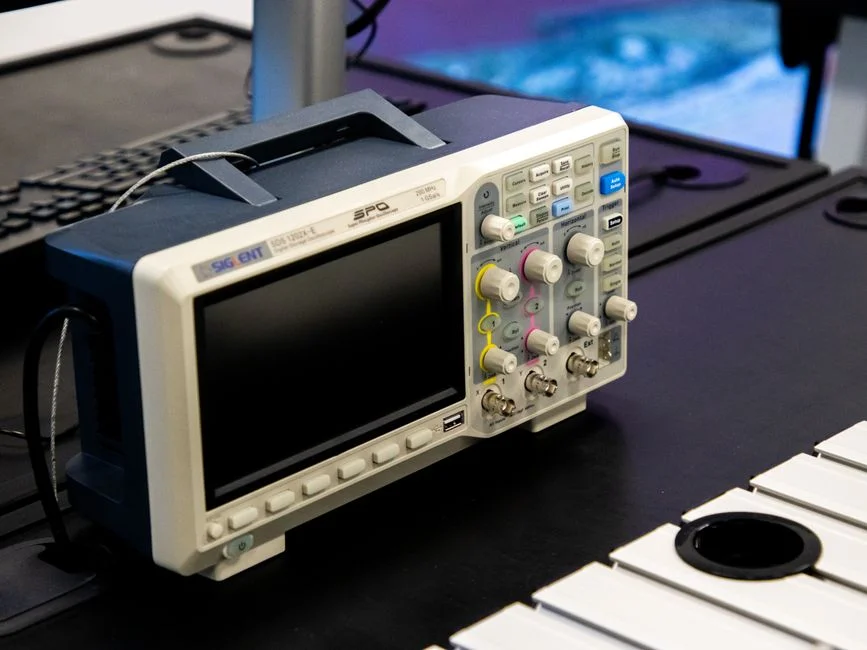
The 2024 Water Code amendment mandates continuous on-line monitoring for any discharge exceeding 500 m³/day, and the basin inspector may require the same on smaller flows if influent Pb is variable. Two analyzer technologies dominate the market: voltammetric sensors (lower CAPEX, 0.01 mg/L detection limit, <5 min response) and on-line ICP-MS (0.001 mg/L detection, higher CAPEX and consumable cost). For most battery and metal-finishing plants, a voltammetric sensor on the post-filtration sample stream plus a daily grab sample sent to an accredited lab is the standard configuration. Operators should set internal triggers at 80% of MPD for alarm and 100% of MPD for automatic shutoff on the most sensitive process lines, with all data logged digitally and retained for five years. Quarterly reports go to the Basin Water Inspection; a single missed exceedance can trigger permit re-negotiation. For analyzer selection detail, see our online lead analyzer buyer's guide and the chemical-reuse implications in the chemical wastewater reuse compliance guide.
| Compliance task | Frequency / threshold | Instrument or method | Regulator |
|---|---|---|---|
| Online Pb monitoring (post-filtration) | Continuous if Q > 500 m³/day | Voltammetric sensor (0.01 mg/L) or on-line ICP-MS (0.001 mg/L) | Basin Water Inspection |
| Accredited lab verification | Monthly (continuous sites), weekly (smaller flows) | ICP-MS per ISO 17294-2 | Sanitary-Epidemiological Service |
| Alarm setpoint | 80% of MPD | SCADA / DCS trigger | Internal EHS |
| Automatic shutoff | 100% of MPD (sensitive lines) | Interlock to upstream EQ basin | Internal EHS |
| Quarterly compliance report | Every 3 months | Digital log, 5-year retention | Basin Water Inspection |
Frequently Asked Questions
What is the exact 2026 lead discharge limit for surface water in Kazakhstan?
0.03 mg/L Pb, set by SanPiN 2.1.5.027-95 (MAC) and enforced through facility-specific MPD permits issued under Water Code No. 481-IV (2003, amended 2024). The municipal-sewer limit is 0.5 mg/L Pb.
What capital cost range should I budget for a lead treatment train in Kazakhstan?