The Two-Layer Compliance Stack Every Pulaski-Region Indirect Discharger Faces
Pulp and paper plants discharging to a municipal sewer in the Pulaski region must clear two stacked rules: 40 CFR Part 430 categorical pretreatment standards (promulgated 1974/1977, last major amendment 1998) and site-specific POTW local limits developed under 40 CFR 403.5(c). The standard 2026 train is fiber recovery → primary clarification → DAF → equalization → biological treatment (activated sludge, MBR, or anaerobic) → AOX/color polishing for bleached kraft, with sludge dewatered on a plate-and-frame press.
EPA promulgated 40 CFR Part 430 in 1974 and 1977, amended it in 1982 and 1986, and added the 1998 toxic-pollutant amendment that brought AOX, chlorinated organics, and color into the regulated parameter set for bleached kraft and dissolving subparts (per EPA Effluent Guidelines, 2026). For indirect dischargers the same categorical numbers flow through the National Pretreatment Program in 40 CFR Part 403. Two enforcement triggers sit on top of those categorical numbers. Under 40 CFR 403.3(p), pass-through is a discharge that exits the POTW in quantities or concentrations that, alone or with other sources, cause a violation of the POTW's NPDES permit. Interference is a discharge that inhibits or disrupts the POTW's treatment processes, sludge processes, or disposal — again causing a permit or sludge violation. Either trigger gives the POTW enforcement authority on its own.
About half of U.S. pulp and paper facilities discharge to POTWs rather than directly to surface waters (IWA Publishing, 1988), which makes the local-limits layer the binding constraint for a large share of the Southeast U.S. mill base. POTW local limits under 40 CFR 403.5(c) may be numeric or narrative, may include best management practices, and are site-specific — so two mills in adjacent counties can face different end-of-pipe numbers for the same pollutant (per EPA, 2026). The comparison to 40 CFR Part 437 mining pretreatment compliance is useful: mining uses a similar two-layer logic, but the pollutant profile — metals and not chlorinated organics — drives a very different train.
Which 40 CFR Part 430 Subpart Applies to Your Mill
40 CFR Part 430 is divided into 12 subparts (A through L), each with its own pollutant parameter set, and each indirect discharger must identify which subpart applies before any equipment is sized (per EPA Effluent Guidelines, 2026). Subpart selection fixes the parameter envelope; the wrong subpart means the wrong categorical number and the wrong polishing technology.
| Subpart | Mill type | Dominant pollutants |
|---|---|---|
| A | Dissolving sulfite (nitration, viscose, cellophane, acetate) | AOX, color, high BOD, recalcitrant organics |
| B | Bleached papergrade kraft and soda (market pulp, paperboard, tissue, fine paper) | AOX, color, chlorinated organics, high BOD |
| C | Unbleached kraft, cross-recovery NSSC, combined unbleached kraft + semi-chemical | TSS, BOD, low AOX |
| D | Papergrade sulfite (blow pit, vacuum/pressure drum wash) | BOD, TSS, sulfite residuals |
| E | Semi-chemical (ammonia base or sodium base) | High BOD, COD, sodium/ammonia residuals |
| F | Groundwood, TMP, CTMP, chemi-mechanical, newsprint, fine paper | High TSS, FOG, BOD, low AOX |
| G | Non-wood chemical pulp mills | BOD, COD, color, silica scaling |
| H | Deink mills (fine paper, tissue, newsprint) | High TSS, ink, fillers, FOG, BOD |
| I/J/K/L | Secondary fiber paperboard, tissue, molded products, builders' paper, fine and lightweight papers from purchased pulp, nonintegrated tissue/filter/non-woven/paperboard | High TSS, fillers, FOG, BOD |
Subpart B (dissolving kraft) typically carries the strictest AOX and color limits because dissolving pulp uses more chlorine dioxide in the bleach plant (per EPA, 2026). Secondary-fiber and deink operations under Subparts J, K, and L run the opposite profile — high TSS, ink, fillers, FOG, and BOD drive the design rather than AOX. Unbleached kraft and NSSC cross-recovery (Subpart D) face TSS and BOD dominance without the AOX burden, which removes the polishing step from the train. The 1998 toxic-pollutant amendment is the reason AOX and color are now regulated parameters in the bleached subparts and the reason those mills must add a polishing step rather than rely on biological treatment alone. Confirm your subpart against the EPA Pulp, Paper and Paperboard effluent guidelines before sizing anything.
Raw Influent Envelope by Subcategory
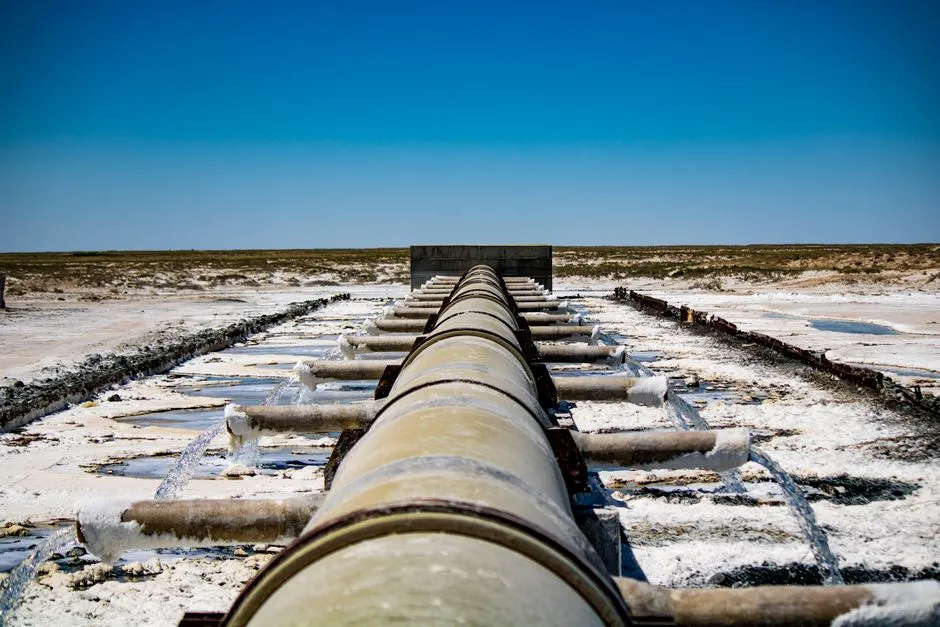
Raw pulp and paper wastewater is highly variable, but the parameter envelope is well documented, and mills that benchmark their own influent against industry-typical ranges catch design gaps before the POTW does. Large volumes — up to 70 m³ of wastewater per metric ton of paper produced — are typical, depending on raw material, finished product, and the extent of water reuse (Rintala and Puhakka 1994, cited S4).
| Parameter | Unbleached kraft / NSSC | Bleached kraft / dissolving sulfite | Deink / secondary fiber | Groundwood / TMP |
|---|---|---|---|---|
| Flow, m³/tonne product | 20–50 | 40–70 | 15–40 | 25–60 |
| BOD₅, mg/L | 200–450 | 300–600 | 400–900 | 250–500 |
| COD, mg/L | 600–1,500 | 800–2,000 | 1,000–2,500 | 700–1,800 |
| TSS, mg/L | 300–800 | 200–500 | 800–2,500 | 500–1,500 |
| AOX, mg/L | <5 | 5–40 (legacy); 0.5–5 (modern ECF) | <2 | <2 |
| Color, Pt-Co | 300–800 | 1,000–3,000 | 200–600 | 200–500 |
| BOD/COD ratio | 0.30–0.40 | 0.25–0.40 | 0.35–0.50 | 0.30–0.45 |
The BOD/COD ratio represents the biodegradable fraction (McCubbin and Folke 1993, cited S4) and is a direct input to whether the biological step needs anaerobic pretreatment. Chemical pulping processes generate more than 40% poorly biodegradable organics within the total organic matter of the effluent (Dahlman et al. 1995, cited S4), which is why equalization plus biological polishing is mandatory, not optional. AOX content is generally proportional to chlorine consumption in bleaching (Savant et al. 2006, cited S4), and the industry has cut AOX emissions by more than 80% since 1990 (Friere et al. 2003, cited S4) — which sets the bar for what "good" looks like at a legacy mill. For comparable municipal numbers, see the South Carolina industrial wastewater compliance benchmark.
The Six-Step Treatment Train for 2026 Sewer Discharge
The treatment train for an indirect discharger is a sequence of unit operations, each justified by the pollutant fraction it removes. Skipping a step almost always shows up later as a POTW violation or a biological system that cannot hold the load (per EPA Effluent Guidelines, 2026).
- Fiber recovery and save-all. Kidney-loop logic recycles clean water back into the mill before any wastewater hits DAF. Filtration save-alls and kidney-like operations reduce the load of pollutants and the volume of effluent being discharged to end-of-pipe wastewater treatment plants (Hubbe review, cited S4).
- Primary clarification. Gross-solids removal via conventional or lamella settling. Handles the settleable fraction of TSS and free-floating FOG.
- Dissolved air flotation (DAF). Colloidal and fine-fiber fractions do not settle well, so a dissolved air flotation system for pulp and paper service is the default primary clarifier. The DAF line is offered in 13 standard models covering 4–300 m³/h, with hydraulic loading rates of 15–25 m³/m²·h typical for paper-mill service.
- Equalization and pH control. Raw mill discharge is highly variable; equalization basins and PLC-controlled chemical dosing for coagulants and pH adjustment are required to hold performance under variable load.
- Biological treatment. Three options dominate. Activated sludge remains the workhorse at most U.S. mills. An integrated MBR membrane bioreactor system with submerged PVDF membranes is the default where footprint is constrained or the polishing TSS target sits below 10 mg/L. Anaerobic reactors (UASB or IC) suit high-strength BOD streams from dissolving pulp or NSSC operations and can offset aeration power.
- AOX / color polishing (bleached kraft and dissolving subparts only). Fenton oxidation, ozone, or membrane polishing train targets the residual that biological treatment cannot mineralize (Hubbe review, cited S4).
Sludge from the train is dewatered with a plate-and-frame filter press; cake dryness above 30% is achievable with lime or polymer conditioning, which directly lowers sludge-haul cost.
Subcategory-to-Treatment-Train Matrix
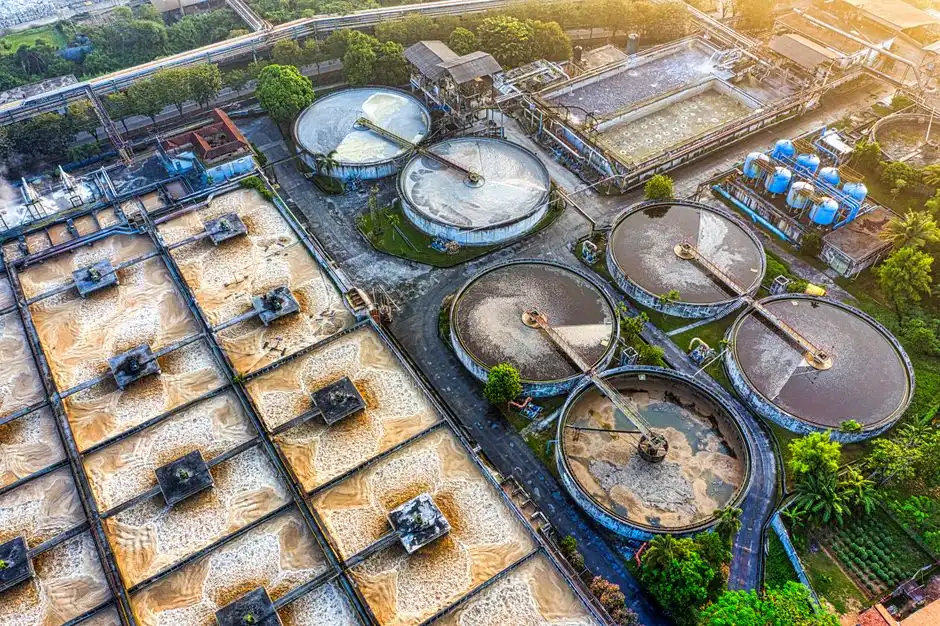
Train complexity scales with subcategory. The matrix below maps the mill type to the unit operations actually needed, so a mill can scope a budget without re-reading the regulatory text.
| Subcategory | Fiber recovery | Primary clarification | DAF | Equalization + pH | Biological | AOX / color polish |
|---|---|---|---|---|---|---|
| Unbleached kraft linerboard (Subpart C) | Yes | Yes | Yes | Optional | Activated sludge | No |
| Bleached kraft market pulp (Subpart B) | Yes | Yes | Yes | Yes | Anaerobic + aerobic, or MBR | Yes (Fenton / ozone) |
| Dissolving kraft (Subpart A) | Yes | Yes | Yes | Yes | Anaerobic + aerobic + MBR | Yes (most aggressive) |
| Deink / secondary fiber (Subparts H, J, K, L) | Yes | Yes | Yes (ink, fillers, FOG) | Yes | Activated sludge; MBR if TSS < 10 mg/L target | No (low AOX) |
| NSSC semi-chemical (Subpart E) | Yes | Yes | Yes | Yes | Anaerobic (UASB / IC) front-end favored | No |
| Groundwood / TMP / newsprint (Subpart F) | Optional | Yes | Yes (DAF-first design) | Yes | Activated sludge | No |
For MBR-equipped mills, MBR module selection should follow the biological flux target; an MBR membrane bioreactor module specification is set after the upstream train is fixed, not before.
POTW Local Limits vs. Federal Categorical Limits: Where the Real Pressure Sits
Local limits are POTW-specific numeric or narrative effluent limits applied at the end-of-pipe discharge from an industrial user — the point of connection to the POTW's collection system (per EPA, 2026). They are not a federal uniform number. The POTW's own NPDES permit is the binding document, not the federal categorical standard, and EPA can enforce approved local limits as pretreatment standards, which is what gives the sewer-connection layer real teeth (per EPA, 2026).
| Pollutant | Typical 40 CFR Part 430 range (mg/L) | Typical POTW local limit (mg/L) | Driver at the POTW |
|---|---|---|---|
| Zinc | 0.5–4.0 (subpart-dependent) | 0.5–2.0 | Disrupts biotreatment biomass |
| Copper | 0.5–3.0 | 0.5–1.5 | Disrupts biotreatment biomass |
| Sulfide (as S) | Not always numeric | 0.5–5.0 | H₂S release in collection system, odor, corrosion |
| Temperature | No uniform limit | ≤ 40 °C (95 °F) at connection | Shifts basin biology, kills nitrifiers |
| Oil & grease | ≤ 50 (BPT) | ≤ 50–100 (frequently ≤ 25) | Slug-loads the headworks, foam, scum |
| AOX | ≤ 0.5–2.5 (bleached subparts) | Frequently ≤ 1.0; sometimes narrative | POTW effluent toxicity, fish-fate concerns |
BMPs, sampling frequency, and self-monitoring are routinely imposed as conditions of discharge acceptance and should be read alongside the numeric limit (per EPA, 2026). The six pollutants above are the ones that bind tighter at the POTW than at the federal categorical level; the rest of the parameter envelope is normally set by Part 430. Comparable indirect-discharger logic is laid out in 40 CFR Part 437 mining pretreatment compliance for the metals-heavy side of the same framework.
Sizing Sketch for a Mid-Size Pulaski-Region Mill
Using 70 m³ of wastewater per metric ton of paper as the volumetric starting point (Rintala and Puhakka 1994, cited S4) and a working assumption of 200–500 tonne/day production, a mid-size mill in the Pulaski region runs roughly 600–1,500 m³/day (25–60 m³/h) of combined wastewater to the sewer connection.
- DAF selection. At 15–25 m³/m²·h hydraulic loading, a 50 m³/h stream needs roughly 2–3.5 m² of effective DAF footprint, which falls inside the small-frame DAF models. The 13-model DAF line covers 4–300 m³/h, so a mid-size mill picks from the lower-middle of the catalog rather than the top.
- MBR selection. Submerged PVDF MBR membranes in pulp and paper service typically last 5–8 years with proper chemical cleaning and relaxation protocols. High AOX, color, and calcium scaling shorten life; consistent MLSS control and periodic recovery cleans extend it. Build the membrane replacement as a reserved 5-year OPEX line — not a surprise.
- Sludge dewatering. A plate and frame filter press for sludge dewatering with lime or polymer conditioning routinely achieves > 30% cake dryness, with a direct line to $/dry-ton haul cost. Press selection should follow upstream train design, because sludge volume is a function of chemistry, not the press. See the municipal sewage sludge treatment process guide for the dewatering logic on the POTW side of the connection.
The same train that gets a mill under the POTW cap produces water clean enough for brown-stock washing or shower water — a planning point that has shifted mill capital budgets at several Southeast operations since 2024 (per ACS ES&T Engineering, 2021, cited S3).
Frequently Asked Questions
What did the 1998 toxic-pollutant amendment actually change for bleached kraft mills?
The 1998 amendment to 40 CFR Part 430 added AOX, chlorinated organics, and color as regulated toxic pollutants for bleached kraft and dissolving subparts (per EPA, 2026). For a bleached kraft mill, the practical change is a mandatory polishing step — Fenton, ozone, or membrane — downstream of biological treatment, because conventional activated sludge cannot mineralize the residual AOX/color to the categorical number. Pick the polishing technology before sizing the biological reactor, not after.
Should a mill stay indirect (POTW) or convert to direct discharge under an NPDES permit?
Roughly half of U.S. pulp and paper facilities discharge directly to surface waters and half to POTWs (IWA Publishing, 1988). The decision is rarely a technical preference — it usually turns on local POTW capacity, hauling cost, and whether the mill can meet the site-specific local limits without expanding the train. If local limits are infeasible, an NPDES direct-discharge path with full biological plus tertiary treatment is the fallback.
How long will MBR membranes last in a pulp and paper service?
Submerged PVDF MBR membranes in pulp and paper service typically last 5–8 years with proper chemical cleaning and relaxation protocols. High AOX, color, and calcium scaling shorten membrane life; consistent MLSS control and periodic recovery cleans extend it. Reserve membrane replacement as a 5-year OPEX line, not a year-7 surprise.
What is the right hydraulic loading for a DAF on pulp and paper wastewater?
Paper-mill DAF service runs at 15–25 m³/m²·h hydraulic loading on DAF units, with 13 standard models covering 4–300 m³/h. At 50 m³/h, that is a 2–3.5 m² effective footprint — well inside the small-frame catalog. Match polymer dose and bubble size to the colloidal fraction, not the gross TSS.
How is pass-through defined and why does it matter?
Pass-through is a discharge that exits the POTW in quantities or concentrations that, alone or in conjunction with other sources, cause a violation of the POTW's NPDES permit (40 CFR 403.3(p)). Interference is the separate, parallel trigger that lets the POTW act on a mill that disrupts treatment, sludge handling, or disposal. Either one is an independent enforcement basis — design the train so that both fail-safe together.