What Ultrafiltration Is — and What It Is Not
Ultrafiltration (UF) is a pressure-driven membrane filtration process that physically strains suspended solids, bacteria, most viruses, and colloidal matter from water using semi-permeable membranes with pore sizes between 0.01 and 0.1 microns (per Crystal Quest). It sits between microfiltration (0.1–10 µm) and nanofiltration (0.001–0.01 µm) on the membrane spectrum, and its defining trait is that it is a purely physical sieve — no chemical change, no phase change, no thermal input, and no addition of coagulants or oxidants inside the membrane module.
Equally important is what UF does not do. It does not remove dissolved ions, low-molecular-weight organics below roughly 1,000 daltons, or small viruses under 0.01 µm. Reverse osmosis, by contrast, removes dissolved salts by solution-diffusion through a non-porous thin-film composite at 10–80 bar — fundamentally different physics, fundamentally different energy profile, and the reason a standalone HydropureWater industrial RO system is a separate line item from a UF skid in any capital plan.
The Core Mechanism: How Pressure, Pore Size, and Flow Separate Solids from Water
UF separates by size exclusion: water and dissolved species smaller than the membrane pore pass through the membrane wall as permeate; particles, colloids, bacteria, and large macromolecules larger than the pore are rejected and leave as concentrate or backwash waste. The driving force is transmembrane pressure (TMP) — the differential between feed and permeate pressure — and industrial UF modules run at 0.5–2.5 bar, roughly one-twentieth of the pressure RO requires.
Two operating modes define how the feed contacts the membrane. Dead-end mode pushes 100% of the feed through the membrane; recovery is 95–99%, and the cake that builds on the surface is removed by periodic backwash. Cross-flow mode sweeps feed tangentially across the membrane surface, bleeding 5–15% of the flow as concentrate while the rest becomes permeate; recovery lands at 85–95%, but continuous scouring keeps fouling under control — which is why cross-flow is the standard for industrial wastewater (per the answers.com reference on outside-in flow). Most modern hollow-fiber UF modules are run in an outside-in configuration, so feed contacts the shell side and permeate collects inside the fiber lumen.
Flux, expressed in liters per square meter per hour (LMH), is the key performance metric. Sustainable industrial flux sits at 40–80 LMH depending on feedwater quality, and pushing above that range accelerates fouling and shortens CIP intervals. The factors that set UF rate, per the answers.com reference, are the pressure gradient across the membrane, the concentration gradient of solutes, available membrane area, temperature (viscosity drops about 2% per °C, raising flux), and the fluid's viscosity — all of which become inputs in any UF design basis.
Inside a UF System: Membranes, Housings, Pumps, and Instrumentation
Membrane geometry is the most consequential design decision, and three formats dominate. Hollow-fiber modules bundle thousands of 0.5–2 mm outer-diameter fibers into a single pressure vessel; the high surface-area-to-volume ratio (typically 500–800 m² per 8-inch module) makes them the workhorse of industrial UF (per Crystal Quest on bundles of hollow fibers). Tubular membranes use 5–25 mm diameter channels and are specified for high-solids or viscous feeds where hollow fibers would plug — food slurry, oily wastewater, and certain textile effluents. Flat-sheet cassettes, such as the DF series flat sheet membrane module with 0.1 µm PVDF, are submerged directly in mixed liquor in MBR configurations, replacing the secondary clarifier.
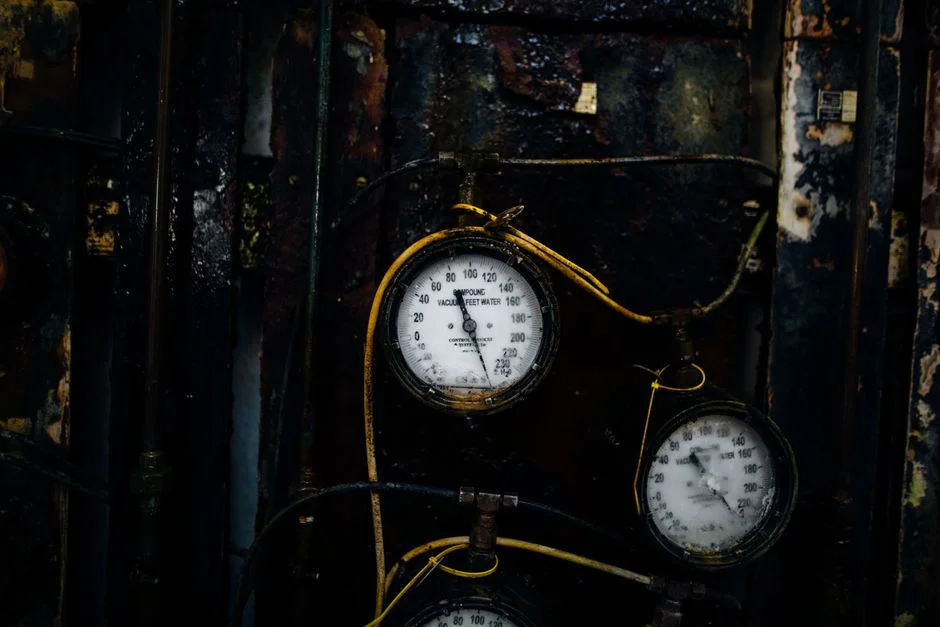
Every UF skid has four functional zones. The feed pump (centrifugal for cross-flow, positive-displacement for viscous feeds) supplies the TMP; the membrane modules — staged in parallel racks with 70–80% recovery per pass — perform the separation; a permeate manifold collects product water; and a reject/retentate line bleeds concentrate or returns it to the feed tank for multi-pass operation. Instrumentation is non-negotiable for stable operation: inlet and outlet pressure transmitters, feed and permeate flow meters, a turbidity meter on the permeate line (target <0.2 NTU), a TMP differential indicator that triggers backwash at a set ΔP (typically 0.3–0.5 bar above clean baseline), and an automatic backwash valve train driven by the skid PLC.
Industrial Operating Parameters: The Numbers Behind a Real UF Skid
The table below consolidates the operating envelope a process engineer can paste into a design basis (per HydropureWater field data, 2026).
| Parameter | Typical Range | Notes |
|---|---|---|
| Pore size | 0.01–0.1 µm | Nominal; effective rating is tighter |
| Transmembrane pressure (TMP) | 0.5–2.5 bar | Alarm/backwash trigger at ΔP +0.3–0.5 bar |
| Sustainable flux | 40–80 LMH | 50–60 LMH surface water; 30–40 LMH high-fouling wastewater |
| Recovery (cross-flow) | 85–95% | Multi-pass designs reach 95%+ overall |
| Recovery (dead-end) | 95–99% | Standard for potable UF |
| Backwash interval | 20–60 min | Permeate + air scour; 1–2 min duration |
| CEB frequency | Weekly | NaOCl 200–500 ppm (organics) or citric acid (scale) |
| CIP frequency | Every 1–3 months | Acid + caustic recirculation at 35–40 °C |
| pH envelope (cleaning) | 1–12 | PVDF tolerance |
| Temperature limit | 40–45 °C | PVDF; PES up to 50 °C |
| Feed turbidity limit | <50 NTU | Higher feeds need multi-media pre-filter or DAF |
| Oil & grease limit | <5 mg/L | Higher feeds foul irreversibly |
| Free chlorine limit | <0.1 mg/L continuous; 500 ppm short-term | Protects polyamide; PVDF tolerates higher |
| Permeate turbidity | <0.2 NTU | Independent of feed |
| Permeate SDI | <3 | RO feed target is <5 |
| Bacteria removal | >99.99% (4–6 log) | Cryptosporidium and Giardia cysts fully rejected |
| Virus removal | 2–3 log | Small viruses (e.g. parvovirus at ~0.02 µm) can pass |
The UF Process Cycle: From Filtration to Backwash to CIP
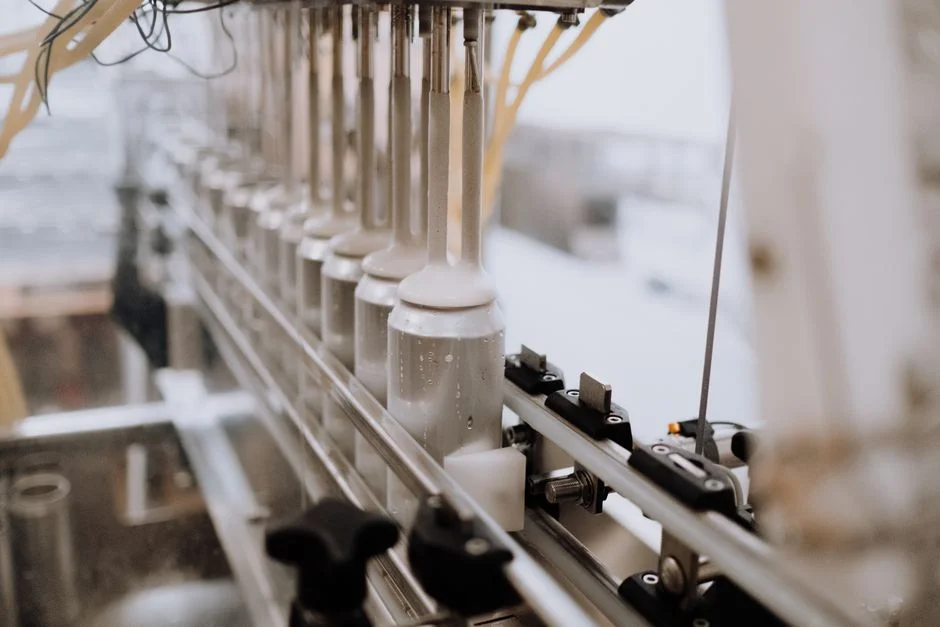
UF is not a one-step filter; it is a repeating cycle whose rhythm the operator must understand. Step 1, the filtration phase, runs 20–60 minutes: the feed pump holds TMP at 0.5–2.5 bar, permeate flows to the product tank, and concentrate either returns to the feed tank or bleeds from the system. Step 2, backwash, runs 1–2 minutes at the end of each filtration cycle: permeate is pumped in reverse through the membrane, often combined with air scour at 0.3–0.5 m³/(m²·h) to dislodge the cake layer and flush it to drain. Step 3, chemically enhanced backwash (CEB), runs weekly: low-concentration NaOCl at 200–500 ppm free chlorine for organic fouling, or citric acid at 1–2% for scale, soaked for 15–30 minutes per module.
Step 4, clean-in-place (CIP), runs every 1–3 months once normalized permeability drops 15–20% below baseline: caustic (NaOH at pH 11–12, 35–40 °C) recirculates for 30–60 minutes, followed by acid (citric or HCl at pH 1.5–2) for another 30–60 minutes, then a permeate rinse. Step 5, the integrity test, runs daily on potable and pharmaceutical service: either a pressure decay test (decay <0.1 bar/min for 5 minutes confirms intact fibers) or a bubble point test at the manufacturer's specified threshold, to verify no fiber has broken through — a single broken fiber can drop virus log-removal below regulatory limits.
Where UF Fits in a Process Train — and When to Choose It
UF earns its place in a process train by solving specific problems that conventional filtration cannot. As RO pretreatment, a UF skid cuts the Silt Density Index (SDI) from a raw-water 6–8 down to <3, which can extend downstream RO membrane life by 2–3x and reduce RO CIP frequency by half (per HydropureWater field data, 2026). As a standalone barrier, UF delivers reuse-quality water for industrial washing, cooling-tower makeup, and process rinse water where dissolved solids are acceptable but suspended solids and biofilm risk are not. Inside a HydropureWater MBR system, submerged 0.1 µm PVDF flat-sheet UF replaces the secondary clarifier and produces effluent below 5 mg/L TSS without sedimentation.
UF beats multimedia filtration by 1–2 log on TSS when feed turbidity exceeds 50 NTU or contains emulsified oils that sand and anthracite let through, and it adds a disinfection barrier that conventional filters cannot. The decision rule: if your contaminant is particulate, colloidal, or microbiological, UF is the right tool; if your contaminant is dissolved (salts, hardness, heavy metals, low-MW organics), you need RO, ion exchange, or advanced oxidation downstream — see the JY integrated water purification system for a packaged multi-stage example.
2026 Cost and Sizing Snapshot for Industrial UF Skids
Packaged industrial UF skids in the 10–50 m³/h range land at $80,000–$350,000 CAPEX in 2026, including the membrane modules, feed and backwash pumps, the backwash tank, the CIP skid, and a PLC with HMI (per HydropureWater field data, 2026). OPEX breaks down as energy at $0.02–0.05 per m³ of permeate, membrane replacement every 5–8 years at $800–$2,000 per m² of installed membrane area, and CIP chemicals at roughly $0.01–0.03 per m³. A 50 m³/h UF skid typically occupies 25–40 m² of floor space including the backwash tank, CIP chemical dosing, and a 2-meter service aisle around the rack.
For sizing, design flux rules: 50–60 LMH for surface water and tertiary wastewater, 30–40 LMH for high-fouling industrial effluent. Lead time on an engineered skid runs 8–14 weeks; containerized UF skids with pretreatment integrated inside a 20- or 40-foot ISO frame can cut that to 4–6 weeks. For application-specific economics, the 2026 UF cost breakdown for animal feed wastewater walks through a 20 m³/h case study end to end.
Frequently Asked Questions
What pore size is ultrafiltration? UF membranes have nominal pores in the 0.01–0.1 µm range and physically reject suspended solids, bacteria, most viruses, colloids, and large macromolecules while passing dissolved salts and water — making UF a physical barrier, not a chemical one.
What is the difference between UF and RO? UF is a porous membrane process that separates by size exclusion at 0.5–2.5 bar; RO is a non-porous thin-film composite that separates by solution-diffusion at 10–80 bar. UF rejects suspended solids and microbes; RO additionally rejects 95–99% of dissolved ions, which UF cannot remove.
How often do UF membranes need cleaning? Industrial UF runs automatic backwash every 20–60 minutes, chemically enhanced backwash weekly, and full clean-in-place every 1–3 months once normalized permeability drops 15–20% below clean-water baseline — the exact interval is set by feed quality and flux.
Can ultrafiltration remove viruses? UF delivers 4–6 log removal of bacteria and 2–3 log removal of viruses, but small viruses around 0.02 µm (parvovirus, some enteroviruses) can pass through nominal 0.01 µm pores — for potable or pharmaceutical service, specify tighter UF or add an RO or UV polisher downstream.
What does UF not remove? UF does not remove dissolved salts, low-molecular-weight organics below roughly 1,000 daltons, hardness ions, or small viruses under 0.01 µm — any of those contaminants require RO, ion exchange, EDI, or advanced oxidation downstream of the UF stage.