
What a Filter Press Does and Where It Fits in a Treatment Train
A filter press is a dewatering device that uses pressure filtration across filter media to separate slurry into a solid filter cake and a liquid filtrate, according to ChemREADY. The technology originated in the mid-19th century United Kingdom as a vegetable-oil press before migrating into mining and wastewater service; dewatered solids are easier and cheaper to handle than untreated slurry, and the recovered water can be discharged or returned to a closed loop.
Filter presses are usually selected over settling ponds, which need large footprints and periodic dredging, and over belt presses or centrifuges in applications where modern plate-and-frame designs can deliver lower energy and maintenance cost per unit of cake produced, per ChemREADY's industry framing. In a typical treatment train, the press sits after biological or physico-chemical treatment and a thickening step, often after a dissolved air flotation unit or lamella clarifier has lifted suspended solids to a workable concentration. The plate and frame filter press for sludge dewatering is one of the most common end-of-line configurations because it produces a stackable, transportable cake that cuts hauling cost.
The Four Main Components Inside a Filter Press
ChemREADY breaks the hardware into four functional groups: the frame, the filter plates, the manifold, and the filter cloth. The frame supports the entire stack and resists the hydraulic closing force during operation; on a horizontal unit, this is the heavy I-beam and ram housing located in the equipment room.
Filter plates are the structural skeleton of the dewatering chamber. They hold the filter cloth and form the sealed cavities where cake builds up. In a plate-and-frame press, alternating plates and hollow frames create the chamber; in a recessed-chamber design, the cavity is cast into the plate itself. The manifold is the piping-and-valve network that distributes incoming slurry to each chamber, collects filtrate as it exits the cloth, and — during blow-down — delivers compressed air to push residual moisture out of the cake.
Filter cloth is the actual separation medium, and cloth selection materially changes performance. A study from Indonesia's National Research and Innovation Agency (BRIN) tested cotton cloth against drill cloth on a simulated CaCO3 activated sludge at 1–4% w/w feed concentration; cotton cloth produced a solute removal efficiency of 56.00% at 4% w/w feed, outperforming drill cloth under identical conditions. High-pressure systems rated 21–30 bar require reinforced plates and high-strength cloth to handle the mechanical load.
Step-by-Step: How a Filter Press Cycle Actually Runs

A complete filter press cycle is a six-phase sequence that repeats every batch. Walking through it phase by phase makes it possible to identify which step is underperforming when cake quality drops or cycle time stretches out.
- Close and lock. The hydraulic ram closes the plate stack and holds pressure until the plate-to-plate seals are tight. ChemREADY's standard sequence description places this as the first step, and the lock-up pressure is the first thing to log if a press is leaking at start-up.
- Prime and feed. Slurry is pumped into the chambers. The feed pump typically starts at low pressure to seat the cake against the cloth, then shifts to higher flow as solids build and resistance rises. This phase determines whether a press is properly conditioned upstream; under-thickened feed will run long feed phases and produce wet cake.
- Pressurize. Full filtration pressure is held until filtrate flow drops to a defined endpoint, indicating the chamber is full. Difficult slurries, such as fine mineral tailings or oily sludges, may require the 21–30 bar high-pressure configuration to reach acceptable endpoint solids.
- Blow-down. Compressed air, or a squeeze diaphragm on membrane-plate designs, pushes residual filtrate out of the cake to raise solids content before discharge. This step separates a 55% solids cake from a 65% solids cake on the same feed.
- Open. The hydraulic ram retracts. On automatic presses, a plate-shifter separates the plates one by one; on smaller units, the operator pulls the plates apart manually.
- Cake discharge. The dewatered cake drops onto a conveyor or into a skip, and the cloth may be washed automatically before the next cycle starts. High-capacity presses with automatic plate shifters can run fully automated 24-hour operation, which is a key economic threshold when sizing equipment.
When a cycle suddenly runs long or the cake is wet, the first diagnostic move is to identify which phase is responsible: a feed problem shows up in phase 2 or 3, a cloth problem shows up in phase 4, and a mechanical problem shows up in phase 1 or 5.
Plate and Frame vs Recessed Chamber vs Belt Press
Three geometries dominate industrial dewatering, and the right choice depends on feed characteristics, automation level, and how dry the cake needs to be. The table below summarizes the trade-offs a buyer should evaluate against their own slurry.
| Feature | Plate and Frame | Recessed Chamber | Belt Filter Press |
|---|---|---|---|
| Filtration area range (per HydropureWater catalog) | 1–500 m² | 1–500 m² | Continuous, not area-rated |
| Driving force | Positive hydraulic pressure up to 21–30 bar | Positive hydraulic pressure, typically lower than plate-and-frame | Gravity drainage plus low-pressure squeeze rolls |
| Cake dryness | Driest cake of the three at given feed | Slightly wetter than plate-and-frame at the same feed pressure | Lowest cake solids; best on biological sludge, weak on mineral slurry |
| Throughput | Batch, but high cake mass per cycle | Batch, faster cycling than plate-and-frame on small chambers | Continuous, high volumetric throughput |
| Automation | Manual, hydraulic, or fully PLC | Manual, hydraulic, or fully PLC | Typically continuous with low operator input |
| Operating cost framing | Modern plate-and-frame designs can deliver operational cost as low as one-sixth of belt presses or centrifuges in suitable applications | Similar cost class to plate-and-frame | Higher operating cost |
| Best-fit slurry | Difficult, fine, or high-solids feeds | General industrial sludge, mid-range difficulty | Biological sludge, high-volume low-solids feed |
For a procurement evaluator, the practical question is whether your slurry rewards the higher cake dryness of a plate-and-frame or the continuous throughput of a belt press. The HydropureWater catalog lists plate and frame filter press for sludge dewatering units from 1 m² to 500 m², which covers everything from a small-batch pharmaceutical application up to a full-scale municipal dewatering line.
Feed Solids, Cloth Selection and Operating Pressure
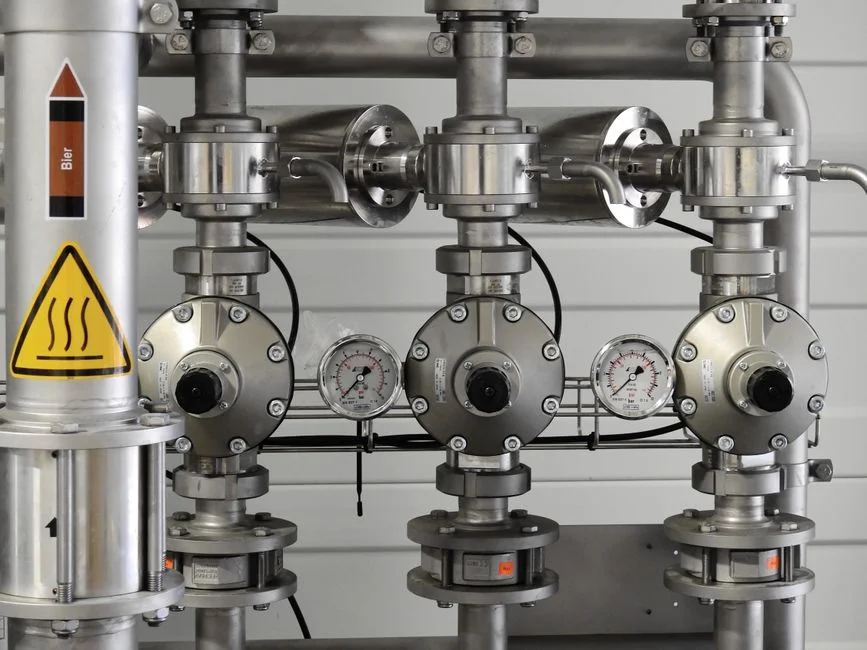
Three operating parameters most directly control cake dryness and cycle time: feed solids concentration, filter cloth selection, and operating pressure. The table below ties each parameter to the outcome an operator observes on the floor.
| Parameter | Range or choice | Observed outcome | Source |
|---|---|---|---|
| Feed solids (optimum) | 50–60% solids | Press performs to design; full chambers, dry cake | ChemREADY |
| Feed solids (low end) | 5–10% solids | Add a clarifier or thickener upstream before pressing | ChemREADY |
| Filter cloth — cotton | Woven cotton cloth on 4% w/w CaCO3 feed | 56.00% solute removal efficiency | BRIN study (S1) |
| Filter cloth — drill | Drill cloth under identical conditions | Lower efficiency than cotton at matched feed | BRIN study (S1) |
| Operating pressure — standard | Up to ~7 bar typical | Adequate for easy feeds, lower cloth wear | ChemREADY |
| Operating pressure — high | 21–30 bar | Needed for difficult slurries; requires reinforced plates and high-strength cloth | ChemREADY |
| Cycle interaction | Thicker cake → longer feed phase | Drier solids and fewer cycles per shift | Process principle |
Polymer conditioning upstream of the press is the most underappreciated lever in this parameter set. The polymer dosing upstream of a filter press determines floc strength, which controls how much fine solids pass through the cloth versus how much is captured as cake. When the BRIN cloth comparison is read alongside the polymer guide, the message is consistent: capture rate is a function of both cloth selection and the conditioned floc. For buyers comparing quotes, the practical takeaway is that the cheapest cloth on paper is rarely the lowest-cost option once cake dryness and hauling cost are factored in.
Frequently Asked Questions
How much filtration area do I need for my plant throughput?
The HydropureWater catalog lists plate and frame filter presses from 1 m² to 500 m² of filtration area, covering small-batch industrial users up to full-scale municipal dewatering. Because throughput depends on feed solids, cake thickness target, and cycle time, the area itself is not a useful number to quote a vendor without specifying those three parameters. Request that the vendor size the press against your daily slurry volume, target cake dryness, and desired cycles per shift before comparing any two quotes.
What feed solids concentration does my filter press need?
ChemREADY specifies that filter presses work best on 50–60% solids, and that slurries below 5–10% solids should be pre-concentrated by a clarifier or thickener before reaching the press. If your upstream process delivers feed in the single-digit percent range, adding a clarifier or a DAF unit is a prerequisite. Measure the solids content of the feed stream entering the press for one full operating shift before signing any equipment order.
How dry will the cake actually be?
Cake dryness is a function of three variables: operating pressure, cloth selection, and feed solids. ChemREADY's high-pressure range of 21–30 bar raises cake solids on difficult slurries, while the BRIN study showed cotton cloth reaching 56.00% solute removal efficiency on a 4% w/w CaCO3 feed. A vendor quoting a specific cake-solids number without naming the pressure, cloth, and feed concentration is not providing a comparable figure.
How do I compare two filter press suppliers without getting burned?
Request a written specification that names the filtration area in m², plate material and thickness, cloth specification, maximum operating pressure in bar, and the automation level. Ask for the documented cycle time at your target cake thickness and feed solids, and confirm whether the price includes the plate shifter, cloth wash system, and any upstream polymer dosing skid. The sludge press equipment buyer guide is a useful checklist to bring to the vendor meeting so that every quote is returned on the same parameters. Pricing should be requested per configuration rather than as a single number, as a 30-bar high-pressure unit with reinforced cloth is a different scope from a 7-bar standard unit.