Why Polymer Pumping Is Harder Than General Chemical Dosing
Polymer flocculants are viscous, shear-sensitive liquids that break the assumptions built into most general-purpose chemical dosing pumps. Ian Bishop, co-owner at UK dosing system integrator Chemical Support Systems Ltd (CSS), states that conventional diaphragm pumps can be problematic for high-viscosity polymers because the polymer blocks the suction and discharge valves, forcing periodic cleaning and flushing of the pump head (WMFTS, wmfts.com, polymer dosing case study). The same source notes that the regulatory backdrop is unforgiving: over half of UK river water bodies and roughly three quarters of UK lakes exceed the 0.1 mgP/L phosphorus consent for "good environmental status", and US/Canada fines for discharges outside consent limits can reach $500,000 (WMFTS, wmfts.com, polymer dosing case study). Under-dosing therefore has a compliance cost, not just a process cost.
Polymer also creates a housekeeping problem the moment it leaves the pipework. Peter Dohrn, wastewater treatment manager at Abwasserzweckverband Region Heide (AZV Heide), describes a leaking screw pump as "a slippery mess on the floor" that required intensive cleaning, with the entire contents of an IBC lost when the previous pump had no leak detection (WMFTS, wmfts.com, Heide WwTP case study). Peer-reviewed work on wastewater service reinforces the fouling risk that pump internals must tolerate: Astrouski et al. (2015, DOI 10.3303/CET1545159) measured a clean Overall Heat Transfer Coefficient of 2,026 W/m²K dropping to 1,747 W/m²K after 35 days of laundry wastewater, driven by both particulate fouling and biofouling. Polymer wetted parts must resist build-up, be cleanable, and survive daily exposure to hydrocarbon emulsions.
The Four Pump Technologies Used for Polymer Dosing
The four pump families an engineer will meet on a polymer dosing line are peristaltic (tubing), diaphragm, progressive cavity, and metering gear pumps. They differ in how they move fluid and in how they fail in polymer service.
Peristaltic (tubing) pumps move polymer by compressing a flexible tube against a shoe or roller, so the only wetted part is the tube or pumphead itself. WMFTS reports linear, repeatable low-pulse flow from 0.1 to 2,000 ml/min at up to 7 bar for its Qdos range, with no valves or seals to block (WMFTS, wmfts.com, polymer dosing case study). For petroleum-based polymers, the Qdos ReNu PU pumphead uses a polyurethane (PU) wetted part designed to resist petroleum distillates and other aliphatic hydrocarbons (WMFTS, wmfts.com, polymer dosing case study).
Diaphragm metering pumps use a reciprocating diaphragm with inlet and outlet check valves. CSS reports that on high-viscosity polymers these valves block, so the operator inherits a cleaning and flushing burden that the peristaltic alternative avoids (WMFTS, wmfts.com, polymer dosing case study).
Progressive cavity (screw) pumps were Heide WwTP's previous polymer pump and were described as "difficult to operate", requiring frequent servicing, unable to run dry, and unable to match the dosing accuracy of other pump types "due to its design" (WMFTS, wmfts.com, Heide WwTP case study). Bottom-outlet IBC suction made changeovers slow and leak-prone, and the absence of leak detection meant a tube failure released the full IBC of polymer.
Metering gear and sealed pumphead designs sit between the other families. The Qdos ReNu PU pumphead is a single sealed replaceable element with an integrated leak detector that auto-stops the pump and displays an error message if the tube ruptures, removing the uncontrolled-spill failure mode that plagued the Heide screw pump (WMFTS, wmfts.com, Heide WwTP case study).
Side-by-Side Comparison: Peristaltic vs Diaphragm vs Progressive Cavity

The table below consolidates the figures published in the WMFTS case studies so the reader can make a technology choice in one glance. All values are sourced from the two WMFTS pages cited.
| Parameter | Peristaltic (WMFTS Qdos) | Diaphragm (CSS observation) | Progressive cavity (Heide WwTP) |
|---|---|---|---|
| Flow range | 0.1–2,000 ml/min (WMFTS, wmfts.com, polymer dosing case study) | Typical metering range, no polymer-specific figure published | Process-specific, sized to sludge line (not reported as a pump spec) |
| Maximum pressure | Up to 7 bar (WMFTS, wmfts.com, polymer dosing case study) | Process-dependent | Process-dependent |
| Dosing accuracy on polymer | ±1% on intermittent polymer dosing (Heide WwTP, Qdos 60 PU; WMFTS, wmfts.com, Heide WwTP case study) | Not reported for viscous polymer in the supplied sources | Operator states the screw pump "couldn't achieve the dosing accuracy of other pumps due to its design" (WMFTS, wmfts.com, Heide WwTP case study) |
| Viscosity tolerance | CSS: "even more useful" for viscous polymers (WMFTS, wmfts.com, polymer dosing case study) | CSS: "problematic" due to valve blockages (WMFTS, wmfts.com, polymer dosing case study) | Tolerates viscous polymer, but with the other drawbacks listed |
| Dry-run / self-priming | Self-primes from the top of an IBC at under 1 m suction lift; can "empty the polymer almost completely" (WMFTS, wmfts.com, Heide WwTP case study) | Typically requires flooded suction or priming | Cannot run dry; bottom IBC outlet required (WMFTS, wmfts.com, Heide WwTP case study) |
| Leak containment | Fully sealed ReNu PU pumphead with integrated leak detection that auto-stops the pump on tube rupture (WMFTS, wmfts.com, Heide WwTP case study) | Valves and diaphragm seals can weep; no integrated leak detection in the sources cited | No leak detection; full IBC can be lost on tube failure (WMFTS, wmfts.com, Heide WwTP case study) |
| Maintenance interval / burden | First Qdos 60 PU pumphead ran ~12 months before preventive replacement; no-tools single-component swap (WMFTS, wmfts.com, Heide WwTP case study) | Periodic cleaning and flushing of pump head and valves (WMFTS, wmfts.com, polymer dosing case study) | "Several hours" per service; heavy pump, multiple polymer-contact parts (WMFTS, wmfts.com, Heide WwTP case study) |
Selection Workflow: How to Specify a Polymer Pump in 2026
The workflow below mirrors the inputs a dosing system integrator would request, ordered so the engineer can walk into a vendor meeting with a datasheet rather than a brand preference.
- Define the dose in flow and frequency. At Heide WwTP each polymer dose runs about five minutes and fires six times per day onto a sludge line processing 7 m³/hour (WMFTS, wmfts.com, Heide WwTP case study). Convert shot size and shots/day to ml/min and check it sits inside the candidate pump's flow range. The WMFTS Qdos range of 0.1–2,000 ml/min at up to 7 bar covers both jar-test scale and full-scale polymer dosing (WMFTS, wmfts.com, polymer dosing case study).
- Confirm the polymer chemistry. Petroleum-based emulsion polymers attack many elastomers, which is why WMFTS introduced the Qdos ReNu PU pumphead with polyurethane wetted parts for aliphatic hydrocarbons (WMFTS, wmfts.com, polymer dosing case study). Specify PU or an equivalent chemical-resistant wetted material up front; do not retrofit it after a failure.
- Set the accuracy target. ±1% is achievable on intermittent polymer dosing with a sealed peristaltic pump, as documented at Heide WwTP with a Qdos 60 PU (WMFTS, wmfts.com, Heide WwTP case study). A progressive cavity pump cannot match that figure "due to its design", per the Heide operator (WMFTS, wmfts.com, Heide WwTP case study).
- Check the suction geometry. If the polymer is supplied in an IBC, top-of-IBC suction with self-priming removes the bottom-outlet fittings that caused leaks on IBC changeover at Heide WwTP. The Qdos handled under 1 m suction lift and emptied the IBC "almost completely" (WMFTS, wmfts.com, Heide WwTP case study).
- Specify leak detection as a hard requirement. An integrated leak detector that auto-stops the pump and shows an error message is standard on the Qdos ReNu PU (WMFTS, wmfts.com, Heide WwTP case study) and is a housekeeping and compliance control, not an optional extra. The pump head is part of an integrated chemical dosing skid; the controls around it are handled by a HydropureWater automatic chemical dosing system.
- Plan preventive replacement. Budget a pumphead swap roughly every 12 months for the first unit at full polymer duty; the first Qdos 60 PU at Heide WwTP ran a year before being changed "purely as a preventive measure" (WMFTS, wmfts.com, Heide WwTP case study). Stock a spare so a swap is a 10-minute job, not a shutdown.
OPEX, Polymer Waste, and the Real Cost of the Wrong Pump
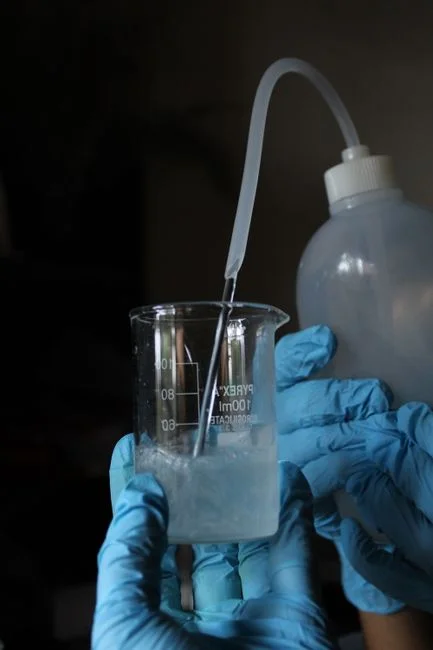
Polymer is expensive enough that a single uncontrolled failure can wipe out the saving from buying a cheaper pump. At Heide WwTP, the previous screw pump's lack of leak detection meant a tube failure released the entire IBC of polymer, and Peter Dohrn described the result as "a slippery mess on the floor" that required intensive cleaning (WMFTS, wmfts.com, Heide WwTP case study). WMFTS makes the broader case that Qdos peristaltic pumps cut chemical costs through higher accuracy metering, and Ian Bishop at CSS states it bluntly: "paying a little more for a pump that can provide the necessary accuracy and confidence to do the job correctly, seems small hardship" (WMFTS, wmfts.com, polymer dosing case study).
Maintenance labour is the second line item. Heide WwTP reports that every screw-pump service run took "several hours" of work, on a heavy pump with multiple polymer-contact parts (WMFTS, wmfts.com, Heide WwTP case study). A sealed pumphead swap, by contrast, is a single-component, no-tools replacement.
The compliance multiplier sits on top. WMFTS cites potential US/Canada fines up to $500,000 for discharges outside consent limits, and the UK context where more than half of rivers and roughly three quarters of lakes exceed the 0.1 mgP/L consent (WMFTS, wmfts.com, polymer dosing case study). For a 40,000-population plant such as Heide WwTP, dosing accuracy is therefore a financial risk control, not just a process parameter.
Where Polymer Pumps Sit in a Wastewater Treatment Train
Polymers are dosed as a flocculant upstream of a solid-liquid separation step. At Heide WwTP the conditioned sludge is thickened with an oil-based polymer flocculating agent and then fed through a screw press, which removes the water before digestion (up to 25 days) and a second dewatering stage, with the dewatered cake collected for use in agriculture (WMFTS, wmfts.com, Heide WwTP case study). The downstream dewatering equipment sets the dryness target: Heide WwTP moves dry residue from 0.71% to 4.83% with an 80% volume reduction, and the dosing pump must support that consistently shot after shot (WMFTS, wmfts.com, Heide WwTP case study).
On a different train the flocculated stream may feed a plate and frame filter press for sludge dewatering or a dissolved air flotation system rather than a screw press; in both cases the pump's accuracy and leak containment determine whether downstream separation runs at design cake solids or fights under-dosed floc. The polymer pump is therefore part of an integrated chemical dosing skid, not a stand-alone appliance. The design of those separation stages is covered in the filter press for amino acid fermentation wastewater guide and the DAF oil water separator design criteria guide, and the sensor layer that closes the loop around the skid is treated in the IoT sensor for chemical wastewater plant guide.
Frequently Asked Questions
What flow rate do I need from a polymer dosing pump?
Size the pump from the dose shot size and frequency rather than from a brand brochure. At Heide WwTP each polymer dose runs about five minutes and fires six times per day onto a sludge line processing 7 m³/hour (WMFTS, wmfts.com, Heide WwTP case study). The WMFTS Qdos range of 0.1–2,000 ml/min at up to 7 bar covers that duty and laboratory jar-test scale in one family (WMFTS, wmfts.com, polymer dosing case study). Request a curve that shows accuracy at your shot flow, not just the headline maximum.
How often does a peristaltic polymer pump need a new pumphead?
The first Qdos 60 PU pumphead at Heide WwTP ran about 12 months before being changed "purely as a preventive measure", with the second pumphead running without trouble since (WMFTS, wmfts.com, Heide WwTP case study). Budget a 12-month swap on the first unit at full polymer duty and stock a spare so the change is a no-tools, single-component job.
Can a diaphragm pump dose high-viscosity polymer?
CSS states that conventional diaphragm pumps can be problematic for high-viscosity polymers because the polymer blocks the suction and discharge valves, requiring periodic cleaning and flushing of the pump head and valves (WMFTS, wmfts.com, polymer dosing case study). It can be made to work, but the maintenance burden should be priced in.
What is the budget range for a polymer dosing pump?
The WMFTS case studies (wmfts.com, polymer dosing case study and Heide WwTP case study) do not publish list prices. Request a quote that itemises the pump, a PU pumphead rated for petroleum-based polymers, integrated leak detection, and a spare pumphead for the 12-month preventive swap, then compare total cost of ownership over a 5-year window including chemical savings from tighter accuracy.
How do I choose a polymer pump supplier?
Look for documented polymer-specific accuracy rather than generic pump curves; the ±1% figure from Heide WwTP on a Qdos 60 PU is the kind of evidence to ask for (WMFTS, wmfts.com, Heide WwTP case study). Insist on a sealed pumphead with integrated leak detection, and prefer a dosing system integrator with a long installed base; CSS reports over 2,000 chemical dosing systems delivered in 30 years (WMFTS, wmfts.com, polymer dosing case study). Ask for at least two reference sites running the same polymer chemistry as yours.