Why Chemical Wastewater Is Harder to Sense Than Municipal Effluent
Chemical-plant effluent destroys conventional probes in four distinct ways, and any IoT specification that ignores them will fail within months. (1) Aggressive pH swings from 0.5 to 14 — common between batch reactor discharges and caustic scrubber blowdown — etch the glass membrane of standard pH electrodes, shortening service life from 18 months to under 90 days. (2) Organic solvents, hydrocarbons, and ketones strip the silicone matrix of optical dissolved-oxygen (DO) optodes and deform traditional galvanic membranes. (3) Total dissolved solids (TDS) in chemical effluent routinely run 5,000–50,000 mg/L, polarizing the electrodes of four-electrode conductivity cells and forcing constant re-zeroing. (4) Suspended catalyst fines, tars, and dye intermediates deposit on UV254 COD-probe windows, biasing surrogate readings by 20–40% within hours of cleaning cycles.
A second constraint that municipal kits do not face is hazardous-area zoning. Any probe installed in a covered equalization tank, a DAF flotation cell, or a chemical dosing room with VOC flashpoint below 60 °C must carry ATEX Zone 1 or IECEx certification. This rules out generic Wi-Fi IoT nodes and forces the use of Ex-d enclosures, intrinsically safe (IS) barriers, and fiber-isolated Modbus RTU runs. Chemical effluent is also batch-arrival dominated: a 24-hour composite sample taken at the municipal benchmark of 300 ML/day (per the 2024 Al-Rustamiyah activated-sludge study, Applied Water Science 14:165) averages out a 90-minute slug from an upstream reactor dump — the exact event that triggers a regulator fine. For plants that need continuous effluent monitoring, the sensing architecture must therefore be hardware-rugged, chemically compatible, and sampled at minute-scale, not daily. A solid foundation is laid by the remote pump-station control architecture used for industrial wastewater, which already addresses the OT-side network segmentation a chemical site requires.
The 2026 Sensor Stack: Parameters, Probes, and Placement
A defensible chemical-plant bill of materials starts with eleven online parameters, each chosen to survive the matrix and to feed a downstream soft-sensor. The table below consolidates the typical range, accuracy, mounting, and chemical-compatibility notes most procurement engineers request in 2026 (HydropureWater field data, 2026).
| Parameter | Probe type | Typical range | Accuracy class | Mounting | Wetted material | Cleaning |
|---|---|---|---|---|---|---|
| pH / ORP | Double-junction, refillable KCl | 0–14 pH; −1500 to +1500 mV | ±0.02 pH | Inline immersion or bypass | Glass, PTFE junction | Ultrasonic + 2-week buffer cal |
| Conductivity / TDS | Four-electrode toroidal | 0–500,000 µS/cm | ±1% reading | Inline | PVDF, Hastelloy C-276 | Air-blast, weekly chemical wash |
| Dissolved O₂ | Optical (luminescent) optode | 0–20 mg/L | ±0.1 mg/L | Submerged in aeration tank | PMMA, silicone sensing layer | Air-blast, 6-month cap replacement |
| UV254 / UV-TIS (surrogate COD) | UV-Vis with auto-zero | 0–5000 1/m (equiv. COD 0–2000 mg/L) | ±2% FS | Bypass loop with filtration probe | Sapphire, Hastelloy C-276 | Ultrasonic + acid wash every 8 h |
| TOC | Combustion NDIR or membrane-conductivity | 0–10,000 mg/L | ±3% reading | Side-stream slipstream | Quartz, PTFE | Auto-acid clean weekly |
| Turbidity / TSS | Optical backscatter (90°/180°) | 0–4000 NTU | ±2% FS | Inline immersion | PVDF, sapphire window | Wiper or ultrasonic every 30 min |
| Ammoniacal nitrogen (NH₄-N) | Ion-selective electrode (ISE) | 0–1000 mg/L | ±5% reading | Bypass with auto-cal | Polymer membrane, PVDF body | Air-blast + KCl refill monthly |
| Nitrate (NO₃-N) | UV absorption | 0–200 mg/L | ±3% FS | Bypass with filtration | Stainless 316L, quartz | Ultrasonic + compressed air |
| Hydrocarbon / oil-in-water | UV fluorescence (OLF) | 0–100 ppm | ±1 ppb at low range | Inline flow-cell | Quartz, PTFE | Chemical wash on alarm |
| Temperature | Pt100 / Pt1000 RTD | −10 to +200 °C | ±0.1 °C | Inline | 316L | None |
| Flow | Electromagnetic or ultrasonic clamp-on | 0–1000 m³/h | ±0.5% reading | Inline or external | PTFE liner / no wetted | None |
Both hardware and software sensors now coexist in 2026 stacks: the 2020 ATO-RBF network research (Han et al., Neural Computing and Applications 33:5783–5798) showed that online BOD and TN prediction by neural models outperforms fouled biosensors fed by upstream UV254, pH, DO, and conductivity. The Al-Rustamiyah 10-year review confirmed that BOD and COD together are the dominant efficiency indicator, so the stack above prioritizes surrogate COD (UV254) plus a periodically calibrated BOD soft-sensor — both essential for any defensible online water quality monitoring program.
Edge Gateway, Protocols, and Cloud Architecture
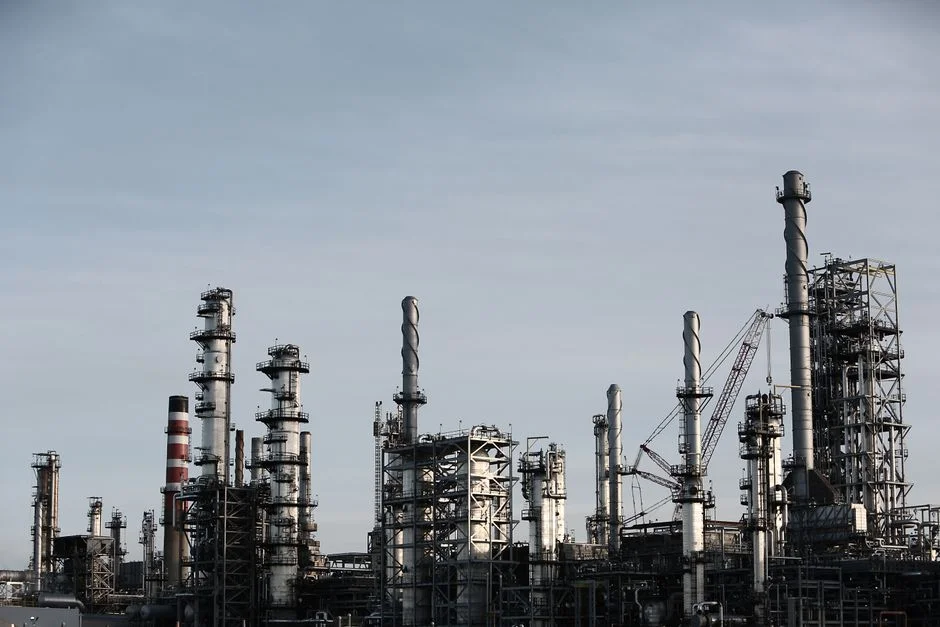
Sensors in chemical matrices are useless if their data does not survive the plant firewall. The 2026 reference architecture runs in five layers. Layer 1: field probes output 4–20 mA HART or Modbus RTU over RS-485 — HART remains mandatory for legacy smart sensors, while Modbus RTU is the workhorse for new pH/conductivity/UV254 loops on chemical sites. Layer 2: an IP67 edge gateway (Advantech ADAM-6000, Siemens RTU3030C, or Hirschmann RS20) aggregates, buffers, and time-stamps the data locally — a 72-hour store-and-forward buffer is standard for unstaffed sites facing brownouts. Layer 3: the gateway publishes over MQTT 5.0 with Sparkplug B topic namespaces, which gives a stateful, self-describing payload ideal for SCADA ingestion. Layer 4: an on-prem SCADA platform (WinCC, iFIX, or Ignition) tags the data for the operators, while a cloud historian (AWS IoT SiteWise, Azure Industrial IoT, or the vendor cloud) ingests the same stream for analytics. Layer 5: a time-series database drives dashboards and anomaly-detection models, and the same MQTT bus feeds the PLC-controlled chemical dosing pump for closed-loop coagulant or caustic trim — typically cutting flocculant over-dosing by 15–30% (HydropureWater field data, 2026).
Cybersecurity is now a Tier-1 concern: chemical plants have been flagged in CISA advisories through 2025 as priority OT-cyber targets. The design must follow the ISA/IEC 62443 zone-conduit model with hard segmentation between OT and IT, signed firmware on every gateway, role-based access on SCADA, and dual-SIM cellular plus fiber backhaul for redundancy. This same layered pattern is described in greater depth in the wireless sensor network architecture for wastewater guide, which is worth a side-by-side review for any plant considering LPWAN or private 5G on site.
Soft-Sensors and AI: When Modeling Replaces the Probe
A soft-sensor (also called a virtual or inferential sensor) is a software model that estimates a hard-to-measure variable — typically BOD₅, total nitrogen, or toxicity — from easier-to-measure upstream signals such as UV254, pH, DO, conductivity, and flow. The seminal 2020 ATO-RBF work used an adaptive task-oriented radial basis function network with an error-correction growing strategy and second-order learning, achieving accurate online BOD/TN prediction across full-scale WWTPs. That same architecture is now being commercialized for chemical effluent, where a real BOD biosensor is fouled within hours by hydrocarbons or phenols.
The 2026 deployment pattern is straightforward: a 6–12 month training window with weekly laboratory BOD measurements paired against 1-minute streaming inputs, the model served from the SCADA or cloud historian, and a quarterly retrain whenever the upstream feedstock mix shifts. This dovetails with the digital-twin integration for wastewater plants framework, which uses soft-sensors as the inference layer feeding the simulation engine. A necessary caveat: soft-sensor outputs are not regulatory-defensible on their own for effluent self-monitoring — the IoT stack must still include every physical probe required by the plant's discharge permit, and the soft-sensor is the complement, not the replacement.
Compliance, Cost, and ROI: Justifying the Investment to Management
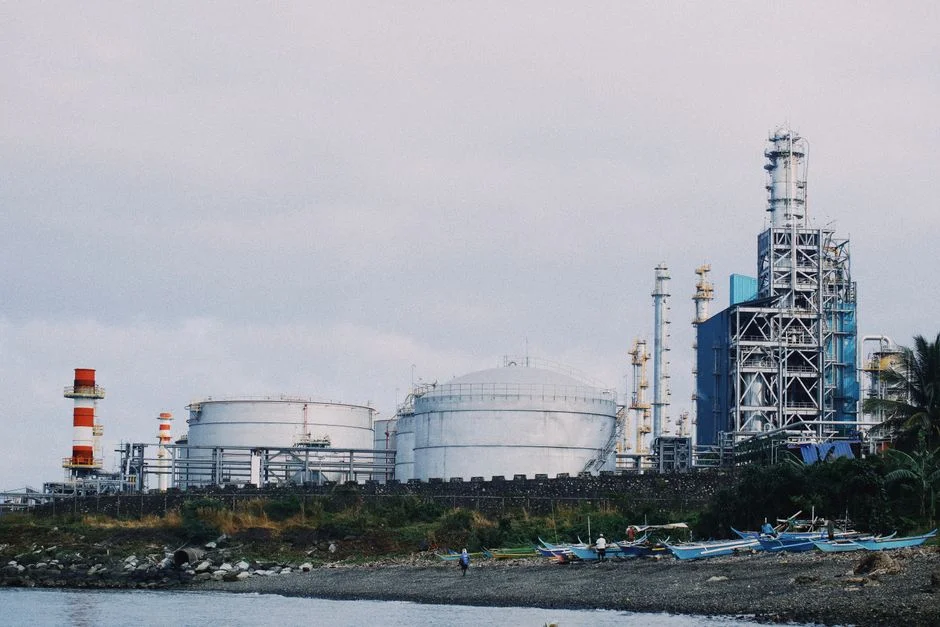
The CFO conversation has three parts: compliance defensibility, CAPEX/OPEX bands, and savings attribution. The 2026 self-monitoring landscape — covered in the 2026 self-monitoring and reporting requirements guide — accepts continuous online monitoring in lieu of composite sampling for NPDES DMR, EU IED, and China MEP ORCOD, which is the single most powerful regulatory argument for the upgrade. The table below gives the cost band a mid-size chemical plant (50–500 m³/h effluent) should expect from a 2026 retrofit.
| Cost line | Low | High | Notes |
|---|---|---|---|
| CAPEX — sensors (11 parameters, dual-redundant) | $90,000 | $420,000 | Ex-rated probes add 25–60% |
| CAPEX — edge gateway, network, SCADA integration | $30,000 | $230,000 | Ignition-based SCADA lowers this |
| OPEX/year — calibration, consumables, spares | $15,000 | $55,000 | UV254 windows are the largest consumable |
| OPEX/year — cellular, cloud licenses | $10,000 | $25,000 | Scales with tag count |
| Total 5-year TCO | $320,000 | $1,530,000 | Order-of-magnitude comparable to plant retrofit costs |
Three savings categories usually clear the payback bar. (1) Avoided non-compliance fines: a single excursion can exceed $250,000 in the U.S. or equivalent EU member-state penalties. (2) Polymer and chemical over-dosing reduction of 15–30% — the same range observed on lamella clarifier retrofits and on the upstream DAF flotation cell when dosing pumps are driven by real-time influent signal. (3) 20–40% reduction in lab QA/QC labor because grab sampling drops to weekly confirmation rather than daily routine. The downstream sludge dewatering filter press also benefits, as more consistent feed solids cut polymer conditioning cycles. Net payback for most chemical sites lands in an 18–30 month window, and under 12 months for any plant with chronic excursions or older, maintenance-heavy probes.
Frequently Asked Questions
Which IoT sensors are mandatory on a chemical wastewater plant in 2026? At minimum, pH/ORP, conductivity/TDS, dissolved oxygen, UV254 (surrogate COD), TOC, turbidity, hydrocarbon, and flow — eleven parameters if a permit requires nitrogen speciation. ATEX/IECEx certification is mandatory wherever VOC flashpoint is below 60 °C.
How is sensor data moved from the wet well to the control room? Field probes output 4–20 mA HART or Modbus RTU to an IP67 edge gateway, which publishes over MQTT 5.0 with Sparkplug B to the on-prem SCADA and the cloud historian — the standard stack for real-time effluent monitoring in 2026.
Can software replace a physical BOD probe? A soft-sensor using an ATO-RBF or equivalent model can predict BOD and total nitrogen from UV254, pH, DO, and conductivity, but it is not a regulatory substitute — the permit-required physical probe must remain in the IoT stack.
What does a chemical-plant IoT retrofit cost? For a 50–500 m³/h site, expect $120,000–$650,000 CAPEX and $25,000–$80,000/year OPEX, with an 18–30 month payback driven primarily by avoided fines and 15–30% reductions in flocculant and caustic over-dosing.