Why Electroplating Wastewater Needs a Two-Stage Chromium Train
Chromium in electroplating wastewater is removed in a two-stage process: hexavalent chromium (Cr(VI)) is first chemically reduced to the trivalent ion (Cr(III)), usually with ferrous sulfate, sodium bisulfite, or iron scrap under acidic conditions (pH ~2–2.5), and then precipitated as chromium hydroxide (Cr(OH)3) by raising pH to 8.0–9.5 with caustic or lime, per U.S. EPA AP-42 Section 12.20. The reason this sequence is non-negotiable is the chemistry of the chromate and dichromate ions (CrO42−, Cr2O72−): they remain soluble across the entire practical pH range and will not form a separable solid until the chromium itself is converted to Cr(III). A "direct precipitation" shortcut — dosing caustic into Cr(VI) liquor — produces a clear overflow that still contains soluble hexavalent chromium and will fail EPA's BAT/BCT effluent expectations and most NPDES total-chromium limits, which typically sit at 0.5–2.0 mg/L daily max for the electroplating point source category (40 CFR 413).
Real electroplating-park streams rarely contain chromium alone. The 2024 ScienceDirect mixed-metal study on a Chinese electroplating park reports simultaneous Cr(VI), Cu2+, and Ni2+ in the combined wastewater, all routed first through precipitation and flocculation before any polishing step (source: ScienceDirect S1004954124002398, 2024-10). Chromium is removed first because its redox potential dominates the ORP setpoint, and its acid reduction stage would otherwise consume reagents meant for the hydroxide precipitation of copper and nickel downstream. The two-stage rule is therefore both a regulatory requirement and a process-sequencing requirement.
Stage 1 — Reducing Hexavalent Chromium to Trivalent Chromium
The reduction half-reaction is the line every design review comes back to:
Cr2O72− + 14 H+ + 6 e− → 2 Cr3+ + 7 H2O E° ≈ +1.33 V
That half-reaction consumes 14 protons per dichromate, which is why the reduction tank must be held at pH 2.0–2.5. Outside this window, the reaction slows, ORP drifts positive, and Cr(VI) breaks through into the clarifier overflow — the failure mode most often flagged in compliance audits on electroplating ETPs.
| Reagent | Typical dose per kg Cr(VI) | Operating pH | Target ORP (Pt/Ag-AgCl) | Key trade-off |
|---|---|---|---|---|
| Ferrous sulfate (FeSO4·7H2O) | ~16 kg (8 kg FeSO4 anhydrous equiv.) | 2.0–2.5 | < +250 mV, often 0 to −100 mV | Cheapest reagent; generates 3–4× the dry solids of NaHSO3 |
| Sodium bisulfite (NaHSO3) | ~3–4 kg | 2.0–2.5 | < +200 mV | Workhorse for medium-to-large lines; lower sludge; produces SO2 if overdosed |
| Sulfur dioxide (SO2 gas) | ~2.5–3 kg | 2.0–2.5 | < +200 mV | Lowest reagent mass; needs scrubbers and gas dosing; favored above ~50 m³/h |
| Zero-valent iron (Fe0 scrap) | ~4–8 kg (stoichiometric, contact-time limited) | 2.0–3.0 | Driven negative by Fe corrosion | Lowest OPEX, near-zero reagent sludge; needs long contact basins; poor at low Cr(VI) (<20 mg/L) |
The operational target is straightforward: hold ORP below roughly +250 mV (Ag/AgCl reference) in the reduction reactor, and most plants drive the setpoint to 0 to −100 mV to confirm the reaction has gone to completion. A 20–45 min hydraulic residence time with mechanical or aerated mixing is the standard envelope; underdosing leaves Cr(VI) in the effluent because the half-reaction needs all six electrons per Cr atom delivered before the pH is raised. The 2024 ScienceDirect ion-exchange paper, the ACS 2016 functionalized-sand work, and the 2018 Scientific Reports PHB-CNT adsorbent study all describe polishing technologies that sit after the reduction–precipitation train, not substitutes for it (source: ScienceDirect S221471442400045X, 2024-02; ACS acssuschemeng.6b02185, 2016; Scientific Reports s41598-018-37899-4, 2018).
Stage 2 — Precipitating Trivalent Chromium as Chromium Hydroxide
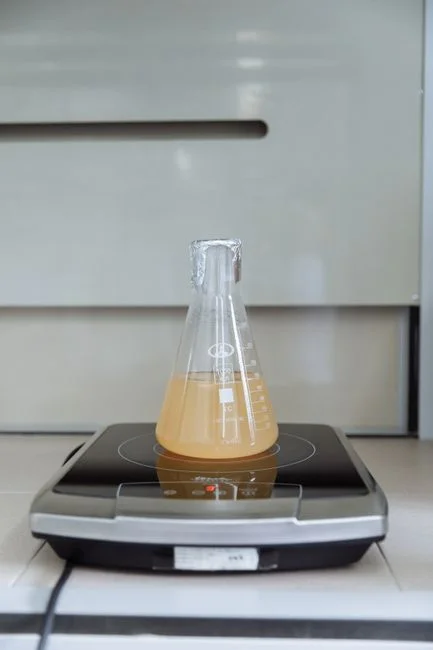
Once the ORP probe confirms complete reduction, the liquor is routed to a precipitation tank where pH is raised to 8.0–9.5:
Cr3+ + 3 OH− → Cr(OH)3(s)
Cr(OH)3 reaches minimum solubility near pH 8.5 (Ksp ~ 6.3 × 10⁻³¹), and a properly controlled clarifier overflow will drop an influent of 50–500 mg/L Cr(VI) to below 0.5 mg/L total chromium. NaOH gives tighter pH control and a denser, more filterable sludge; lime (Ca(OH)2) is cheaper per kg but adds calcium load, can raise scale risk in downstream piping, and will re-dissolve Cr(OH)3 if the pH swings above ~10.5 — a common upset when an operator over-corrects on caustic.
Cr(OH)3 starts as a fine colloidal gel. It needs 5–15 min of slow mixing with a cationic polyacrylamide flocculant (typical dose 0.5–2 mg/L) to grow a settleable floc, and a working precipitation step turns the liquor a pale green-to-blue color once the reaction is complete — a useful visual confirmation that the ORP step actually reduced everything downstream of it. The underflow from this step is the hazardous-waste line item most often under-budgeted at design stage: Cr(OH)3 sludge typically tests as EPA RCRA characteristic for hexavalent chromium (TCLP ≥ 0.5 mg/L Cr if any residual Cr(VI) escaped reduction), and it must be segregated from non-hazardous clarifier sludge, dewatered, and shipped to a licensed facility under a uniform hazardous-waste manifest.
Reagent Comparison for 2026 ETP Buyers
For a procurement lead, the reagent decision is a side-by-side on six axes. The table below uses a directional cost index (USD per kg Cr(VI) removed, baseline = NaHSO3 = 1.0) so numbers can be re-based to local pricing without re-engineering the comparison.
| Axis | FeSO4·7H2O | NaHSO3 | SO2 gas | Fe0 scrap |
|---|---|---|---|---|
| Reagent cost index (per kg Cr(VI)) | 0.5–0.7 | 1.0 (baseline) | 0.6–0.9 | 0.2–0.4 (scrap-priced) |
| Stoichiometric dose (kg/kg Cr(VI)) | ~16 | ~3–4 | ~2.5–3 | ~4–8 |
| Dry solids added to sludge | High (3–4× NaHSO3) | Low (sulfate only) | Lowest (no reagent cation) | Negligible (Fe0 → Fe3+ → Fe(OH)3 co-precipitates) |
| CAPEX for storage / dosing | Low (liquid dosing) | Low–medium | High (gas scrubbers, vapor handling) | Medium (scrap handling, contact basin) |
| OPEX labor & maintenance | High (sludge hauling dominates) | Medium | Medium–high (scrubber upkeep) | Low (long contact, infrequent media top-up) |
| Operator skill required | Low | Medium (SO2 slip risk) | High (gas safety) | Medium (process control slower) |
The 2024 ScienceDirect mixed-metal study explicitly frames the operating reality as "precipitation and flocculation" pretreatment on a real Cr–Cu–Ni stream, not single-reagent reduction (source: ScienceDirect S1004954124002398, 2024-10). In 2026 plant audits, total hazardous-sludge disposal cost has overtaken reagent purchase price as the dominant operating expense at most U.S. sites, which is why NaHSO3 and Fe0 are displacing FeSO4 on new lines even though FeSO4 is the cheapest on the drum. The reagent itself is delivered by PLC-controlled chemical dosing skids sized to the stoichiometric demand plus a 10–20% safety factor for influent variability.
The Downstream Train — Clarification, Polishing, and Sludge Handling
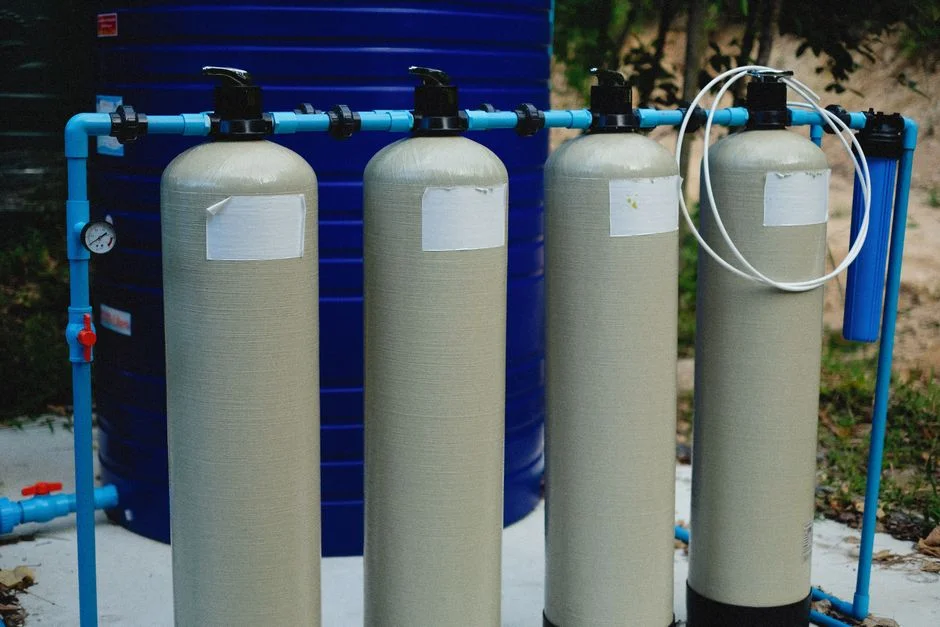
Chemistry decisions only become a plant once the downstream train is specified. After precipitation, the Cr(OH)3 floc is separated in either a lamella clarifier (high surface-loading 20–40 m³/m²·h, works well for dense, fast-settling hydroxide flocs) or a DAF unit (better for the lighter, oily floc common in mixed electroplating streams carrying emulsified cleaners and brighteners). Pick lamella when the stream is metals-only with a tight Cr(OH)3 floc; pick DAF when the upstream rinse carries surfactants or when oil/grease is co-present — the same logic that drives DAF as a pretreatment step in other high-surfactant waste streams.
For sub-mg/L total-chromium discharge, the clarifier overflow is polished through a strong-base anion exchange resin targeted at any residual Cr(VI) that slipped past ORP control (source: ScienceDirect S221471442400045X, 2024-02). For reuse loops — rinse-water recovery back to the plating line — an RO polisher follows, with its own pretreatment train described in RO pretreatment for reuse loops. The clarifier underflow is then dewatered on a plate-and-frame filter press to 25–35% dry solids for hazardous-waste pickup. Upstream of all of this, a rotary bar screen protects the reduction and precipitation tanks from rags and debris that would otherwise short-circuit the floc and blind the filter press cloth.
The 2026 decision framework is one chain: chemistry choice → sludge yield → clarifier sizing → filter-press sizing → disposal cost. Skipping any link is where projects blow up at commissioning, and the disposal cost is the line that quietly drives the reagent decision back upstream.
Frequently Asked Questions
Why can't hexavalent chromium be precipitated directly?
Cr(VI) exists as chromate (CrO42−) and dichromate (Cr2O72−) anions that stay soluble across the full pH range; only Cr(III) forms an insoluble hydroxide, so reduction is a prerequisite for any solid–liquid separation (per EPA AP-42 §12.20).
What pH windows are required for each stage?
Reduction runs at pH 2.0–2.5 to keep the half-reation thermodynamically favorable and fast; precipitation runs at pH 8.0–9.5, with minimum Cr(OH)3 solubility near pH 8.5. Above ~10.5 the hydroxide re-dissolves as chromite.
Which reducing reagent produces the least sludge?
Zero-valent iron (Fe0) and SO2 gas add the least extraneous dissolved solids; ferrous sulfate generates roughly 3–4× the dry solids of NaHSO3 and is the dominant disposal-cost driver on FeSO4-fed lines.
Can ion exchange replace the reduction stage?
No. Ion exchange, functionalized-sand adsorption, and CNT-based adsorbents are polishing options for residual Cr(VI) after chemical reduction; they cannot economically handle the 50–500 mg/L Cr(VI) load typical of electroplating rinse water (per ScienceDirect S221471442400045X, 2024-02).
What happens to the chromium hydroxide sludge?
Cr(OH)3 sludge is segregated as hazardous (RCRA characteristic for Cr(VI) if any residual remains), dewatered to 25–35% dry solids in a filter press, and shipped to a licensed treatment, storage, and disposal facility under a hazardous-waste manifest. Standard NPDES permit documentation requires chain-of-custody records for this stream.