Why Wastewater Treatment Plants Are Deploying Wireless Sensor Networks in 2026
Effluent permits tightened to total nitrogen below 10 mg/L across most EU catchment areas and a growing number of US state discharges in 2024–2025, while electricity costs in industrial regions rose 18–30% between 2022 and 2025; together with a documented shortage of qualified WWTP operators, these three forces have pushed 24/7 online monitoring from an option to a specification requirement on every new and retrofit plant above 5,000 m³/day. The cost of reaching that monitoring density with traditional wired instrumentation is the binding constraint: trenching and PVC-coated conduit typically run $80–$250 per meter, multi-conductor shielded instrumentation cable $4–$12 per meter, and install labor in hazardous wet-well or digester areas carries a 20–30% premium over general industrial work (HydropureWater field data, 2026). At a 20,000 m³/d plant needing 60–80 measurement points spread across aeration, clarification, and outfall zones, wired CAPEX alone can exceed $400,000 before a single instrument is connected.
Wireless monitoring in wastewater is not new as a research concept. The 2011 Binghamton University paper by Chen, Twigg, Sadik, and Tong demonstrated self-powered nodes integrating microbial fuel cells, field-programmable analog arrays, and low-power radios for maintenance-free operation in primary clarifiers and aeration tanks — a 15-year operating evidence base that today's commercial WSN products build on. The 2017 Tanzania cloud-WSN pilot and the broader academic literature converge on the advantage over wired loggers: the permanent deployment of monitoring stations in locations of difficult access, without the need of manual data retrieval. A practical remote monitoring system for chemical wastewater plant applications in 2026 inherits that advantage and adds the protocol maturity, cybersecurity certification, and SCADA integration that the early research prototypes lacked.
WSN Architecture: Sensor Nodes, Gateways, Edge, and Cloud
A modern WSN for wastewater treatment is a four-layer reference architecture: (1) the sensor node, comprising a wet-end probe, a microcontroller, a radio transceiver, and a battery or energy harvester in an IP68 or IECEx-rated enclosure; (2) the gateway or concentrator, which aggregates node traffic and bridges to plant Ethernet; (3) the edge compute layer, typically an industrial PC or a PLC acting as a protocol buffer and local historian; and (4) the cloud or SCADA/HMI layer, where data lands in a historian, an asset management system, or a digital twin. Each layer is a procurement decision, and getting the boundaries wrong is the most common 2026 commissioning problem.
Standard node payloads cover pH, ORP, dissolved oxygen, conductivity, turbidity, TSS, NH₄-N, NO₃-N, level, flow, pressure, and temperature. Probe selection follows chemistry: ion-selective electrodes for NH₄-N and NO₃-N, optical luminescent DO for low-maintenance aeration basin service, UV-NIR for organics, and guided-wave radar for sludge level. pH sensor selection for wastewater treatment plants in particular must account for reference-junction fouling, which is the single most common field failure mode on submerged pH loops.
Node power is the second procurement decision. Primary lithium-thionyl chloride (Li-SOCl₂) 3.6 V cells at 17–35 Ah deliver 5–10 year service on LoRaWAN duty cycles of one transmission per 5–15 minutes; rechargeable Li-ion with a 1–5 W solar or vibration harvester suits mains-proximate installations; and microbial fuel cell nodes remain viable only in primary sludge or anaerobic zones where the substrate reliably supports the cell. Enclosure ratings separate products sharply: IP68 at 5 m for 30 days is the baseline for any node that may sit in a launder or a wet well, IECEx/ATEX Zone 1 is mandatory inside digester gas zones, and NEMA 4X covers outdoor lift stations. Topology is the third decision: a WirelessHART mesh gives redundancy but roughly doubles node power draw, while a LoRaWAN star is more power-efficient and is the 2026 default for greenfield plant-wide monitoring where a single gateway can cover 5–10 km line-of-sight.
Wireless Protocol Comparison: LoRaWAN, NB-IoT, 5G RedCap, Zigbee, and WirelessHART
Radio choice cannot be delegated to a vendor and cannot be cheaply reversed after deployment. The 2026 shortlist for WWTP service is five protocols, each with a defensible niche.
| Protocol | Range (line-of-sight) | Data rate | Battery life on AA-grade cell | Security baseline | Typical 2026 WWTP use case |
|---|---|---|---|---|---|
| LoRaWAN 1.1 / 4.0 | 5–10 km | 0.3–50 kbps | 5–10 years | AES-128, IEC 62443-4-2 component cert | Distributed plant-wide monitoring: lift stations, aeration tanks, clarifiers, outfall |
| NB-IoT (LTE Cat-NB2) | 1–5 km via cellular | 26 kbps DL / 62 kbps UL | Up to 10 years | 3GPP AKA, IEC 62443-4-2 component cert | Remote outfalls and discharge points with no plant gateway |
| 5G RedCap (3GPP Rel. 17/18) | Cellular | 5–150 Mbps | 3–5 years (mains-rechargeable) | 3GPP, IEC 62443-4-2 component cert | Video-based headworks monitoring: foam, scum, color analytics |
| Zigbee / Thread | <100 m mesh | 250 kbps | 3–5 years | AES-128 | Indoor cabinets and skid-mounted equipment (DAF, MBR) with co-located gateway |
| WirelessHART (IEC 62591) | 200–300 m mesh, multi-hop | 250 kbps | 3–5 years | IEC 62443-aligned, ISA 100 compatible | Hazardous Zone 1 areas: digesters, chemical dosing skids |
Every protocol above supports IEC 62443-4-2 component certification when sourced from major industrial vendors, allowing the network to integrate into a plant's existing OT security zone. WirelessHART remains the default inside Zone 1 hazardous areas around digesters and chemical skids because of its deterministic TDMA schedule and channel hopping. LoRaWAN dominates the balance of plant because of its 5–10 year battery life on commodity cells and its ability to cover a 20,000 m³/d facility from a single rooftop gateway.
Wired vs Wireless Instrumentation: A 2026 Decision Framework
The procurement-committee question is rarely "wireless or wired" — it is "which measurement points, and on which bus." A defensible 2026 decision matrix looks like this.
| Criterion | Wired 4–20 mA + HART | Wireless LoRaWAN / WirelessHART |
|---|---|---|
| CAPEX per measurement point (installed) | $1,800–$3,500 (cable + conduit + I/O card + labor) | $450–$1,100 (node + gateway amortized) |
| OPEX per point per year (sampling + calibration) | $200–$500 manual grab + calibration | $20–$60 remote calibration check |
| Install time per point (greenfield) | 2–6 hours including conduit | 15–30 minutes, no trenching |
| Cybersecurity posture | Physically isolated, air-gapped | IEC 62443-4-2 component cert, segmented OT zone |
| Reliability in flooding | Conduit ingress is a chronic failure | IP68 nodes continue transmitting when submerged |
| Scalability | Limited by I/O card slots and duct fill | Add nodes without new conduit runs |
| Retrofit disruption to operations | High; trenching across live tanks | Low; nodes clamp or float into place |
| Hazardous-area suitability (Zone 1) | Excellent with Ex-rated glands | Excellent with WirelessHART + IECEx nodes |
The 30–45% CAPEX saving quoted in most 2026 vendor analyses comes from the gap between $1,800–$3,500 per wired point and $450–$1,100 per wireless point at scale; the 60–80% labor reduction comes from replacing $25–$60 manual grab samples with continuous online data. For brownfield retrofits above 5,000 m³/d, the defensible architecture is hybrid: keep wired 4–20 mA in the digester gas zone and on existing chemical dosing skids where conduit is already in place, and deploy wireless for distributed monitoring across clarifier launders, aeration grids, and remote outfalls. For greenfield 2026 plants, the defensible default is wireless-native — WirelessHART on hazardous skids, LoRaWAN on the balance of plant, and wired retained only for the PLC-to-VFD control loops where determinism and noise immunity are non-negotiable.
Integrating WSN Data with MBR, DAF, RO, and PLC/SCADA Systems
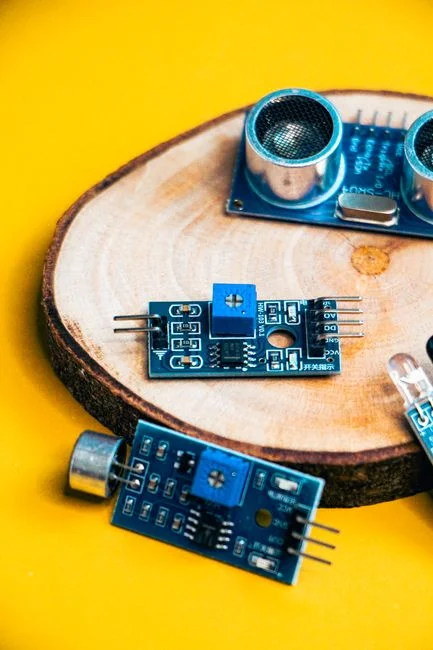
A WSN only earns its CAPEX back when its data closes a control loop. The standard 2026 integration path is WSN gateway → MQTT or OPC UA Pub/Sub → edge buffer (industrial PC or PLC) → plant SCADA (Siemens WinCC, Ignition, AVEVA) → cloud historian or digital twin. These two transports traverse firewalls without bespoke drivers and map cleanly onto both modern and legacy PLCs.
On the aeration basin, dissolved-oxygen nodes feed a PID loop in the PLC that modulates blower VFD speed; the result against a constant-speed baseline is 15–25% blower energy reduction, which on a 20,000 m³/d plant with 4–6 blowers is $40,000–$90,000 per year at 2025–2026 industrial tariffs (HydropureWater field data, 2026). On a DAF skid, pH, conductivity, and turbidity nodes upstream of the unit feed the dosing pump VFD on the automatic chemical dosing systems, trimming coagulant and polymer consumption by 8–15% versus fixed-rate dosing. On an MBR membrane bioreactor system using DAF flotation systems upstream of flat-sheet modules, TMP, tank level, and DO nodes trigger backwash cycles and scour-air blow-off at thresholds rather than on timers, extending membrane life by 20–30% in well-instrumented installations. At the outfall, NH₄-N, NO₃-N, and turbidity nodes auto-populate the Discharge Monitoring Report, replacing grab samples and removing the human-error component of compliance reporting. Edge computing for wastewater monitoring covers the buffering and protocol translation in more detail; the engineering takeaway is that the WSN is a data source, not a separate system, and the value sits in the control loop it enables.
Frequently Asked Questions
How reliably do wireless nodes operate in flooded or humid wastewater environments?
IP68-rated LoRaWAN and WirelessHART nodes rated for 5 m submersion for 30 days routinely survive launder and wet-well flooding, with field MTBF above 100,000 hours when junction boxes are elevated above the high-water line; the failure mode is almost always the cable gland, which is why wireless eliminates the dominant wet-environment risk in 2026 designs.
Do wireless sensor networks satisfy IEC 6244