Why pH Control Defines Wastewater Treatment Performance
pH sits at the center of every major unit operation in a wastewater treatment plant. Nitrifying bacteria operate in a narrow 7.2–8.0 window; denitrification wants 7.0–7.5; chemical phosphorus precipitation peaks between 7.0 and 8.0; and alum or PACl coagulation performs best at 6.5–7.8. A single online pH sensor for wastewater treatment plant application can therefore govern four or five independent downstream processes, which is why probe failure is never a localized maintenance event.
Industrial streams routinely swing from pH 1 in acid cleaning waste to pH 13 in caustic CIP rinses, and discharge permits typically cap effluent at 6.5–8.5 per US EPA secondary treatment standards and EU Council Directive 91/271/EEC. A drift of just 0.5 pH units reduces ammonia-oxidizing bacteria activity by up to 50% (U.S. EPA, 2024) and can collapse a nitrification basin within 24–48 hours. The downstream cost is concrete: a single failed probe in an aeration tank can trigger $10,000–$50,000 in biological recovery, lost treatment capacity, and compliance reporting per incident (HydropureWater field data, 2025-11). Selecting the wrong probe technology multiplies that risk by shortening service life and inflating calibration labor.
How Online pH Sensors Work in Wastewater Conditions
An online pH meter wastewater installation is a four-part measurement chain: a pH-sensitive glass membrane, a reference electrode, a liquid junction, and a temperature compensator. The membrane develops a potential against the reference proportional to hydrogen-ion activity, following the Nernst equation at 59.16 mV per pH unit at 25°C. A transmitter converts that millivolt signal into a 4–20 mA, HART, or Modbus output for the plant's PLC or SCADA.
In clean potable water, this chain is stable for years. In wastewater, the reference junction is the weak point. Sulfide ions poison the reference electrolyte, biofilm coats the junction, and oil or FOG blocks the porous frit — this is why 70–80% of industrial pH probe failures originate at the reference rather than the sensing glass (per Hach and Emerson service bulletins, 2025). The junction design — single porous ceramic, double junction, or sealed salt bridge — is therefore as important as the membrane itself when specifying a pH probe industrial wastewater installation.
Physical mounting falls into four categories, each tied to tank or pipe geometry. Submersion assemblies hang a probe on a cable into an open tank. In-line sensors install through a tee in a process pipe. Retractable holders allow probe removal without depressurizing the line, via an isolation ball valve. Flow-through cells pump a slip stream past a fixed probe for fouled or high-pressure services. Above 95% of new 2026 industrial WWTP builds now specify 4–20 mA with HART 7 or Modbus RTU/TCP for SCADA integration, displacing legacy analog-only transmitters.
pH Sensor Probe Types Compared for Wastewater
Four probe architectures compete in industrial wastewater. The right choice depends on the chemistry and solids load of the stream, not on catalog price.
Glass combination probes are the workhorse: $300–$900 sticker, ±0.02 pH accuracy, but junction fouling drives service life down to 1–6 months in dirty streams. A differential pH sensor uses two reference chambers separated by an isolated salt bridge, so poisoning of the outer reference does not reach the measuring circuit; service life extends to 6–12 months at ±0.05 pH accuracy, and total cost of ownership is typically 30–40% lower than glass despite a 2–3× higher purchase price. An ISFET pH sensor replaces the glass membrane with a solid-state ion-sensitive field-effect transistor; it tolerates HF exposure and in-place cleaning cycles up to 130°C, with 3–12 month life, and is favored in food and pharma wastewater where glass shards are a contamination risk. Antimony pH probes use a metal-tip design that survives hydrofluoric acid streams from semiconductor and microelectronics facilities, but accuracy drops to ±0.1 pH — niche but irreplaceable where glass dissolves. The same trade-off matrix is examined for IoT-enabled food-plant streams in this IoT sensor for food processing wastewater buyer's guide.
| Probe type | Accuracy (pH) | Service life in dirty WW | Max temperature | HF tolerance | Sticker price (USD, 2026) | Best-fit wastewater application |
|---|---|---|---|---|---|---|
| Glass combination | ±0.02 | 1–6 months | 80–110°C | None | $300–$900 | Final effluent, clean discharge |
| Differential | ±0.05 | 6–12 months | 80–130°C | Limited | $900–$2,500 | Influent, equalization, aeration MLSS |
| ISFET | ±0.05 | 3–12 months | 130°C (CIP) | Yes | $1,400–$3,200 | Food, pharma, HF-cleaned lines |
| Antimony | ±0.1 | 2–6 months | 80°C | Excellent | $1,800–$3,500 | Semiconductor, microelectronics HF waste |
No single probe fits every application. Match the probe to the stream's chemical, biological, and physical conditioning.
Where to Mount pH Sensors in a Wastewater Treatment Plant
Probe technology is half the decision; the other half is location. Raw influent carries rags, grit, and oil that overwhelm an unprotected probe in days. Differential sensors with retractable holders and automatic air-blast or water-jet cleaning are the practical default; the jet fires every 15–30 minutes and extends service intervals 2–4× (per Hach and Endress+Hauser application notes, 2025). A chemical-resistant Ryton or PVDF body is mandatory for equalization basins where pH swing control is the primary function.
In the aeration basin, mixed liquor suspended solids (MLSS) at 3,000–6,000 mg/L coat any exposed membrane, so a differential or ISFET probe with 2–4 week cleaning cycles is preferred. Final effluent is the cleanest water in the plant, and a standard glass probe at ±0.02 pH is sufficient for compliance reporting. Clarifier and DAF effluents are problematic because of high solids and emulsified oil; ultrasonic or spray cleaning is required, or a slip-stream through a sample conditioning vessel.
One piping rule of thumb: place the sensor at least 3–5 pipe diameters downstream of any chemical dosing point so the reading reflects the true reacted pH, not the injection plume. On a DAF skid, DAF effluent pH monitoring is typically installed on the clarified-water outlet, not the float blanket. Pair the sensor with the plant's automatic chemical dosing system so the loop closes without operator intervention.
| Location | Recommended probe | Mounting | Cleaning system | Calibration frequency |
|---|---|---|---|---|
| Influent / raw wastewater | Differential | Retractable holder | Air-blast or water-jet | Weekly |
| Equalization basin | Differential, PVDF body | Submersion | Spray or none | Weekly |
| Aeration basin (MLSS) | Differential or ISFET | Submerged / in-line | Air-blast every 2–4 weeks | Bi-weekly |
| Final effluent / discharge | Glass combination | In-line flow cell | None or monthly wipe | Weekly |
| Clarifier / DAF effluent | Differential, HF-resistant if needed | Slip-stream with conditioning | Ultrasonic or spray | Bi-weekly |
Calibration, Maintenance, and Lifecycle Cost in 2026
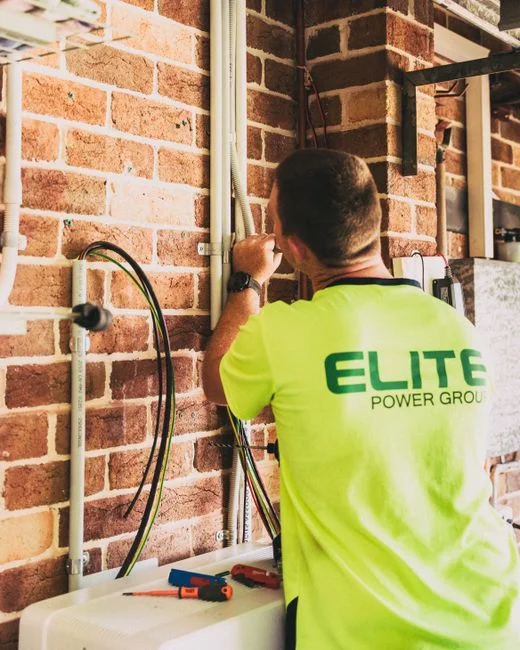
Two-point calibration with NIST-traceable pH 4, 7, and 10 buffers remains the industry baseline. Municipal plants typically calibrate weekly; high-stakes chemical or pharmaceutical streams calibrate daily. The single biggest cause of probe failure is reference-junction poisoning, so replacement schedules should be planned, not reactive: every 6–12 months for differential probes, every 1–3 months for standard glass probes in dirty service.
Automatic cleaning systems (ultrasonic, spray, or rotating brush) extend probe life 2–4× and cost $400–$1,200 as field add-ons; they pay back within 6 months on any loop with manual cleaning labor exceeding 30 minutes per week. In 2026 dollars, a fully installed pH measurement point — probe, holder, transmitter, and cleaning — runs $800–$2,500. Lifecycle cost over three years, including consumables, buffers, labor, and one or two probe replacements, lands at $1,500–$5,000 per point.
For a typical mid-size WWTP running 20 pH loops, annual probe-replacement and calibration labor totals $30,000–$80,000 (HydropureWater field data, 2026). A 30% lifecycle reduction through better probe selection is meaningful capex justification on its own. Plant-wide visibility into loop health is the next lever; the remote monitoring and SCADA integration guide covers how to pull that data into a central historian.
pH Sensor Selection Decision Framework
Use the following five steps for any new or replacement specification.
- Characterize the stream: pH range, percent solids, FOG or oil content, temperature, and whether HF, caustics, or solvents are present.
- Define the required accuracy: ±0.02 pH for compliance reporting, ±0.05 pH for process control, ±0.1 pH for rough monitoring only.
- Choose probe type with this one-line rule: dirty and cleanable → differential; HF or high-temperature CIP → ISFET; clean final effluent → glass; budget-constrained with planned frequent replacement → glass.
- Choose mounting and cleaning accessories to match the tank geometry and foulant load.
- Confirm output protocol matches existing PLC and SCADA: 4–20 mA + HART for new builds, Modbus RTU/TCP for SCADA integration with multi-parameter networks.
| Stream characteristic | Recommended probe | Mounting | Cleaning | Output |
|---|---|---|---|---|
| Raw influent with rags, grit | Differential | Retractable | Air-blast | 4–20 mA + HART |
| Equalization, pH swings 1–13 | Differential, PVDF | Submersion | Spray | 4–20 mA + HART |
| Aeration basin, MLSS 3,000–6,000 mg/L | Differential or ISFET | Submerged / in-line | Air-blast bi-weekly | 4–20 mA + HART |
| HF waste, semiconductor | Antimony or ISFET | In-line flow cell | None or spray | 4–20 mA + HART |
| Final effluent, clean | Glass combination | In-line | None or monthly | 4–20 mA or Modbus |
| Pharma / food, glass-free | ISFET | In-line retractable | CIP-compatible spray | 4–20 mA + HART |
Integration with PLC, SCADA, and Process Control
A pH probe that only displays a value on a screen is leaving 80% of its value uncaptured. Modern 4–20 mA + HART or Modbus output supports bidirectional communication for remote calibration, predictive maintenance alerts, and diagnostic data such as reference impedance and glass impedance trends. The signal should feed a PID loop in the PLC that drives caustic or acid dosing on equalization basins, preventing the pH excursions that cause biological upset. On aeration basins, pH trending combined with dissolved oxygen and ammonia-nitrogen signals enables advanced aeration control that reduces blower energy by 10–20% (Water Environment Federation, 2025).
Pairing the sensor with an automatic chemical dosing system closes the loop: pH transmitter to PLC, PLC to variable-frequency drive on the dosing pump, dosing pump stroke volume trended back to the historian. Cloud SCADA platforms now deliver pH excursion alerts via SMS or email within 2–5 seconds of threshold breach. One non-negotiable for 2026: the pH transmitter must be on an isolated OT network segment, with firmware patched on the manufacturer's release schedule. Per ISA/IEC 62443 zone-and-conduit guidance, pH and dosing loops should not share a flat network with office IT or vendor remote-access laptops.
Frequently Asked Questions
How long does a pH probe last in a wastewater treatment plant?
Standard glass combination probes last 1–6 months in dirty wastewater; differential and ISFET probes typically last 6–12 months with proper cleaning. Service life in clean final effluent can exceed 18 months (per Hach and Endress+Hauser service bulletins, 2025).
What pH range do I need for biological nutrient removal?
Nitrification operates between pH 7.2 and 8.0, with the rate dropping by 50% at pH 6.5 and by 90% below pH 6.0. Denitrification prefers 7.0–7.5, and biological phosphorus removal needs pH above 7.0 to avoid competing chemical precipitation (U.S. EPA, 2024).
How often should I calibrate an online pH sensor?
Weekly two-point calibration with pH 4, 7, and 10 buffers is standard for municipal plants; daily calibration is recommended for chemical or pharmaceutical streams where a 0.1 pH drift can scrap a batch.
Can one pH probe handle both influent and discharge?
No. Influent probes must be differential or ISFET with automatic cleaning to survive solids and oil; discharge probes are typically standard glass at ±0.02 pH for compliance reporting. Using one probe type for both locations shortens service life and degrades accuracy.
What is the difference between 4–20 mA + HART and Modbus output?
4–20 mA + HART overlays a digital signal on the same two wires used for analog transmission, supporting remote calibration and diagnostics with a single cable. Modbus RTU/TCP is a fully digital multidrop protocol best for dense SCADA networks with dozens of sensors. New 2026 builds favor HART for point-to-point loops and Modbus for multi-parameter skids.
How much does a pH measurement point cost in 2026?
A fully installed point with probe, holder, transmitter, and automatic cleaning runs $800–$2,500 in 2026; three-year lifecycle including consumables and labor is $1,500–$5,000. Differential and ISFET probes have higher sticker prices but 30–40% lower total cost of ownership in dirty wastewater (HydropureWater field data, 2026).