Why Amino Acid Fermentation Wastewater Is Hard to Dewater
Amino acid fermentation broth residuals carry 15,000–80,000 mg/L COD, 1,500–4,000 mg/L NH3-N, and 5,000–20,000 mg/L suspended solids, with raw fermenter effluent at pH 1.5–3.0 that must be neutralized to 6.5–7.5 before mechanical dewatering. The troublesome fractions are residual mycelium (cell biomass from Corynebacterium glutamicum and similar producers), unused carbohydrates, protein and peptide fragments, and the calcium phosphate or calcium sulfate that precipitates during pH correction. These colloids blind filter cloth within hours if fed unconditioned, and they pin cake moisture above 45% even on a well-operated press.
Gravity thickening alone leaves a 96–98% water underflow — roughly 25–40 m³ of liquid sludge per tonne of dry solids — which is uneconomical to haul and impossible to landfill in most jurisdictions. A mechanical dewatering step is therefore non-negotiable in any amino acid effluent treatment plant (ETP), and the question for the engineer is not whether to dewater, but which technology delivers a handleable cake at acceptable polymer consumption. The plate-and-frame filter press has become the workhorse for this duty because it tolerates the variable feed solids, the high mycelial fraction, and the protein fouling that defeats open-mesh belt media.
How a Plate-and-Frame Filter Press Works in a Fermentation ETP
A complete press cycle runs 20–45 minutes and consists of six stages: feed pump ramp at 4–8 bar, chamber fill at 6–10 bar, diaphragm squeeze (membrane models only) at 15–30 bar, optional cake wash with 0.5–1.0 m³ wash water per m³ of cake, air blow at 6–8 bar to displace filtrate, and automatic plate shift for cake discharge. Total cycle time on a 100 m² hydraulic press processing 3% DS feed typically lands at 28–35 minutes, of which 12–18 minutes is active filtration and 8–12 minutes is the diaphragm squeeze and discharge phase.
Three mechanical variants matter for amino acid duty. Recessed-plate presses are the cheapest and simplest but cap cake dryness near 30–35% DS because they rely solely on feed pressure. Plate-and-frame (open discharge) presses add a wash step useful when downstream incineration specs require low chloride, at the cost of a longer cycle. Diaphragm (membrane) presses are the preferred configuration for mycelial fermentation sludge because the secondary squeeze pushes cake dryness 5–8 percentage points higher than recessed plates — typically 38–45% DS versus 30–35% DS — which translates directly into fewer haul trucks and lower disposal cost. For a sizing baseline, the HydropureWater plate and frame filter press covers 1–500 m² filtration area with manual, hydraulic, or PLC closing options.
Conditioning the Broth: Polymer Dose, pH, and CST Targets
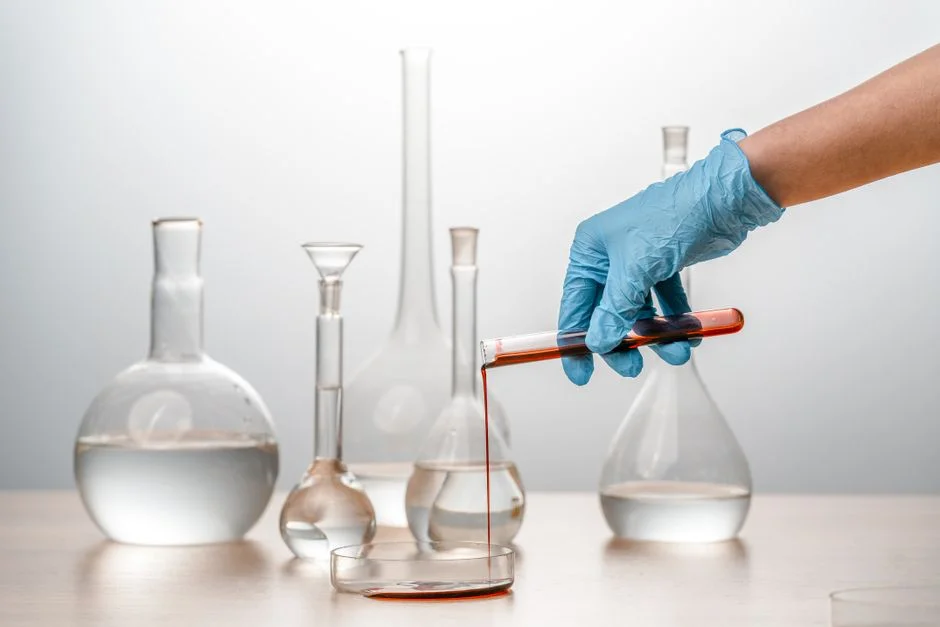
The single most common commissioning failure on amino acid lines is feeding unconditioned fermentation sludge into the press and watching the cloth blind inside an hour. Protein and peptide fragments carry a net negative charge at pH 6.5–7.5, so a high-charge cationic flocculant is required to bridge the colloids into a filterable floc. The working recipe is cationic polyacrylamide (CPAM) at 40–60% charge density and 8–12 MDa molecular weight, dosed at 3–8 kg per tonne of dry solids. For plants exporting to markets that restrict synthetic flocculants — Japan, parts of the EU, and organic-certified composting streams — chitosan at 5–10 kg/t DS is a viable bio-based alternative, though it costs 2.5–3× per kilogram and needs 20–30 minutes maturation time.
Conditioning is not optional and must be verified with three KPIs before the press is fed. Capillary suction time (CST) must be ≤20 seconds at 2.5–4.0% w/w feed solids; unconditioned fermentation sludge routinely measures 80–200 seconds and will never form a coherent cake. Sludge volume index (SVI) after flocculation should land at 60–90 mL/g — values above 100 indicate under-dosed polymer, below 50 indicates overdose and wasted reagent. Feed solids to the press should be 2.5–4.0% w/w: below 2% the cycle stretches past 60 minutes, above 5% the chamber fills unevenly and the squeeze phase stalls. These targets are realistic — the BRIN plate-frame study reported only 56% solids removal on unconditioned CaCO3 surrogate, but real fermentation sludge conditioned with CPAM routinely exceeds 90% suspended-solids capture (HydropureWater field data, 2025–2026). Inline maturation and accurate dose control are critical; an automatic polymer dosing skid with flow-paced control holds the CST within ±3 seconds across a 12-hour shift.
Filter Press Sizing Parameters for an Amino Acid Plant
The sizing block below is what an engineer should hand to a vendor for an RFQ on an amino acid dewatering duty. All numbers assume CPAM-conditioned feed at 2.5–4.0% w/w DS, target cake ≥35% DS, and 20–45 minute cycle time.
| Parameter | Typical range | Engineering note |
|---|---|---|
| Filtration area | 0.8–1.5 m² per m³/h of feed | Rule of thumb; adjust upward for cake thickness >32 mm |
| Cake thickness | 25–32 mm | Thinner cakes dry faster but reduce chamber volume |
| Chamber volume | 0.6–1.0 L per m² per mm cake | Size to buffer 8–12 h of sludge generation |
| Feed pressure | 6–10 bar | Higher pressure does not compensate for poor conditioning |
| Squeeze pressure (diaphragm) | 15–30 bar | Holds 10–15 min; main driver of final cake DS |
| Hydraulic closing force | 15–25 MPa (50–200 m² presses) | Scales to 30 MPa above 200 m² |
| Plate material | PP (polypropylene) | Standard for pH 5–9, <60 °C |
| Filter cloth | Multifilament polyester, 80–120 µm | Replace every 6–10 months under amino acid duty |
| Control | PLC with pressure transducer + cycle counter | Standard for 2026 procurements; supports remote SCADA |
A practical example: a 30 m³/h fermentation ETP targeting 35% DS cake and 35-minute cycles needs a 30 m² press at 30 mm cake, expanding to 60–80 m² if the operator wants to run a single batch per shift rather than two.
Filter Press vs. Decanter Centrifuge vs. Belt Press for Fermentation Sludge
The three mechanical dewatering options differ enough on cake dryness, CAPEX, and operating profile that the choice should be made on the basis of flow rate, downstream disposal route, and odor-control obligations rather than vendor preference. The table below summarizes the trade-offs as of 2026 for an amino acid fermentation stream conditioned with CPAM.
| Criterion | Plate-and-frame / diaphragm press | Decanter centrifuge | Belt press |
|---|---|---|---|
| Cake dryness (% DS) | 30–45 | 22–30 | 18–25 |
| Solids capture (%) | ≥95 | 85–92 | 85–90 |
| Polymer consumption (kg/t DS) | 3–8 | 2–5 | 4–10 |
| Relative CAPEX (2026) | 1.0 (baseline) | 0.8–0.9 | 0.4–0.6 |
| OPEX (USD per m³ feed) | 3–6 | 4–7 | 2–4 |
| Footprint | Large, batch | Compact, continuous | Long, continuous |
| Odor / ammonia containment | Moderate (enclosed models available) | Best (fully enclosed) | Worst (open belt) |
| Feed solids tolerance | 1.5–5.0% w/w | 2.0–6.0% w/w | 0.8–2.5% w/w |
| Best-fit flow range | 5–80 m³/h | 10–150 m³/h | 5–40 m³/h |
The filter press wins on cake dryness, which is the dominant variable for hauling and landfill cost. CAPEX is highest by 20–30% versus a decanter of equivalent hydraulic capacity, but for flows above 20 m³/h the volume reduction of 75–85% pays back the CAPEX delta in 12–24 months through lower tonnage fees. The centrifuge is the better choice when odor or ammonia control drives the design — it is fully enclosed and continuous — and the belt press only makes economic sense below 15 m³/h on streams that are already well-thickened. For plants above 50 m³/h, a hybrid train is often the most defensible answer: centrifuge for thickener underflow (handles the bulk flow continuously) followed by a filter press for the fine biosolids polish (drives the cake to >38% DS for incineration). The full head-to-head data is in the filter press vs screw press comparison guide, which uses the same cost methodology.
Filtrate Quality and Discharge Compliance
Filter press filtrate is not a treated effluent — it is a side stream that must return to upstream biological treatment. From a well-conditioned press, the filtrate typically carries COD 800–2,500 mg/L, NH3-N 200–600 mg/L, and SS 100–300 mg/L, with the high ammonia reflecting the fermentation broth itself rather than any failure of the press. Routing this stream directly to the outlet will breach every major discharge standard; it must recycle to the anoxic/oxic basin or to an MBR polish stage.
Three regulatory anchors govern compliance for amino acid plants. In China, GB 8978-1996 second-tier limits apply to fermentation effluents (COD ≤300 mg/L, NH3-N ≤25 mg/L at the outlet after biological treatment). In the EU, the Industrial Emissions Directive 2010/75/EU sets BAT-AELs for the food, drink, and milk sector that fermentation plants are benchmarked against. In the United States, EPA 40 CFR Part 413 covers the fermentation industry with BPT, BAT, and BCT limits depending on subcategory. For plants targeting water reuse, pairing the press with an MBR membrane bioreactor brings residual COD below 50 mg/L and SS below 5 mg/L — comfortably inside reuse thresholds for cooling-tower makeup and CIP rinsing.
2026 Cost and ROI Snapshot for a Plate-and-Frame Press
Procurement will challenge every CAPEX line item, so the numbers below are stated in 2026 USD on an FOB China basis for a hydraulic PLC unit, and should be scaled by ±15% for Western European or North American supply. All OPEX figures assume CPAM dosing at 5 kg/t DS and a 35-minute cycle on a 60 m² press running 16 hours per day.
| Cost element | 2026 benchmark | Notes |
|---|---|---|
| CAPEX, 1–50 m² hydraulic PLC | USD 18,000–22,000 per m² | Includes hydraulic pack, PLC panel, cloth set |
| CAPEX, 50–100 m² | USD 15,000–18,000 per m² | Bulk plate pricing kicks in |
| CAPEX, 100–500 m² | USD 12,000–15,000 per m² | Economy of scale on frame fabrication |
| OPEX — polymer (CPAM) | 35–45% of total | USD 2.5–4.0 per kg, 3–8 kg/t DS dose |
| OPEX — power | 15–20% | Hydraulic pack + feed pump dominate |
| OPEX — cloth replacement | 20–25% | Every 6–10 months on amino acid duty |
| OPEX — labor | 15–20% | One operator per 1–2 presses on PLC |
| Total OPEX per m³ feed | USD 3–6 | Excludes sludge hauling |
| Payback period | 12–24 months | When haul cost > USD 30/tonne and volume is reduced 75–85% |
The payback math is straightforward. A 50 m³/h ETP producing 600 m³/d of 2% DS thickened sludge (12 t DS/d) currently hauls roughly 100 m³/d of liquid sludge at USD 30/tonne disposal. After the press, the same plant produces 30 m³/d of 38% DS cake (11.4 t DS/d) and hauls 30 m³/d at the same rate — a 70 m³/d reduction that, at USD 30/tonne, returns roughly USD 60,000–75,000 per month against a USD 600,000–900,000 CAPEX. Payback lands at 10–14 months before any polymer savings are credited. The full cost model and the centrifuge cross-check are in the high-strength organic wastewater treatment cost guide for 2026.
Frequently Asked Questions
What cake dryness can a filter press realistically achieve on amino acid fermentation sludge?
A diaphragm (membrane) plate-and-frame press on CPAM-conditioned fermentation sludge at 2.5–4.0% w/w feed DS achieves 38–45% DS, compared with 30–35% DS for a recessed-plate press on the same feed. Cake above 40% DS is typically heapable and suitable for direct incineration without auxiliary dewatering.
How much cationic polyacrylamide does a fermentation plant need per tonne of dry solids?
Working dose is 3–8 kg of CPAM (40–60% charge density, 8–12 MDa molecular weight) per tonne of dry solids, with 5 kg/t DS as a typical mid-point. Under-dosed sludge fails the CST ≤20 s target and blinds the cloth; overdose above 10 kg/t DS consumes reagent without improving cake dryness and increases OPEX by 20–35%.
Can the filter press filtrate be discharged directly to the environment?
No. Press filtrate typically contains COD 800–2,500 mg/L, NH3-N 200–600 mg/L, and SS 100–300 mg/L, which exceeds GB 8978-1996 second-tier limits, EU IED BAT-AELs, and EPA 40 CFR Part 413. The filtrate must return to the upstream biological stage (anoxic/oxic or MBR) for ammonia and COD removal before final discharge or reuse.
What is the smallest plate-and-frame press that makes economic sense for a fermentation ETP?
For amino acid duty, a 20–30 m² press is the practical minimum — large enough to deliver a 30-minute cycle and 35% DS cake at 5–10 m³/h feed, small enough to keep CAPEX below USD 600,000. Below 10 m², the cycle time stretches past 60 minutes and labor cost per m³ of cake rises sharply; above 200 m², a second press or a centrifuge pre-thickener should be evaluated instead.