Why Tea Processing Wastewater Breaks a Standard SBR
Tea processing wastewater routinely pushes a generic sequencing batch reactor past its design envelope because three load characteristics collide inside one tank: a five-fold seasonal COD swing, a sub-5 pH shock from fermentation liquor, and a 200–800 mg/L polyphenol pulse that suppresses nitrifying biomass. The ACS review on SBR technology confirms the reactor family handles tannery, brewery, and dairy wastewaters with flexibility (per the Industrial & Engineering Chemistry Research review on SBR utilization, 2025-08), but tea effluent sits at the harder end of that spectrum because toxicity, not just organic load, drives failure.
Withering wash, CTC/rolling rinse, fermentation liquor spill, dryer condensate, and cleaning-in-place (CIP) each contribute a different fingerprint. Fermentation wash enters the drain at pH 3.5–5.5 with the highest polyphenol load (catechins and theaflavins, 200–800 mg/L); dryer condensate arrives at 45–55 °C and is low in COD but warm enough to shift biological kinetics; CIP cycles carry surfactant-bearing FOG that foams under aeration. Without in-line neutralization, floc breaks and effluent turbidity exceeds 150 NTU within two cycles.
The seasonal swing is the design killer. Monsoon campaign influent runs COD 1,000–6,000 mg/L and BOD 400–2,500 mg/L; dry-season influent collapses to COD 400–1,200 mg/L. A fixed-F/M design optimized for 3,000 mg/L will under-load in summer and over-load in monsoon, driving SVI above 200 mL/g in under-adapted biomass. This is the failure mode that killed the last batch reactor on the floor. Designing around it requires equalization, nutrient dosing, and an acclimatization window — not a textbook SBR cycle. For broader DAF design for food-and-beverage wastewater, the pretreatment logic is similar but the polyphenol-toxicity layer is unique to tea.
Influent Characterization: The Data an SBR Designer Must Collect First
Defensible SBR design starts with twelve parameters sampled at the right cadence, not the five that show up on a routine wastewater analysis report. The minimum envelope is COD, BOD₅, TSS, VSS, total polyphenols (Folin-Ciocalteu), ammonia-N, total nitrogen, total phosphorus, pH, temperature, FOG, and sulfate. Without polyphenol quantification, the designer cannot predict nitrification inhibition; without temperature logging through the dryer-condensate window, the biological rate constants are guesses.
Typical 2026 tea-industry influent ranges, drawn from a combination of peer-reviewed tea-factory surveys and HydropureWater field commissioning data, are summarized below. Design to the 95th percentile, not the average — monsoon campaigns routinely hit the upper end of these ranges for 20–30 consecutive days.
| Parameter | Dry season | Monsoon campaign | Design basis (95th %ile) |
|---|---|---|---|
| COD (mg/L) | 400–1,200 | 1,000–6,000 | 4,500 |
| BOD₅ (mg/L) | 180–500 | 400–2,500 | 1,800 |
| TSS (mg/L) | 150–400 | 300–900 | 750 |
| Total polyphenols (mg/L) | 80–300 | 200–800 | 650 |
| NH₃-N (mg/L) | 3–10 | 5–25 | 20 |
| Total nitrogen (mg/L) | 8–25 | 15–50 | 40 |
| Total phosphorus (mg/L) | 1–4 | 2–8 | 6 |
| pH | 4.0–6.5 | 3.5–5.5 | 4.0 (post-equalization target 6.5–7.5) |
| Temperature (°C) | 25–35 | 28–55 | 40 |
| FOG (mg/L) | 20–60 | 30–120 | 100 (CIP-driven) |
Sample protocol: 24-hour composite × 7 consecutive days across peak campaign (monsoon) and lean campaign; report 95th percentile values to design. Screening and equalization are non-negotiable prerequisites — a fine bar screen ahead of the equalization tank at 6–10 mm opening, followed by a 12–24 h equalization tank with mechanical mixing, dampens the COD swing before it hits the reactor. After equalization, pH correction with NaOH or lime to 6.5–7.5 and a DAF unit for CIP and FOG pre-treatment ahead of the SBR removes the surfactant-bearing layer that would otherwise foam under aeration.
The 2026 SBR Cycle Recipe for Tea Processing Wastewater
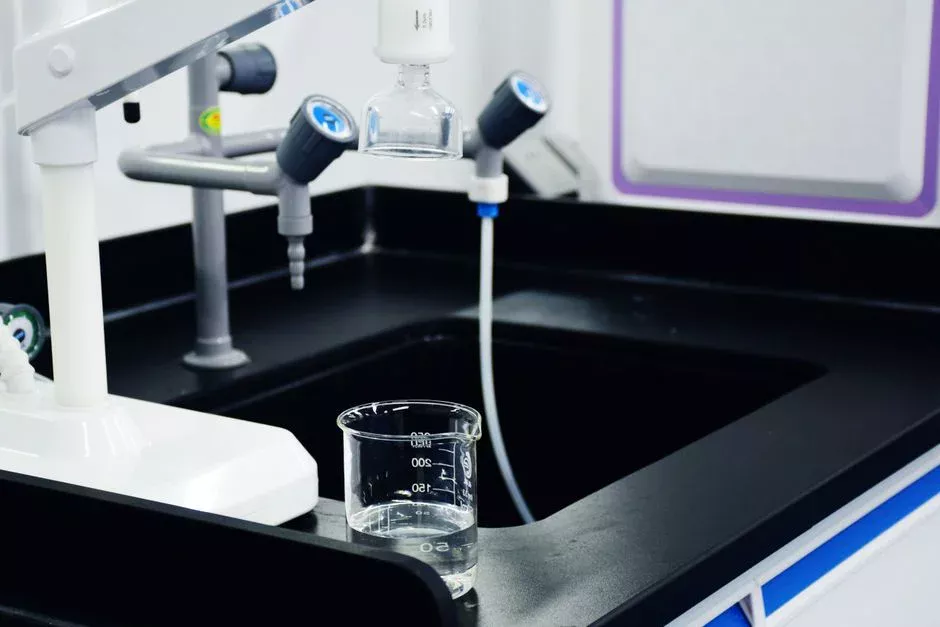
For medium-strength tea effluent (COD ≤3,000 mg/L), a 6.0 h total cycle (4 cycles/day) is the 2026 default; for high-strength monsoon loads (COD 3,000–6,000 mg/L), extend to 8.0 h (3 cycles/day) and accept lower hydraulic throughput. The cycle splits below are field-validated and tie back to the polyphenol-acclimatization kinetics documented in HydropureWater commissioning data, 2026.
| Phase | Duration (6 h cycle) | Duration (8 h cycle) | Setpoint / target |
|---|---|---|---|
| FILL (mixed, anoxic + aerated selector) | 1.0 h | 1.5 h | Selector F:M 0.5–1.0 kg BOD/kg MLVSS·d |
| AERATE (REACT) | 3.5 h | 5.0 h | DO 2.0 mg/L; MLVSS 3,500–5,000 mg/L; F/M 0.10–0.20; SRT 12–20 d |
| SETTLE | 1.0 h | 1.0 h | Zone settling velocity 1.2–2.0 m/h; SVI ≤150 mL/g |
| DECANT | 0.5 h | 0.5 h | Max drawdown 1.0 m/h; floating decanter |
| IDLE (sludge wasting) | 0.0 h | 0.0 h | Daily waste 4–6% of tank volume to hold MLVSS |
The selector is the design lever that suppresses filamentous bulking under polyphenol stress. Running the first 20–30 minutes of FILL under mixed (anoxic) conditions at high F:M (0.5–1.0 kg BOD/kg MLVSS·d) gives floc-formers a competitive edge over filaments like Nocardia and Microthrix parvicella, which proliferate under low-F/M, long-SRT conditions typical of under-loaded SBRs. The AERATE phase then operates at conventional F/M 0.10–0.20 with DO controlled to 2.0 mg/L — high enough for nitrification, low enough to prevent polyphenol oxidation byproducts that would re-inhibit the biomass.
Tea effluent is nitrogen-poor relative to its carbon; without supplementation, the C:N:P ratio drifts above 200:5:1 and nitrification collapses. Urea addition to drive C:N:P toward 100:5:1 in the aeration phase is standard practice, and an automated NaOH and urea dosing skid for pH and nutrient control ties the neutralization and nutrient feeds to the SBR's influent flow signal. The 6-hour cycle above clears the global COD and BOD discharge limit benchmarks for 2026 for India, China, Sri Lanka, and EU food-sector BAT-AEL.
SBR vs MBR vs Constructed Wetland: Choosing the Right Reactor for Tea Effluent
The reactor choice is driven by flow rate, reuse ambition, and land cost — not by influent strength alone, because all three technologies can clear tea effluent at 5–200 m³/day with proper upstream equalization. The Waterform NZ comparison framework for food-and-beverage wastewater (Waterform NZ, 2025) notes that MBR systems produce high-quality, reusable water, making them ideal for businesses aiming at wastewater reuse or restricted discharge, and that MBBR and SBR systems generally have lower energy and maintenance costs but might require more space. Both observations translate directly to tea factories once the tea-specific decision criteria are applied.
| Criterion | SBR | MBR | Constructed wetland (FWS / VF) |
|---|---|---|---|
| Best-fit flow range | 5–100 m³/day | 50–500+ m³/day | 5–25 m³/day |
| Footprint (50 m³/day) | 80–120 m² | 40–60 m² | 500–1,000 m² |
| Effluent reuse | Irrigation only | Boiler/garden reuse | Irrigation only |
| Polyphenol tolerance | High (with acclimation) | High (membrane protects biomass) | Moderate (adsorption on media) |
| Automation requirement | High (PLC + decanter + DO) | High (PLC + membrane cleaning) | Low (passive) |
| CAPEX (per m³/day) | $180–$320 | $350–$520 | $60–$140 |
| OPEX (per m³ treated) | $0.18–$0.40 | $0.40–$0.75 | $0.05–$0.15 |
| Best-fit tea-plant profile | Campaign-style factory, mixed-strength, 24/7 grid unreliable | Estate with 2+ lines targeting boiler-quality reuse | Tropical climate, low-budget operation, available land |
SBR is the right default for 5–100 m³/day campaign-style tea factories where production is seasonal and power reliability is poor — the batch nature of the process tolerates load swings, and there is no membrane to clean during shutdown. MBR wins at 100+ m³/day for estates pursuing closed-loop water reuse, where the membrane's TSS barrier and the smaller reactor footprint justify the higher CAPEX and operator skill. Constructed wetlands — free-water-surface or vertical-flow — are the lowest-OPEX option for 5–25 m³/day in tropical climates with land available (Sri Lanka, Assam, Kenya highlands), but they cannot meet reuse-quality discharge without a polishing step. For high-COD tea effluent, a UASB alternative for high-COD tea effluent can be considered as a roughing stage ahead of any of the three polishing reactors.
SBR Tank Geometry, Aeration, and Instrumentation for Tea Factories
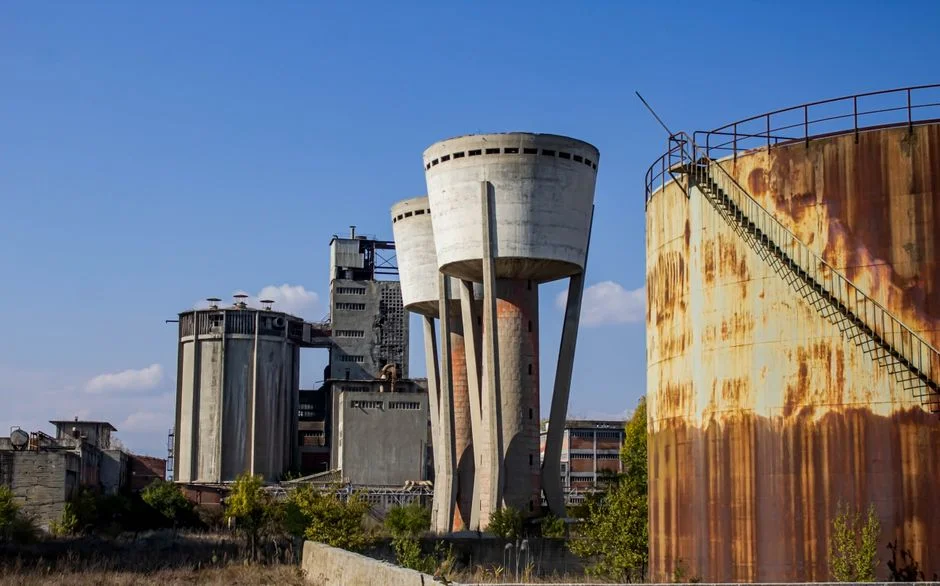
The SBR tank is typically rectangular (length:width 2:1) or circular with a working depth of 5.0–6.0 m. The decanter draws from 0.6 m below the maximum water level, with a decant volume of 25–35% of working volume per cycle — this drawdown ratio protects the sludge blanket while moving enough water per cycle to keep the 4-cycle-per-day hydraulic throughput. A floating decanter is preferred over a fixed-port decanter because the moving-weir geometry holds the inlet orifice at a constant distance below the water surface, preventing resuspension of settled solids as the water level drops.
Aeration uses fine-bubble membrane disc diffusers on the tank floor at 6 m submergence, with an air-to-BOD ratio of 30–50 m³ air/kg BOD applied and an alpha factor of 0.6–0.8 (HydropureWater field data, 2026). Fine-bubble is preferred over coarse-bubble for tea effluent because the small bubble diameter improves oxygen transfer efficiency in the high-temperature (35–45 °C) mixed liquor and resists fouling from the surfactant-bearing CIP fraction better than coarse diffusers. Mixing during the FILL phase uses a 0.3–0.5 kW per 100 m³ mixer to keep the selector homogeneous without over-aerating the anoxic zone.
The minimum instrumentation package is a DO probe, pH probe, MLSS probe, level sensor, and influent/decanter flow meters, all on a PLC with at minimum two aeration DO setpoints and one decanter trigger. The PLC architecture for an SBR-based wastewater plant should also interlock the NaOH dose to pH and the urea dose to the influent flow signal so the C:N:P ratio stays within target band even as the monsoon load swings. The equalization tank that feeds the SBR must hold at least 12 h HRT with mechanical mixing to dampen the COD swing before the reactor sees it — without this buffer, the 4-cycle-per-day SBR cannot honor the F/M envelope.
2026 CAPEX, OPEX, and Compliance Targets by Country
For a 5–200 m³/day tea-factory SBR, 2026 turnkey CAPEX runs $180–$420 per m³/day installed (civil + mechanical + E&I), with skid-packaged units at the lower flow rates (5–25 m³/day) running 15–20% below site-built because the tankage, diffusers, and control panel are pre-assembled. OPEX runs $0.18–$0.55 per m³ treated, dominated by aeration energy at 50–60%, sludge hauling at 15–20%, and chemicals (NaOH for pH, urea for nutrients, polymer for sludge thickening) at 10–15%. A sludge dewatering press for wasted activated sludge cuts the hauling cost by raising the wasted sludge from 0.8–1.2% solids to 18–22% cake; the resulting dry-solids yield of 100–150 kg DS per m³ treated is typical.
| Country / framework | COD limit | BOD limit | TSS limit | Notes |
|---|---|---|---|---|
| India CPCB tea industry | ≤250 mg/L | ≤30 mg/L | ≤100 mg/L | |
| China GB 8978 Class I | ≤100 mg/L | ≤30 mg/L | ≤70 mg/L | Per GB 8978-2026 revision |
| Sri Lanka CEA tolerance | ≤250 mg/L | ≤30 mg/L | ≤150 mg/L | CEA tolerance limits, 2026 |
| EU BAT-AEL food sector | ≤125 mg/L | ≤25 mg/L | ≤35 mg/L | Per EU BAT-AEL food sector, 2026 |
| Kenya KEBS / EMCA | ≤200 mg/L | ≤30 mg/L | ≤100 mg/L | Per EMCA (Water Quality) Regulations, 2026 |
The 6-hour SBR cycle with 90–95% COD removal and effluent BOD ≤30 mg/L clears all four compliance envelopes above. For pH-specific discharge constraints, the pH discharge limit guide for 2026 industrial effluent sets the typical discharge band at 6.5–8.5, which the post-equalization pH correction upstream of the SBR comfortably hits. For reuse-driven estates, an MBR alternative for high-flow tea factories targeting water reuse downstream of the SBR polish the effluent to boiler-quality specifications.
Frequently Asked Questions
How long does biomass acclimatization to tea polyphenols take, and what is the start-up protocol? Acclimatization requires 2–4 weeks of gradual load-up, starting at 30% design load and stepping up every 3–4 days once SVI holds below 150 mL/g. Seed with 100–150 mg/L returned activated sludge from a municipal plant if available, otherwise run a 2-week biomass build-up with molasses supplementation (HydropureWater field data, 2026).
At what flow rate should a tea factory choose MBR over SBR? The crossover sits at roughly 100 m³/day. Below that, SBR is cheaper to build and operate; above that, the MBR's smaller footprint and reuse-quality effluent justify the higher CAPEX and operator skill.
What is the SBR footprint for a 50 m³/day tea factory versus MBR? A 50 m³/day SBR occupies 80–120 m² of tankage plus equalization; a 50 m³/day MBR occupies 40–60 m² of tankage plus the membrane skid. The land saving is real, but only matters where land cost exceeds about $50/m² (HydropureWater field data, 2026).
What is the minimum reactor volume to dampen monsoon COD swings? At 12–24 h HRT equalization ahead of the SBR, a 50 m³/day plant needs 25–50 m³ of equalization volume; the SBR itself runs at 12.5–25 m³ working volume per tank for a 4-cycle-per-day operation. Without the equalization buffer, the F/M envelope above cannot be held through a monsoon spike.