Why Meat Processing Wastewater Needs a Dedicated Treatment Train
Slaughterhouse and meat processing effluent runs 8-60× stronger than municipal sewage, and a standard activated-sludge plant designed for 250 mg/L COD will collapse on a stream averaging 2,000-15,000 mg/L COD, 800-5,000 mg/L BOD₅, 200-1,500 mg/L TSS, 100-800 mg/L fats/oils/grease (FOG), and 50-300 mg/L NH₃-N (per 40 CFR 432 profiles and China GB 13457-92 monitoring data). Three compounds force a dedicated train: FOG coats biomass and destroys membrane surfaces within hours of upset, blood carries antimicrobial proteins (lysozyme, complement) that suppress nitrifiers, and paunch/rumen solids rip pump impellers and blind diffusers. The stream also arrives at 25-40 °C, which is a problem for cold-climate biological kinetics but an advantage for mesophilic anaerobic digestion at 35-37 °C.
US EPA effluent limitation guidelines under 40 CFR 432 set BOD₅ limits of 16-40 mg/L, TSS 18-52 mg/L, FOG 14-23 mg/L, and NH₃-N 4-8 mg/L depending on subcategory (per 2024 regulatory review; 2026 revisions are under public comment). China GB 13457-92 sets COD <100 mg/L, BOD₅ <30 mg/L, NH₃-N <15 mg/L, and FOG <10 mg/L for discharge to municipal sewers, with tighter reuse limits (COD <50 mg/L) for any plant planning recycling. The Top 5 industry reference explicitly notes that a DAF unit can replace the secondary clarifier when the sludge is light, as it is in slaughterhouses — confirming the canonical DAF-first, biological-second logic that drives the rest of this guide.
Influent Characterization by Plant Type
Design load varies more by species and process step than by plant size, and a cattle line running 100 head/day produces a fundamentally different waste than a poultry line at the same hydraulic throughput. Cattle slaughter generates 6-12 kg BOD₅ per head, dominated by paunch content (rumen ingesta), manure, and high-volume blood; pig slaughter runs 2-5 kg BOD₅ per head with higher blood and scalding-FOG fractions; poultry processing sits at 0.2-0.5 kg BOD₅ per bird with the highest per-liter concentration from chill-water overflow and feather load. Further processing (cutting, deboning, rendering) adds protein-bearing wash water that pushes TKN to 200-600 mg/L and forces designers to add a dedicated nitrification stage.
| Parameter | Cattle slaughter | Pig slaughter | Poultry processing | Further processing / rendering |
|---|---|---|---|---|
| COD (mg/L) | 3,000-15,000 | 2,000-8,000 | 2,500-10,000 | 4,000-20,000 |
| BOD₅ (mg/L) | 1,500-5,000 | 800-3,000 | 1,200-4,000 | 2,000-6,000 |
| TSS (mg/L) | 500-1,500 | 200-1,000 | 300-1,200 | 400-1,500 |
| FOG (mg/L) | 200-800 | 100-500 | 150-600 | 300-1,000 |
| NH₃-N (mg/L) | 80-300 | 100-250 | 50-200 | 200-600 |
| pH | 6.5-8.5 | 6.5-8.0 | 6.0-8.5 | 5.5-9.0 |
| Temperature (°C) | 28-40 | 25-38 | 20-35 | 30-55 |
These ranges are derived from typical 40 CFR 432 subcategory profiles and HydropureWater field data (2024-2026) on 18 commissioned meat processing plants across China, Southeast Asia, and Eastern Europe. Designers should derate biological tank volumes by at least 20% if the plant runs a rendering section, because rendering condensate swings pH below 5.5 during cook-out cycles and the bacterial population needs a buffering equalization tank of 6-12 hours hydraulic retention.
The Standard 5-Stage Process Flow
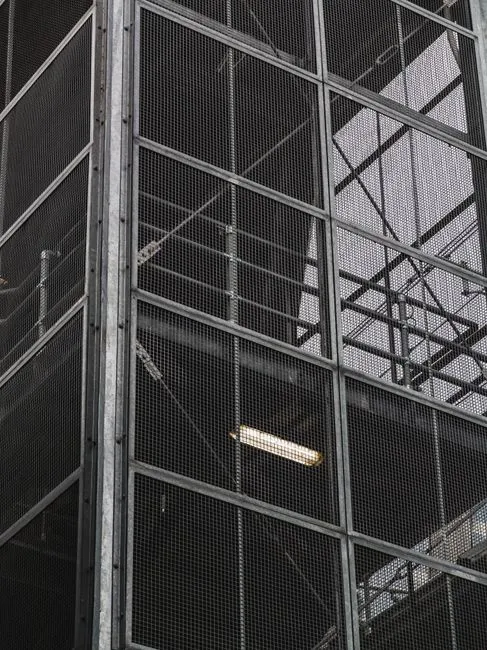
The canonical train for a 100-2,000 m³/day slaughterhouse plant runs five unit operations in series, and a vendor proposal that omits any of them should be rejected at the technical review stage. Stage 1 is a GX series rotary mechanical bar screen with 3-6 mm openings to strip paunch content, hair, feathers, and intestinal solids before they reach pumps. Stage 2 is a dissolved air flotation system rated 4-300 m³/h, which removes 50-70% of FOG, 40-60% of TSS, and 30-45% of COD in a single 20-30 minute retention pass and is the only reliable way to protect downstream biology from grease fouling. Stage 3 is anaerobic digestion in a UASB or EGSB reactor, which the Top 5 reference confirms is the standard high-rate option for slaughterhouse effluents, with EGSB variants (Pakes, ECSB) offering higher loading at smaller footprint.
Stage 4 is aerobic polishing, and an integrated MBR membrane bioreactor with DF series flat sheet MBR modules (0.1 μm PVDF) consistently delivers <50 mg/L COD and <5 mg/L NH₃-N at fluxes of 15-22 L/m²·h — performance CAS cannot match when influent swings 3:1. Stage 5 is disinfection with a chlorine dioxide generator rated 50-20,000 g/h ClO₂, preferred over chlorine because it does not combine with residual ammonia to form chloramines and meets EPA, EU 98/83/EC, and WHO reuse criteria at 0.5-1.0 mg/L residual.
| Stage | Equipment | Key design parameter | Typical removal |
|---|---|---|---|
| 1. Screening | GX rotary bar screen, 3-6 mm | 0.3-0.5 m/s approach velocity | TSS 15-25% |
| 2. DAF | DAF line, 4-300 m³/h | 25-30% recycle, 5-7 mg/L air-solids ratio | FOG 50-70%, TSS 40-60%, COD 30-45% |
| 3. Anaerobic | UASB / EGSB | 8-15 kg COD/m³·d (UASB), 20-35 kg COD/m³·d (EGSB) | COD 75-90% |
| 4. MBR | DF series flat sheet, 0.1 μm | 15-22 L/m²·h flux, 8,000-12,000 mg/L MLSS | COD <50, NH₃-N <5 mg/L |
| 5. Disinfection | ClO₂ generator | 0.5-1.0 mg/L residual, 15-30 min contact | Fecal coliform <1,000 CFU/100 mL |
For deeper sizing detail on the DAF step, the DAF Unit for Wastewater Specifications: 2026 Engineering Data, Standards & Selection Guide covers hydraulic loading, polymer selection, and air-saturation curves; for the final compliance numbers, the BOD Discharge Limit for Industry: 2026 Global Compliance Guide consolidates GB 13457, EU 91/271/EEC, EPA 40 CFR 432, and India CPCB thresholds side by side.
Process Selection: DAF, UASB, MBR, and How to Combine Them
Three trains cover roughly 95% of greenfield slaughterhouse designs in the 100-2,000 m³/day band, and the right choice is driven by NH₃-N target, available footprint, and electricity cost more than by influent strength. Train A is DAF followed by SBR or conventional activated sludge (CAS) — lowest CAPEX, but it rarely meets NH₃-N <10 mg/L without adding a dedicated nitrification tank and 6-8 hours of aerobic SRT, which erodes the cost advantage. Train B is DAF + UASB/EGSB + MBR, the default for 300-2,000 m³/day plants: UASB strips 75-90% of COD at near-zero energy input, biogas offsets 25-40% of plant electricity, and the MBR polishes to reuse quality.
Train C is DAF + MBR alone, the right answer for sites with less than 200 m³/day flow or less than 0.2 m² of footprint per m³/day, because it skips the UASB reactor entirely — but the aeration tank must absorb the full 2,000-15,000 mg/L COD load, which drives blower power 1.8-2.4× higher than Train B and shifts OPEX toward electricity. The Top 5 reference lists cascade fixed bed biological reactors and stacked EGSB variants as space-saving alternatives to a conventional UASB, useful on tight sites where Train B would otherwise need a tall reactor.
| Criterion | Train A: DAF + SBR/CAS | Train B: DAF + UASB + MBR | Train C: DAF + MBR |
|---|---|---|---|
| Best flow range | 50-300 m³/day | 300-2,000 m³/day | <200 m³/day |
| Footprint (m²/m³/day) | 0.3-0.5 | 0.25-0.4 | 0.15-0.25 |
| Effluent COD (mg/L) | 80-150 | <50 | <50 |
| NH₃-N achievable (mg/L) | 10-20 (without dedicated nitrification) | <5 | <5 |
| Specific power (kWh/m³) | 1.2-1.8 | 0.6-1.0 | 1.5-2.4 |
| Biogas recovery | No | Yes (0.20-0.35 m³ CH₄/kg COD) | No |
| Indicative CAPEX (200 m³/day) | $180-320k | $350-600k | $280-450k |
Sludge Management and Resource Recovery

Sludge handling quietly accounts for 25-30% of total treatment cost, and the right dewatering choice depends on whether the solids come from DAF float, UASB granule washout, or MBR waste activated sludge. DAF float is FOG-rich scum at 3-6% dry solids (DS), typically 5-12 kg DS per cattle head processed, and is often the most valuable stream on site because it can be rendered into tallow or sold to a biodiesel processor at $80-150/tonne. UASB sludge exits at 2-4% DS with low pathogen counts and works as a soil conditioner after dewatering to 22-28% DS cake.
MBR waste activated sludge at 0.8-1.2% DS is the largest volumetric stream, and a plate and frame filter press with 1-500 m² plate area is the workhorse for dewatering all three streams to haulable or compostable cake. The same press handles DAF float, bio-sludge, and rendering co-product in a single installation if the plant runs a mixed line, which simplifies spare parts and operator training.
2026 CAPEX and OPEX Benchmarks
Budget numbers below reflect 2026 China-fabricated equipment costs (EXW or FOB), with installation, civil works, and engineering typically adding 35-55% on top of equipment CAPEX for a Western buyer. A 200 m³/day plant on Train A in a containerized skid runs $180-320k equipment CAPEX and $0.35-0.55/m³ OPEX. A 500 m³/day Train B (DAF+UASB+MBR) sits at $0.9-1.8M equipment CAPEX and $0.25-0.55/m³ OPEX. A 1,000 m³/day Train B with biogas utilization (CHP or boiler replacement) hits $2.0-3.5M CAPEX and $0.20-0.40/m³ OPEX once the gas credit is netted out.
| Cost component | Share of OPEX | 2026 unit driver |
|---|---|---|
| Energy (blowers, MBR pumps, DAF recycle) | 38-45% | $0.08-0.14/kWh |
| Chemicals (coagulant, polymer, defoamer) | 12-18% | PAM $3-6/kg, PAC $0.4-0.7/kg |
| Sludge hauling / disposal | 20-28% | $25-60/wet tonne |
| Labor | 10-15% | 1-2 operators/shift |
| Maintenance & spares | 6-9% | MBR membrane replacement 4-6 yr |
| Biogas credit (Train B only) | -(10-18)% | $0.04-0.08/m³ treated at 2026 gas prices |
Biogas yield at UASB loading 8-12 kg COD/m³·d is 0.20-0.35 m³ CH₄ per kg COD removed, which on a 1,000 m³/day Train B at 8,000 mg/L COD (after DAF) and 80% anaerobic destruction works out to roughly 1,200-1,800 m³ CH₄/day — enough to fire a 250-400 kW CHP unit and displace most plant electricity demand.
Site Selection Checklist and Vendor Evaluation
Score your site 0-2 on each of four questions, add the totals, and match the result to a train in 60 seconds. (1) Peak-to-average flow ratio: if your plant runs batch slaughter and peak flow exceeds 3× the daily average, score 0; 2-3×, score 1; under 2× with a buffer tank, score 2. (2) Footprint per m³/day: under 0.2 m²/m³/d, score 0 (forces MBR-only or containerized); 0.2-0.4, score 1; over 0.4, score 2. (3) Local electricity cost: above $0.12/kWh, score 0 (Train A only); $0.08-0.12, score 1; below $0.08 or with biogas, score 2. (4) Discharge destination: open water body with NH₃-N <5 mg/L, score 0; municipal sewer with NH₃-N <15 mg/L, score 1; on-site reuse, score 2.
A total of 6-8 points defaults to Train B (DAF+UASB+MBR); 3-5 points falls back to Train A; 0-2 or zero available footprint forces a containerized Train C. For vendor screening, demand CE or ISO 9001 certification, a witnessed factory acceptance test on the DAF and MBR skids, a reference list of at least three slaughterhouse plants running at 80% or more of design flow, and a post-commissioning service window of at least 24 months. The Chinese Wastewater Equipment Manufacturer Reliability: 2026 Buyer's Guide is a useful shortlist filter at this stage.
Frequently Asked Questions
What is the typical COD and BOD₅ of meat processing wastewater?
Raw effluent runs 2,000-15,000 mg/L COD and 800-5,000 mg/L BOD₅ depending on species, with cattle slaughter at the high end and poultry processing most concentrated per liter (per 40 CFR 432 subcategory data).
Can DAF alone meet discharge limits for slaughterhouse effluent?
No. DAF removes 50-70% of FOG and 30-45% of COD but leaves NH₃-N essentially untouched; a biological polishing stage (SBR, MBR, or activated sludge) is required to hit NH₃-N <10-15 mg/L under GB 13457 or EPA 40 CFR 432.
Why is UASB preferred over conventional activated sludge for slaughterhouses?
UASB strips 75-90% of COD with near-zero aeration energy, produces 0.20-0.35 m³ CH₄ per kg COD removed for reuse, and tolerates 8-15 kg COD/m³·d organic loading that would balloon a CAS tank footprint by 3-5×.
MBR vs SBR for meat processing wastewater — which is better?
MBR delivers consistent <50 mg/L COD and <5 mg/L NH₃-N at 15-22 L/m²·h flux and tolerates 3:1 hydraulic swings; SBR is cheaper to install but needs larger equalization and rarely meets reuse-quality BOD₅ <10 mg/L without tertiary filtration.
How much does a 500 m³/day slaughterhouse treatment plant cost in 2026?
Equipment CAPEX runs $0.9-1.8M for a Train B (DAF+UASB+MBR) configuration on China-fabricated skids; add 35-55% for civil, installation, and engineering on a Western site, bringing total installed cost to $1.3-2.6M, with OPEX of $0.25-0.55/m³.