Why Chilean Dairy Plants Need a Multi-Stage Treatment Train
Dairy wastewater treatment in Chile combines DAF pre-treatment (80–95% FOG, 60–90% TSS removal), anaerobic digestion via UASB (70–90% COD reduction), and MBR polishing to reach DS 90/2000 limits (BOD5 ≤250 mg/L, SS ≤220 mg/L, oils ≤150 mg/L). For a 200 m³/d plant, 2026 turnkey CAPEX sits between US$420K and US$780K, with OPEX of US$0.55–US$0.95 per m³ treated.
Untreated dairy effluent is one of the strongest waste streams a food plant will ever generate. Typical Chilean dairy influent runs COD 2,000–10,000 mg/L, BOD5 1,200–4,800 mg/L, TSS 300–1,500 mg/L, FOG 200–800 mg/L, TN 60–300 mg/L, and TP 30–150 mg/L (per the ScienceDirect dairy review literature, 2017–2019). On top of that, a single cheese or whey-processing line can swing pH from 4 to 11 inside one shift, which is enough to crash an unaided activated-sludge tank within hours.
Chile processes roughly 2.65 billion liters of milk per year (ODEPA 2024–2025 bulletin data), spread across more than 400 receiving plants, many of which discharge into rivers and channels regulated by SISS. A single-stage aerobic design fails for three reasons: FOG shocks strip biomass and destroy floc, equalization alone cannot break emulsified oils, and the aeration volume required to push BOD below 50 mg/L typically exceeds 1,000 m³ for a 200 m³/d plant. The regulatory ceiling the train must clear is DS 90/2000 (MOP) — BOD5 ≤250 mg/L, SS ≤220 mg/L, oils & greases ≤150 mg/L — but site-specific SISS resolutions routinely tighten BOD5 to ≤35 mg/L for sensitive receiving waters in the Osorno, Llanquihue, and Maipo basins.
The 2026 Process Train: DAF → Equalization → UASB → MBR
The defensible 2026 design for a Chilean dairy plant is a four-stage train, with an optional fifth stage for reuse. Each stage has a measurable job, and each one is mappable to a specific vendor scope of supply.
Stage 1 — DAF pre-treatment. A HydropureWater dissolved air flotation system sized to peak flow strips 80–95% of FOG and 60–90% of TSS before the stream reaches biology. Operating chemistry: PAC 50–150 mg/L as coagulant, plus 0.5–3 mg/L of anionic polymer as flocculant. The DAF micro-bubble generator (30–80 μm bubble size) outperforms coarse-bubble units in FOG capture because the bubble has a higher surface-to-volume ratio and lifts emulsified oil more efficiently.
Stage 2 — Equalization and nutrient balancing. 12–24 h HRT buffer smooths production peaks; pH is corrected to 6.8–7.4 with NaOH or H₂SO₄ dosing; urea and phosphoric acid are dosed as needed to hit a BOD:N:P ratio of roughly 100:5:1 for the downstream biological stage.
Stage 3 — Anaerobic (UASB or EGSB). Operated at 35–37 °C with an OLR of 8–15 kg COD/m³·d and HRT of 24–48 h, the upflow anaerobic sludge blanket delivers 70–90% COD reduction and generates biogas at 0.25–0.40 m³ CH₄ per kg COD removed. The reactor typically runs at 60–80% of design height as a sludge bed, with a three-phase separator at the top.
Stage 4 — MBR polishing. A HydropureWater MBR membrane bioreactor system equipped with DF-series PVDF flat-sheet MBR modules (0.1 μm nominal pore) runs at HRT 6–10 h, MLSS 8,000–12,000 mg/L, and flux 10–18 L/m²·h. Effluent targets: COD <50 mg/L, BOD5 <10 mg/L, TSS <5 mg/L. Flat-sheet geometry gives roughly 60% footprint reduction versus conventional activated sludge with a clarifier.
Optional Stage 5 — RO polishing. Brackish-water reverse osmosis at 70–80% recovery, fed through a multi-media filter that brings SS below 1 mg/L. The permeate is suitable for CIP rinse, boiler feed, or cooling-tower make-up, which materially shifts plant water economics.
| Stage | Unit Operation | HRT | Key Design Parameter | Primary Removal | Effluent Target |
|---|---|---|---|---|---|
| 1 | DAF | 20–40 min | A/S ratio 0.02–0.05 | FOG 80–95%, TSS 60–90% | FOG ≤150 mg/L |
| 2 | Equalization | 12–24 h | BOD:N:P = 100:5:1 | Flow/load buffering | pH 6.8–7.4 |
| 3 | UASB / EGSB | 24–48 h | OLR 8–15 kg COD/m³·d | COD 70–90% | COD 500–1,500 mg/L |
| 4 | MBR (DF flat-sheet) | 6–10 h | Flux 10–18 L/m²·h | COD/BOD/TSS polishing | COD <50, BOD <10, TSS <5 mg/L |
| 5 (opt.) | RO polishing | — | Recovery 70–80% | Dissolved salts | TDS <500 mg/L (reuse) |
Process Parameters and Removal Efficiencies at a Glance
The table below condenses the operating envelope a Chilean process engineer should be holding in their head when they walk into a vendor meeting. Numbers are anchored to the 2017 ScienceDirect membrane review (Bortoluzzi et al.) and the 2019 Kaur review of aerobic and anaerobic dairy treatment methods, cross-checked against HydropureWater field installations in 2025–2026.
A practical anchor: a 200 m³/d dairy wastewater flow typically corresponds to a plant processing on the order of 120,000 L of milk per day, which is mid-scale by Chilean standards (ODEPA 2024–2025) and lines up with the intake volumes reported by mid-tier processors in the Los Ríos region.
| Parameter | DAF | Equalization | UASB | MBR | RO (optional) |
|---|---|---|---|---|---|
| HRT | 20–40 min | 12–24 h | 24–48 h | 6–10 h | — |
| OLR / F / M | A/S 0.02–0.05 | — | 8–15 kg COD/m³·d | F/M 0.05–0.15 kg BOD/kg MLSS·d | Flux 15–25 L/m²·h |
| Removal efficiency | FOG 80–95%, TSS 60–90% | Flow/load smoothing | COD 70–90%, BOD 70–85% | COD up to 95%, TSS >99% | TDS 95–99% |
| Effluent target | FOG ≤150 mg/L | pH 6.8–7.4 | COD 500–1,500 mg/L | COD <50, BOD <10, TSS <5 mg/L | TDS <500 mg/L (reuse) |
| Sludge / byproduct | Float (3–6% DS) | — | Excess biogas 0.25–0.40 m³ CH₄/kg COD | Waste activated sludge | Concentrate (10–15% of feed) |
Choosing the Right Equipment: 2026 Selection Framework
Process design only matters once it lands as a bill of materials. The framework below turns the train into a vendor-ready equipment list, with the decision criteria a Chilean buyer should be putting on the RFQ.
DAF selection. The DAF line covers 13 standard models spanning 4–300 m³/h, so flow matches directly to a skimmer area. Specify micro-bubble flotation (30–80 μm) over coarse-bubble designs for FOG capture; specify a top-mounted spiral scraper and a hinged access cover so the float chamber can be cleared during CIP. Skid-mounted packages with saturator, pump, and polymer make-up tank cut site erection time to roughly 2–3 days.
MBR module selection. Choose DF-series PVDF flat-sheet modules over hollow-fiber when the feed has variable FOG residuals and the plant tariff is high; flat-sheet modules consume 10–20× less energy than cross-flow hollow-fiber because there is no recirculation pump. A single DF module covers 80–225 m² and treats 32–135 m³/d, so a 200 m³/d plant is typically served by 2–3 modules with one redundant.
Pre-screening. A rotary mechanical bar screen ahead of the DAF protects the saturator nozzle and polymer make-up from rags and curd particles; a 2–5 mm aperture is the standard dairy range, with screenings handled to a bin or to a coarse-solids washing step.
Sludge line. Dairy sludge is gelatinous and high in protein. A HydropureWater plate-and-frame filter press conditioned with 4–6 kg cationic polymer per ton of dry solids will reach 22–28% cake dryness, which is high enough for off-site disposal or land application. For a fuller cost view, see the filter press vs. centrifuge cost analysis.
Disinfection polish. When the effluent is reused for irrigation, SISS Article 5.1.6 expects coliform compliance. A HydropureWater ClO₂ disinfection generator (50–20,000 g/h capacity range) delivers a stable residual without the trihalomethane formation risk of chlorine, and works across the 6–9 pH window a dairy plant typically runs.
| Unit | Sizing Input | Selection Rule | Vendor Mapping |
|---|---|---|---|
| DAF | Peak hourly flow (m³/h) | Micro-bubble 30–80 μm; A/S 0.02–0.05 | DAF 4–300 m³/h, 13 models |
| MBR modules | Average daily flow (m³/d) | Flux 10–18 L/m²·h; 1 module standby | DF flat-sheet, 80–225 m² |
| Pre-screen | Peak flow (m³/h) | 2–5 mm aperture, auto-clean | GX rotary bar screen |
| Sludge dewatering | Dry solids (kg DS/d) | Polymer 4–6 kg/t DS; ≥22% cake | Plate-and-frame 1–500 m² |
| Disinfection | Reuse volume (m³/d) | ClO₂ dose 1–5 mg/L | ClO₂ 50–20,000 g/h |
2026 CAPEX and OPEX Benchmarks for Chilean Dairy Plants
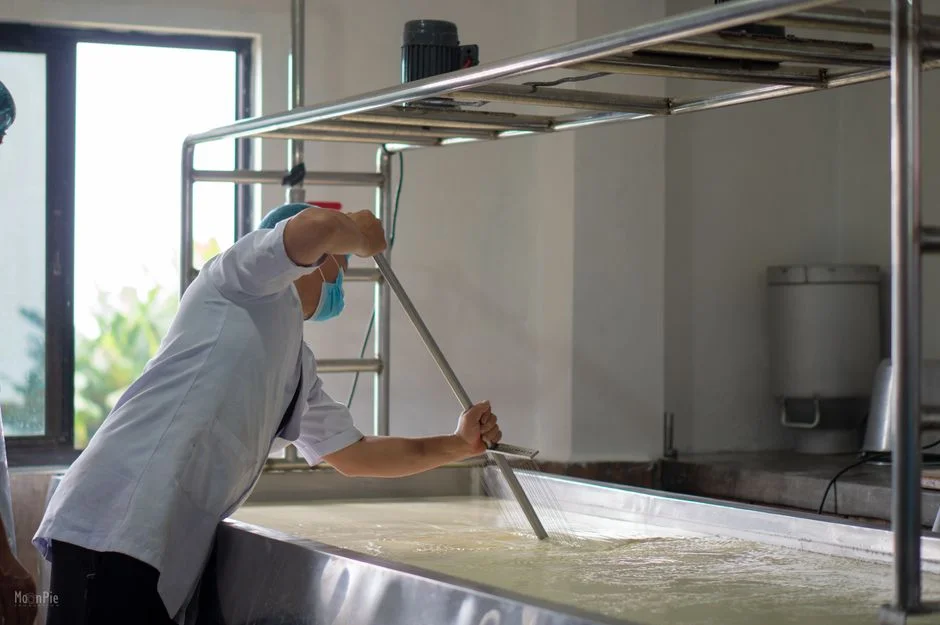
The table below is the artifact that moves a CAPEX line item from "TBD" to "board-ready." All values are 2026 turnkey, ex-works, USD-equivalent scope covering DAF, equalization, UASB/EGSB, MBR, and a basic control panel; site civil works, building, and RO polishing are not included.
OPEX averages US$0.55–US$0.95 per m³ treated at 2026 Chilean industrial tariffs. Energy typically drives 45–55% of that figure at 0.8–1.4 kWh/m³ (HydropureWater field data, 2025–2026), chemicals add US$0.04–US$0.08/m³, and sludge hauling adds US$0.05–US$0.12/m³. Biangas recovery with a CHP unit sized to the UASB gas output typically offsets 25–40% of plant aeration load, with a 3–5 year simple payback on the gas-recovery capex. Routing 40% of the MBR permeate to CIP rinse water avoids roughly US$0.18/m³ of municipal water plus the regulated basin surcharges applied by SISS in the Santiago and Rancagua concessions.
| Plant Size (m³/d) | CAPEX Range (US$, turnkey, 2026) | OPEX (US$/m³) | Energy Intensity (kWh/m³) | Notes |
|---|---|---|---|---|
| 50 | US$180K–US$320K | 0.75–1.10 | 1.0–1.6 | Skid-mounted; single UASB |
| 200 | US$420K–US$780K | 0.55–0.95 | 0.8–1.4 | Reference design; 3× DF modules |
| 500 | US$1.1M–US$1.9M | 0.45–0.80 | 0.7–1.2 | EGSB upgrade; CHP-ready |
| 1,000 | US$2.4M–US$4.2M | 0.40–0.70 | 0.6–1.0 | Two-line MBR; full biogas CHP |
Compliance Pathway: DS 90/2000, SISS Resolutions, and the Audit Trail
Discharge to a SISS-regulated waterway starts with DS 90/2000 (MOP) as the baseline ceiling — BOD5 ≤250 mg/L, SS ≤220 mg/L, oils & greases ≤150 mg/L, pH 6.0–8.5 — but the operative number is almost always the site-specific SISS resolution, which in the Los Ríos, Bío-Bío, and Maipo basins frequently tightens BOD5 to ≤35 mg/L and SS to ≤80 mg/L (SISS resolutions, 2018–2025). The audit trail expected of a plant manager is straightforward: monthly composite sampling per SISS protocols, certified lab analysis (parameters, methods, detection limits), and continuous online logging of pH, conductivity, and temperature. SISS has issued more than 40 fines to dairy and meat processors in Los Ríos and Bío-Bío between 2018 and 2025, and roughly 70% of those fines trace to SS and FOG exceedances — exactly the two parameters a properly tuned DAF + MBR train will not let escape. Holding the SOP file, calibration log, and DAF/RO CIP records in the same folder as the lab certificates is the cheapest compliance investment a plant can make.
Frequently Asked Questions
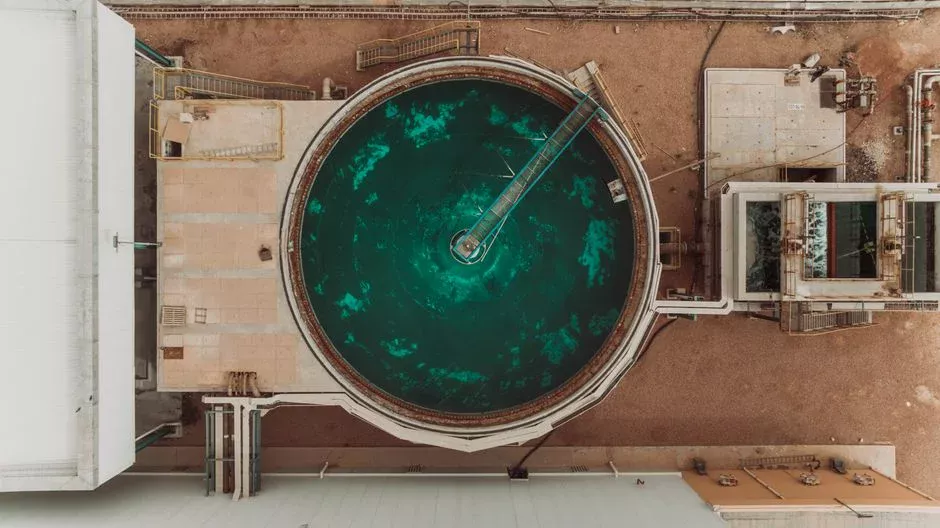
What is the standard 2026 treatment train for a Chilean dairy plant? A four-stage train of DAF → equalization → UASB (or EGSB) → MBR is the dominant 2026 design, with turnkey CAPEX in the US$420K–US$780K range for a 200 m³/d plant and OPEX of US$0.55–US$0.95 per m³ treated. A typical scope is delivered by a dissolved air flotation system feeding an MBR membrane bioreactor system, with optional RO polishing for in-plant reuse.
How much FOG does DAF remove from dairy wastewater? A well-operated micro-bubble DAF removes 80–95% of FOG and 60–90% of TSS in a single stage, with PAC 50–150 mg/L and polymer 0.5–3 mg/L as the standard chemistry.
What are the DS 90/2000 discharge limits for dairy effluent in Chile? DS 90/2000 sets BOD5 ≤250 mg/L, SS ≤220 mg/L, and oils & greases ≤150 mg/L, with site-specific SISS resolutions often pushing BOD5 down to ≤35 mg/L in sensitive basins.
Is it economically worth reusing MBR permeate? Yes. Routing roughly 40% of the permeate to CIP rinse water saves about US$0.18 per m³ of avoided municipal water, plus the SISS basin surcharges, and the RO system typically pays back in 2–4 years on that water line alone. For a deeper technical baseline, see the DAF system technical guide for food processing and the MBR engineering guide for food-processing wastewater.
How much biogas does a dairy UASB produce? A mesophilic UASB (35–37 °C) at OLR 8–15 kg COD/m³·d generates 0.25–0.40 m³ CH₄ per kg of COD removed, which is enough to fire a CHP unit that offsets 25–40% of plant aeration load.