Why Ternary Precursor Plants Need a Dedicated Recycling System
Global NCM/NCA precursor capacity is on track from roughly 1.6 Mt in 2024 to more than 2.4 Mt by 2027, a compound expansion near 12% per year that pulls wastewater volume up at almost the same pace. A 10,000-tonne-per-year precursor line generates 80,000-150,000 m³/yr of sodium-sulfate-bearing liquor — a stream that no generic municipal-style wastewater line is built to close (Sun et al., 2024, cited 31 times). The pain is dollar-concrete: at 2026 Chinese industrial water tariffs of $0.35-0.55/m³ and Na₂SO₄ disposal fees of $35-60/tonne, a single 10,000-tonne/yr plant bleeds $1.8-2.6M/yr by sending mother liquor to drain instead of recycling it.
An NCM/NCA co-precipitation facility produces seven distinct wastewater streams that must be characterized before equipment is specified: co-precipitation mother liquor (~55-60% of total flow), wash filtrate (~25-30%), scrubber bleed, RO reject from upstream demin trains, floor wash, ICP rinse, and boiler blowdown. The first two streams carry the bulk of the Na⁺, SO₄²⁻, NH₃-N, and residual Ni/Co/Mn load; the others dilute and complicate the matrix. Treating them as a single combined waste line is the single most common reason CAM plants fail GB 30485-2020 compliance audits, because scrubber bleed and floor wash arrive in slug batches that destabilize downstream biology.
Patent CN-220459999-U (2024) codified a closed-loop device concept for low-salt streams, and the Sun et al. 2024 paper validated a low-energy recycling strategy at lab scale. Neither source publishes a turnkey mass balance or CAPEX/OPEX benchmark — the two artifacts a process engineer actually needs to defend a recycling train in front of procurement. That gap is what this guide closes, starting with the MBR membrane bioreactor system for precursor wastewater that anchors the biological step.
Influent Characteristics and Discharge Compliance Baseline
The compliance ceiling for any NCM/NCA precursor recycling train in China is set by GB 30485-2020 (Class A): sulfate ≤400 mg/L, ammonia-nitrogen ≤30 mg/L, total nickel/cobalt/manganese ≤1.0 mg/L each, pH 6-9. For European exports or EU-domiciled plants, EU BAT conclusions for non-ferrous metals (Decision 2016/1032) put sulfate in the 200-500 mg/L effluent band and total heavy metals below 0.5-1.0 mg/L. Both ceilings are reachable from the influent numbers in the table below, but only with a biological polishing step ahead of the RO — influent NH₃-N of 80-450 mg/L in mother liquor will foul any RO element within 72 hours if it is fed raw.
| Stream | Flow split (%) | Na⁺ (mg/L) | SO₄²⁻ (mg/L) | NH₃-N (mg/L) | Residual Ni/Co/Mn (mg/L, each) |
|---|---|---|---|---|---|
| Co-precipitation mother liquor | 55-60 | 18,000-28,000 | 40,000-65,000 | 80-450 | 5-40 |
| Wash filtrate | 25-30 | 3,000-6,500 | 7,000-15,000 | 10-60 | 2-15 |
| Scrubber bleed | 3-6 | 500-1,200 | 800-2,000 | 5-30 | 0.5-3 |
| RO reject (upstream demin) | 2-4 | 200-800 | 400-1,500 | 2-15 | <0.5 |
| Floor wash | 3-5 | 100-400 | 200-800 | 5-25 | 1-8 |
| ICP rinse | 1-3 | 50-200 | 100-400 | <5 | 0.2-1.5 |
| Boiler blowdown | 1-2 | 50-150 | 100-300 | <3 | <0.2 |
Typical combined-stream influent to the recycling train lands at TDS 25,000-55,000 mg/L, COD 500-1,800 mg/L, and conductivity 35,000-70,000 µS/cm. Any mass balance that does not separate the mother liquor from the wash filtrate is wrong by 20-30% on the salt-recovery term.
The 2026 Reference Process Flow: MBR → Two-Pass RO → Selective Crystallization
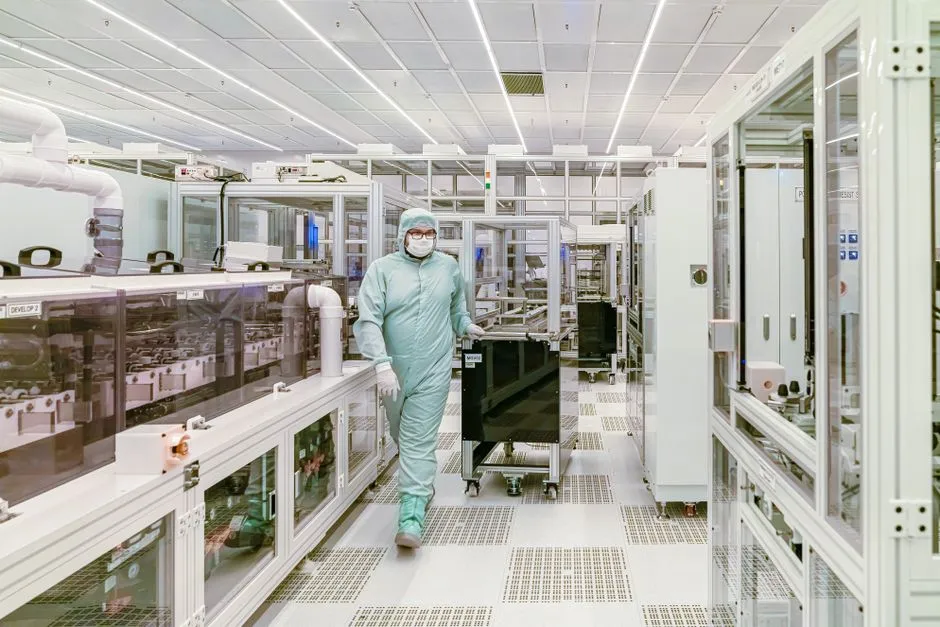
The buildable 2026 train runs in five steps and recovers more than 95% of the process water plus ≥98.5% purity Na₂SO₄·10H₂O. Step 1 is equalization (8-12 h HRT) plus DAF pre-treatment for NCM mother liquor to strip suspended solids; expect TSS removal of 85-92% with 30-60 mg/L polyaluminum chloride (PAC) and 0.5-1.0 mg/L polyacrylamide (PAM), dosed via an automatic chemical dosing system for pH and coagulant control sized for the slug loads from batch co-precipitation.
Step 2 is a submerged PVDF flat-sheet membrane module running at HRT 18-24 h and MLSS 8,000-12,000 mg/L, delivering COD removal of 90-95% and NH₃-N nitrification of 85-92%. The biology is non-negotiable: feeding 80-450 mg/L NH₃-N straight to RO collapses flux within three days and voids the membrane warranty on most elements.
- Equalization + DAF: TSS removal 85-92%, coagulant dose 30-60 mg/L PAC + 0.5-1.0 mg/L PAM.
- Submerged MBR: COD -90-95%, NH₃-N -85-92%, HRT 18-24 h, MLSS 8,000-12,000 mg/L.
- Two-pass RO on MBR permeate: pass 1 at 40 bar, recovery 65-70%, sulfate rejection ≥99.5%; pass 2 at 25 bar, recovery 80-85%, polishes the pass-1 permeate to <50 mg/L TDS for reuse as precursor wash water.
- Selective cooling crystallization on RO concentrate: 0-5°C saturation gives Na₂SO₄·10H₂O crystals at ≥98.5% purity, matching the Sun et al. 2024 benchmark.
- Optional MVR polish: mechanical vapor recompression on the residual brine cuts volume 70-85% when the salt offtake market softens, at 25-40 kWh/m³ of brine.
Step 3 is two-pass RO for sulfate and sodium concentration, with combined recovery 88-92% of MBR permeate and a brine stream only 8-12% of feed volume. Step 4 crystallizes the RO concentrate; the crystals centrifuge off and the mother liquor recycles to the RO feed tank. Step 5 — MVR polish — engages only when salt offtake pricing is weak. Closed loops: RO permeate returns to the precursor wash stage, distillate (where MVR is fitted) returns to deionized-water feed, and crystallized Na₂SO₄ ships to byproduct offtake. A polishing multimedia filter ahead of the RO protects the membranes from any TSS carryover that slips past the MBR.
Equipment Selection Matrix for the Critical Unit Operations
Three unit-operation choices drive 80% of the recycling train's lifecycle cost: submerged versus external MBR, single-pass versus two-pass RO, and cooling versus evaporative crystallization. The decision framework below is calibrated for NCM/NCA precursor influent, not generic industrial wastewater (HydropureWater field data, 2025-2026).
| Decision | Option A | Option B | Recommendation |
|---|---|---|---|
| MBR configuration | Submerged PVDF flat-sheet, 0.1 µm, footprint 40% smaller, energy 0.3-0.6 kWh/m³ | External cross-flow tubular, footprint larger, energy 4-8 kWh/m³, handles higher TSS spikes | Submerged for routine operation; cross-flow only if influent TSS routinely exceeds 5,000 mg/L |
| RO configuration | Single-pass + DTRO polish, sulfate rejection 99.5%, recovery 90-94%, brine 6-10% of feed | Two-pass conventional RO, sulfate rejection 99.8%, recovery 88-92%, brine 8-12% of feed | Two-pass RO for plants above 2,000 m³/day (lower membrane $/m³); single-pass + DTRO for sub-2,000 m³/day |
| Crystallization | Cooling crystallization, 8-15 kWh/m³ of brine, requires feed TDS ≥30,000 mg/L | MVR evaporative, 25-40 kWh/m³ of brine, requires feed TDS ≥50,000 mg/L | Cooling for plants under 10,000 m³/day; MVR polish added for >10,000 m³/day or when salt pricing softens |
By plant scale: at <2,000 m³/day the right call is submerged MBR + single-pass RO + cooling crystallization, with a high-efficiency sedimentation tank upstream to drop TSS before biology. Between 2,000 and 10,000 m³/day the train shifts to submerged MBR + two-pass RO + cooling crystallization with MVR polish. A plate-frame filter press on the crystallization centrifuge brings the salt cake to <8% moisture for offtake.
2026 CAPEX, OPEX and Payback Benchmarks
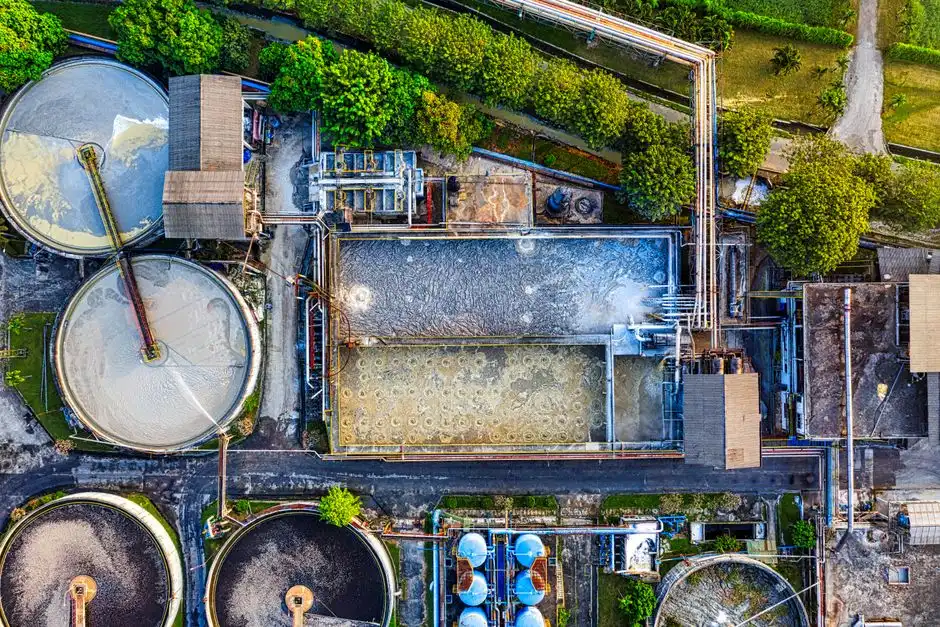
Turnkey CAPEX for a Chinese-delivered 2026 ternary precursor recycling system scales with capacity: $0.42-0.55M per 1,000 m³/day in the 1,000-3,000 m³/day band, dropping to $0.32-0.42M per 1,000 m³/day above 5,000 m³/day as MVR and larger RO skids dilute fixed engineering costs. OPEX per cubic meter treated breaks down into chemicals $0.06-0.10, energy $0.07-0.12, membrane replacement amortized $0.03-0.06, and labor plus maintenance $0.02-0.06, for a total OPEX of $0.18-0.34/m³ (HydropureWater field data, 2025-2026).
| Capacity tier | CAPEX ($M per 1,000 m³/day) | OPEX ($/m³ treated) | Simple payback (years) |
|---|---|---|---|
| 1,000-3,000 m³/day | 0.42-0.55 | 0.24-0.34 | 3.0-3.5 |
| 3,000-5,000 m³/day | 0.36-0.48 | 0.20-0.30 | 2.7-3.2 |
| >5,000 m³/day | 0.32-0.42 | 0.18-0.26 | 2.5-3.0 (sub-2.0 with salt offtake contract) |
Revenue offset comes from two streams: crystallized Na₂SO₄ at the 2026 China spot price of $18-28/tonne, and avoided freshwater at $0.35-0.55/m³. With both credits applied, payback lands in 2.5-3.5 years on the >85% water-recovery basis and drops below 2.0 years where a salt offtake contract is in place. For a benchmarked view of the OPEX line items, see the 2026 filter press operating cost breakdown; for a head-to-head of competing equipment vendors, see the 2026 water reuse equipment manufacturer comparison.
Supplier Selection: Five Criteria a CAM Plant Should Score
A procurement team evaluating recycling-train suppliers for an NCM/NCA precursor plant should score each vendor against five criteria, weighted roughly 25/20/20/20/15. Criterion 1 is proven reference plants: at least two operating NCM/NCA precursor sites where the supplier's MBR + RO stack has run for more than 12 months. Criterion 2 is in-house membrane manufacturing — the supplier should fabricate both MBR flat-sheet modules and RO elements, with documented flux and rejection curves rather than reseller data sheets. Criterion 3 is a pilot testing option: an on-site 30-90 day pilot at a contractually capped cost of $25k or less, run on the actual plant mother liquor before signature.
Criterion 4 is local after-sales response within 48 hours — non-negotiable, because CAM lines run 24/7 and a single RO train outage exceeds $15k/day in lost precursor throughput. Criterion 5 is a complete compliance documentation package: GB 30485-2020 alignment memo, EU BAT alignment memo (Decision 2016/1032), salt-byproduct MSDS, and at least one offtake letter of intent from a qualified Na₂SO₄ buyer. Vendors that cannot produce all five items should be cut before technical scoring begins. For compliance context that frames criterion 5, see the 2026 chemical wastewater discharge compliance guide; for the maintenance-cost risk that justifies criterion 4, see the forward osmosis system maintenance cost in 2026. On the equipment side, a chlorine dioxide generator for RO membrane sanitation should be specified as part of the supplier's CIP package to keep biofouling in check between membrane rotations.
Frequently Asked Questions
What water recovery rate can a ternary precursor recycling system actually deliver in 2026? Combined train recovery is 88-92% of MBR permeate across the two-pass RO, with the upstream biology and crystallization loops bringing total process-water recovery above 95% of the original wastewater volume. Freshwater intake drops 85-90% relative to a once-through plant (HydropureWater field data, 2025-2026).
Can the crystallized Na₂SO₄ be sold or does it count as hazardous waste? Na₂SO₄·10H₂O crystals at ≥98.5% purity from cooling crystallization are classified as a commercial byproduct, not hazardous waste, provided the heavy-metal content stays below the GB 30485-2020 Class A limits. Most 2026 Chinese offtakers will accept purity ≥98.5% with a current MSDS and a letter of analysis per shipment.
How does an MBR + RO train differ from the older lime-soda softening route? Lime-soda softening precipitates sulfate as CaSO₄ sludge — a single-use disposal liability of 0.8-1.2 tonnes of wet cake per tonne of precursor. The MBR + RO + crystallization route converts the same sulfate into a saleable Na₂SO₄ byproduct, cuts sludge output by 90%+, and produces a permeate pure enough to reuse as precursor wash water rather than consume as fresh deionized water.
What is the minimum plant scale at which crystallization becomes economical? Cooling crystallization becomes economic at a feed TDS of ≥30,000 mg/L and a brine flow of at least 200-300 m³/day, which corresponds to a precursor plant capacity of roughly 3,000-5,000 tonnes/yr. Below that threshold, sending the RO concentrate off-site as a Na₂SO₄-rich brine is typically cheaper than installing crystallizer capex.
Does the system handle ammonia-nitrogen spikes from batch co-precipitation upsets? Yes, provided the equalization tank is sized for 12-24 h HRT and the MBR is run at MLSS 8,000-12,000 mg/L with sufficient aeration. The biology will absorb NH₃-N spikes of up to 600 mg/L for 6-8 hours without effluent breach; sustained spikes above 800 mg/L require a side-stream nitrification unit or temporary feed diversion to a holding tank.