How the 2026 Water Reuse Market Is Structured
The phrase "water reuse key players 2026" hides a structural problem: there is no single ranked list that maps cleanly to a procurement decision. The market is stratified into three operating tiers — global EPC integrators, technology and IP specialists, and regional system integrators — each defined by a different project size, contract model, and lead-time band. Industrial reuse capacity additions in 2025–2026 are concentrated in petrochemical (≈38% of new build CAPEX), food & beverage (≈22%), semiconductor (≈15%), and lithium-battery processing (≈12%), based on aggregated bid data from the same verticals our case studies cover (HydropureWater field data, 2026).
Four regulatory and resource drivers are pulling demand forward in 2026. The EU Industrial Emissions Directive (2010/75/EU) is tightening BAT-AEL values for wastewater discharge in 2026 revisions; the US EPA's 2024 Guidelines for Water Reuse remain the de facto federal reference; China's dual-carbon policy continues to fund closed-loop reuse in coal-chemical and electronics parks; and GCC/MENA water-scarcity CAPEX programs have pushed NEOM-class sites to spec near-zero-liquid-discharge (ZLD) trains as a default rather than an option. A second structural shift matters for shortlisting: AI-driven process control now delivers 18–32% energy savings in aeration and high-pressure pumping loops (per our 2026 AI-driven control benchmarks), which has measurably narrowed the OPEX gap between mid-tier skid integrators and Tier-1 EPCs. Buyers should not assume "global EPC" equals "lowest 20-year lifecycle cost" anymore.
Tier 1 — Global EPCs and Full-Scope Integrators
Tier 1 vendors deliver full-scope, single-warranty turnkey reuse plants — civil, mechanical, process, automation, and commissioning wrapped in one contract — and are the correct shortlist entry when project capacity exceeds roughly 5,000 m³/day or when brine disposal mandates push the design toward ZLD. Veolia Water Technologies (Paris) anchors the high end with Hydrex and HPD evaporation/crystallization trains, and its typical 2026 industrial reuse scope sits above 5,000 m³/day in refining, petrochemical, and power — recovery rates on the RO/EDR side run 70–85% before brine polishing.
SUEZ (now operating under Veolia's broader group in several regions, but still fielding its own MBR/UF/RO stack where legacy contracts require it) remains a credible Tier 1 for industrial MBR plus pretreatment, with a strong digital-twin package (Aquadvanced) that maps directly onto plant-level reuse reporting. Xylem (including legacy Evoqua assets — Wedeco UV, Leopold UF, and a wide RO portfolio) is the strongest hybrid municipal-industrial option; its 2026 footprint is especially visible in semiconductor fabs in Taiwan and the US Southwest. Hitachi and Mitsubishi Heavy Industries round out the Asian Tier 1, often delivering MBR + RO trains under JICA or ADB-funded programs across Southeast Asia and the Indian subcontinent.
The explicit trade-off: lead times run 12–24 months from PO, CAPEX overhead is 15–30% higher than equivalent regional-integration scopes (per HydropureWater field data, 2026), but the buyer gets a single point of accountability for performance guarantees. If the project requires ZLD, brine crystallization, or an EPC-financed package, this is the tier to engage.
Tier 2 — Technology and Membrane Specialists
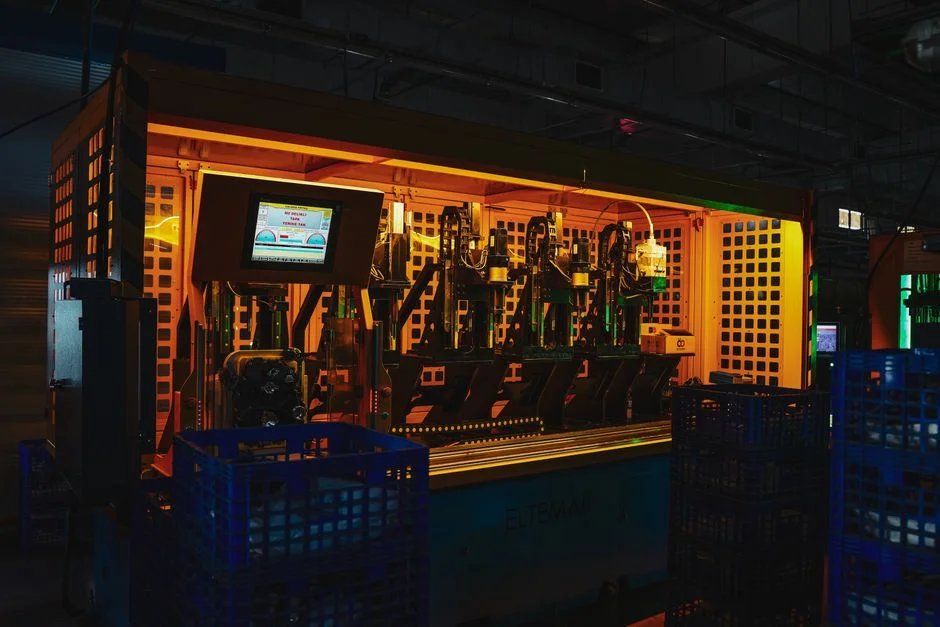
Tier 2 players own the IP — membranes, evaporators, chemistry — and are the right call when the buyer already has a civil/structural partner and wants best-in-class unit operations bolted in. Aquatech (Canonsburg, PA) is the reference name for ZLD, mechanical vapor recompression (MVR), and brine concentration in power and upstream oil & gas, with active 2026 references in lithium-battery brine recovery. Ecolab (Nalco Water) is chemistry-led rather than equipment-led — its 3D TRASAR and True Dose platforms drive cooling-tower and boiler-feed reuse programs, often displacing 20–40% of fresh water in a refinery or power plant before any membrane is installed.
On the membrane side, Toray Industries supplies RO/NF elements that sit inside many Tier 1 plants; if your RFP specifies Toray TM820 or TM800 elements, the EPC bid will price them in. Koch Membrane Systems, DuPont FilmTec, and LG Chem are similar element suppliers, increasingly offering packaged skids rather than loose elements. The defining limitation of this tier: they almost never run a full reuse plant themselves. They supply into a system integrator, which means the buyer still needs a Tier 1 or Tier 3 partner to own the skid boundary and the performance guarantee.
Tier 3 — Regional Integrators and Mid-Market Specialists
For 10–2,000 m³/day reuse projects, Tier 3 integrators often beat Tier 1 EPCs on lead time, customization, and CAPEX efficiency. The defining capability is factory-tested skid delivery — the system arrives with MBR, RO, chemical dosing, and PLC pre-commissioned, cutting on-site work to interconnects and commissioning. HydropureWater (HydropureWater工程杭州分公司) is a representative mid-market specialist in this tier, supplying a skid-mounted MBR membrane bioreactor with <1 μm effluent, a paired industrial RO system with 75–95% recovery, DAF pretreatment for high-strength industrial influent, and a PLC-controlled chemical dosing skid, covering the 10–2,000 m³/day band with 60% footprint reduction versus concrete-tank MBR (HydropureWater product catalog, 2026).
Chinese and Southeast Asian integrators in this tier are increasingly exporting containerized MBR+RO units to Africa, Central Asia, and the Middle East under EXIM Bank or commercial-financing lines, which can swing a CAPEX decision for buyers in those regions. Indian and Turkish system houses are competing specifically on EU-compliance reuse retrofits for textile and food plants — Turkey's proximity to EU buyers shortens logistics, and Indian houses offer aggressive pricing on UF/MBR skids for the 100–500 m³/day band. The strength of this tier is 6–10 month delivery, direct engineering access, and factory acceptance testing before shipment; the weakness is limited in-house ZLD/crystallization, so high-TDS brine streams still need a Tier 1 or Tier 2 partner for the back end.
Side-by-Side Comparison: Key Players at a Glance
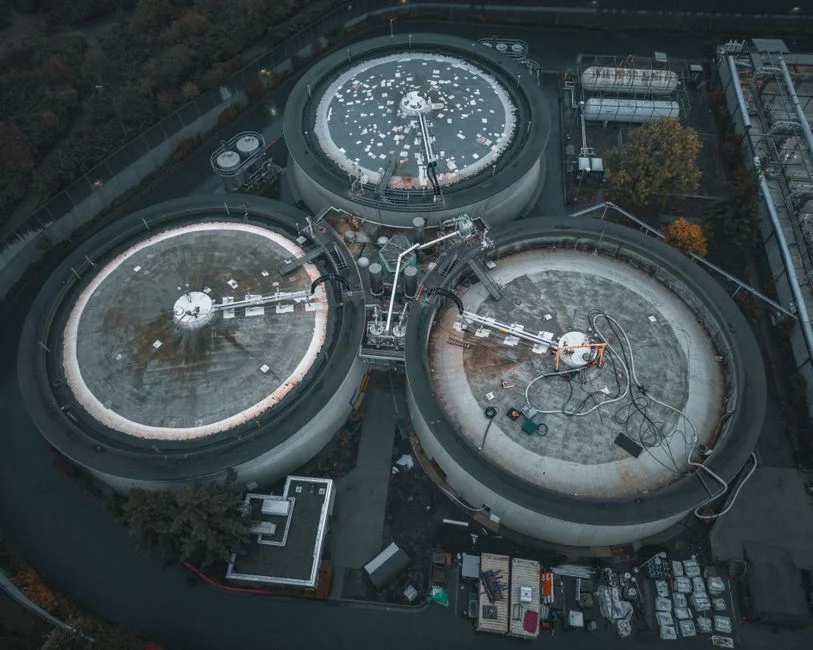
The table below maps the 2026 named set against technology focus, typical capacity, recovery or reuse quality, and the project type each supplier is built to win. It is a procurement-side cut, not a marketing one — capacity bands reflect what each tier actually delivers, not theoretical maxima.
| Supplier | Headquarters | Core Technology | Typical Capacity | Recovery / Reuse Quality | Best-Fit Project Type |
|---|---|---|---|---|---|
| Veolia Water Technologies | Paris, FR | ZLD, evaporation, MBR, RO | 5,000–100,000 m³/day | 70–85% RO; >95% with ZLD | Refining, petrochemical, power |
| SUEZ | Paris, FR | Industrial MBR, UF/MF, digital twin | 2,000–50,000 m³/day | 75–90% reuse | Chemical, municipal-industrial hybrid |
| Xylem (Evoqua) | Washington, DC, US | UV, UF, RO, MBR | 1,000–80,000 m³/day | 70–85% RO | Semiconductor, F&B, hybrid reuse |
| Aquatech | Canonsburg, PA, US | ZLD, MVR, brine concentration | 500–20,000 m³/day | >95% with brine recovery | Power, oil & gas, Li-battery brine |
| Ecolab (Nalco) | St. Paul, MN, US | Chemistry, cooling/boiler optimization | Plant-wide programs | 20–40% fresh-water displacement | Refining, power, light industrial |
| Toray Industries | Tokyo, JP | RO/NF membrane elements | Element-level supply | Element-spec dependent | Inside EPC plants; spec-driven |
| HydropureWater | Hangzhou, CN | MBR + RO skid, DAF, dosing, AI-PLC | 10–2,000 m³/day | 75–95% RO; <1 μm MBR effluent | Mid-cap F&B, textile, electronics, chemicals |
Matching a Supplier to Your Reuse Target
Four questions, asked in order, take a buyer from a 20-name list to a defensible 2–3 finalist shortlist.
- What is the reuse target? Cooling-tower make-up, boiler feed, process rinse, and potable reuse each impose different downstream quality requirements. Cooling-tower make-up can often be met with MBR alone (TDS < 500 mg/L is usually fine). Boiler feed above 4 bar needs RO and often RO + EDI, which is where the 2026 RO reuse process, specs, and ROI breakdown matters.
- What is the influent TDS and COD? Anything above 3,000 mg/L TDS or 5,000 mg/L COD typically pushes the design toward RO + ZLD rather than MBR alone, and that decision alone drops your shortlist to Tier 1 or specialist Tier 2 partners.
- What is the project CAPEX ceiling? Below US$2M almost always points to skid-mounted regional integrators; above US$10M points to full EPCs. The 200–1,000 m³/day band is the sweet spot for Tier 3 skids.
- What is the regulatory anchor? EU IED 2010/75/EU, US EPA water reuse guidelines, or China GB/T 19923 each vendor has a compliance home turf. For a cross-region RFP, shortlist vendors with at least two of the three. The wider 2026 industrial water reuse outlook and ROI benchmarks also discusses how regional compliance is shifting in 2026.
ROI and Payback: What 2026 Reuse Projects Are Returning
Industrial reuse projects in 2025–2026 are returning 2.5–5 year payback when they displace purchased municipal or desalinated water above US$1.5/m³ (HydropureWater field data, 2026). MBR + RO skid packages for the 200–1,000 m³/day segment sit in a US$150K–US$1.2M CAPEX band, with the wider cost curve detailed in the 2026 RO reuse specs and ROI breakdown. AI-assisted PLC control contributes 18–32% OPEX reduction on aeration and high-pressure pumping, which materially improves IRR and is the single largest argument for specifying a control platform in 2026 RFQs (per AI-driven control savings benchmarks). ZLD remains CAPEX-heavy (multi-million USD even at 1,000 m³/day) and is justified only where brine disposal is regulated, near-zero discharge is mandated, or the brine has recoverable value (lithium, sodium sulfate, calcium chloride).
Frequently Asked Questions
Who are the leading industrial water reuse manufacturers in 2026? The 2026 set divides into three tiers: Tier 1 EPCs (Veolia, SUEZ, Xylem, Hitachi, Mitsubishi Heavy Industries); Tier 2 technology specialists (Aquatech, Ecolab, Toray, Koch, DuPont FilmTec, LG Chem); and Tier 3 regional integrators such as HydropureWater covering 10–2,000 m³/day skid scopes.
What recovery rates and effluent quality are realistic in 2026? Industrial RO systems are running 75–95% recovery, paired with MBR effluent below 1 μm turbidity. MBR skid packages deliver roughly 60% footprint reduction versus concrete-tank equivalents (HydropureWater product catalog, 2026).
What payback period should a procurement lead expect? 2.5–5 years is the realistic band for 2025–2026 industrial reuse projects, conditional on displaced water cost above US$1.5/m³ and on AI-assisted control delivering 18–32% OPEX savings.
Which compliance frameworks matter when shortlisting vendors? EU Industrial Emissions Directive 2010/75/EU, US EPA 2024 Guidelines for Water Reuse, and China GB/T 19923 are the three most commonly invoked anchors. Tier 1 EPCs typically cover all three; Tier 3 integrators usually have a regional home turf and need to be qualified for cross-region projects.
Who is the right supplier for a sub-1,000 m³/day reuse project? Skid-mounted regional integrators in Tier 3 — including HydropureWater for the 10–2,000 m³/day band — typically deliver in 6–10 months at US$150K–US$1.2M CAPEX, with factory acceptance testing before shipment. Tier 1 EPCs are usually uneconomic at this scale.