Why Hospital Wastewater in Ecuador Is a 2026 Priority
Hospital wastewater in Ecuador is regulated more tightly than municipal sewage because it carries pharmaceutical residues, pathogens, and occasional radioactive isotopes that ordinary WWTPs are not designed to handle. Ecuador's bed density — roughly 1.4 public-sector beds per 1,000 inhabitants per MSPS statistics — translates into thousands of tonnes of regulated effluent per day across Quito, Guayaquil, and Cuenca alone. In 2026, two instruments govern every discharge and reuse decision: TULSMA Libro VI Anexo 1 for the numerical effluent limits, and Acuerdo Ministerial 097-A for any irrigation or toilet-flush reuse. Enforcement is no longer aspirational: MAE spot inspections, ARC watershed controls, and the municipal utilities EMAAP-Q (Quito) and INTERAGUA (Guayaquil) routinely reject connection permits from hospitals whose effluent fails fecal coliform or BOD₅ limits. A 120-bed hospital in Quito producing roughly 60–80 m³/day now needs a defensible specification — not a generic municipal design — to secure its discharge permit in 2026.
Ecuador 2026 Regulatory Framework for Hospital Effluent
TULSMA Libro VI Anexo 1, Tables 5 and 6, set the binding 2026 limits for hospital discharges to sewer and to surface water in Ecuador. For sewer discharge: BOD₅ ≤ 100 mg/L, COD ≤ 200 mg/L, TSS ≤ 100 mg/L, FOG ≤ 30 mg/L, pH 6–9. For surface-water discharge the bar is identical except fecal coliforms fall to < 1,000 NMP/100 mL. Where the receiving water feeds a sensitive Andean or Amazon basin tributary, total nitrogen is capped at 40 mg/L and total phosphorus at 10 mg/L. For landscape irrigation under AM 097-A reuse criteria, the limits tighten further: BOD₅ < 20 mg/L, TSS < 30 mg/L, and fecal coliforms < 1 NMP/100 mL for unrestricted reuse. ARCOM and municipal utilities add site-specific clauses for hospitals near drinking-water intakes, including continuous online BOD/COD monitoring tied to the utility's SCADA. PAHO and WHO guidance on healthcare wastewaters converge on the same numerical targets, which means an Ecuadorian design meeting TULSMA also satisfies international hospital effluent standards.
| Parameter | Discharge to sewer (TULSMA Anexo 1) | Discharge to surface water | Unrestricted reuse (AM 097-A) |
|---|---|---|---|
| BOD₅ | ≤ 100 mg/L | ≤ 100 mg/L | < 20 mg/L |
| COD | ≤ 200 mg/L | ≤ 200 mg/L | < 50 mg/L |
| TSS | ≤ 100 mg/L | ≤ 100 mg/L | < 30 mg/L |
| FOG | ≤ 30 mg/L | ≤ 30 mg/L | ≤ 10 mg/L |
| pH | 6–9 | 6–9 | 6.5–8.5 |
| Fecal coliforms | — | < 1,000 NMP/100 mL | < 1 NMP/100 mL |
| Total nitrogen | — | 40 mg/L (sensitive basins) | 15 mg/L |
| Total phosphorus | — | 10 mg/L (sensitive basins) | 5 mg/L |
Influent Characteristics of Ecuadorian Hospital Wastewater
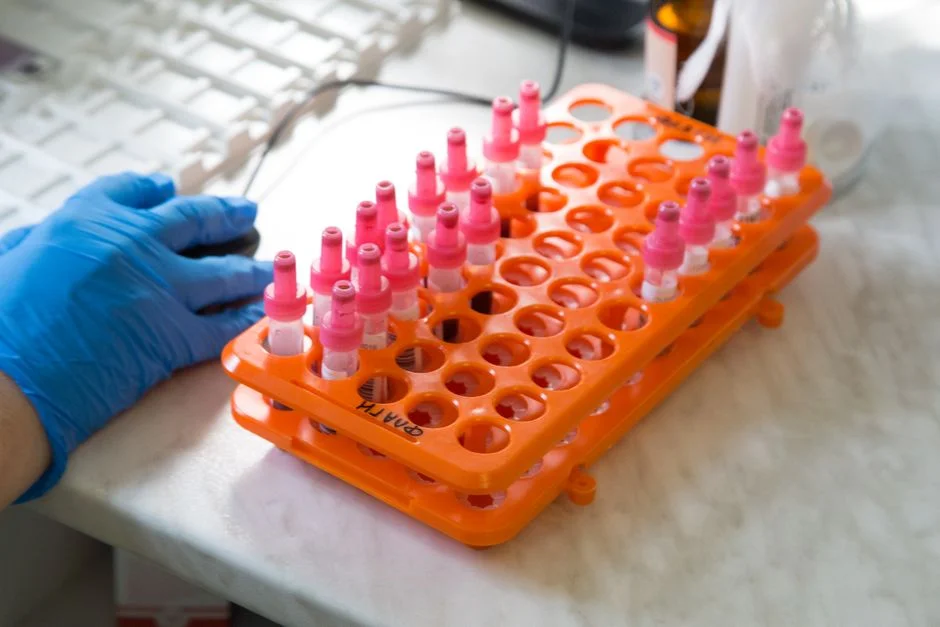
The 2024 Springer dataset on Chlorella sp. LH2 gives a defensible baseline for Ecuadorian hospital influent: BOD₅ 192 ± 8.6 mg/L, COD 245 ± 9.2 mg/L, with a BOD₅:COD ratio of 0.77 that signals high biodegradability. Total nitrogen and total phosphorus after 10 days of treatment dropped 68.6% and 64.4% respectively — but only because the influent carried 40–60 mg/L TN and 6–10 mg/L TP. E. coli ATCC 8739 was eliminated by 88.9% in seven days of microalgae contact. Tropical-highland operation at Quito's 2,850 m (Cuenca 2,500 m, Guayaquil sea level) shifts the design envelope: dissolved-oxygen saturation drops to roughly 7.5 mg/L versus 8.8 mg/L at sea level, biological reaction rates slow 15–20%, and aeration blower head must be sized for 1,012 mbar local pressure. Pathogen load in Ecuadorian hospital streams includes E. coli, Klebsiella pneumoniae, and Pseudomonas aeruginosa, plus antibiotic-resistance genes (ARGs) reported in the 2018 Ecuadorian native-microalgae study. Trace contaminants typical of radiology and pharmacy departments include iodinated X-ray contrast media, ciprofloxacin, sulfamethoxazole, and formaldehyde at sub-µg/L to low-mg/L levels — none are removed by a conventional septic + chlorination train.
| Parameter | Quito (2,850 m) | Guayaquil (sea level) | Cuenca (2,500 m) |
|---|---|---|---|
| BOD₅ (mg/L) | 180–220 | 200–260 | 170–210 |
| COD (mg/L) | 240–280 | 260–320 | 230–270 |
| TSS (mg/L) | 120–180 | 150–220 | 110–170 |
| NH₃-N (mg/L) | 30–45 | 35–50 | 28–42 |
| FOG (mg/L) | 40–80 | 50–100 | 35–75 |
| DO saturation (%) | ~85% | ~95% | ~88% |
Process Train Options for Ecuadorian Hospitals
Four realistic 2026 process trains cover the bed-count range a hospital engineer in Ecuador will see, from a 30-bed rural clinic to a 400-bed tertiary hospital. The decision rule is bed count + reuse intent + available footprint: small rural hospitals with no reuse target can run a septic + A2O + chlorination train at the lowest CAPEX ($80–140 per m³/d installed). Mid-size 50–200 bed hospitals in Quito or Cuenca usually pick a sequencing batch reactor (SBR) for single-tank flexibility, 18–24 h HRT, and 85–90% BOD₅ removal. Hospitals with a reuse obligation under AM 097-A — landscape irrigation, cooling-tower makeup, toilet flush — should specify a submerged MBR with 0.1 µm PVDF membranes, 60% smaller footprint than SBR, and effluent already filtered to <1 µm, paired with a dedicated MBR membrane bioreactor system that meets the <1 NMP/100 mL fecal coliform bar when followed by ClO₂. The fourth option, biological treatment followed by Chlorella sp. microalgae polishing, is still pilot-scale in 2026 but is the only tertiary step proven on Ecuadorian native strains; the Springer 2024 dataset recorded COD from 245 → 47 mg/L and 88.9% E. coli kill in 7 days, and the 2018 Ecuadorian microalgae study confirmed local species achieve comparable nutrient stripping.
| Train | Bed range | HRT (h) | BOD₅ removal | CAPEX (USD/m³/d) | Reuse-ready? |
|---|---|---|---|---|---|
| A — Septic + A2O + Cl₂ | ≤ 50 | 24–30 | 80–88% | $80–140k | No |
| B — SBR + ClO₂ | 50–200 | 18–24 | 88–94% | $180–260k | Conditional |
| C — MBR (PVDF) + ClO₂ | 100–500 | 8–12 | 95–99% | $350–700k | Yes (AM 097-A) |
| D — Biological + Chlorella polishing | 50–300 | 10+10 polishing | 95%+ | $300–550k | Pilot only |
Disinfection and Pathogen Control in 2026
Liquid chlorine remains the cheapest disinfectant at roughly $0.04/m³ treated, but at Quito's low-alkalinity, low-TDS source water it routinely drives trihalomethane formation above 100 µg/L when overdosed — well past the WHO drinking-water guideline of 100 µg/L total THM and a known driver of DBPs in hospital reuse streams. Chlorine dioxide (ClO₂) avoids THM formation entirely, achieves >99.9% E. coli kill at 1–2 mg/L residual with a 30-minute contact time, and complies with EPA, EU, and WHO hospital-discharge guidance; for a 2026 Ecuadorian plant, a chlorine dioxide generator sized to the peak flow is the most defensible choice. Ozone (O₃) at 5–10 mg/L is the strongest option against antibiotic-resistant bacteria and viruses but requires on-site generation, a 10–15 min contact tank, and an ozone-destruct unit to keep stack emissions below 0.1 ppm. UV at 40 mJ/cm² is chemical-free and effective against most vegetative bacteria, but above 100 mg/L TSS its dose delivery collapses — meaning UV alone is never the primary barrier downstream of an MBR that has already polished TSS to <5 mg/L. The 2026 best practice in Ecuador: MBR effluent → ClO₂ for the regulatory residual, with UV as a redundancy layer where utilities demand it.
Equipment Selection and 2026 Cost Benchmarks for Ecuador
For hospitals under 80 beds, a WSZ underground package plant rated 1–80 m³/h needs no on-site operator, ships skid-mounted, and clears TULSMA sewer-discharge limits out of the box. Mid-size hospitals in the 80–500 m³/day range should specify an MBR with DF-series flat-sheet PVDF modules — 80–225 m² per cassette, 32–135 m³/day per cassette, with a recommended flux of 15–20 L/m²·h to extend membrane life under hospital loading. A plate and frame filter press with 5–10 m² plate area cuts sludge volume 75–80% before disposal, which matters under Ecuador's hazardous-waste rules for pathology and pharmacy residues. A dissolved air flotation unit ahead of the MBR protects membranes from FOG and surfactant spikes common in hospital laundry and kitchen waste streams. Sludge and chemistry are tied off with a high-efficiency sedimentation tank and an automatic chemical-dosing system sized for peak flow. 2026 CAPEX bands in USD: small hospital under 50 beds $90–150k; mid-size 50–200 beds $250–500k; large tertiary hospital 200+ beds $700k–$1.6M. OPEX runs $0.18–0.35 per m³ treated. Only process trains that hit BOD₅ < 20 mg/L and fecal coliforms < 1 NMP/100 mL qualify for unrestricted irrigation under AM 097-A — for context, the Andean hospital wastewater engineering guide for Medellín applies the same TULSMA-style limits with comparable MBR cost bands.
| Hospital size | Train | CAPEX (USD) | OPEX (USD/m³) | Reuse-eligible |
|---|---|---|---|---|
| < 50 beds | WSZ + Cl₂ | $90–150k | $0.18–0.25 | No |
| 50–200 beds | SBR or MBR + ClO₂ | $250–500k | $0.22–0.32 | Yes (MBR) |
| 200+ beds | MBR + ClO₂ + filter press | $700k–$1.6M | $0.28–0.35 | Yes |
Step-by-Step Specification Checklist for an Ecuadorian Hospital Plant
This seven-step checklist is what I hand to procurement so the RFP cannot be answered with a generic municipal design. Step 1 — confirm bed count, average daily flow (use 400–600 L/bed·day unless the hospital has laundry or dialysis on-site, then add 30%), and whether the plant needs to hit AM 097-A reuse limits or only TULSMA sewer-discharge limits. Step 2 — match the TULSMA 2026 limits to the process train and document expected BOD₅, COD, TSS, and coliform removal rates in writing. Step 3 — specify pre-treatment: a rotary mechanical bar screen with 3–5 mm openings, an equalization basin sized to 8 h HRT, and a DAF unit if FOG exceeds 50 mg/L. Step 4 — specify the biological stage — A2O, SBR, or MBR — with HRT, MLSS (3,000–8,000 mg/L for MBR), dissolved-oxygen setpoint (2.0–2.5 mg/L), and SRT, all adjusted for Quito's highland aeration derate. Step 5 — specify disinfection: ClO₂ residual of 0.5–1.0 mg/L after 30 min contact, on-site generation capacity sized to peak hourly flow, and a redundant UV stage if the receiving utility requires it. Step 6 — specify sludge dewatering and chain of custody through a licensed hazardous-waste hauler. Step 7 — specify PLC automation, IoT monitoring of BOD/COD/TSS, and remote alarm integration with EMAAP-Q or INTERAGUA SCADA where the utility contract requires it; a rotary mechanical bar screen upstream protects the rest of the train from rag carryover. For OPEX benchmarking on the biological and disinfection stages, the Pharmaceutical wastewater OPEX breakdown for 2026 gives consumable cost lines that translate directly to a hospital's chemistry budget.
Frequently Asked Questions
Q1 — What BOD and COD limits apply to hospitals in Ecuador in 2026? Per TULSMA Libro VI Anexo 1, Tables 5 and 6: BOD₅ ≤ 100 mg/L, COD ≤ 200 mg/L, TSS ≤ 100 mg/L, FOG ≤ 30 mg/L, pH 6–9, fecal coliforms < 1,000 NMP/100 mL for surface-water discharge. Sensitive Andean and Amazon basin tributaries tighten TN to 40 mg/L and TP to 10 mg/L.
Q2 — Can hospital effluent be reused for irrigation in Ecuador? Yes, under Acuerdo Ministerial 097-A. Unrestricted landscape irrigation requires BOD₅ < 20 mg/L, TSS < 30 mg/L, fecal coliforms < 1 NMP/100 mL, and pH 6.5–8.5 — only MBR or SBR + microfiltration trains can credibly meet these numbers.
Q3 — Is microalgae polishing ready for hospital use, or still pilot-scale? Still pilot-scale in 2026. The Springer 2024 Chlorella sp. LH2 paper recorded COD 245 → 47 mg/L and 88.9% E. coli kill in 7 days, and the 2018 Ecuadorian native-microalgae study confirmed local strains achieve similar nutrient removal — but no full-scale hospital plant in Ecuador is running this as the sole tertiary step yet. Position it as a polishing stage on MBR effluent.
Q4 — How much does a 100-bed hospital wastewater plant cost in Ecuador? CAPEX $250,000–$500,000 USD for an MBR-based train that meets both TULSMA and AM 097-A reuse limits; OPEX $0.22–$0.32 per m³. Smaller septic-A2O plants run $90,000–$150,000 but cannot deliver reuse-grade effluent.
Q5 — Which disinfection is best for Ecuadorian hospitals: chlorine, ClO₂, ozone, or UV? ClO₂ at 1–2 mg/L residual with 30 min contact is the 2026 best fit: >99.9% E. coli kill, no THM formation, EPA/EU/WHO compliant, and a generator on site. Liquid chlorine is cheapest but forms THMs above 100 µg/L in low-alkalinity Andean water. Ozone is strongest against resistant organisms but capex-heavy. UV at 40 mJ/cm² works downstream of MBR but not as a primary barrier at high TSS.
Related Equipment
- MBR membrane bioreactor system — specifications, capacity range, and technical data
- Chlorine dioxide generator — specifications, capacity range, and technical data
- WSZ underground package plant — specifications, capacity range, and technical data
- Dissolved air flotation unit — specifications, capacity range, and technical data
- plate and frame filter press — specifications, capacity range, and technical data
- DF-series flat-sheet MBR modules — specifications, capacity range, and technical data