Medellín hospitals must treat wastewater to Colombia’s Resolución 0631 standards (BOD < 50 mg/L, COD < 150 mg/L, TSS < 50 mg/L, fecal coliforms < 1,000 MPN/100 mL) or face fines up to COP 2.3 billion (USD 580,000). Pharmaceuticals like carbamazepine and ciprofloxacin—detected at 1.2–45 µg/L in local hospital effluent (Serna-Galvis 2022)—require advanced oxidation or membrane bioreactors (MBR) for 95%+ removal. This guide provides engineering specs, cost benchmarks, and a 2025 compliance checklist for system selection to ensure facility managers meet the rigorous environmental demands of the Aburrá Valley.
Why Medellín Hospitals Are Failing Wastewater Compliance in 2025
Approximately 86.5% of hospital staff in Medellín lack formal training in hazardous waste management, according to a 2023 Universidad de Medellín (UDEM) study, which directly correlates to the improper segregation of pharmaceuticals and chemicals into the sewage stream. This systemic failure in source control places an insurmountable burden on aging primary treatment systems. When antibiotics, disinfectants, and radioactive isotopes enter the wastewater stream without pretreatment, they inhibit the biological processes of standard activated sludge plants, leading to discharge violations.
Research conducted by Serna-Galvis (2022) identified 20 distinct pharmaceuticals in Colombian hospital effluent, with antibiotics like ciprofloxacin and sulfamethoxazole, and antiepileptics such as carbamazepine, present at concentrations between 1.2 and 45 µg/L. These compounds are "recalcitrant," meaning they pass through conventional treatment virtually untouched. For Medellín hospitals, this is no longer just an environmental concern but a significant financial risk. Under the Ministerio de Ambiente guidelines, Resolución 0631 (2015) non-compliance penalties range from COP 115 million to COP 2.3 billion (USD 29K–580K) per violation.
Regulatory pressure is intensifying as the Secretaría de Medio Ambiente increases the frequency of unannounced inspections. In 2023, a 200-bed hospital in Medellín was fined COP 870 million (USD 220K) after its effluent exceeded Chemical Oxygen Demand (COD) limits by 300%. The failure was traced to inadequate pretreatment of fats, oils, and grease (FOG) from the hospital kitchen combined with high pharmaceutical loads that "poisoned" the secondary biological treatment phase. As 2025 compliance deadlines approach, the shift from basic septic or aerobic systems to advanced MBR vs conventional activated sludge for hospital wastewater is becoming an operational necessity.
Medellín’s Hospital Wastewater: Contaminant Profile and Treatment Challenges
Hospital wastewater in the Aburrá Valley exhibits higher toxicity and variability than standard municipal sewage, characterized by high concentrations of disinfectants and complex organic molecules. Typical parameters for a mid-sized Medellín hospital include BOD levels of 200–800 mg/L and COD levels of 500–2,000 mg/L. The presence of fecal coliforms at 10^6–10^8 MPN/100 mL necessitates a robust disinfection strategy that goes beyond simple chlorination.
The primary challenge for local engineers is the removal of pharmaceuticals. Conventional activated sludge (CAS) systems typically achieve less than 30% removal for compounds like carbamazepine (Serna-Galvis 2022). pathogens such as Pseudomonas aeruginosa and antibiotic-resistant E. coli require a 4–6 log reduction to meet safe discharge standards. Heavy metals also present a specific hurdle; mercury (0.1–0.5 mg/L) from legacy dental amalgams and silver (0.3–1.2 mg/L) from X-ray processing require dedicated chemical precipitation or ion exchange stages to prevent environmental accumulation.
Environmental conditions in Medellín also influence treatment efficiency. With an average temperature of 22°C and 80% humidity, biological activity is generally high, but the high humidity increases the risk of corrosion for metal components and electronic controls. Systems must be designed with high-grade stainless steel or specialized coatings to survive the local climate.
| Parameter | Raw Hospital Effluent (Typical) | Target (Resolución 0631) | Removal Required |
|---|---|---|---|
| BOD5 (mg/L) | 200 – 800 | < 50 | > 90% |
| COD (mg/L) | 500 – 2,000 | < 150 | > 92% |
| TSS (mg/L) | 150 – 400 | < 50 | > 85% |
| Fecal Coliforms (MPN/100mL) | 10^6 – 10^8 | < 1,000 | 6-Log Kill |
| Ciprofloxacin (µg/L) | 12 – 45 | N/A (Recommended < 1) | > 95% |
| Mercury (mg/L) | 0.1 – 0.5 | < 0.001 | > 99% |
Colombia’s 2025 Hospital Wastewater Regulations: A Compliance Checklist for Medellín
Compliance in Medellín is governed by a tiered regulatory framework involving national standards (Resolución 0631) and local enforcement by the Secretaría de Medio Ambiente. For 2025, hospitals must not only meet concentration limits but also demonstrate consistent monitoring and reporting. Failure to provide quarterly reports for hospitals with more than 100 beds can result in administrative fines ranging from COP 50 million to 150 million, independent of actual water quality.
Decreto 1594 (1984) remains relevant for its specific requirements on disinfection residuals and aesthetic qualities. It mandates a chlorine residual of 0.2–1.0 mg/L if chlorine is used, and strictly prohibits visible foam or color in the discharge. monthly sampling for heavy metals (Hg, Ag, Pb) is mandatory for any facility with surgical or radiological units. Sampling must follow a strict 24-hour composite protocol, handled by an accredited laboratory such as the Laboratorio de Calidad Ambiental, to be legally defensible.
| Step | Compliance Action Item | Regulatory Reference |
|---|---|---|
| 1 | Verify pretreatment for FOG > 50 mg/L (Kitchen/Cafeteria) | Resolución 0631 |
| 2 | Install 24-hour composite proportional sampler | Standard Methods / IDEAM |
| 3 | Achieve 4-log pathogen reduction for surgical/infectious units | WHO / Decreto 1594 |
| 4 | Maintain pH between 6.0 and 9.0 units | Resolución 0631 |
| 5 | Eliminate visible foam and color at discharge point | Decreto 1594 |
| 6 | Quarterly reporting to Secretaría de Medio Ambiente (>100 beds) | Local Medellín Mandate |
| 7 | Monthly heavy metal screening (Hg, Ag, Pb, Cr) | Decreto 1594 |
| 8 | Validation of disinfection residual (0.2–1.0 mg/L) | Decreto 1594 |
| 9 | Emergency bypass containment plan (Spill protocol) | Ministerio de Ambiente |
| 10 | Certified operator training logs (Annual update) | UDEM/SENA Guidelines |
Treatment Technologies for Hospital Wastewater: Engineering Comparison for Medellín’s Needs
Selecting the right technology requires balancing the removal of complex pharmaceuticals with the footprint constraints typical of urban Medellín hospitals. Dissolved Air Flotation (DAF) is increasingly utilized as a pretreatment step. A high-efficiency DAF system for hospital wastewater pretreatment can remove 90–95% of TSS and significantly reduce the organic load from fats and heavy metals, protecting downstream biological processes. In Medellín's high-humidity environment, DAF systems must be equipped with corrosion-resistant skimmers.
For secondary and tertiary treatment, the Membrane Bioreactor (MBR) has become the gold standard. An MBR system for pharmaceutical and pathogen removal in hospital effluent combines biological degradation with membrane filtration (0.03 µm pore size), achieving 99.9% pathogen removal and up to 95% pharmaceutical removal. While the energy demand is higher (0.8–1.2 kWh/m³) than CAS, the footprint is 60% smaller, making it ideal for hospitals in densely populated areas like El Poblado or Laureles.
Disinfection is the final critical hurdle. While liquid chlorine is common, an on-site chlorine dioxide generator for hospital wastewater disinfection offers superior performance against viruses and cysts without producing harmful trihalomethanes (THMs). Chlorine dioxide also provides a stable residual that meets Decreto 1594 requirements more effectively than ozone, which, despite its high oxidation potential, lacks a residual and requires significant energy for off-gas destruction.
| Technology | BOD/COD Removal | Pathogen Log Kill | Footprint (m²/m³/h) | Energy (kWh/m³) |
|---|---|---|---|---|
| DAF | 60 – 80% (COD) | 1 – 2 | 0.5 – 1.0 | 0.3 – 0.5 |
| MBR (DF Series) | 95 – 99% | 4 – 6 | 0.2 – 0.4 | 0.8 – 1.2 |
| ClO₂ | Low | 4 – 6 | < 0.1 | 0.1 – 0.2 |
| Ozone | 70 – 90% (Pharma) | 5 – 6 | 0.3 – 0.5 | 1.5 – 2.5 |
| CAS (Baseline) | 85 – 90% | 1 – 2 | 1.5 – 2.5 | 0.4 – 0.6 |
Equipment Selection Framework: Matching Technology to Hospital Size and Budget
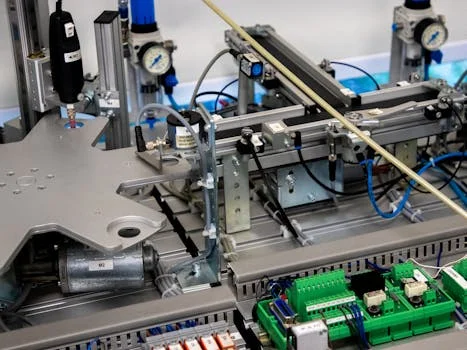
The selection of a wastewater treatment system must align with the hospital's hydraulic load and specific clinical services. For small clinics and specialized centers (<50 beds), a compact medical wastewater treatment system for small hospitals and clinics is the most cost-effective approach. These systems integrate advanced oxidation and filtration into a single skid, typically costing between COP 120 million and 250 million installed. They are designed for low-maintenance operation, which is critical for facilities without dedicated wastewater engineers.
Medium-sized hospitals (50–200 beds) often face a choice between underground package plants and MBR systems. While underground systems (COP 350M–800M) save surface space, they are harder to maintain and may struggle with pharmaceutical limits. MBR systems (COP 600M–1.2B) provide future-proof compliance. For large tertiary care hospitals (>200 beds), a multi-stage approach is required: DAF for pretreatment, MBR for core treatment, and Chlorine Dioxide for final disinfection. These installations range from COP 1.5B to 3.5B but offer the lowest risk of regulatory fines.
When calculating ROI, facility managers should compare the CAPEX against the potential for maximum fines (COP 2.3B). A typical 200-bed hospital in Medellín can achieve a payback period of 4.2 years through fine avoidance and the potential for water reuse in non-potable applications like cooling towers or irrigation. Local cost factors in Medellín include a 15–20% import duty on non-Andean equipment and labor rates for specialized operators ranging from COP 35K to 50K per hour.
| Hospital Scale | Flow Rate (m³/h) | Recommended System | Est. CAPEX (COP) | Est. OPEX (m³/year) |
|---|---|---|---|---|
| Small (<50 beds) | < 10 | Compact medical wastewater system (Integrated) | 120M – 250M | 1.2M – 1.8M |
| Medium (50-200) | 10 – 50 | MBR (DF Series) | 600M – 1.2B | 2.0M – 2.8M |
| Large (>200 beds) | > 50 | DAF + MBR + ClO₂ | 1.5B – 3.5B | 2.5M – 3.5M |
Case Study: Upgrading a 150-Bed Hospital in Medellín for 2025 Compliance
In late 2023, Hospital San Vicente Fundación (a 150-bed model) faced an environmental audit that revealed significant non-compliance with Resolución 0631. The facility’s effluent showed COD levels of 450 mg/L and fecal coliform counts exceeding 10^7 MPN/100 mL. The existing conventional activated sludge system, installed in 1998, was hydraulically overloaded and inhibited by high concentrations of ciprofloxacin (38 µg/L) and kitchen grease (85 mg/L).
The engineering solution involved a phased upgrade. First, a DAF-20 system (20 m³/h) was installed to remove the grease and suspended solids that were fouling the biological tanks. Second, the aeration basins were retrofitted with DF-150 MBR membranes to increase biomass concentration and ensure a physical barrier against pathogens. Finally, a 500-class chlorine dioxide generator was installed to provide robust disinfection and a stable residual for the discharge line. This configuration is similar to selecting hospital effluent treatment plants for industrial-scale applications where high-strength waste is common.
The results were immediate. By mid-2024, COD levels dropped to 42 mg/L, and fecal coliforms were reduced to <10 MPN/100 mL, well within the 2025 compliance limits. Pharmaceutical removal also improved, with ciprofloxacin levels falling below 1 µg/L. The total CAPEX for the upgrade was COP 980 million (USD 245K), with an annual OPEX of COP 2.1 million per m³. With the threat of a COP 2.3 billion fine eliminated, the hospital’s ROI was calculated at 4.2 years. A key lesson learned was that the DAF pretreatment extended the MBR membrane life by 30%, significantly reducing long-term maintenance costs.
Frequently Asked Questions
Q: What are the most common reasons hospitals in Medellín fail wastewater compliance tests?
A: Failure is typically caused by inadequate pretreatment of fats and oils (exceeding 50 mg/L), which fouls biological systems, and insufficient disinfection contact time, leading to fecal coliform counts above 1,000 MPN/100 mL. Additionally, the presence of pharmaceuticals at levels exceeding 10 µg/L often triggers secondary toxicity in the treatment plant.
Q: How much does a hospital wastewater treatment system cost in Medellín?
A: For 2025, CAPEX ranges from COP 120 million for small clinics to over COP 3.5 billion for large tertiary hospitals. Operational expenses (OPEX) typically range from COP 1.2 million to 3.5 million per m³ of treated water per year, covering energy, chemicals, and labor.
Q: Can hospital wastewater be reused in Medellín?
A: Yes. When treated with MBR technology, effluent can meet WHO and local standards for non-potable reuse (TSS < 5 mg/L, fecal coliforms < 10 MPN/100 mL). This water is suitable for toilet flushing and landscape irrigation, which is a common practice in hospital wastewater treatment standards in other emerging markets looking to reduce utility costs.
Q: What are the penalties for non-compliance with Resolución 0631 in Medellín?
A: Fines are substantial, ranging from COP 115 million to 2.3 billion per violation. Beyond financial penalties, the Secretaría de Medio Ambiente has the authority to issue partial or total closure orders for facilities that repeatedly fail to meet discharge limits.
Q: How often should hospital wastewater treatment equipment be maintained in Medellín’s climate?
A: Due to the 80% average humidity, DAF skimmers and electrical panels should be inspected monthly for corrosion. MBR membranes require quarterly chemical cleaning (CIP) to manage biofouling, which is accelerated by the consistent 22°C ambient temperature. Chlorine dioxide generators should be calibrated weekly as the altitude of Medellín (1,495m) can slightly affect gas solubility and pump efficiency.