Frankfurt's 2026 Industrial Discharge Compliance Framework
Industrial wastewater treatment in Frankfurt in 2026 must satisfy Germany's AbwV (Abwasserverordnung), the EU Industrial Emissions Directive 2010/75/EU BAT-AELs, and the Federal Water Act (WHG) for Main and Rhine basin discharge. Typical flows of 10–2,000 m³/day use DAF pre-treatment, MBR biological treatment, and RO polishing, with CAPEX of €280–€1,400 per m³/day depending on influent load and reuse target. The AbwV is structured as 57 origin-specific annexes; two of them dominate the Rhine-Main industrial corridor. AbwV Annex 31 governs wastewaters from the manufacture of organic and inorganic chemicals, pharmaceuticals, and dyes — the core processes of the Höchst industrial park, where combined discharges from roughly 90 plants flow to the Industriepark Höchst WWTP. AbwV Annex 40 governs metal-finishing and electroplating operations across Hanau, Offenbach, and the northern Frankfurt industrial zones. Both annexes were last amended in 2024 and are enforced in 2026 under expanded self-monitoring obligations, including 24-hour composite sampling for COD, AOX, and heavy metals at frequencies specified per annex.
For IED-permitted installations (typically chemical and pharmaceutical sites above the IED capacity thresholds), the overriding ceiling is the BAT-AEL ranges published in the 2014/699/EU and sector-specific BREF conclusions — for waste water and waste gas treatment in the chemical sector (CWW BREF, 2016), for common waste water and waste gas treatment (WGC BREF), and for surface treatment using organic solvents and metals. BAT-AELs typically set tighter ceilings than AbwV numerical limits; Frankfurt engineers must design to the stricter value. For indirect discharges to the Frankfurt municipal Klärwerk Niederrad or the Höchst site WWTP, the EU Urban Waste Water Directive 91/271/EEC applies in parallel, often with additional municipal Indirekteinleiter limits set under §58 WHG and enforced by Regierungspräsidium Darmstadt, the Hessian permitting authority for water law.
Direct Main and Rhine discharges must additionally satisfy the chemical and ecological quality objectives of OGewV 2016 (Oberflächengewässerverordnung), including river-basin-specific temperature ceilings (typically ≤28°C), chloride limits tied to Rhine salinity objectives, and trace-metal EQS values for Cu, Ni, Zn, and Cr-VI. Engineers evaluating a 2026 upgrade should start with the AbwV annex that matches their discharge origin, then layer IED BAT-AEL and OGewV limits on top — this is the order that prevents redesigns after the permit is issued.
Influent Characteristics by Major Frankfurt Industrial Sectors
Influent characterization drives the treatment train: under-sizing equalization or omitting AOX destruction in a chemical-pharma waste is the most common reason Frankfurt plants miss their first compliance sampling round. The table below summarizes the typical raw wastewater profile and the governing AbwV annex for the five industry clusters that define the Rhine-Main region.
| Sector | COD (mg/L) | BOD (mg/L) | TSS (mg/L) | Key Contaminants | Typical Flow (m³/day) | Governing Annex |
|---|---|---|---|---|---|---|
| Chemical / Pharma (Höchst) | 1,500–8,000 | 800–3,500 | 200–1,200 | AOX 5–25 mg/L, TDS 3,000–15,000 mg/L, sulfides, solvents | 200–2,000 | AbwV Annex 31 |
| Automotive / Metal Finishing (Hanau, Offenbach) | 500–3,000 | 100–600 | 300–2,000 | Cu, Ni, Zn, Cr-VI; oil/grease 200–2,000 mg/L; low BOD/COD | 50–800 | AbwV Annex 40 |
| Food & Beverage (regional breweries, processors) | 2,000–10,000 | 800–4,000 | 500–3,000 | FOG 100–800 mg/L, TKN 30–150 mg/L, total P 10–50 mg/L | 100–1,500 | AbwV Annex 7 |
| Electroplating / PCB | 300–1,500 | 50–250 | 100–500 | Free/total cyanide 1–50 mg/L, complexed Cu/Ni, pH swings 1–12 | 10–200 | AbwV Annex 40 |
| Pharmaceutical API production | 3,000–12,000 | 1,000–5,000 | 300–1,500 | AOX, active residues, high salinity, antibiotic traces | 50–600 | AbwV Annex 31 + BREF CWW |
Two patterns dominate. Chemical and pharmaceutical streams (Höchst) carry moderate-to-high COD with AOX and salinity — these require dedicated AOX reduction (typically activated carbon or oxidative stripping) before biological treatment, and biological systems must tolerate TDS excursions to 15,000 mg/L. Metal-finishing streams (Hanau, Offenbach) are characterized by high heavy-metal load, oil and grease, and a BOD/COD ratio often below 0.2 — meaning biological treatment alone will not meet effluent limits, and physico-chemical pre-treatment is mandatory. Food and beverage streams are high-BOD, high-TSS, nutrient-rich, and respond well to MBR biology but require FOG and fiber removal upstream to protect membranes. The electrochemical and pharmaceutical sectors are the most demanding on hydraulic consistency, and any AbwV submission must include 24-hour flow-proportional sampling data, not grab samples.
Standard Treatment Train: From Screening to Reuse-Quality Effluent
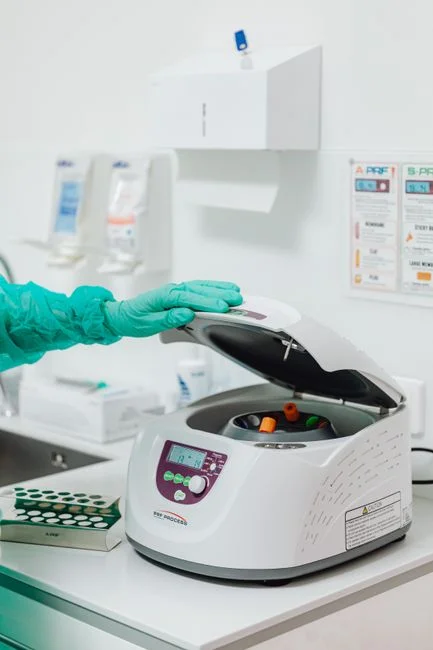
For a typical Frankfurt plant discharging 50–500 m³/day of mixed chemical or metal-finishing wastewater, the defensible process train is a five-stage configuration that maps directly onto the contaminant profile and the 91/271/EEC and AbwV effluent requirements.
Stage 1 — Headworks: a rotary mechanical bar screen with 3–6 mm aperture removes rags, fibers, and large solids that would otherwise damage downstream pumps and clog DAF nozzles. For FOG-heavy food streams, finer 2 mm apertures are justified.
Stage 2 — Equalization: an 8–24 h HRT buffer tank dampens batch-to-batch variability common in Höchst chemical production, where a single reactor dump can swing pH by 3 units and COD by 5,000 mg/L. Equalization alone prevents the majority of biological-system upsets documented in 2026 EU wastewater compliance reviews.
Stage 3 — Physico-chemical pre-treatment: a DAF pre-treatment system (4–300 m³/h) with micro-bubble flotation achieves 85–95% TSS and 90–95% FOG removal when paired with coagulant and flocculant dosing. DAF is the standard first step in both Annex 31 and Annex 40 trains across the Rhine-Main region.
Stage 4 — Biological treatment: an integrated MBR system using PVDF flat-sheet membranes (0.1 µm pore size, 32–135 m³/day per module) delivers >99% BOD removal, <1 NTU effluent turbidity, and stable nitrification at MLSS 8,000–12,000 mg/L. The MBR market continues to expand on the back of these performance numbers — see MBR market growth 2026 for the procurement-side data.
Stage 5 — Tertiary / polishing: either chlorination for direct discharge compliant with OGewV microbiological quality, or a reverse-osmosis system for closed-loop reuse, achieving 75–95% permeate recovery with conductivity rejection >99%.
Equipment Selection Matrix for Frankfurt Plants
Selecting the right unit operation depends on three engineering variables: peak flow, dominant contaminant, and whether the plant targets direct discharge or reuse. The matrix below condenses typical design ranges for the four technologies most commonly procured in the Rhine-Main region.
| Technology | Flow Range (m³/h) | Target Contaminant | Removal Efficiency | Footprint | Energy (kWh/m³) | Indicative CAPEX (€/m³/day) |
|---|---|---|---|---|---|---|
| DAF (dissolved air flotation) | 4–300 | TSS, FOG, oil, emulsions | TSS 85–95%, FOG to <10 mg/L | Compact (5–25 m²) | 0.05–0.20 | €280–€500 |
| Lamella clarifier (incl. high-efficiency sedimentation tank) | 10–400 | TSS, precipitates, metals | TSS 70–90%, metals with pH/precipitation | Compact (inclined plates, 20–40 m/h surface loading) | 0.02–0.10 | €180–€350 |
| MBR (membrane bioreactor) | 5–250 | COD, BOD, NH₄-N, TSS | COD >95%, BOD >99%, NH₄-N >98% | 60% smaller than CAS | 0.40–0.90 | €700–€1,400 |
| RO (reverse osmosis) | 2–200 | Dissolved salts, trace organics, heavy metals | Conductivity rejection >99%, recovery 75–95% | Modular racks | 0.60–1.50 | €500–€1,200 |
| Multi-media filter (incl. multi-media filter for ultrapure water) | 5–300 | RO pre-treatment, residual TSS, turbidity | Turbidity <1 NTU, SDI <5 | Compact vertical vessel | 0.03–0.10 | €80–€200 |
Decision rule: if the dominant issue is FOG or free oil, DAF is the only technology that does the job economically. If COD/BOD must drop below 100 mg/L and the plant has limited space, MBR is the correct choice. If the plant is targeting a closed-loop reuse stream for boiler feed or process water, an industrial RO system is required, and it must be protected by a multi-media filter to keep Silt Density Index below 5. Lamella clarifiers are typically used upstream of DAF or as a stand-alone high-rate TSS pre-sedimentation step for metal-precipitation trains in Annex 40 plants.
2026 CAPEX and OPEX Benchmarks for Frankfurt Industrial Plants
Frankfurt Rhine-Main industrial CAPEX and OPEX are 8–15% above the German national median because of higher industrial electricity rates (€0.28–€0.34/kWh in 2026, per BDEW tariff data) and skilled-labor costs at €38–€52/hour for certified wastewater plant operators (per IG BCE collective agreement, 2025-10). The table below gives defensible 2026 cost bands indexed to m³/day of installed treatment capacity.
| Plant Size | CAPEX Range (€/m³/day) | OPEX Range (€/m³ treated) | Typical OPEX Split |
|---|---|---|---|
| Small (≤50 m³/day) | €280–€600 | €1.20–€2.50 | Energy 30–40%, chemicals 15–20%, sludge 15–25%, labor 15–25% |
| Mid-scale (50–500 m³/day) | €450–€900 | €0.70–€1.50 | Energy 40–50%, chemicals 15–25%, sludge 10–20%, labor 10–15% |
| Large (500–2,000 m³/day) | €700–€1,400 | €0.40–€0.90 | Energy 45–55%, chemicals 15–25%, sludge 10–20%, labor 5–10% |
Energy is the largest single OPEX line at 35–55% — this is the line that justifies high-efficiency blowers, VFD-controlled pumps, and RO energy-recovery devices on large systems. Sludge handling at 10–20% is the second-largest cost driver and is best controlled with a plate-frame filter press that drops cake moisture to 55–65% versus 75–85% for a belt press, halving sludge disposal tonnage. Chemical cost is best controlled with a automatic chemical dosing system that ties coagulant and polymer feed to real-time flow and streaming-current measurement; this typically cuts chemical OPEX 15–25% versus manual dosing.
Implementation Roadmap: From Feasibility to Commissioning
German industrial-wastewater projects follow a 46–82 week sequence from kickoff to performance verification. The five steps below align with both IED permitting and the Regierungspräsidium Darmstadt review schedule.
- Step 1 — Wastewater audit and bench/pilot testing (8–14 weeks): 24-hour composite sampling across at least 5 production days, jar testing for coagulant selection, and a 4–8 week on-site pilot of the proposed MBR or DAF unit. For Annex 31 plants, AOX treatability is best confirmed at pilot scale.
- Step 2 — Permit application via AbwV / EU IED pathway (12–24 weeks): submit the Antrag nach §57 WHG and, for IED installations, the BAT-AEL compliance demonstration alongside the IED permit modification. Expect one round of authority queries from Regierungspräsidium Darmstadt.
- Step 3 — Engineering, procurement, and prefabrication in parallel (16–28 weeks): detailed engineering, P&ID, E&IC, and containerized or skid-mounted prefabrication. Long-lead items (membranes, RO vessels) should be ordered at week 4 of this phase.
- Step 4 — Installation and cold commissioning (6–10 weeks): civil works tie-ins, mechanical install, I&C loop checks, leak testing, and power-on dry commissioning. Sludge seeding and biological acclimation begin here.
- Step 5 — Performance verification, AbwV self-monitoring start, and operator training (4–6 weeks): 2-week parallel operation against existing plant, 4-week performance test with accredited-lab sampling, and TÜV- or DEKRA-certified operator training (typically 40 hours, per DWA-A 199). Final disinfection is brought online using a chlorine dioxide generator calibrated to the OGewV microbiological targets.
The single most common schedule slip is failing to overlap Step 2 and Step 3 — the IED permit is rarely approved inside 12 weeks for first-time filers, so equipment procurement and long-lead orders must start against draft permit conditions, not the issued permit.
Frequently Asked Questions
Which permits apply to an industrial wastewater discharge in Frankfurt in 2026? Direct Main or Rhine discharges require a §57 WHG permit (Wasserrechtliche Erlaubnis) under AbwV Annex 31 (chemical/pharma) or Annex 40 (metal finishing) with Regierungspräsidium Darmstadt as the issuing authority. IED-permitted installations additionally require a permit modification under 2010/75/EU demonstrating compliance with BAT-AEL ranges from the CWW BREF. Indirect discharges to municipal Klärwerke are governed by 91/271/EEC plus municipal Indirekteinleiter rules under §58 WHG.
What TSS and FOG removal can a DAF system achieve on Frankfurt industrial wastewater? Properly sized DAF units achieve 85–95% TSS removal and reduce FOG to below 10 mg/L, which typically meets the AbwV Annex 31 and Annex 40 pre-treatment limits before biological polishing. Hydraulic loading is held at ≤25 m³/m²·h, and air-to-solids ratio is controlled between 0.02 and 0.05.
Is MBR more cost-effective than SBR for a 200 m³/day Frankfurt plant? MBR offers a 60% smaller footprint than conventional activated sludge and produces <1 NTU effluent turbidity, eliminating the need for a separate clarification step. For sites with limited plot area in Höchst or along the Main corridor, MBR's compact skid and higher MLSS tolerance typically deliver lower 10-year lifecycle cost than SBR.
What reuse rates are realistic with RO for Frankfurt industrial plants? Industrial RO systems typically achieve 75–95% permeate recovery with conductivity rejection above 99%, producing reuse water at an OPEX of €0.40–€0.90 per m³ — competitive with Frankfurt municipal process-water tariffs of €2.80–€4.20/m³ in 2026. This is the most defensible economic argument for RO in pharmaceutical and electronics plants.
How does Frankfurt's industrial water reuse potential compare with other EU regions? Compared with the central-European peer markets covered in the recent regional guide on industrial wastewater treatment in Warsaw, Frankfurt shows higher reuse CAPEX but faster payback because of higher municipal water tariffs, tighter Rhine salinity objectives, and stronger IED BAT-AEL enforcement under Hessian state oversight.