Why Yeast Wastewater Is Not Brewery Wastewater
Industrial baker's yeast, yeast extract, and bioethanol yeast plants generate 10–30× the organic load of a craft brewery, and that gap defines every reactor sizing decision downstream. A typical industrial yeast plant produces effluent with BCOD of 8,000–20,000 mg/L, TSS 3,000–8,000 mg/L, total nitrogen 500–1,200 mg/L, sulfate 1,500–4,000 mg/L (driven by melasse carryover), pH 4.5–6.5, and temperature 30–40 °C. The widely cited Cartwright Springs microbrewery case in Ottawa treated combined streams pretreated down to 100–180 mg/L BOD — a 50–100× lower load than an industrial yeast plant, with only 10,000 L/week of combined flow. The MBBR sizing math in that case does not transfer.
Six distinct waste streams converge at a yeast plant: melasse preparation wash water (high in sulfate and color, low pH), fermenter CIP rinses (caustic and acid swings), centrifuge and separator bleed streams (dense in yeast cell solids), autolysate concentrate (very high BOD, ammonia-rich), condenser blowdown (warm, low strength), and floor wash (variable pH and grit). Each stream has a different pH, strength, and temperature, and a single-pass aerobic MBBR becomes overloaded above 6,000 mg/L BCOD. The standard 2026 configuration for industrial yeast duty is a two-stage anoxic-aerobic MBBR, or an MBBR followed by an MBR polishing step when reuse-quality effluent is required. The same is covered in more detail in a parallel MBBR design for rendering plant effluent guide, which carries overlapping biofilm sizing logic for high-strength food wastewater.
Influent Characterization: Building the Design Basis
No MBBR design is defensible without a 7-day composite sampling campaign across all shifts — single-grab sampling underdesigns yeast plant equalization tanks by 30–60% because it misses the melasse batch peaks and CIP spikes. Composite samples must be flow-weighted and pulled at the common header downstream of all source streams, with a parallel set of grab samples at each individual source for the mass balance.
The minimum analytical panel is BCOD, TCOD, TSS, VSS, TKN (with ammonia-N and organic-N broken out separately), orthophosphate, sulfate, FOG (specifically tracking antifoam agents and yeast skimmings), pH, and temperature. The BCOD/TCOD ratio should fall between 0.5 and 0.7 for a melasse-based stream; a ratio below 0.4 signals refractory carryover from yeast extract processing and pushes the design toward longer HRT or an MBR polish. Peak-to-average flow ratio at a yeast plant typically runs 1.8–2.5×, with BCOD peaking at fermentation CIP discharge and harvest centrifuge dewatering. Equalization sizing at 12–24 hr HRT smooths the load to ≤1.3× average before the MBBR; smaller tanks cause shock loading that strips biofilm and cuts nitrification efficiency by 20–40% within days. A useful primer on the underlying sizing math is the general wastewater treatment system sizing guide.
MBBR Reactor Sizing Parameters for Yeast Effluent
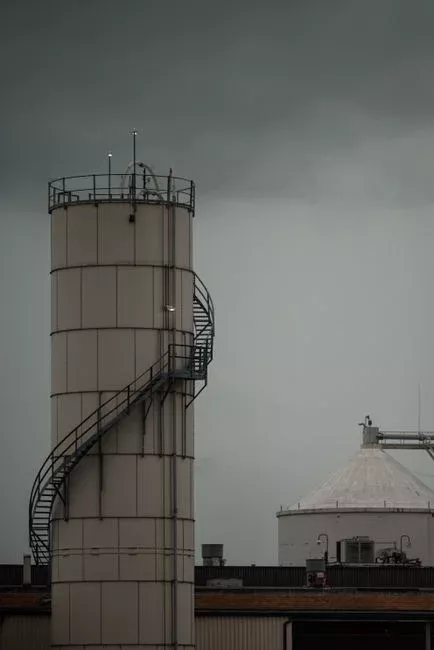
For yeast plant duty, a two-stage anoxic-aerobic MBBR delivers 90–95% COD removal and effluent ammonia below 15 mg/L when fed equalized influent at pH 6.5–7.5 and 30–38 °C. Stage 1 (anoxic pre-denitrification) operates at 30–40% HDPE media fill with 3–5 hr HRT, no continuous aeration, and a target NO₃-N removal above 70% by routing the return activated sludge or recycle stream to the anoxic zone. Stage 2 (aerobic nitrification plus COD polishing) operates at 30% media fill with 5–7 hr HRT, DO 2.0–3.0 mg/L, and an OLR of 0.8–1.2 kg BOD/m²·d measured on protected (effective) surface area.
Combined OLR across both stages runs 4–8 kg COD/m³·d at the standard 30% fill — well above the 1–2 kg COD/m³·d typical of domestic MBBR installations and the reason domestic sizing references do not apply. The temperature window of 25–38 °C is favorable: yeast plant effluent is often self-heating from fermentation and CIP, and the MBBR needs cooling only if the downstream discharge temperature limit is below 30 °C. Media specification for food-industry duty is HDPE biofilm carriers with density 0.95–0.98 g/cm³, specific surface area 500–800 m²/m³, and protected surface (the portion that actually retains biofilm) of 350–500 m²/m³. Aeration is supplied by fine-bubble disc or tube diffusers sized at 1.5–2.5 Nm³ air per kg COD removed, with coarse mixing sized to turn the media at 6–10 m/h cross-flow velocity to prevent carrier settling and dead zones. A rotary mechanical bar screen upstream of the equalization tank protects the MBBR from rag and cell clumps that would otherwise blind the diffusers.
| Parameter | Stage 1 — Anoxic | Stage 2 — Aerobic |
|---|---|---|
| HRT (hr) | 3–5 | 5–7 |
| Media fill (%) | 30–40 | 30 |
| DO (mg/L) | <0.5 (intermittent) | 2.0–3.0 |
| OLR (kg COD/m³·d) | 2–4 | 2–4 (combined 4–8) |
| OLR (kg BOD/m²·d, protected area) | n/a | 0.8–1.2 |
| F/M ratio (kg BOD/kg MLVSS·d) | n/a | 0.15–0.30 |
| Temperature (°C) | 25–38 | 25–38 |
| Target removal | NO₃-N >70% | COD 90–95%, NH₃-N <15 mg/L |
Pretreatment Chain: What Must Come Before the MBBR
Yeast cells and melasse particulates will blind the MBBR media, and the reactor will fail within months if the pretreatment chain is incomplete. The four steps below are non-negotiable for industrial yeast duty. Step 1 is coarse screening at 5–10 mm aperture to remove yeast cell clumps, grain hulls, and CIP rag; a rotary drum or step screen is appropriate for continuous duty. Step 2 is fine screening at 0.5–1.0 mm — a rotary drum screen that removes suspended yeast cells and melasse particulates that would otherwise colonize the media interstices and reduce active surface area by 30% or more. Step 3 is pH adjustment and equalization, targeting 6.5–7.5 at the MBBR inlet; raw melasse streams routinely hit pH 4.0–4.5 and will inhibit nitrification within hours. Dosing is best handled by a PLC-controlled pH adjustment skid tied to the equalization tank outlet pH probe. Step 4 is an optional dissolved air flotation unit for high-FOG or high-TSS streams carrying residual floating yeast skimmings and antifoam oils; standard DAF units cover 4–300 m³/h, which fits most yeast plant envelopes. Skipping any of these steps forces the MBBR media into a 2–3× more frequent cleaning cycle and costs 20–40% of design OLR within 6 months of startup.
MBBR vs SBR vs UASB: Choosing the Right Process
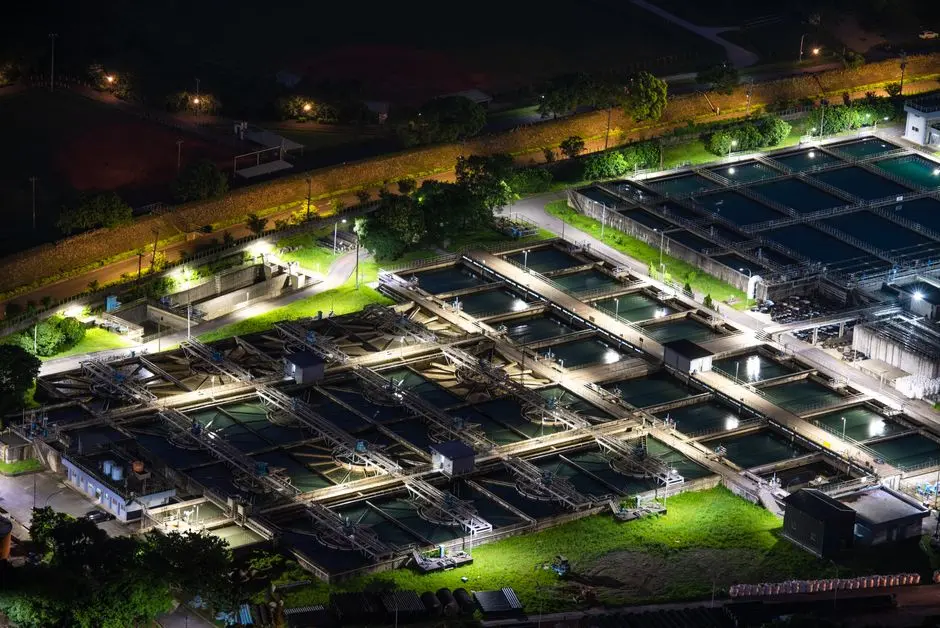
The right biological process for a yeast plant is not the cheapest per m³ of tank volume — it is the one that handles melasse-sulfate-ammonia fingerprint without chronic operational failure. Three options compete for the slot, and the trade-offs are sharp.
MBBR vs SBR for yeast duty: SBR handles shock loads well through its batch cycle, but it requires 2–3× the footprint at the same OLR because the reactor must hold the full batch volume through fill, react, settle, and decant. Sludge bulking from high-carbohydrate yeast feeds is a chronic SBR operational problem and typically forces the addition of a selector zone or periodic chlorination of the return sludge, which adds complexity the MBBR avoids by retaining biomass on a fixed media surface.
MBBR vs UASB for yeast duty: UASB achieves lower energy demand and produces biogas, but it fails on melasse-sulfate wastewaters above 500 mg/L SO₄²⁻. At yeast plant sulfate levels of 1,500–4,000 mg/L, sulfate-reducing bacteria outcompete methanogens, generating H₂S that corrodes piping and produces a sulfide-laden biogas stream that needs scrubbing before use. MBBR is the safer default when influent sulfate exceeds 1,500 mg/L.
MBBR + MBR hybrid: when the discharge spec requires reuse-quality effluent (COD below 50 mg/L, TSS below 5 mg/L, NH₃-N below 1 mg/L), the MBBR effluent should feed a submerged PVDF MBR module. The MBR adds roughly $80–$140 per m³ of daily flow to the installed CAPEX, but it eliminates the secondary clarifier and tertiary filtration step and delivers a stable, low-TSS permeate suitable for cooling tower make-up or boiler feed. This is the configuration used in the parallel beverage wastewater MBR solution reference design for high-strength food-industry streams. The MBBR + MBR hybrid polishing step combines both reactor types in a single packaged skid for flows up to 5,000 m³/d.
MBBR loses to alternatives in three specific cases: very small flows (under 50 m³/d) where a packaged SBR or MBR is cheaper per m³/d installed; very high inlet temperature (above 45 °C) where thermophilic UASB outperforms any biofilm reactor; or when biogas energy recovery is a project priority and the sulfate level is low enough to keep H₂S in check.
| Process | Footprint (m²/m³·d) | Energy (kWh/m³) | CAPEX ($/m³·d, 2026) | Best-fit condition |
|---|---|---|---|---|
| Two-stage MBBR | 0.08–0.15 | 0.6–1.0 | 380–720 | Sulfate >1,500 mg/L; variable load; retrofit |
| SBR | 0.20–0.35 | 0.5–0.8 | 450–800 | Flow <200 m³/d; low sulfate; tight nutrient spec |
| UASB + polishing | 0.05–0.10 | 0.2–0.4 | 500–900 | Sulfate <500 mg/L; biogas recovery priority |
| MBBR + MBR hybrid | 0.12–0.20 | 1.0–1.6 | 620–1,050 | Reuse-quality effluent; tight NH₃-N limit |
2026 Cost Benchmarks and Footprint
For a 500 m³/d yeast plant, MBBR-only CAPEX (civil works, media, aeration, and control system) runs $380–$720 per m³/d installed in 2026, with OPEX of $0.18–$0.32 per m³ treated depending on tank material (concrete retrofit vs new carbon-steel epoxy-lined) and automation level (HydropureWater field data, 2026). MBBR + MBR hybrid CAPEX runs $620–$1,050 per m³/d installed, with OPEX of $0.35–$0.55 per m³ including membrane replacement amortized over a typical 5–7 year PVDF module life.
Footprint for two-stage MBBR is 0.08–0.15 m² per m³/d, which means a 500 m³/d plant fits into 40–75 m² of reactor plan area — small enough to retrofit into an existing yeast plant building without major civil expansion. Conventional activated sludge at the same OLR needs 0.20–0.30 m² per m³/d, so MBBR delivers a 40–60% footprint reduction. MBBR also produces 30–50% less waste activated sludge than CAS because biofilm retention allows operation at a higher SRT, and the smaller sludge volume downstream is dewatered with a plate-and-frame filter press sized to the reduced cake throughput.
Frequently Asked Questions
What HRT does MBBR need for 8,000–20,000 mg/L BCOD yeast wastewater? Two-stage anoxic-aerobic MBBR at 30% media fill runs 6–10 hr total HRT (3–5 hr anoxic plus 5–7 hr aerobic) and delivers 90–95% COD removal at an OLR of 4–8 kg COD/m³·d. Below 6 hr combined HRT, nitrification efficiency drops below 80% at the upper BCOD range.
Can MBBR handle sulfate-rich melasse effluent? Yes — MBBR handles sulfate-rich melasse effluent better than anaerobic options because aerobic conditions avoid sulfate reduction to H₂S. MBBR tolerates influent sulfate up to 4,000 mg/L without biogas scrubbing or sulfide corrosion concerns that would otherwise force a switch from UASB.
What media specification is standard for food-industry MBBR? HDPE biofilm carriers, 500–800 m²/m³ specific surface area, 0.95–0.98 g/cm³ density, with protected effective surface of 350–500 m²/m³. Food-grade HDPE is required for yeast duty to prevent leaching and to meet FDA/EU food-contact material standards for plants handling consumable yeast.
What is the 2026 CAPEX range for an MBBR at a yeast plant? Typical MBBR CAPEX is $380–$720 per m³/d installed; OPEX runs $0.18–$0.32 per m³ treated in 2026. MBBR + MBR hybrid for reuse-quality effluent runs $620–$1,050 per m³/d installed with OPEX of $0.35–$0.55 per m³.
What pretreatment is mandatory before the MBBR? Equalize to ≤1.3× average load, screen below 1 mm aperture, adjust pH to 6.5–7.5, and target FOG below 200 mg/L. Skipping fine screening or pH adjustment causes biofilm stripping and 20–40% OLR loss within the first 6 months of operation.