How Sri Lanka Regulates Food Processing Effluent in 2026
The Central Environmental Authority (CEA), operating under the National Environmental Act No. 47 of 1980, issues an Environmental Protection Licence (EPL) to any food processor discharging more than 100 m³/day or operating inside a designated industrial zone — a threshold that captures most mid-scale dairies, poultry abattoirs, and coconut oil mills in Sri Lanka's Western and North Western provinces. SLSI tolerance limits for industrial effluents discharged to inland surface waters set the binding floor: BOD ≤ 30 mg/L, COD ≤ 150 mg/L, TSS ≤ 50 mg/L, oil & grease ≤ 10 mg/L, pH 6.0–8.5, and total nitrogen ≤ 10 mg/L (SLSI 2026 revision; confirm current edition before tender issue). Poultry processing wastewater (PPWW) is the most-cited compliance failure in the local literature: Wijesekera (2021) reports raw PPWW at BOD 5,000–10,000 mg/L and FOG 1,000–3,000 mg/L, meaning a single slaughter shift can spike BOD loading by an order of magnitude above the daily licence average. Seafood processors discharging near Peliyagoda, Negombo, or Beruwala additionally fall under the Marine Pollution Prevention Act and Coast Conservation Department rules, with oil & grease capped at 5 mg/L in some coastal receiving waters. Board of Investment (BOI) contracts for export-oriented tea, coconut, and seafood factories typically append a stricter effluent condition that mirrors EU BAT-AEL ranges, even when SLSI is the legal minimum.
Typical Influent Characteristics by Sri Lankan Food Sub-Sector
Sizing a treatment train correctly starts with matching your sub-sector to a defensible influent envelope. The parameter table below compiles the figures engineers use most often in Sri Lankan feasibility studies; it draws on Wijesekera (2021) for poultry and on typical operating data for dairy, coconut oil, fish, tea, bakery, and canning streams.
| Sub-sector | Flow (m³/d) | pH | COD (mg/L) | BOD (mg/L) | TSS (mg/L) | FOG (mg/L) | TN (mg/L) | Temp (°C) |
|---|---|---|---|---|---|---|---|---|
| Dairy (CIP-heavy) | 20–300 | 6–9 | 2,000–5,000 | 1,200–3,000 | 500–1,500 | 200–800 | 40–120 | 30–45 |
| Poultry slaughter | 30–500 | 6.5–8.5 | 5,000–10,000 | 2,500–5,000 | 800–2,500 | 1,000–3,000 | 200–400 | 30–40 |
| Coconut oil (virgin / parings) | 10–200 | 4–7 | 8,000–25,000 | 4,000–12,000 | 1,000–3,500 | 2,000–10,000 | 30–80 | 50–80 |
| Fish / seafood | 20–400 | 6–8 | 2,000–6,000 | 1,200–3,500 | 600–2,000 | 200–1,000 | 200–500 | 15–30 |
| Tea processing | 50–800 | 5–7 | 500–1,500 | 300–900 | 200–600 | 20–100 | 10–40 | 60–80 |
| Bakery / confectionery | 5–100 | 5–8 | 3,000–8,000 | 2,000–5,000 | 400–1,200 | 50–300 | 20–60 | 25–40 |
| Fruit & vegetable canning | 50–500 | 4–8 | 1,500–4,000 | 800–2,500 | 500–1,500 | 50–200 | 30–100 | 25–60 |
Dairy plants around Pannala and Ambewela run hot CIP alkali cycles that push pH above 9 for several hours each shift — a flow equalization tank is non-negotiable. Coconut oil effluent is the most FOG-loaded stream in the table; without DAF pretreatment, no biological stage will hold its biomass. Tea wastewater is seasonal and high-temperature, often discharged warm enough (60–80 °C) to skip a heater on the anaerobic stage entirely.
The 2026 Process Train: Screening → DAF → Anaerobic → MBR/SBR → Disinfection
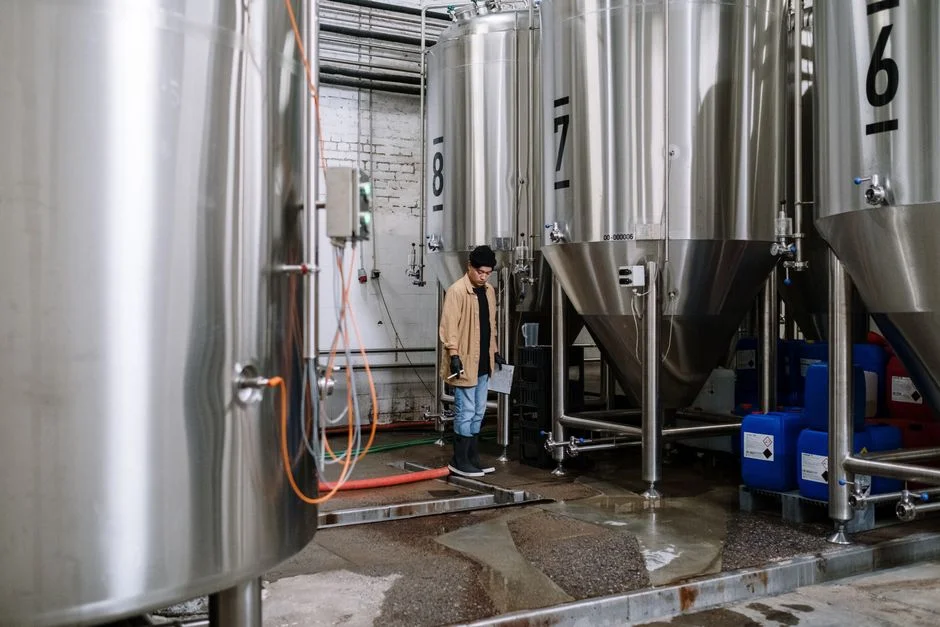
The process train below handles more than 90% of Sri Lankan food effluent cases. Each stage has a defined job; skipping one creates a downstream failure that is more expensive to retrofit than to install correctly the first time.
Stage 1 — Screening. A GX series rotary mechanical bar screen with 3–6 mm aperture protects downstream pumps from feathers, fruit peels, paunch contents, and CIP rag. Stage 2 — Equalization at 8–24 hours HRT dampens the batch spikes from slaughter floors, cookers, and CIP returns; under-sizing this tank is the single most common reason Sri Lankan plants fail their EPL sample. Stage 3 — A dissolved air flotation system (4–300 m³/h capacity, proven in dairy and poultry deployments) removes 90–95% of FOG and 70–85% of TSS before the biological stage. Stage 4 — Anaerobic treatment in a UASB reactor (8–12 kg COD/m³·d loading, biogas recovery) or a glass-fused-to-steel (GFS) digester tank — capacity 20–18,000 m³, design life >30 years per AWWA D103 / OSHA, coating 0.35 mm — gives both treatment and energy offset. Stage 5 — Aerobic polishing: an integrated MBR membrane bioreactor for reuse-quality effluent at sub-1 µm filtration, or a sequencing batch reactor (SBR) for lower capex where skilled operators are available. Stage 6 — Disinfection with a chlorine dioxide generator (1–2 mg/L residual ClO₂) for surface discharge, or chlorination plus RO polishing where the plant reuses water for CIP or boiler feed. Sludge from the aerobic and anaerobic lines is dewatered on a plate and frame filter press from 1–2% feed solids to a 25–35% cake for off-site disposal or composting. Anaerobic digestion typically cuts surplus sludge by 60–80% versus an aerobic-only train, which is a real disposal-cost saving in Sri Lanka where hauler fees run LKR 8,000–15,000 per trip. The same staged approach is well documented in the regional South Asian literature; for a tropical-climate comparison see the industrial wastewater treatment in Bangladesh 2026 guide.
Choosing the Right Process Train: Lagoon vs Packaged MBR vs DAF+UASB+MBR
For a 50 m³/day reference plant — 8-hour equalization, 10 m³/h DAF, 200 m³ UASB, 80 m³ MBR with PVDF submerged membranes, 5 m³ chlorine contact tank — three credible configurations cover almost every site condition in Sri Lanka. The table below is the decision framework I run past procurement before we open a supplier list.
| Criterion | Option A: Anaerobic + aerobic lagoon | Option B: Packaged MBR skid | Option C: DAF + UASB + MBR |
|---|---|---|---|
| Land footprint (50 m³/d) | 0.3–0.6 ha | ~120 m² (60% smaller than lagoon) | ~180 m² |
| Effluent BOD (mg/L) | 2,000–3,000 (no reuse) | < 10 (reuse-capable) | < 10 (reuse-capable) |
| CAPEX (2026, USD) | 65,000–95,000 | 85,000–130,000 | 110,000–180,000 |
| OPEX (USD/m³) | 0.20–0.45 | 0.55–0.80 | 0.45–0.70 |
| Biogas credit | Limited / flared | None | 0.25–0.40 m³/kg COD removed |
| Best fit | Rural sites with land, no reuse target | Urban / industrial-park sites, water reuse | Export-oriented plants under BOI / EU-style limits |
Decision rule: if land is cheap and the receiving water is a stream or a large holding pond, lagoon wins on cost. If the plant is inside a BOI zone, an industrial park near Colombo, or plans to reuse water for CIP, packaged MBR earns its premium. If the effluent carries FOG above 800 mg/L — poultry, coconut oil, dairy — DAF + UASB + MBR is the only configuration that keeps biomass inside the reactor and the licence inside its envelope. The MBR footprint and reuse performance figures track what HydropureWater's MBR datasheet shows for tropical food deployments, and the broader dairy case is laid out in the dairy wastewater treatment engineering methods reference. For a regional cost-and-spec sanity check, the food processing wastewater treatment in Ireland guide shows a similar train scaled to a colder climate.
2026 CAPEX and OPEX for Sri Lankan Food Wastewater Projects
Budget numbers for Sri Lankan food plants in 2026, assuming LKR 305–315 per USD and a complete mechanical, electrical, and civil scope:
| Plant size | CAPEX (USD) | CAPEX (LKR) | Typical OPEX (USD/m³) |
|---|---|---|---|
| 5–20 m³/day (packaged) | 25,000–55,000 | 7.6–17 M | 0.60–1.10 |
| 50–150 m³/day (mid-scale) | 65,000–180,000 | 20–56 M | 0.40–0.80 |
| 200–500 m³/day (large) | 200,000–600,000 | 61–186 M | 0.30–0.65 |
Process-train cost split holds fairly consistently across sizes: DAF 12–18%, anaerobic digester or tank 25–35%, MBR or SBR 25–30%, civil works and buildings 20–25%. OPEX is dominated by electrical energy — 0.4–1.2 kWh/m³ for MBR trains versus 0.1–0.3 kWh/m³ for lagoon systems — followed by chemical dosing (coagulant, defoamer, NaOCl), membrane replacement every 5–8 years (typically 15–25% of membrane train CAPEX amortized), and sludge hauling at LKR 8,000–15,000 per trip. A working biogas credit of 0.25–0.40 m³ per kg COD removed, used in a boiler or genset, offsets roughly USD 0.05–0.10/m³ on the OPEX line — small in absolute terms but it shortens payback on the anaerobic tank by 6–12 months.
Implementation Timeline and Supplier Selection Checklist
Plan the project as 8–14 months from kickoff to commissioned plant: feasibility and EIA submission 6–10 weeks, CEA EPL review 8–16 weeks, detailed design 6–10 weeks, fabrication 8–14 weeks, civil works 6–10 weeks, installation and commissioning 4–8 weeks. When you draw up a supplier shortlist, verify the following on paper before you accept a price: confirmed food-sector reference plants with a client list you can call, AWWA D103 / OSHA design basis for any steel tank, ISO 9001 manufacturing, factory acceptance test (FAT) video, on-site commissioning in Sri Lanka, English-language O&M documentation, and a 24-month warranty with a remote-monitoring option. The four engineering mistakes I see most often in local retrofits are: equalization tank sized for 4 hours instead of 8–24, FOG removal omitted so the UASB loses its granular sludge within a month, tropical-ambient derating ignored on blowers and pumps (1.0–1.5 kW extra per 100 m³/d is realistic), and sodium inhibition from seafood effluent underestimated in the biological sizing.
Frequently Asked Questions
What discharge limits does a Sri Lankan food factory face in 2026? SLSI tolerance limits for inland surface-water discharge are BOD ≤ 30 mg/L, COD ≤ 150 mg/L, TSS ≤ 50 mg/L, oil & grease ≤ 10 mg/L, pH 6.0–8.5, total nitrogen ≤ 10 mg/L. Plants under a CEA EPL may also be held to a lower site-specific limit set during licence review.
Which is the most difficult Sri Lankan food effluent to treat? Coconut oil and poultry slaughter tie for the worst case. Coconut oil carries FOG of 2,000–10,000 mg/L; poultry per Wijesekera (2021) carries BOD of 5,000–10,000 mg/L and FOG of 1,000–3,000 mg/L. Both need DAF in front of any biological stage.
How much land does a 50 m³/day packaged MBR plant need? Roughly 120 m², including access and chemical storage, against 0.3–0.6 ha for a lagoon train at the same flow.
What CAPEX should a mid-scale Sri Lankan food plant budget in 2026? For 50–150 m³/day with a DAF + UASB + MBR train, plan USD 65,000–180,000 installed, or LKR 20–56 million at the current exchange band.
How long does the CEA EPL process take for a new food plant? From project kickoff to commissioned plant, allow 8–14 months: 6–10 weeks for feasibility and EIA submission, 8–16 weeks for the CEA EPL review, and a further 6–10 months for design, fabrication, civil works, and commissioning.