Why Industrial Wastewater Treatment in Puebla in 2026 Is Regulated Differently
NOM-001-SEMARNAT-2021 replaced the 1996 NOM-001 standard on January 14, 2022, and remains the binding federal instrument for industrial discharges into Mexican water bodies in 2026. The standard tightens limits on BOD, COD, TSS, fats-oils-greases (FOG), and total nitrogen based on three receiving-body classifications: rivers and streams (cuerpo receptor tipo A), lakes and reservoirs (tipo B), and municipal sewer systems (tipo C). For most Puebla plants discharging to the Atoyac or its tributaries, daily maximum BOD is capped at 50 mg/L, COD at 120 mg/L, TSS at 50 mg/L, FOG at 20 mg/L, and total nitrogen at 25 mg/L (per NOM-001-SEMARNAT-2021). Discharges to a municipal sewer in Puebla city run roughly 30–50% looser, but only when the downstream WWTP accepts the load and a pretreatment contract is filed with the operador (per CONAGUA guidance). Puebla state adds two further obligations: a CONAGUA descarga permit (01-CONAGUA or 02-CONAGUA depending on flow) before commissioning, and live PROFEPA enforcement exposure, which can issue multas starting at roughly MXN 100,000 for non-compliant effluents. The earliest documented industrial benchmark in the state is the Warner-Lambert (now Pfizer) high-strength WWTP built in Puebla in the 1990s for combined pharmaceutical wastewater, an installation that pre-dates NOM-001-SEMARNAT-2021 and no longer reflects defensible practice for new builds. Generic "activated sludge" textbooks from that era understate both the FOG and the color-removal burden that 2026 audits now flag. A 2026 retrofit or new build in Puebla must therefore be designed around the 2021 standard, not around 30-year-old case studies. For a useful cross-jurisdiction parallel on emerging-market effluent-limit design, the 2025 Egypt industrial effluent compliance guide walks through a comparable regulatory structure.
Sector-by-Sector Influent Characterization for Puebla Industry
Puebla's industrial base clusters around four wastewater archetypes, each with a different front-end treatment requirement. Automotive and metal-mechanical tier-1 suppliers (VW/Audi and the Cuautlancingo corridor) generate high TSS in the 500–2,000 mg/L range, total oils and greases from 200–800 mg/L, pH 8–10, and frequent metal-bearing cutting fluids — DAF is mandatory before any biological step. Textile dyeing operations in the Huejotzingo and San Martín Texmelucan corridors produce COD between 800–3,000 mg/L, decolorized but highly colored effluent, and elevated temperatures of 40–60°C, which must be equalized and cooled before biological contact. Pharmaceutical and fine-chemical facilities see the highest shock loads: COD 2,000–10,000 mg/L, variable pH (3–11), and intermittent solvent traces that demand anaerobic pre-treatment or a UASB hybrid upstream of membranes. Food and beverage plants, including the snack and bakery clusters around Cholula and San Pedro Cholula, deliver BOD 1,500–4,000 mg/L and FOG 300–1,000 mg/L — well-suited to DAF plus conventional biological. The Sanchez-Sanchez 2023 aerobic granular sludge study at the Department of Environmental Engineering, Puebla 72810, México (cited 10× as of 2026) confirms that real combined industrial/municipal streams respond to advanced biological treatment when MLVSS is held above 4,000 mg/L. The bakery sector overlaps almost perfectly with the food cluster, and is covered in more detail in the MBR for bakery wastewater design guide.
| Sector | COD (mg/L) | BOD (mg/L) | TSS (mg/L) | FOG (mg/L) | pH | Temp (°C) | Typical Flow (m³/day) |
|---|---|---|---|---|---|---|---|
| Automotive / metal-mechanical | 1,000–2,500 | 400–1,000 | 500–2,000 | 200–800 (oils) | 8–10 | 25–40 | 50–500 |
| Textile dyeing | 800–3,000 | 300–900 | 200–800 | 50–150 | 7–10 | 40–60 | 100–2,000 |
| Pharma / chemical | 2,000–10,000 | 1,000–4,500 | 300–1,500 | 50–300 | 3–11 | 25–45 | 20–300 |
| Food / beverage (incl. bakery) | 1,500–4,000 | 1,500–4,000 | 400–1,200 | 300–1,000 | 5–9 | 25–50 | 50–800 |
The 2026 Reference Process Train for Puebla Industrial Plants
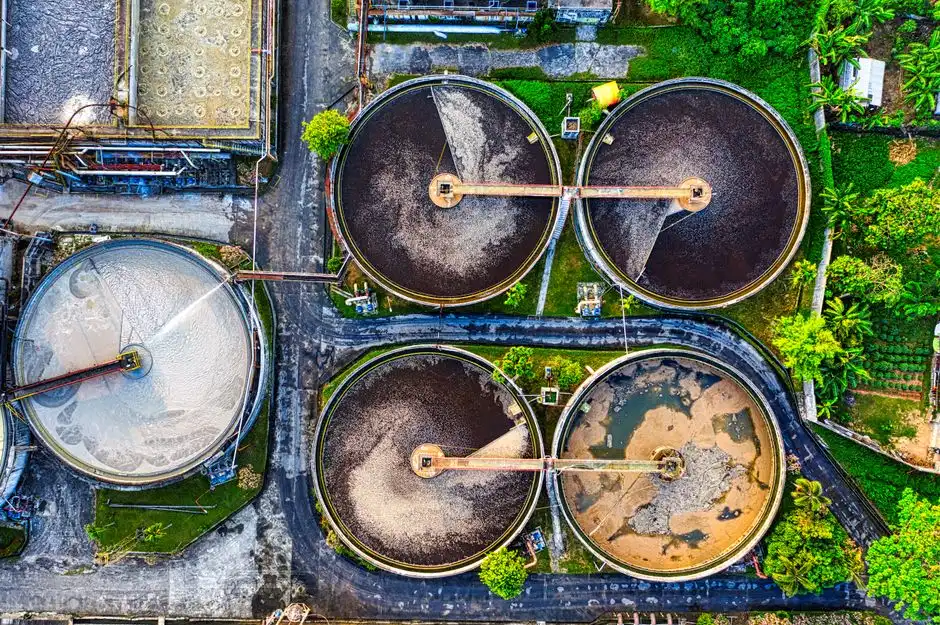
A defensible 2026 process train for a Puebla industrial plant follows six stages, sized for the 10–500 m³/day range that covers most tier-1 supplier operations. Step 1 is a GX series rotary mechanical bar screen at 1–10 mm aperture, which protects downstream pumps from wipes, trimmings, and plant debris — a step that is often skipped in budget retrofits and causes 30–40% of unplanned service calls. Step 2 is flow equalization with pH correction at 8–24 h HRT, damping batch-discharge shock loads that otherwise crash biological kinetics. Step 3 is the dissolved air flotation unit, rated 4–300 m³/h, generating 20–80 μm micro-bubbles that lift >90% of free TSS and FOG in a single pass. Step 4 is biological treatment — either conventional activated sludge at MLVSS 2,000–4,000 mg/L, or a UASB hybrid for high-strength pharma/chemical streams at COD loadings above 2,500 mg/L. Step 5 is an MBR membrane bioreactor system using a DF series PVDF flat-sheet membrane module (0.1 μm pore), which eliminates the secondary clarifier and shrinks footprint by roughly 60% versus CAS. Step 6 is optional tertiary polishing with an industrial RO system at up to 95% recovery, plus chlorine dioxide dosing for any reuse loop. Total energy demand typically lands at 0.8–1.4 kWh per m³ treated, with the MBR aeration train accounting for 55–65% of that load.
| Stage | Equipment | Design Parameter | Typical Removal / Output |
|---|---|---|---|
| 1. Screening | GX rotary bar screen | 1–10 mm aperture | Protects downstream equipment |
| 2. Equalization | EQ tank + pH dosing | 8–24 h HRT | Shock-load dampening |
| 3. DAF | DAF line, 4–300 m³/h | 20–80 μm bubbles | >90% TSS, >85% FOG |
| 4. Biological | Activated sludge or UASB | MLVSS 2,000–4,000 mg/L | 70–90% BOD/COD |
| 5. MBR | DF series PVDF flat-sheet | 0.1 μm pore, 10–2,000 m³/day | Effluent <5 mg/L TSS, <5 mg/L BOD |
| 6. RO + disinfection | Industrial RO + ClO₂ | Up to 95% recovery | Reuse-quality water |
2026 CAPEX and OPEX Benchmarks for Puebla Industrial WWTPs
Budget numbers for a packaged DAF + MBR skid in 2026 land in a defensible band, and procurement teams in Puebla should anchor their requests around them. CAPEX for a fully equipped 50–200 m³/day DAF + MBR skid landed in Puebla sits between USD 45,000 and USD 180,000, depending on inclusion of equalization, dosing skids, blowers, and control panels (HydropureWater field data, 2026). OPEX is dominated by membrane aeration and chemical dosing, landing in the USD 0.10–0.35 per m³ treated band for most Puebla influent profiles. Cross-border landed cost from a Chinese OEM typically runs 20–35% below US/EU equivalent for skid-mounted units, but the savings are partially absorbed by sea freight to Veracruz (6–10 weeks transit) plus inland trucking to Puebla. For a useful head-to-head on the primary vs. induced-air flotation decision, the DAF vs IAF cost comparison breaks down 2026 numbers. Sludge handling should not be a footnote: a plate and frame filter press sized 1–500 m² reduces sludge volume 80–85% before disposal, cutting sludge hauling cost by roughly the same margin. For a regional benchmark on cost expectations in a comparable Mexican state, the Guadalajara sewage treatment suppliers guide lays out parallel figures.
| Plant Size (m³/day) | Core Equipment Skid | Sludge Handling | CAPEX (USD landed, 2026) | OPEX (USD/m³) |
|---|---|---|---|---|
| 50 | DAF + MBR + dosing | 1–5 m² filter press | 45,000–70,000 | 0.18–0.35 |
| 100 | DAF + MBR + dosing + EQ | 5–10 m² filter press | 75,000–110,000 | 0.14–0.28 |
| 200 | DAF + MBR + dosing + EQ + RO | 10–20 m² filter press | 120,000–180,000 | 0.10–0.22 |
| 500 | DAF + MBR + dosing + EQ + RO + ClO₂ | 20–50 m² filter press | 250,000–420,000 | 0.10–0.18 |
Evaluating a Cross-Border Wastewater Equipment Supplier in 2026
Sourcing a packaged WWTP from China into Mexico in 2026 is a solvable problem, but most warranty disputes come from the same five procurement errors. First, verify ISO 9001, CE, and (for any drinking-water reuse loops) NSF/ANSI 61 certifications on the actual manufacturer, not on a holding or trading company. Second, demand factory acceptance test (FAT) video and at least one reference plant operating in Latin America or on a comparable influent matrix. Third, confirm 24/7 bilingual technical support and a guaranteed ≤72 h spare-parts dispatch from a regional hub — a metric that filters out most low-cost suppliers within a single RFP round. Fourth, validate membrane warranty terms: reputable PVDF flat-sheet membranes carry 3–5 year warranties and include documented CIP cleaning protocols. Fifth, compare the integrated MBR + DAF + sludge press offering against the typical multi-vendor approach, which adds interface risk and roughly 10–20% to total cost through duplicated engineering. A practical regional benchmark for cross-border OEM selection is the Bangkok 2026 buyer's guide, which covers a parallel supplier-evaluation framework.
| Evaluation Criterion | Pass Threshold | Red Flag |
|---|---|---|
| Certifications | ISO 9001, CE, NSF/ANSI 61 if reuse | Trading company on certificates |
| Reference plants | ≥1 in Latin America or similar influent | Only domestic China references |
| Technical support | 24/7 bilingual, ≤72 h parts | Email-only support |
| Membrane warranty | 3–5 years, CIP protocol included | <2 years, no CIP documentation |
| Scope of supply | Integrated DAF + MBR + sludge press | Loose multi-vendor BOM |
Puebla-Specific Compliance Checklist Before You Start Construction
- Confirm NOM-001-SEMARNAT-2021 receiving-body classification (river, lake, or municipal sewer) before sizing the biological step.
- File the CONAGUA descarga permit (01-CONAGUA for surface water, 02-CONAGUA for municipal sewer) and water-use concession before commissioning.
- Validate sludge disposal against NOM-004-SEMARNAT-2002 — automotive and pharma sludges can shift into hazardous classification if metals or solvents exceed CRETIB thresholds.
- Engage a Puebla-based environmental consultant for the Manifestación de Impacto Ambiental (MIA) where annual discharge exceeds the SEMARNAT threshold.
- Document chain of custody for all pretreatment chemicals to defend dosing records during a PROFEPA visita.
Frequently Asked Questions
What are the NOM-001-SEMARNAT-2021 daily maximum limits for industrial discharge to a river in Puebla?
Rivers and streams (cuerpo receptor tipo A) are capped at 50 mg/L BOD, 120 mg/L COD, 50 mg/L TSS, 20 mg/L FOG, and 25 mg/L total nitrogen as daily maxima (per NOM-001-SEMARNAT-2021).
How is a DAF unit sized for a 100 m³/day automotive effluent?
For automotive effluent at 1,000 mg/L TSS and 400 mg/L oil, select a DAF rated 1.5–2× the design flow, i.e. 150–200 m³/h hydraulic capacity, with a 20–30% recycle ratio (HydropureWater field data, 2026).
When does an MBR outperform conventional activated sludge in a Puebla plant?
When the site is footprint-constrained (typically <30% of the land needed for CAS), when effluent TSS must stay under 10 mg/L without a clarifier, or when variable influent makes sludge settle poorly.
What is a defensible 2026 CAPEX benchmark for a 100 m³/day DAF + MBR system in Puebla?
USD 75,000–110,000 landed, with OPEX of USD 0.14–0.28 per m³ treated (HydropureWater field data, 2026).
How long does cross-border shipping from China to Puebla take in 2026?
Sea freight to Veracruz runs 6–10 weeks, plus 4–6 hours by road to Puebla; plan a total of 8–12 weeks from purchase order to site delivery, not counting customs hold.
What is the typical replacement interval for PVDF flat-sheet MBR membranes in industrial service?
PVDF flat-sheet membranes typically last 5–8 years before replacement, with annual CIP cleaning and integrity testing per the supplier's protocol (HydropureWater field data, 2026).