Egypt eeaa industrial effluent discharge limits 2026 are applied through recipient-specific permits under Law 48/1982, related sewer rules, and EEAA monitoring practice. The controlling value depends on whether treated industrial wastewater reaches the Nile, a canal, an agricultural drain, groundwater, or a public sewer.
egypt eeaa industrial effluent discharge limits 2026
Egyptian industrial discharge compliance is decided by the receiving water body, the permitted discharge point, and the measured pollutant load. For initial engineering screening, this article retains TSS ≤ 30 mg/L, BOD5 ≤ 20–25 mg/L, COD ≤ 100 mg/L, and oil and grease ≤ 10 mg/L. The final permit must confirm the applicable recipient-specific table.
According to the Egyptian Environmental Affairs Agency (EEAA), industrial wastewater guidance covers pollutant types, pollution loads, sampling, review, inspection, and corrective action. The EEAA page also describes a national continuous monitoring connection guide issued in September 2019. The Ministry of Water Resources and Irrigation regulations require authorization for treated liquid waste discharged to regulated watercourses; a plant should not assume treatment alone creates a discharge right.
Current Industrial Effluent Limits by Parameter
Egyptian industrial effluent limits vary by receiving water body, so the table is an engineering screening schedule rather than a universal permit. The EEAA technical report identifies BOD, COD, pH, temperature, residual chlorine, TSS, TDS, oil, and grease as parameters for monitoring or inspection, and it presents different limits for sea, Nile, canals, agricultural drains, and public sewers.
Plant managers should compare a recent, flow-weighted laboratory result with the actual permit table before sizing an upgrade. Keep the sample point, production rate, flow, temperature, and operating condition with the result; a single grab sample can hide a cleaning or production shock.
| Parameter | EEAA Discharge Limit (mg/L, unless specified) | Notes |
|---|---|---|
| Total Suspended Solids (TSS) | ≤ 30 mg/L | Standard for direct discharge to surface water or municipal sewers. |
| Biochemical Oxygen Demand (BOD5) | ≤ 20–25 mg/L | Varies slightly depending on the receiving water body's sensitivity. |
| Chemical Oxygen Demand (COD) | ≤ 100 mg/L | Stricter limits may apply for discharge into sensitive or protected zones. |
| Ammonia Nitrogen (NH3-N) | ≤ 5 mg/L (acute exposure zones) ≤ 2 mg/L (chronic exposure zones) |
Critical for preventing eutrophication and toxicity to aquatic life. |
| Total Nitrogen (TN) | ≤ 3.5 mg/L as N | Aligned with the Nile River permissible level of 3500 µg/L. |
| pH | 6.5–8.5 | Range for discharge to public sewers or surface water, preventing corrosion and toxicity. |
| Oil & Grease | ≤ 10 mg/L | Strictly regulated for industrial effluents to prevent surface film and oxygen depletion. |
| Total Dissolved Solids (TDS) | ≤ 2000 mg/L | General guideline; specific limits may apply based on receiving water. |
| Heavy Metals (e.g., Pb, Cd, Cr, Cu) | Varies (typically µg/L range) | Specific limits for individual metals are detailed in Law 48/1982 annexes. |
Earlier guidance often compresses several recipient categories into one summary, but the official Egyptian sources distinguish those categories. Use the values above to identify the controlling pollutant, then verify the permit route and applicable annex. A surface-water design should not borrow a sewer value, and a sewer pretreatment design should not assume a Nile discharge value applies.
Low BOD and TSS caps can push a plant beyond basic primary and secondary treatment into tertiary polishing. Tight nitrogen targets likewise call for biological nutrient removal or physicochemical polishing. Teams comparing Red Sea plant layouts can review the Sharm El Sheikh industrial wastewater treatment engineering specs alongside national EEAA parameter tables.
egypt industrial effluent nitrogen and fog limits
Egypt industrial effluent nitrogen and FOG limits control two different failure modes: nitrogen affects toxicity and nutrient loading, while FOG can coat equipment, form a surface film, and upset downstream biology. The working values are ammonia nitrogen ≤ 5 mg/L in acute exposure zones, ≤ 2 mg/L in chronic exposure zones, TN ≤ 3.5 mg/L as N, and oil and grease ≤ 10 mg/L.
Equalization is usually the first practical control for variable food, slaughterhouse, textile, or chemical flows. A food plant with FOG spikes above 10 mg/L will fail the oil and grease gate until flotation capacity matches peak kill-floor or fryer dumps. Nitrogen control needs a separate mass balance because FOG removal does not replace nitrification-denitrification.
Why So Many Industries Fail to Meet Effluent Standards

Many Egyptian plants still run outdated or undersized treatment trains. Legacy units were built for lower production rates and older operating assumptions, while modern food, textile, and chemical loads swing sharply. Those swings can drive BOD and COD above the discharge cap even when the daily average looks acceptable.
Monitoring gaps compound the problem. A 2010 study cited in the original article indicated that nearly 50% of industries in Egypt violated existing effluent discharge limits, while another 2010 report on industrial pollution control indicated that only 0.2% of effluents were flagged as non-compliant in one audit. Those figures describe different samples and methods; they should not be treated as a current national rate.
Common root causes are simple: no equalization, a design flow below the production peak, weak chemical dosing control, poor sludge wasting, and sampling that misses intermittent discharges. The EEAA guidance emphasizes monitoring, inspection, and corrective action, so the compliance file should show both laboratory results and operating conditions.
Textile and chemical lines with COD above 500 mg/L need staged removal before the final 100 mg/L COD gate is realistic. For coastal tourism hubs facing similar FOG and organics pressure, see Hurghada industrial wastewater treatment cost models.
Permit strategy belongs on a dedicated sibling page; use this article for numeric caps and technology matching, then read industrial waste discharge permit in egypt when you need the authorization path. For the separate sewer-parameter question, use parameters to discharge wastewater sewer system in egypt.
Which advanced wastewater treatment technologies meet Egypt EEAA effluent standards?
Egyptian plants select advanced treatment by the pollutant that controls the permit, not by a generic package label. High FOG or TSS streams from food, slaughterhouse, and petrochemical sites usually start with a DAF system for FOG and TSS removal. Dissolved Air Flotation units remove 90–95% of FOG and suspended solids when oil and grease must stay at or below 10 mg/L.
Sites that need reuse-grade water often add a MBR system for ultra-low BOD and TSS effluent. Membrane bioreactors routinely deliver TSS below 1 mg/L and BOD below 5 mg/L, which clears the retained Egyptian industrial discharge screening values with margin. Actual performance still depends on influent variability, membrane flux, cleaning, and operator control.
Matching Treatment Trains to Egypt Parameter Caps
Egyptian treatment-train selection follows the controlling pollutant and the permitted discharge route. FOG and TSS spikes favor flotation first. Ultra-low BOD and TSS targets favor membrane bioreactors. High-strength COD above 500 mg/L usually needs anaerobic reduction, coagulation-flocculation, then aerobic polishing to reach ≤ 100 mg/L COD.
Hospitals and clinics discharging pathogenic or pharmaceutical traces often specify a dedicated Medical & Hospital Wastewater Treatment System ahead of any sewer connection. That train protects the retained EEAA numeric limits and infection-control requirements without oversizing the main industrial plant.
Most plants we size for variable production run at the lower end of their average flow but experience short, high-load peaks. Equalization volume, peak-hour DAF loading, alkalinity, sludge storage, and standby pumping therefore matter as much as the nominal daily capacity.
How do CETP discharge standards compliance approaches work for Egyptian industrial plants?
Egyptian CETP or municipal sewer compliance still requires stable pretreatment before the final meter. Factories that skip equalization or FOG removal push shock loads downstream and can fail the receiving system's acceptance conditions. Where oil-water separation options are debated, compare wastewater treatment technologies for oil and grease removal against the peak FOG profile.
The practical sequence is segregation at source, screening, equalization, pH correction, FOG and solids removal, biological treatment, and final sampling. The exact sequence changes when nitrogen, heavy metals, salinity, or toxic organics control the permit. Design the sampling point so it represents the permitted final effluent rather than a diluted bypass.
Compliant Treatment Systems: Performance, Cost and Footprint
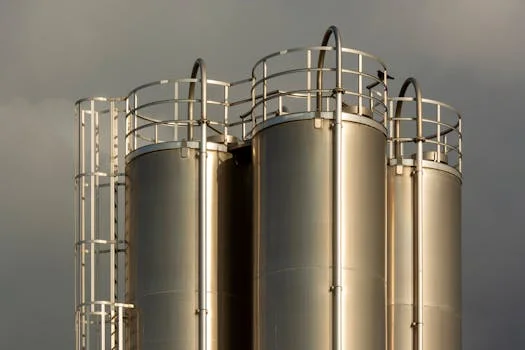
A DAF system covers primary FOG and solids duty at 4 to 300 m³/h with a 92% FOG removal rate. CAPEX typically ranges from $50,000 to $500,000 based on automation and capacity. Treat those figures as the original article's planning ranges, not as a quotation; local civil works, chemical storage, duty-standby philosophy, and import conditions can change the installed cost.
An MBR train treating 10 to 2,000 m³/day can use up to 60% less footprint than conventional activated sludge, which matters on tight industrial plots. The footprint benefit must be weighed against membrane replacement, cleaning chemicals, blower power, instrumentation, and operator skill.
Reuse schemes that must polish dissolved salts often finish with Reverse Osmosis (RO) water purification systems after biological treatment. Reactor selection between membrane and sequencing-batch layouts is covered in the MBR systems comparison when footprint and sludge yield drive the decision.
What sewer pretreatment technologies suit Egyptian public sewer discharge?
Egyptian public sewer pretreatment uses equalization, pH control, DAF, and polishing biology to protect the municipal treatment system. Hold pH between 6.5 and 8.5, cut FOG to ≤ 10 mg/L, and keep BOD and TSS inside the receiving sewer's acceptance window. The sewer operator's consent and sampling conditions must be checked separately from a Nile or canal permit.
pH outside 6.5–8.5 risks corrosion and aquatic toxicity, so neutralization belongs early in the train. Ammonia limits of ≤ 5 mg/L in acute zones and ≤ 2 mg/L in chronic zones, plus TN ≤ 3.5 mg/L as N, decide whether nitrification-denitrification is mandatory before discharge. A lab schedule should cover production peaks, cleaning events, and the permitted final sample point.
Who This Is For / Who Should Look Elsewhere / Next Step
Who this is for: environmental engineers, plant managers, and EPC teams sizing treatment against Egyptian numeric caps for Nile, canal, agricultural-drain, groundwater, or sewer discharge. It also helps auditors checking TSS, BOD, COD, nitrogen, pH, and oil and grease against the relevant Law 48/1982, sewer, or environmental annex values.
Who should look elsewhere: readers seeking only the permit application workflow should open the sibling Egypt wastewater discharge standards compliance guide instead of this parameter-focused article. City-specific Red Sea build costs are better served by the Sharm El Sheikh and Hurghada engineering notes linked above.
Next step: map peak FOG, COD, nitrogen, pH, temperature, flow, and heavy metals against the applicable recipient table, then shortlist DAF, MBR, medical pretreatment, or RO polishing. Share a recent lab sheet and discharge point through an Egypt wastewater treatment design inquiry so the train is sized to the limit that actually controls the permit.
Frequently Asked Questions
What are the Egypt EEAA industrial effluent discharge limits in 2026?
Egyptian discharge limits in 2026 depend on the receiving water body and permit, rather than one national value for every industrial outlet. The retained screening values are TSS ≤ 30 mg/L, BOD5 ≤ 20–25 mg/L, COD ≤ 100 mg/L, oil and grease ≤ 10 mg/L, pH 6.5–8.5, and TDS ≤ 2000 mg/L. Confirm the applicable annex before procurement.
What are Egypt industrial effluent nitrogen and FOG limits?
Egypt industrial effluent nitrogen and FOG screening limits are ammonia nitrogen ≤ 5 mg/L in acute exposure zones, ≤ 2 mg/L in chronic exposure zones, TN ≤ 3.5 mg/L as N, and oil and grease ≤ 10 mg/L. Nitrogen removal needs biological nutrient control, while FOG usually needs source segregation, equalization, and DAF before polishing.
Which treatment process is suitable for Egypt industrial wastewater?
The suitable process is the shortest train that reliably controls the permit's limiting pollutant under peak conditions. DAF suits FOG and TSS, MBR suits low BOD and TSS, staged anaerobic and aerobic treatment suits COD above 500 mg/L, and RO suits dissolved-salt polishing for reuse. Confirm influent data, flow, discharge point, and sampling rules before selecting equipment.
Does a public sewer discharge use the same limits as Nile discharge?
A public sewer discharge does not automatically use the same limits as a Nile or canal discharge. Egyptian sources distinguish recipient categories and identify different laws or annexes for sea, Nile, canals, agricultural drains, groundwater, and public sewers. The plant should obtain the sewer operator's acceptance conditions, then design pretreatment and final sampling around that specific route.
What should an Egyptian plant check before buying a wastewater treatment system?
An Egyptian plant should check the permitted recipient, discharge point, flow range, peak production load, FOG, TSS, BOD5, COD, ammonia, TN, pH, TDS, heavy metals, temperature, sampling method, sludge route, footprint, and operating budget. Most plants we size for fail at peaks rather than averages, so equalization and a representative sampling plan deserve review before equipment capacity is fixed.