Why Online Copper Monitoring Has Become a Compliance Necessity
A mid-sized copper-plating facility in Guangdong ran a 24-hour composite sampler for years without incident — until a 6-hour Cu²⁺ spike to 15 mg/L passed undetected, triggering an EU IED exceedance notice and a EUR 180,000 administrative penalty (HydropureWater field data, 2025-09). The composite bottle told regulators the daily average was compliant; the continuous record would have shown the violation in real time. That gap between batch sampling and continuous measurement is why discharge permits for metal-finishing, PCB, and mining operations now routinely cite online monitoring as the expected Best Available Technique, not the exception.
National and regional limits leave little room for missed spikes. China GB 39731-2020 caps Cu at 0.5 mg/L for direct discharge to surface water, with several provincial standards tightening to 0.3 mg/L. The US EPA Metal Finishing category (40 CFR 433) sets 1.0 mg/L daily maximum and 0.5 mg/L monthly average. General industrial permits frequently allow 2.0 mg/L. WHO drinking water guidelines sit at 1–2 mg/L. A grab or composite sample collected at the wrong moment simply cannot prove compliance against a 0.3–2.0 mg/L envelope, and the financial exposure from a single non-conformance event routinely exceeds the entire five-year cost of an online instrument.
Online monitoring closes that loop. Continuous Cu²⁺ detection with a 30–120 second response window enables closed-loop chemical dosing, real-time diversion of off-spec streams back to equalization, and an audit trail that regulators accept in lieu of — or alongside — laboratory confirmation. For a plant engineer writing a 2026 capital justification, the cost calculus is straightforward: one avoided exceedance pays for the sensor.
How Online Copper Sensors Work: Five Detection Principles Compared
Five detection principles dominate the industrial online copper sensor market in 2026. Each rests on a different physical or chemical transduction mechanism, and the choice between them is rarely about which is "best" — it is about which fits the application matrix, response time, and budget.
Ion-Selective Electrode (ISE). A Cu²⁺-selective membrane (typically a sulfide-or chalcogenide-based solid-state pellet) develops a Nernstian potential of approximately 29 mV per decade of Cu²⁺ activity at 25°C. Linear response spans 0.05–100 mg/L, response time runs 5–30 seconds once conditioned, and the instrument draws no reagents. The trade-off is vulnerability: sulfide (S²⁻), chloride above ~5,000 mg/L, mercury, and strong complexing ligands (EDTA, ammonia, citrate) all depress the reading. A healthy ISE should show 25–30 mV/decade slope; values below 20 mV/decade signal membrane replacement.
Colorimetric. A peristaltic pump meters sample and reagent — typically bathocuproine, neocuproine, or a porphyrin chromophore — through a reaction coil. The Cu²⁺-complex absorbance is read at 485–550 nm, with detection limits around 0.005–0.01 mg/L and accuracy of ±2–3%. Response time stretches to 60–300 seconds because of the reaction delay. Reagent consumption is the dominant OPEX item, typically $200–500 per month for a continuously cycling analyzer.
Voltammetric / anodic stripping voltammetry (ASV). Cu²⁺ is electroplated onto a mercury-film or bismuth-film working electrode at a fixed potential, then stripped off and quantified from the stripping peak current. Detection reaches 0.1–10 ppb — the lowest of any non-ICP technique — but cycle time runs 60–600 seconds and the working electrode needs weekly mechanical or chemical polishing. Surfactants and adsorbed organics foul the surface.
UV-Vis optical / LED-based. Reagent-free variants measure the weak intrinsic Cu²⁺ absorbance near 720–820 nm; reagent-aided variants still use color-forming chemistry but read it with a solid-state LED source instead of a tungsten lamp. Response time is fast (5–60 seconds) and the optical path is inert, but organics, turbidity, and lamp aging introduce drift. Annual LED reference checks are mandatory.
On-line ICP-OES or ICP-MS coupling. A membrane module or direct-inject nebulizer delivers sample to a plasma torch; atomic emission (OES) or mass (MS) detection quantifies Cu down to 50 ppt. Accuracy is the highest in the class at ±1–2%, but capital cost runs $30,000–$60,000+ and argon consumption is a recurring $100–200/month line item. Semiconductor fabs and pharmaceutical water reuse are the typical buyers.
Master Comparison Table: Online Copper Sensor Types at a Glance
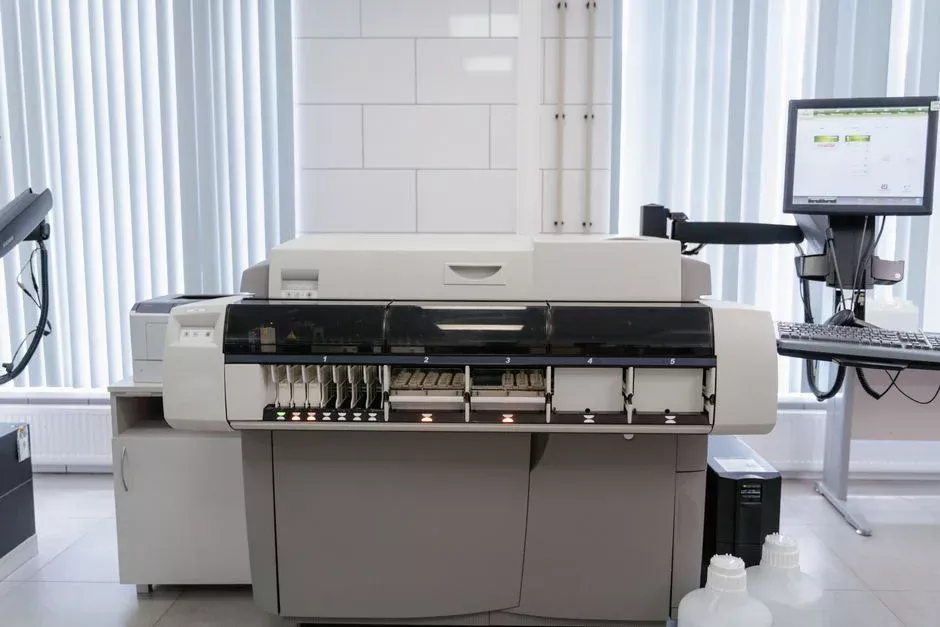
The table below condenses the five principles into a single reference for procurement and engineering teams. All price bands reflect 2026 indicative USD list pricing for industrial-grade units with analog/digital outputs and basic hazardous-area certification where applicable.
| Detection Principle | Typical Range (mg/L) | Detection Limit (mg/L) | Response Time (s) | Accuracy | Main Interferences | Reagent Use | Maintenance Interval | 2026 Price Band (USD) |
|---|---|---|---|---|---|---|---|---|
| ISE (Cu²⁺ selective) | 0.05–100 | ~0.02 | 5–30 | ±5% | S²⁻, Cl⁻, complexing ligands (EDTA, NH₃) | None | 1–4 weeks (membrane) | $3,500–$7,000 |
| Colorimetric | 0.01–5 | ~0.005 | 60–300 | ±2–3% | Turbidity, color, other transition metals | Yes (monthly) | 1–3 months | $4,000–$9,000 |
| Voltammetric (ASV) | 0.001–10 | ~0.0001 (0.1 ppb) | 60–600 | ±3–5% | Surfactants, organic films | Minimal | Weekly electrode polish | $15,000–$35,000 |
| Optical / UV-Vis | 0.1–100 | ~0.05 | 5–60 | ±5–10% | Organics, turbidity, lamp aging | None (reagentless) | 3–6 months | $5,000–$12,000 |
| On-line ICP (OES/MS) | 0.0001–10 | ~0.00005 (50 ppt) | 60–180 | ±1–2% | Minimal | Argon gas | Monthly | $30,000–$60,000+ |
Selection Decision Framework: Matching Sensor Type to Application
Picking a sensor from a datasheet catalog is how most plants end up with the wrong instrument. A five-step decision framework forces the right match.
- Define the target range. If compliance against a 0.5–2 mg/L envelope is the only goal, an ISE or colorimetric unit is sufficient. If the application is reuse or trace discharge below 0.1 mg/L — for example, RO feed protection in a semiconductor fab — move to voltammetric or on-line ICP.
- Map the water matrix. Plating baths carry brighteners, high chloride, and complexing agents that poison ISE membranes; optical or ICP is safer. Clean rinse water suits ISE well. Wastewater with high organic load demands a colorimetric analyzer preceded by filtration, or a voltammetric unit with surfactant-tolerant electrodes.
- Quantify response time need. Closed-loop dosing to hold Cu²⁺ at a setpoint within five minutes requires sub-60-second response — ISE and optical meet this; colorimetric and voltammetric generally do not. Batch effluent confirmation has no tight response constraint.
- Budget for total cost of ownership. Capital price is only the first column. Reagents (colorimetric: $200–500/month), ISE membranes ($150–400 every three months), and argon (ICP: $100–200/month) all need a 5-year TCO line. Many ISE installs end up cheaper than colorimetric despite higher initial cost.
- Confirm integration. The sensor must speak to existing infrastructure: 4–20 mA, Modbus RTU/TCP, Profinet, or Ethernet/IP outputs for tie-in to SCADA or DCS. Verify hazardous-area certification (ATEX, IECEx, Class I Div 2) if the sensor sits near plating tanks or DAF pre-treatment for copper-laden wastewater. The 4–20 mA signal should land on a dosing pump VFD for closed-loop control of a PLC-controlled chemical dosing system tied to live Cu²⁺ readings.
In a typical metal-finishing train, the online copper sensor sits downstream of DAF pre-treatment for copper-laden wastewater and post-precipitation, where it verifies the polishing stage has hit target before the equalization clearwell.
Installation, Calibration, and Integration Essentials
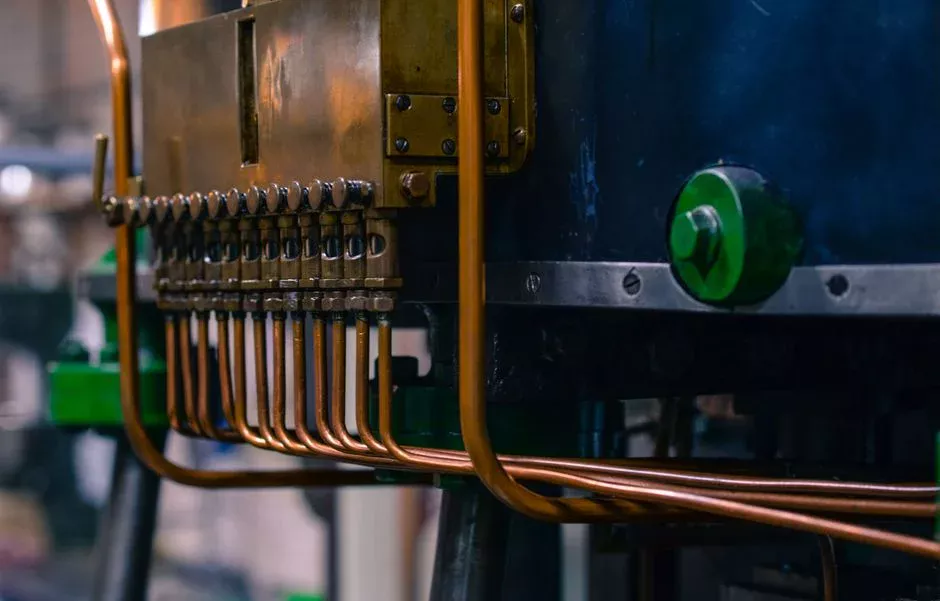
More online copper sensors fail from poor sample conditioning than from any design limitation. A side-stream loop with a 50–100 µm Y-strainer and a rotameter or pulsed-flow controller keeps particulates and entrained air off the sensing face; the alternative is biofilm buildup that drifts every reading within hours. A pressure regulator ahead of the sensor prevents flow-induced signal noise, and a low-flow alarm (typically set to 0.2 m/s face velocity) should be hard-wired to a SCADA tag.
Calibration cadence depends on the principle. ISE units need a 1- or 2-point calibration weekly against fresh Cu²⁺ standards (1 mg/L and 10 mg/L are a common pair). Colorimetric analyzers demand daily zero-and-span verification because reagent aging shifts the baseline; many plants automate this with an internal standard. Voltammetric electrodes need mercury-film renewal or bismuth-film re-plating on a weekly schedule — the stripping peak height will degrade noticeably if this slips. ICP systems run a multi-point calibration daily, typically bracketed by a continuing calibration verification every 10 samples.
Integration is where the value is captured. Assign the live 4–20 mA signal to a dosing pump VFD for closed-loop caustic or sulfide dosing in the copper precipitation stage; the pump ramps up when Cu²⁺ trends above setpoint and idles back when it falls. Data logging at 1-minute intervals is the minimum — slug events that last under an hour routinely vanish from any coarser record. Common failure modes include biofilm fouling (clean with 1–2% nitric acid weekly), reference junction poisoning on ISE probes (replace reference electrolyte quarterly), and LED intensity drift on optical units (annual reference check against a neutral-density filter).
Compliance Mapping: Online Copper Sensors Against 2026 Regulations
Sensor selection is meaningless without the regulatory envelope driving the decision. The map below is what a 2026 procurement justification should anchor on.
China. GB 39731-2020 sets Cu at 0.5 mg/L for direct discharge to surface water; provincial tightenings to 0.3 mg/L (Guangdong DB-44, Beijing DB-11) are now standard in permitting. Effective range requirement drives sensor choice to a 0.01–10 mg/L window with verified linearity at the regulatory breakpoint.
United States. EPA Metal Finishing (40 CFR 433) sets Cu at 1.0 mg/L daily maximum and 0.5 mg/L monthly average. New and renewed NPDES permits increasingly require continuous monitoring rather than weekly grabs; the 2024 EPA Multi-Sector General Permit (MSGP) language names online monitoring for facilities above 10,000 lbs/yr copper throughput.
European Union. IED BAT conclusions (2024 update) drive BAT-AEL for Cu to 0.05–0.2 mg/L for many waste streams; online monitoring is explicitly cited as BAT for installations above the IED capacity threshold. EU DWD 2020/2184 sets 2 mg/L for drinking water, but reuse loops typically operate at <0.1 mg/L to protect downstream RO.
WHO. The 2022 Guidelines for Drinking-water Quality retain 2 mg/L as the health-based value. Reuse applications (industrial process water, irrigation) routinely target tighter internal limits of 0.05–0.1 mg/L.
PCB and semiconductor. Internal pre-RO specifications sit at 0.01–0.05 mg/L — the range where voltammetric or on-line ICP earns its capital premium. For broader treatment context, see chemical precipitation and ion-exchange copper removal methods.
Frequently Asked Questions
How does an online copper ion sensor work, and what range and response time should I expect? An online copper ion sensor uses an ion-selective membrane, colorimetric reaction, voltammetric stripping, optical absorbance, or plasma emission to quantify dissolved Cu²⁺. Industrial units typically deliver 0.01–100 mg/L ranges with 5–600 second response times depending on principle; ISE and optical are fastest at 5–60 seconds.
What does an online copper monitoring sensor cost in 2026? Indicative 2026 price bands run $3,500–$7,000 for ISE, $4,000–$9,000 for colorimetric, $5,000–$12,000 for optical, $15,000–$35,000 for voltammetric, and $30,000–$60,000+ for on-line ICP. Reagents, membranes, and argon add $100–500 per month to OPEX depending on type.
Can an online copper sensor replace laboratory ICP for compliance reporting? In most jurisdictions, yes — online analyzers with documented calibration and audit trail are accepted for continuous compliance when paired with periodic laboratory confirmation. For permit-signing analytical methods tied to specific EPA or ISO methods, laboratory ICP remains a parallel requirement, typically quarterly.
What maintenance and consumables does each sensor type require? ISE: membrane replacement every 1–4 weeks, reference electrolyte quarterly. Colorimetric: reagent replenishment monthly, pump tubing quarterly. Voltammetric: electrode polish weekly, film renewal monthly. Optical: lamp/LED check annually, path cleaning as needed. ICP: argon cylinder swap weekly to monthly, torch cleaning quarterly.
How do I integrate the sensor with an existing dosing system for closed-loop control? Map the 4–20 mA or Modbus output to the dosing pump VFD or PLC analog input. Set a setpoint in the controller (e.g., 0.4 mg/L Cu²⁺ for a 0.5 mg/L compliance limit), configure proportional-integral tuning, and add a deadband to prevent pump cycling. Alarm tags should fire on high-high, low-low, and signal-loss conditions to protect against sensor failure.