Why IoT Sensor Pricing Is So Confusing in 2026
A $5 ESP32 dev board and a $25,000 multi-parameter water quality sonde are both sold as "IoT sensors" in 2026, and that 5,000× price spread is the single biggest source of procurement confusion in the industrial water sector. An IoT sensor is not a passive 4–20 mA probe; it is a sensing element plus an embedded processor plus a network transceiver (Wi-Fi, LoRa, LTE-M, or MQTT-over-Ethernet) that publishes data without manual polling. Industrial units from Hach, Endress+Hauser, and S::can add automatic cleaning, multi-parameter heads, and 5–10 year MTBF ratings, which is where the upper price band comes from. None of the top three Google results for the term "IoT sensor cost" in 2026 publish actual USD pricing — TE Connectivity's page is a generic capabilities overview, a Chinese blockchain news article ranks by accident, and a 2023 PowerPoint on consumer IoT returns a 468 error. The wastewater parameter set that drives real capex in 2026 includes pH, ORP, dissolved oxygen, conductivity, turbidity, TSS, BOD/COD, nitrate, ammonia, MLSS, flow, level, pressure, and temperature — fourteen distinct instrument types, each with its own price band and consumable cost. Buyers who do not separate "sensor node" from "industrial analytical instrument" before they request quotes will be quoted both extremes by accident.
The 4-Layer IoT Cost Stack Every Buyer Must Understand
Any defensible 2026 IoT sensor budget must break the system into four cost layers, because a $500 probe can quietly turn into a $4,500 deployed node once the gateway, cellular modem, and cloud subscription are added. Sensor node hardware (probe plus transmitter) typically accounts for 30–50% of the system cost, while the edge gateway, connectivity, and cloud platform eat the rest. Industrial gateways from Phoenix Contact, Advantech, or Siemens IOT2050 run $400–$3,500; the broader PLC controller range is documented in our PLC control cost guide at $99–$15,000+. Connectivity pricing varies 40× by protocol: LoRaWAN runs $5–$15 per sensor per year, LTE-M cellular $20–$60, Wi-Fi is $0 if infrastructure exists, and satellite connectivity starts at $200+ per year for remote lift stations. Cloud platform cost is the layer most buyers miss — self-hosted Grafana plus InfluxDB costs $0 in license but $1,000–$5,000 for an industrial server, while vendor SaaS like AWS IoT, Azure, Losant, or Ubidots runs $3–$50 per device per month depending on message rate and retention. A $1,200 sensor deployed with cellular, a gateway, and a vendor cloud ends up at $3,200–$4,800 year one, which is exactly why the system-cost multiplier sits at 2.5–4× hardware alone in 2026 (HydropureWater field data).
| Cost Layer | Typical 2026 USD Range | % of System Cost | Hidden Gotcha |
|---|---|---|---|
| Layer 1: Sensor node (probe + transmitter) | $50–$25,000 | 30–50% | Auto-clean adds $1,500–$4,000 to the base probe |
| Layer 2: Edge gateway / IoT controller | $400–$3,500 | 10–20% | Protocol license (Sparkplug B) often billed separately |
| Layer 3: Connectivity (LoRa/cellular/Wi-Fi) | $0–$200+/sensor/year | 5–15% (recurring) | Cellular data overage on high-rate sensors |
| Layer 4: Cloud + dashboard | $0–$50/device/month | 10–25% (recurring) | Data egress fees on AWS/Azure at scale |
| Installation (labor + mounting) | $300–$3,500/sensor | 10–20% | Retractable on pressurized lines doubles install cost |
Industrial Wastewater IoT Sensor Prices by Parameter (2026)
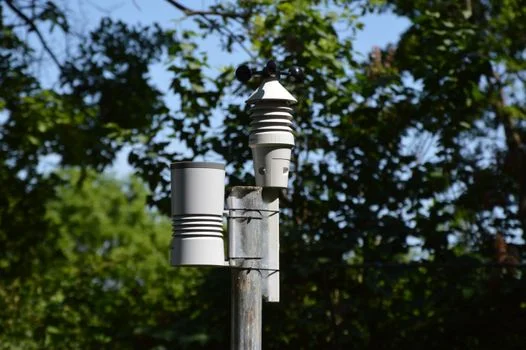
The seven wastewater sensor types below account for roughly 90% of municipal and industrial monitoring capex in 2026. Each parameter has a low-end, mid-range, and high-end option, and the right choice is set by fouling rate, accuracy requirement, and how often your plant can pull a probe for service. For a deeper conductivity spec breakdown, see our conductivity sensor cost 2026 guide; for BOD/COD the reference is our online BOD analyzer cost guide.
| Parameter | Entry / Lab | Industrial Inline | Premium / Self-Clean | Typical Protocol |
|---|---|---|---|---|
| pH | $180–$450 glass probe | $500–$1,800 transmitter w/ Modbus | $2,200–$4,500 differential, high-solids | 4–20 mA + HART, Modbus RTU |
| Dissolved Oxygen (DO) | $300–$600 galvanic | $400–$900 optical luminescence | $1,200–$2,800 membrane polarographic, dirty water | Modbus TCP, HART |
| Conductivity | $120–$400 contact probe | $600–$2,200 toroidal (high-COD/foam) | $2,500–$4,500 four-electrode inline | Modbus RTU, 4–20 mA |
| Turbidity / TSS | $200–$500 surface scatter | $350–$1,200 optical single-beam | $1,500–$3,500 dual-beam self-clean; $5,000+ laser | Modbus, 4–20 mA |
| Online BOD/COD | $1,000–$3,500 UV 254 nm probe | $3,500–$8,000 spectrophotometric | $8,000–$11,000 multi-parameter w/ auto-clean | Modbus TCP, MQTT |
| Nitrate / Ammonia | $1,200–$2,500 ISE probe | $1,800–$4,500 ISE w/ auto-cal | $5,000–$9,000 UV-NIR multi-parameter | Modbus, MQTT/Sparkplug B |
| Multi-parameter sonde (5–7 in one) | $4,000–$8,000 handheld | $8,000–$15,000 fixed, no clean | $15,000–$25,000+ auto-clean, anti-fouling, 90-day cal (Hach, S::can, YSI EXO2) | Modbus, MQTT, SDI-12 |
The table above is the only public 2026 USD reference for this parameter set. Handheld sondes are excluded from capex because they do not publish to a network. A standard mid-range industrial sensor for pH, DO, and conductivity (3 units) plus a $1,200 gateway and one year of cloud typically lands at $4,500–$7,000 installed — which is the realistic 2026 baseline for a small municipal WWTP upgrade.
Communication Protocols and How They Drive Sensor Cost
Protocol choice is the single biggest avoidable cost driver in 2026 IoT sensor deployments, and most spec errors are made before the first probe is ordered. 4–20 mA plus HART remains the legacy default and adds $50–$200 to a transmitter with no protocol license cost, integrating with any existing PLC or SCADA. Modbus RTU over RS-485 and Modbus TCP over Ethernet cost $30–$80 incremental and are dominant in industrial plants for good reason. MQTT with Sparkplug B is the de facto standard for true IoT cloud integration in 2026, costing $100–$400 on the gateway side and $0–$50 per device per month on the cloud side. LoRaWAN is the lowest-power option with 2–10 km range and $5–$15 per sensor per year, which makes it the right pick for tank farms, large aeration basins, and lift stations where cabling is impractical. Cellular LTE-M and NB-IoT run $20–$60 per sensor per year and eliminate the gateway entirely, the right call for retrofit sites with no Ethernet. Wi-Fi is $0 with existing infrastructure but its 50–100 m range and security posture make it rare in WWTPs; deploying Wi-Fi inside a metal-clad headworks building guarantees dead zones. As a rule of thumb, plant-floor coverage uses Modbus, brownfield retrofits use LTE-M, and geographically scattered assets use LoRaWAN — anything else usually wastes money in 2026.
Total Cost of Ownership: Sensor Price Is Only 25–40% of the Bill
A buyer who chases the lowest unit price in 2026 will spend more over a 5-year horizon than the buyer who specs industrial-grade on day one. Installation alone runs $300–$1,500 per sensor for inline mounting and $800–$3,500 for insertion or retractable mounting on pressurized lines. Calibration costs $50–$200 per site visit, and dirty-water applications need 4–12 visits per year because biofilm and grease destroy slope. Consumables add up quietly: pH reference electrolyte $80–$150 per year, DO membrane cap $120–$250 per year, and cleaning solution $200–$500 per year for any self-cleaning cycle. Mean Time Between Failure separates consumer from industrial: cheap consumer-grade probes last 6–18 months, industrial-grade 3–7 years, and multi-parameter sondes with auto-clean 5–10 years. A worked 5-year TCO comparison makes the gap concrete: a $300 pH probe becomes $3,200 once installed and maintained, while a $1,400 industrial transmitter with self-cleaning becomes $4,800 over the same window — only 50% more capex for 2.3× uptime. For plants chasing real lifecycle value, the sensor price line on the quote is the wrong line to optimize against.
Real-World Payback: IoT Sensor ROI in Industrial Wastewater
Payback for IoT sensor retrofits in wastewater is now measured in months, not years, because the cost of doing nothing is rising. Online MLSS and DO control of aeration typically saves $0.02–$0.05 per cubic meter in aeration energy, which means a 10,000 m³/day plant saves $73,000–$182,000 per year — a number that holds across municipal and food-and-beverage facilities in 2026 (covered in our AI process control buyer's guide). Online nitrate and ammonia sensors on a recycled carbon dosing loop cut external carbon cost 20–40%, per the math in our carbon dosing OPEX playbook. Worked example: a 5,000 m³/day food-processing WWTP invests $45,000 in sensors, gateway, and cloud subscription and recovers $90,000 per year in chemical and energy savings — a 6-month payback before any compliance benefit is counted. A PLC-controlled automatic chemical dosing system or an MBR wastewater treatment system downstream of the new sensors compounds the gain by acting on the data in real time. Compliance and penalty avoidance add a second-order benefit: continuous online monitoring eliminates 80–95% of grab-sample non-compliance excursions, which per 2026 EPA enforcement data translates into six-figure avoided fines for mid-sized plants. None of this requires AI — the payback holds with conventional PID loops wired into a Modbus network.
Vendor Selection Checklist: 8 Questions to Ask Before You Buy
- Is the protocol Modbus plus MQTT/Sparkplug B out of the box, or will you need a custom gateway?
- What is the published MTBF, and what are the warranty terms — 12 months is the 2026 industry minimum, 36 months is premium?
- Can the sensor be calibrated in-field without factory return?
- Is the wetted material compatible with your chemistry (PVDF, Hastelloy, PEEK, PTFE)?
- Does the auto-cleaning cycle accept your fouling rate — typical WWTP requirements are 10–60 minutes between cleanings on MBR or DAF effluent?
- What is the data sheet's specified accuracy after 90 days of field deployment, not just at factory calibration?
- Is cloud hosting on your AWS or Azure tenant, or is the data vendor-locked?
- What is the lead time and the price-hold guarantee for a 5-year rollout?
A "no" on any of items 1, 3, 5, or 6 is a deal-breaker in 2026; the rest are negotiation points. Vendors who cannot answer the MTBF question with a documented number, not a marketing range, are not ready for industrial wastewater duty.
Frequently Asked Questions
How much does an IoT sensor cost in 2026?
Industrial wastewater IoT sensor cost in 2026 spans $50 for a simple temperature or pressure probe to $25,000+ for a multi-parameter sonde with auto-clean; most plants budget $500–$4,500 per single-parameter analytical sensor and $8,000–$15,000 for a multi-parameter unit.
What is the total system cost per sensor, including gateway and cloud?
Total IoT system cost in 2026 typically runs 2.5–4× the sensor hardware alone once gateway, connectivity, cloud, and installation are added; a $1,200 sensor becomes a $3,200–$4,800 deployed node on a vendor cloud.
What is the cheapest way to add IoT monitoring to a wastewater plant?
The cheapest 2026 path is LoRaWAN-modbus bridges plus a self-hosted Grafana and InfluxDB stack, which can bring per-sensor annual cost below $150 once the gateway is amortized across 30+ nodes.
How long does an industrial IoT sensor last in wastewater?
Industrial-grade IoT sensors in wastewater service last 3–7 years on average in 2026; multi-parameter sondes with auto-cleaning reach 5–10 years, while consumer-grade probes fail in 6–18 months.
What is the typical ROI for IoT sensors in a wastewater treatment plant?
IoT sensor ROI in a wastewater plant in 2026 typically lands at 6–18 months, driven by $0.02–$0.05 per cubic meter aeration savings, 20–40% external carbon reduction, and 80–95% fewer non-compliance excursions per 2026 EPA enforcement data.
Related Equipment
- DAF flotation system — specifications, capacity range, and technical data