What a WWTP Digital Twin Actually Is
A WWTP digital twin is a calibrated virtual model that mirrors plant biology, hydraulics, and live sensor data every 1-15 minutes. It couples activated-sludge first-principles models with AI predictors. Deployed systems report 10-25% energy savings, 10-20% lower chemical use, and fault warnings 24-72 hours ahead. Mid-scale CAPEX typically runs $80K-$350K (vendor benchmarks, 2024-2026).
ISO 23247 frames the architecture as three layers: physical asset, data/communication, and virtual model. Unlike a static BioWin or GPS-X run that an engineer rebuilds by hand, the twin ingests live SCADA and IIoT streams and stays in sync. The 2024 GEDIAV-H2O Springer case study showed AI models trained on monitored WWTP variables predicting expected process behavior and flagging deviations tied to equipment degradation or hydraulic shocks. That closed loop is what separates a twin from a dashboard.
On a real MBR plant the three layers map to hardware you already know. Layer 1 is the physical asset: membrane tank, blowers, RAS pumps, MLSS and DO probes, and inline flow meters. Layer 2 is the data backbone — a PLC (Siemens S7-1500 or Allen-Bradley CompactLogix), an OPC-UA gateway, and a time-series historian (PI, InfluxDB, or AWS IoT SiteWise). Layer 3 is the virtual model, often an ASM2d mechanistic core coupled with an LSTM effluent predictor. Value appears when Layer 3 recommends a new DO setpoint and SCADA writes it to the blower VFD.
Five capabilities separate a twin from a simulator. (1) Real-time monitoring with state estimation. (2) Soft sensing — inferring BOD or toxicity from online COD, TSS, and DO. (3) Predictive control of aeration and chemical dosing. (4) Anomaly detection 24-72 hours ahead of excursions. (5) What-if rehearsal for storms, toxic loads, or new discharge permits. If a vendor package cannot deliver at least three of these on live data, treat it as a simulator, not a twin.
What Digital Twin Opportunities Exist for Wastewater Plants?
Digital twin opportunities in water and wastewater facilities concentrate on aeration energy, chemical trim, and early upset detection — not on vanity dashboards. Industrial WWTPs spend 30-60% of total plant energy on aeration. At 2026 industrial electricity tariffs of $0.08-$0.14/kWh, a mid-scale 10,000 m³/day plant typically burns $200K-$600K/year on blowers alone. A documented 10-25% reduction from a calibrated twin therefore equals $40K-$150K/year before chemical, labor, and compliance benefits. Most plants we size for keep DO setpoints at the lower end of the permit band once the model is trusted.
Unplanned process upsets cost more than energy waste. A single effluent excursion on ammonia, total nitrogen, or COD can trigger a fine, a consent-order investigation, or a partial shutdown — often $50K-$500K per incident depending on jurisdiction and receiving-water class. The GEDIAV-H2O 2024 Springer case study showed AI-driven process models detecting deviations 24-72 hours before they reached the discharge weir. Rhine and Rhône catchment monitoring data (ResearchGate 2023) made the same point from the receiving-water side: plants meeting 95th-percentile limits still sent loadings that downstream utilities had to treat. Regulators are pushing toward continuous prediction rather than retrospective compliance reports.
Three failure modes dominate industrial activated-sludge trains, and a twin catches each early. Nitrification collapse — usually from a DO drop, alkalinity depletion, or toxic loading — can be predicted 12-48 hours ahead from NH₃-N and pH trajectories. Sludge bulking, marked by rising SVI and drifting F/M, shows as a 5-15% MLSS deviation from the model baseline 48-72 hours before clarifier blankets rise. Toxic shock from upstream production swings appears in ORP and respiration-rate patterns the twin watches in real time. None of these need a new lab method; they fall out of sensor data modern SCADA already collects. For industrial-plant framing that parallels this guide, see the sibling digital twin for industrial wastewater plant article.
How Does a Digital Twin Improve WWTP Day-to-Day Control?
A digital twin improves day-to-day WWTP control by turning 1-5 minute SCADA samples into setpoints, soft sensors, and early alarms. Operators can act before the weir is breached. The highest-leverage loop is aeration: DO is the controllable variable, and blower power is the largest OPEX line. Soft sensors fill lab gaps. An AI soft sensor can infer BOD₅ from online COD, TSS, and DO with a reported mean absolute error of 3-8 mg/L. That replaces a 5-day lab test with a ~1-minute estimate on the operator screen.
Predictive control trims polymer and nutrient chemicals against live residual signals instead of fixed recipes. Anomaly detection uses residual ORP, respiration rate, and MLSS trajectory to warn 24-72 hours ahead. What-if runs let the team rehearse storm peaks, toxic spikes, or tighter permits without risking the real plant. Plants that skip shadow-mode trust-building usually stall when operators refuse closed-loop writes.
Modeling Approaches Compared for Plant Twins
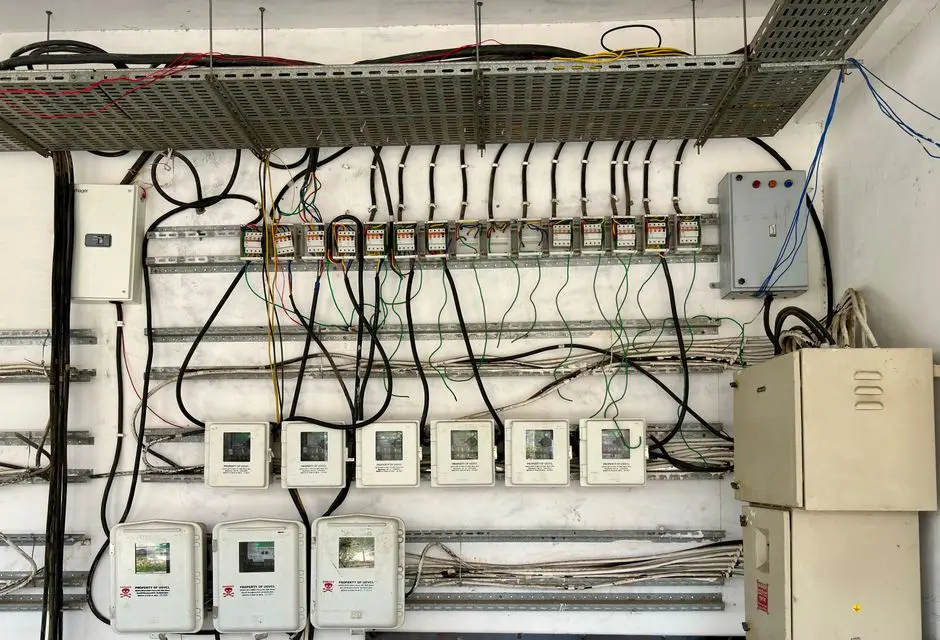
Three modeling approaches dominate twin projects in 2026. The right choice depends on data maturity, in-house skill, and accuracy needs. First-principles modeling uses ASM1, ASM2d, or ASM3 coupled with hydraulic models (Petersen matrix in WEST, BioWin, or GPS-X). These models transfer well across plants and yield interpretable stoichiometry. They need 4-8 weeks of expert calibration, 20-50 measured parameters, and deep process knowledge. Published accuracy on effluent COD typically lands at R² 0.80-0.92 when properly calibrated.
Data-driven AI modeling uses LSTM, GRU, Random Forest, or XGBoost regressors trained on 6-24 months of cleaned historical SCADA data. The GEDIAV-H2O 2024 case study reported R² 0.85-0.95 for short-horizon (1-6 hour) effluent predictions. AI models need less domain expertise, ramp faster, and adapt to seasonal influent shifts. They are opaque, plant-specific, and degrade when sensor calibration drifts. Hybrid physics-informed neural networks (PINNs) embed ASM stoichiometric constraints inside the network loss. That is emerging practice in 2026 for plants that want both interpretability and accuracy, but it needs senior talent who can bridge both paradigms.
Across all three approaches, soft sensors remain the practical bridge on the operator console. Soft sensors do not replace nutrient analyzers where permits demand continuous NH₃-N or NO₃-N; they reduce grab-sample load between analyzer cycles. Use the table below to match approach to plant readiness before you shortlist vendors.
| Criterion | First-Principles (ASM2d + hydraulic) | Data-Driven (LSTM / XGBoost) | Hybrid (PINN) |
|---|---|---|---|
| Data requirement | 20-50 parameters, 4-8 weeks lab/online | 12-24 months of 1-5 min SCADA | ASM parameters + 12-18 months data |
| Typical accuracy (effluent COD) | R² 0.80-0.92 | R² 0.85-0.95 (short horizon) | R² 0.88-0.96 |
| Interpretability | High (stoichiometric) | Low (black box) | Medium (constrained by physics) |
| Transferability across plants | High | Low | Medium |
| Ramp-up time | 3-6 months | 2-4 months | 4-7 months |
| Vendor lock-in risk | Low (open models) | High (proprietary training) | Medium |
| In-house skill needed | Senior process engineer | Data engineer + ML engineer | Both |
Sensor Stack and Data Architecture for the Twin
The minimum viable sensor set for a biological-stage twin is already on most plants with modern SCADA. It includes pH, dissolved oxygen (DO), mixed liquor suspended solids (MLSS), influent flow, and temperature. These five measurements, sampled at 1-5 minute intervals, are enough to feed a first-pass mechanistic model. The accuracy jump is typically 8-15 percentage points in effluent prediction R². It comes from adding online nutrient analyzers: NH₃-N, nitrate, phosphate, and online COD or TOC. A mid-scale plant should expect to spend $40K-$120K on the recommended additional sensor package in 2026.
Data architecture is the layer most often under-specified. PLCs (Siemens S7-1500, Allen-Bradley ControlLogix, or Schneider M580) aggregate field signals and publish them through an OPC-UA server — the de-facto industrial protocol for IIoT in 2026. An edge gateway (or the PLC itself with an embedded MQTT broker) buffers and forwards to a cloud historian — AWS IoT SiteWise, Azure Industrial IoT, or an on-prem InfluxDB + Grafana stack. The model training environment (Python + PyTorch, or a vendor platform like WaterAce or AVEVA PI System) sits behind the historian, with a separate inference service that publishes predictions back to the SCADA HMI. For a 10,000 m³/day plant, total data volume is typically 1-10 GB/day at 1-minute sampling, well within standard industrial cloud tiers.
Cybersecurity cannot be an afterthought. Any twin that bridges OT and IT must follow IEC 62443 zone-and-conduit segmentation. Use a unidirectional data diode or a hardened DMZ between the PLC network (Zone 0/1) and the cloud historian (Zone 3/4). Field reports from 2024-2025 industrial incidents show that 60-70% of OT cyber intrusions entered through improperly segmented IIoT gateways. Careless twin design amplifies that path. The remote SCADA monitoring architecture covered in the 2026 engineering guide to remote SCADA monitoring details the same segmentation pattern. Upstream hardness swings also affect biological stability. Pairing twin DO trim with stable feed from an Industrial Water Softener System (KJ-WT Series) reduces one common source of alkalinity and scaling noise in the sensor train.
| Layer | Component | Typical Product / Protocol (2026) | Sampling Interval |
|---|---|---|---|
| Field sensors | pH, DO, MLSS, flow, temperature | Endress+Hauser, Hach, WTW | 1-5 min |
| Field sensors (recommended) | NH₃-N, NO₃-N, PO₄-P, online COD/TOC | Hach BioTector, Endress+Hauser ISEmax | 5-15 min |
| Control | PLC + HMI | Siemens S7-1500, WinCC | 100 ms - 1 s |
| Edge | OPC-UA / MQTT gateway | Siemens IOT2050, Kepware | 1-5 min |
| Historian | Time-series store | AVEVA PI, InfluxDB, AWS IoT SiteWise | Continuous |
| Model | Training + inference | Python/PyTorch, WaterAce, Siemens | 1-15 min refresh |
| Lab bridge | LIMS feed for BOD, CBOD, TSS | REST API or CSV import | 1-24 h |
Implementing a Digital Twin in 2026: 5-Phase Roadmap
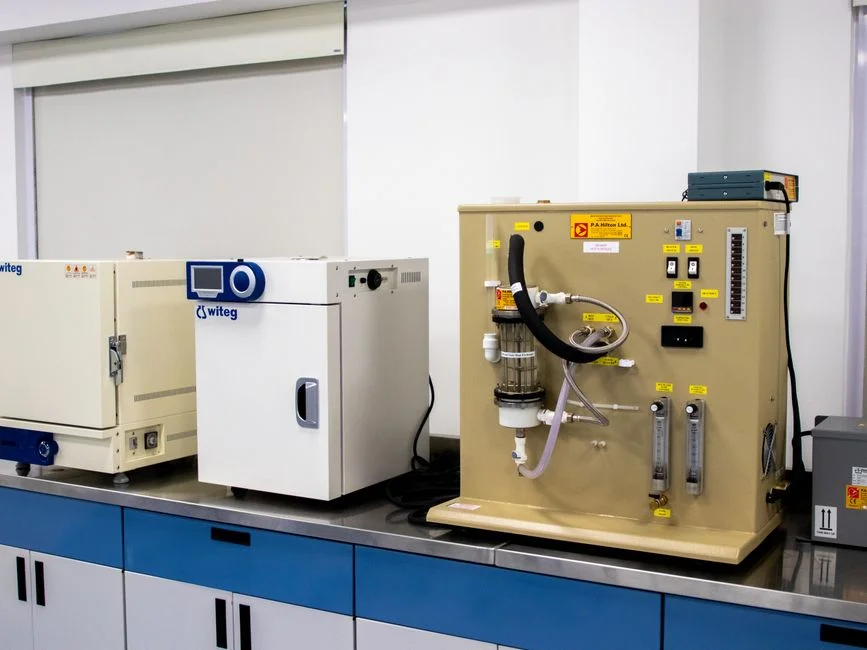
A realistic 2026 deployment for a mid-scale industrial plant runs 9-14 months end-to-end. Plants with mature SCADA and clean historical archives can compress this to 6-9 months; brown-field plants with poor sensor coverage stretch to 18 months. The five phases below are the sequence that 2024-2026 vendor benchmarks converge on.
Phase 1 — Sensor audit and data-quality assessment (months 1-2). Walk the plant, validate every measurement against a handheld reference, and quantify sensor noise, deadband, and calibration drift. Typical output: a data-quality scorecard flagging 10-30% of signals as unfit for AI training.
Phase 2 — Historical data backfill and cleansing (months 2-4). Pull 12-24 months from the historian, reconcile timestamps, interpolate gaps, and remove obviously faulty periods. This phase is where most projects underestimate effort — expect 30-50% of raw signals to require manual or rule-based cleaning.
Phase 3 — Model build and offline validation (months 4-7). Train both a mechanistic baseline and an AI candidate. Benchmark against the last 12 months of recorded process events (excursions, bulking episodes, storm events). Target: the model should reproduce 80% of known events within ±10% of measured magnitude.
Phase 4 — Shadow-mode deployment (months 7-9). The twin runs in parallel with the plant, ingesting live data and producing recommendations that operators can view but not act on automatically. This phase builds organizational trust — operators need 60-90 days of seeing the model be right before they let it touch a control loop.
Phase 5 — Closed-loop advisory or soft control (months 9-12). Connect the twin's outputs to the SCADA as advisory setpoints for aeration DO and chemical dosing trim. Start with rate-limited writes (e.g., ±5% per hour) and a hard operator override. Full closed-loop control without operator override is a 12-18 month milestone, not a 12-month one.
Use this selection checklist before you sign a twin SOW. (1) Confirm 12+ months of usable historian data. (2) Budget nutrient analyzers if R² targets exceed 0.90. (3) Require IEC 62443 segmentation in the architecture drawing. (4) Demand a 60-90 day shadow-mode gate. (5) Cap automatic writes at ±5%/hour with override. (6) Name the owner of quarterly model retraining. (7) Verify the vendor can show a live water-sector reference, not only a slide deck.
CAPEX, OPEX, and ROI: The 2026 Business Case
CAPEX scales with plant size and sensor coverage. 2024-2026 vendor benchmarks put a small industrial WWTP (under 5,000 m³/day) digital-twin project at $80K-$150K; a mid-scale plant (5,000-50,000 m³/day) at $150K-$500K; a large municipal plant at $500K-$1.2M or more. The dominant cost drivers are the additional online nutrient analyzers ($40K-$120K), the historian and edge infrastructure ($20K-$80K), the model build and integration labor ($60K-$200K), and software licensing or SaaS fees ($20K-$80K/year amortized).
OPEX runs $15K-$60K/year for a mid-scale plant, covering cloud hosting, periodic model retraining (typically quarterly), software subscriptions, and 0.2-0.5 FTE of data engineering. Benefits documented in published industrial deployments (2022-2026) include 10-25% aeration energy reduction, 10-20% polymer and chemical savings, 30-50% fewer manual sampling hours, and 1-2 avoided regulatory excursions per year.
Payback at 2026 industrial electricity prices ($0.08-$0.14/kWh) and chemical costs falls in the 18-36 month range for mid-scale plants. Hand finance this ROI formula: (annual energy savings + chemical savings + labor savings + avoided-fine estimate) ÷ (CAPEX amortized over 5 years + annual OPEX). Worked example: a 10,000 m³/day food-and-beverage plant spends $400K/year on aeration, $120K/year on polymer, and $90K/year on lab labor. It can book about $200K/year in combined savings plus $80K/year in avoided-fine risk. Against $300K CAPEX amortized and $40K OPEX, payback is roughly 22 months. For sensor-side investment economics, the 2026 buyer's guide to online heavy-metal sensor selection covers the same CAPEX/OPEX framing for trace contaminant monitoring.
| Cost / Benefit Line | Small (<5,000 m³/d) | Mid (5,000-50,000 m³/d) | Large Municipal |
|---|---|---|---|
| CAPEX (one-time) | $80K - $150K | $150K - $500K | $500K - $1.2M+ |
| Annual OPEX | $10K - $25K | $15K - $60K | $60K - $200K |
| Energy savings (aeration) | 10-20% | 10-25% | 8-18% |
| Chemical savings | 8-15% | 10-20% | 8-15% |
| Typical payback | 24-40 months | 18-36 months | 30-60 months |
| 5-year ROI range | 1.5x - 2.5x | 2.0x - 4.0x | 1.3x - 2.2x |
How HydropureWater Equipment Connects to a Digital Twin
The physical equipment layer is where a digital twin either succeeds or starves for data. MBR systems with built-in PLC and DO sensors ship with Modbus TCP and OPC-UA outputs that publish transmembrane pressure, aeration DO, permeate flow, and MLSS directly to the historian. DAF pre-treatment units expose surface scum flow, recycle ratio, and polymer dose rate over the same protocol. PLC-controlled chemical dosing skids report instantaneous and cumulative dose, which the twin uses to cross-check the soft-sensor BOD estimate. Together, these skids form the instrumentation backbone a third-party twin vendor consumes — without the model integration work falling on HydropureWater. Specialist vendors (Siemens, AVEVA, WaterAce, or a regional water-sector integrator) should supply the twin software. HydropureWater delivers the physical, twin-ready hardware layer and the data contract that makes integration tractable.
Who This Is For / Next Step
Who this is for: plant engineers and EPC teams running industrial or municipal activated-sludge or MBR trains above about 5,000 m³/day with usable historian archives. Who should look elsewhere: plants under 2,000 m³/day without a SaaS twin option, or sites that cannot fund nutrient analyzers and OT/IT segmentation. Next step: map your sensor gaps against the stack table above, then request a twin-ready equipment and data-contract review through our inquiry form so sizing assumptions stay tied to your actual SCADA tags.
Frequently Asked Questions
How much does a digital twin for a wastewater treatment plant cost in 2026?
A mid-scale industrial plant (5,000-50,000 m³/day) should budget $150K-$500K CAPEX and $15K-$60K/year OPEX. The largest cost lines are online nutrient sensors ($40K-$120K) and integration labor ($60K-$200K). Payback typically runs 18-36 months at 2026 industrial electricity prices of $0.08-$0.14/kWh. Small plants under 5,000 m³/day usually land at $80K-$150K CAPEX if sensor coverage is already decent.
How long does it take to deploy a plant digital twin?
Realistic 2026 timelines are 9-14 months for a mid-scale industrial plant end-to-end. That span covers sensor audit, data cleansing, model build, shadow-mode validation, and soft-control rollout. Plants with mature SCADA and clean historical archives can compress this to 6-9 months. Brown-field sites with weak sensors often stretch to 18 months before closed-loop advisory is safe.
How accurate are AI-based plant digital twins?
Published 2024 studies, including the Springer GEDIAV-H2O case, report R² 0.85-0.95 for short-horizon (1-6 hour) effluent COD and NH₃-N predictions. Those results used LSTM and XGBoost models trained on 12-24 months of cleaned SCADA data. Mechanistic ASM2d models typically reach R² 0.80-0.92 after expert calibration. Soft-sensor BOD₅ estimates often show 3-8 mg/L mean absolute error under stable influent conditions.
Which vendors should we evaluate for a plant digital twin in 2026?
Shortlist four categories. Cover process simulator vendors with twin offerings (Siemens, AVEVA, Bentley) and specialist water-sector AI vendors (WaterAce, Kermit.ai, Fluence). Also weigh industrial AI platforms with water templates (AWS, Azure, Google Cloud) and regional system integrators with municipal references. Require each bidder to demonstrate a live deployment, not a slide deck. Ask for shadow-mode duration, write-rate limits, and IEC 62443 drawings in the proposal.
Can a small wastewater plant (under 2,000 m³/day) justify a digital twin?
Yes, but only as a subscription SaaS model — CAPEX rarely amortizes below 5,000 m³/day. A small plant should expect $15K-$40K/year in measurable savings against $10K-$25K/year OPEX. Payback of 30-48 months and a 5-year ROI around 1.5x-2.0x are typical when aeration and polymer lines are already metered. Skip custom model builds until historian quality is proven.