PLC Control Cost in 2026: What Buyers Actually Pay
PLC control cost in 2026 spans $99 for a 32-I/O micro PLC up to $15,000+ for a pre-engineered industrial panel with CompactLogix L24 (+$2,700 surcharge). Complete wastewater PLC systems with I/O, VFD integration, and HMI typically cost $8,000–$60,000 by plant size. I/O point count remains the single largest cost driver across package and municipal projects.
Quotes diverge by an order of magnitude depending on which of four cost buckets a vendor includes. Most buyers see only bucket one: the PLC CPU and power supply. The A-Cell pre-engineered control box lists at $14,800 base. An Allen-Bradley CompactLogix L24 adds a $2,700 surcharge, totaling $17,500 turnkey.
That turnkey price includes a 30"x36" wall-mount enclosure, safety modules, power distribution, terminal blocks, and main disconnect (source: A-Cell product page, 2026). At the floor, an EZPLC Junior with 32 I/O starts at $99, and an EZPLC Nano with 24 rugged I/O starts at $119 (source: EZPLC, 2026). Both price poles are real in 2026 catalogs, and both ship with free programming software.
The procurement question is rarely "PLC or no PLC" but which configuration hides inside the panel line item.
Any defensible 2026 budget must cover four buckets. Bucket one is the PLC CPU plus power supply and backplane, while bucket two covers I/O modules and field termination, including analog, discrete, and specialty cards. Bucket three is engineering and programming for ladder logic, HMI screens, and FAT.
Bucket four is lifecycle support: firmware subscriptions, spares, and cybersecurity patching. Hardware is the visible line, yet engineering is often the largest cost by Year 3 of operation. AutomationDirect Productivity series and Click series sit at the no-surcharge end of the brand-cost spectrum. They typically price 40–60% below Allen-Bradley on equivalent I/O count.
Matching these four cost buckets to a real RFQ scope is what keeps wastewater panel budgets from drifting after award.
| Cost Bucket | Typical 2026 Range | % of Total Project |
|---|---|---|
| PLC CPU + power supply | $99 – $3,000 | 5–15% |
| I/O modules + termination | $200 – $8,000 | 10–25% |
| Engineering + programming | $3,000 – $40,000 | 30–55% |
| Lifecycle support (5 yr) | $1,500 – $12,000 | 10–20% |
Hardware Price Tiers by Platform and I/O Count
Matching a required I/O count to a real platform price band is the first defensible move before an RFQ. The 2026 market has four clear tiers. Micro PLCs under 32 I/O typically price at $99–$400 in 2026 catalogs. Compact PLCs at 32–256 I/O typically price at $500–$3,500 before I/O cards.
Modular mid-range systems at 256–1,024 I/O price at $3,500–$12,000. High-end or process-grade systems at 1,024+ I/O price at $12,000–$40,000+ (HydropureWater field data, 2026). The Allen-Bradley CompactLogix L24 carries the $2,700 surcharge documented in the A-Cell reference. ControlLogix sits one tier above it as the North American process-industry benchmark.
Siemens S7-1200 covers the compact tier while the S7-1500 covers modular and high-end work. Schneider Modicon M340/M580 occupy the same bands on European and Asian projects. Redundant CPU and hot-standby configurations multiply base CPU price by 1.8–2.2x. That multiplier hits both the bill of materials and the programming hours on redundant jobs.
Buyers evaluating name-brand versus frugal platforms should price on a like-for-like I/O basis, not sticker price. A 128-point CompactLogix and a 128-point Productivity series can both meet the I/O spec. The brand premium is still 40–60% of the CPU cost alone on a like-for-like I/O comparison. Hot standby architectures require a second CPU plus a redundancy module.
Hot standby typically doubles the programming hours because every tag and alarm must be mapped twice to the standby controller. Industrial buyers should also plan for a 5–10% surplus of spare I/O modules to absorb field changes. Re-ordering a single specialty analog card after commissioning can delay a plant startup by 30–60 days. Most plants we size for package wastewater skids run at the lower end of the compact tier unless remote SCADA forces a mid-range CPU.
Wastewater Application Cost Drivers: I/O, VFDs, and Field Wiring
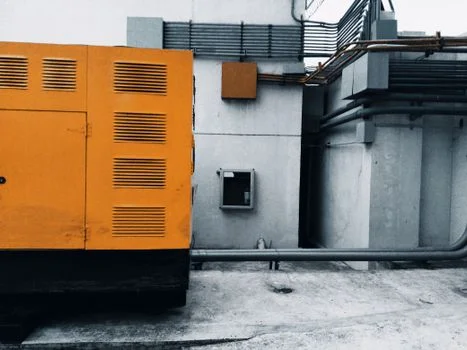
Wastewater treatment applications typically require 60–90 I/O points per 50 m³/day package plant. That count covers influent level, flow, pH, dissolved oxygen, pressure, and chemical feed interlocks. A 500 m³/day municipal works scales to 250–400 I/O points. A 5,000 m³/day regional plant typically needs 800–1,200 I/O across lift stations, biological reactors, clarifiers, and disinfection skids.
Each analog input (AI) for flow, pH, or DO adds $80–$220 per channel before field wiring. Each analog output (AO) used for VFD speed reference adds $120–$280 per channel. VFD integration accounts for 15–25% of total control panel cost on a typical wastewater project. Each VFD needs a dedicated analog/digital interface, motor protection, and fault feedback to the PLC.
Field wiring in a wastewater plant is the silent cost multiplier. Outdoor aeration basins, buried flow conduits, and corrosive chemical rooms need IP65/IP67 cable glands and shielded instrumentation cable. Analog signals must stay segregated from VFD power runs to avoid noise-induced PLC faults. A typical wastewater skid like a PLC-controlled automatic chemical dosing skid ships with 30–60 I/O and pre-engineered wiring.
Packaged skids are often more cost-effective than field-wired discrete panels when the control budget sits under $15,000. Integrated MBR packages such as the HydropureWater MBR system with integrated PLC control bundle membranes, blowers, and PLC control into one tested assembly. That package approach compresses field labor and cuts control integration cost by 20–35% versus stick-built installations.
Panel hardware is only part of the bill of materials. Buyers also need actuators, seals, and consumables — including Water Treatment Parts, Valves & Filter Media — scoped alongside the I/O list so field changes do not trigger late change orders. For long-term planning, the smart water monitoring forecast to 2030 points to higher sensor counts. Instrumentation density at municipal plants may rise 25–40% by 2030 under tighter effluent compliance.
Over-sizing PLC and I/O count by 15% today is cheap insurance against that growth. Once hardware and field wiring are specified, engineering and commissioning become the next major budget item.
Engineering, Programming, and Commissioning Cost
The PLC sticker is rarely the final number, and engineering is the line that grows most between RFQ and SAT. A compact 128-I/O CompactLogix panel with HMI and SCADA typically requires 80–160 engineering hours. Rates run $95–$175/hour in North America and $40–$90/hour in Asia. Programming covers ladder or structured text, HMI screens (typically 20–40 for a mid-sized wastewater plant), alarm rationalization, and the Factory Acceptance Test (FAT) checklist.
Commissioning at site adds another 40–80 hours for Site Acceptance Test (SAT), loop checks, and operator training. A budget of $8,000–$25,000 for engineering and commissioning is realistic for a 200-I/O wastewater plant. That figure scales roughly linearly with I/O count up to about 1,000 I/O.
Redundant architectures double programming complexity because every tag, alarm, and interlock must be tested on both the primary and standby CPU during FAT. Remote SCADA dashboards, historian integration, and OPC UA gateways add 30–60 engineering hours per integration. Buyers should require vendors to break out engineering as a separate line item in any quote. Bundled turnkey pricing typically hides 15–30% of total project cost inside the line marked engineering.
Freeze the control budget only after a short selection checklist. Count AI/AO/DI/DO by unit process, not by vendor brochure. Mark every VFD that needs speed reference and fault feedback. Decide redundant CPU yes or no against downtime cost.
Require FAT and SAT as separate priced lines on every quote. Hold 5–10% spare I/O modules on site before commissioning starts. Reserve firmware and cybersecurity OPEX for Years 2–5 of ownership. Confirm HMI screen count plus SCADA gateway scope in writing before award.
PLC vs DCS vs SCADA: When a PLC Stops Being the Right Answer

A PLC plus SCADA architecture is cost-optimal below approximately 500 I/O points. DCS becomes cost-competitive at 500–1,000 I/O and dominant above 1,000 I/O. The crossover point is driven by per-tag engineering cost. A well-scoped PLC project runs $80–$150 per I/O point including engineering.
Full-asset-management DCS projects run $250–$450 per I/O point. Below 500 I/O, the higher per-point DCS cost cannot be justified. Above 1,000 I/O, centralized engineering, integrated asset management, and built-in DCS redundancy deliver lower total lifecycle cost. SCADA is a software layer, not a replacement architecture, and should be evaluated as an add-on to either PLC or DCS systems rather than a standalone category.
For municipal wastewater plants under 5,000 m³/day, a PLC-based architecture with redundant mid-range CPUs and a SCADA HMI is the industry default. Above 50,000 m³/day, DCS architecture becomes the lower-risk choice. The same applies when multiple unit processes — primary, secondary, tertiary, and sludge handling — each exceed 800 I/O. Petrochemical and power-generation adjacent facilities follow the same crossover logic.
Total Cost of Ownership: 5-Year and 10-Year View
Whether a plant's controls CAPEX represents a sound investment becomes clear in Year 7, not Year 1. A 5-year TCO analysis for a 250-I/O wastewater plant with $35,000 initial CAPEX typically breaks down as follows. Hardware alone accounts for $35,000 on that baseline case. Engineering and commissioning add another $18,000 before the plant sees first wastewater.
Firmware and subscription support typically add about $4,500 over five years. Spare parts inventory for I/O cards and CPUs adds another $6,000. Cybersecurity patching and obsolescence management add about $5,000 across the same window. Unplanned downtime, at $2,000–$8,000 per major incident, often totals about $15,000 over five years.
Under those assumptions, five-year TCO lands around $83,500 for the same 250-I/O plant. A 10-year view doubles lifecycle lines and adds one mid-life CPU migration (~$12,000–$20,000). Realistic 10-year TCO then reaches $170,000–$220,000 for the same plant. Hardware is roughly 40% of TCO over 10 years; engineering plus lifecycle support accounts for the remaining 60%.
The most common TCO error is treating the PLC CAPEX as the project cost. Industrial buyers who separate OPEX lines for firmware, cybersecurity patching, and spares typically run 15–25% lower 10-year TCO. Buyers who treat support as an unbudgeted emergency pay that gap later. Selecting brands with stable firmware roadmaps (Allen-Bradley, Siemens, Schneider) reduces migration cost.
Selecting brands with shorter product lifecycles, including some Asian micro-PLC lines, reduces CAPEX but raises migration risk. A defensible 2026 procurement decision weights Year 1 CAPEX at roughly 35–45% of the procurement weighting. Years 2–10 OPEX should carry 55–65% of the weighting. Industry practice holds 5–10% of PLC hardware cost as on-site spares.
Buyers should also plan a separate 2–3% annual budget for replacement modules over the system lifecycle. For a $20,000 hardware installation, plan $1,000–$2,000 in initial spares and $400–$600 per year in replacement stock. Firmware subscriptions often run $500–$3,000/year for major brands. Cybersecurity patching for industrial environments commonly runs $1,000–$4,000/year.
Teams that ignore these lines routinely overrun 5-year TCO forecasts by 20–30%. For related OPEX levers in wastewater operations, see the sludge disposal cost optimization levers guide.
Who This Is For / Next Step
Plant engineers, EPC contractors, and procurement managers use this guide when sizing PLC panels for package plants, municipal works under about 5,000 m³/day, or multi-skid industrial pretreatment. Teams already locked into a plant-wide DCS above roughly 1,000 I/O should look elsewhere for architecture guidance. Buyers who only need a relay panel with no analog loops also sit outside this scope.
If you are matching I/O count, VFD interfaces, and enclosure class to a wastewater skid, request a scoped panel quote that breaks out hardware, engineering, and FAT. Start with a PLC control panel inquiry and include your AI/AO/DI/DO list plus VFD count. Stock Water Treatment Parts, Valves & Filter Media in the same RFQ package so mechanical and control change orders stay aligned.
Frequently Asked Questions
What is included in a typical PLC control panel quote?
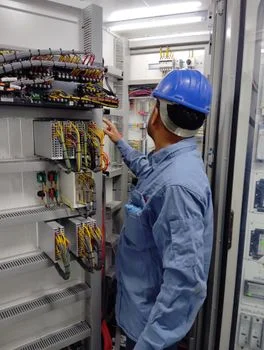
A standard panel quote includes the PLC CPU, power supply, I/O modules, HMI, enclosure, terminal blocks, breakers, and basic FAT. Engineering, SAT, and operator training are usually separate line items. Ask vendors to split hardware and engineering so the 15–30% engineering share is visible before award.
How much does PLC programming cost per hour in 2026?
Programming rates range from $95–$175/hour in North America and $40–$90/hour in Asia for ladder logic, structured text, and HMI development. A 200-I/O wastewater project typically requires 120–200 total engineering hours. Redundant CPUs and SCADA gateways push that range higher on both clock time and FAT scope.
What is the cheapest reliable PLC for a small wastewater skid?
For sub-32-I/O applications, EZPLC Junior ($99) and AutomationDirect Click series ($150–$400) are common low-cost options. For 32–128 I/O, AutomationDirect Productivity series and Siemens S7-1200 usually offer the strongest price-to-reliability balance on package wastewater skids. Most plants we size for chemical dosing or small MBR skids stay in these two bands unless client specs force a name-brand CPU.
When does a DCS make more financial sense than a PLC?
A DCS becomes cost-competitive at 500–1,000 I/O and dominant above 1,000 I/O due to centralized engineering and integrated asset management. For municipal wastewater plants above 50,000 m³/day or multi-process facilities, DCS architecture typically yields lower 10-year TCO than a sprawling multi-PLC network.
What hidden OPEX costs should be planned in 2026 budgets?
Firmware subscriptions ($500–$3,000/year for major brands), cybersecurity patching ($1,000–$4,000/year for industrial environments), and obsolescence-driven mid-life CPU migration ($12,000–$20,000 in Year 7–9) are the most commonly underestimated OPEX lines. Budgeting these early usually cuts 10-year TCO overrun risk by 15–25% versus treating support as emergency spend.