What Does an Online BOD Analyzer Actually Measure?
An online BOD analyzer does not measure the five-day biochemical oxygen demand (BOD₅) that a laboratory Winkler titration produces — most of the units sold for under $5,000 measure a correlated surrogate. True respirometric BOD₅ quantifies the dissolved oxygen consumed by microorganisms over 120 hours at 20 °C, a test that cannot be replicated in real time inside a process pipe. UV-absorption probes, which dominate the $1,000–$3,000 segment, instead measure UV absorbance at 254 nm and apply a site-specific linear correlation to estimate BOD-equivalent. That distinction is the single most common purchase mistake: specifying a UV probe for NPDES compliance reporting when the permit calls for a method equivalent to 40 CFR 136.
Industrial probes sold in 2024–2026 cover three standard BOD-equivalent ranges: 0–500 mg/L for secondary effluent polishing, 0–1000 mg/L for municipal and food & beverage influent, and 0–2000 mg/L for high-strength pulp & paper or brewing waste streams. Accuracy varies by sensor class — entry-tier UV units typically deliver ±10% of full scale, while mid-range optical and respirometric sensors achieve ±5% FS. Output protocols are standardized: RS485 Modbus RTU and 4–20 mA appear on virtually every industrial probe, including the UV units documented in the Desun Uniwill catalog. Anything beyond those two protocols — Ethernet/IP, Profinet, Hart — is a premium-tier feature that adds roughly 8–15% to the unit price.
2026 Online BOD Analyzer Price Tiers: $1K vs. $4K vs. $11K+
Industrial BOD probe pricing in 2026 clusters into three defensible bands, and the gap between them is driven by sensor technology, measurement range, and IP rating — not by brand markup. Entry-tier UV-absorption probes list at $1,000–$3,000 per piece (Desun Uniwill catalog, 2026), ship reagent-free with anti-interference optics, RS485 Modbus output, and an MOQ of 0–100 pieces. They are the right choice for screening applications, process-trend monitoring, or any non-NPDES stream where a correlated surrogate is acceptable.
Mid-tier respirometric and optical units run $3,500–$4,500 (Kalstein YR06297 listing, 2026) and are typically citable for compliance reporting when the local authority accepts the method. Configuration options drive most of the price spread within this band: auto-clean wiper assemblies, dual-channel measurement, and IP68 versus IP65 ratings can each add $300–$600 to the base unit. Premium multi-parameter COD/BOD/TOC systems with multi-stream capability and full SCADA integration retail above $11,000 — a representative online COD/BOD/TOC sensor lists at $11,188.05 (2026 catalog price).
The right tier depends on permit risk and plant size. Food & beverage effluent at 800–1,500 mg/L BOD generally falls into the mid tier. Pulp & paper mills with high-strength streams above 1,500 mg/L usually need a premium unit with dilution or a wider dynamic range. Municipal headworks can often be screened with an entry-tier UV probe, with a mid-tier respirometric unit as the compliance point further downstream. Plants integrating online BOD into an existing biological treatment train — for example, a membrane bioreactor line — should budget for the premium tier, because the data feeds back into aeration control. For context on how these probes fit into a full MBR package, see our MBR membrane bioreactor systems product page.
| Tier | 2026 Price Band (USD) | Sensor Technology | Typical Application |
|---|---|---|---|
| Entry | $1,000–$3,000 | UV absorption, 254 nm correlated | Screening, process control, non-NPDES streams |
| Mid | $3,500–$4,500 | Respirometric / optical | Compliance reporting, dual-channel monitoring |
| Premium | $11,000+ | Multi-parameter COD/BOD/TOC | Multi-stream SCADA-integrated compliance |
Spec Comparison: UV Absorption vs. Optical vs. Respirometric BOD Sensors
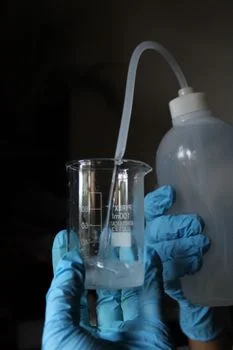
The decision between UV, optical, and respirometric measurement is a decision about response time, reagent handling, and regulatory acceptance — not about which probe is "best." UV absorption probes have a sub-30-second response, which makes them ideal for rapid screening and aeration-tank feedback loops. Optical and fluorescence sensors extend to 30–60 seconds, acceptable for most compliance streams. Respirometric membrane probes take 5–15 minutes per reading, which forces the engineer to place the sensor at a stable sample point rather than directly in turbulent process flow.
Reagent and consumable burden is the second axis. UV and optical sensors are reagent-free by design; respirometric units consume electrolyte and require membrane replacement every 6–12 months under typical fouling loads. The trade-off is that respirometric readings correlate more tightly to true BOD₅, which is why regulators in many U.S. states accept them as a compliance method where they reject UV surrogates. Plants specifying probes for an MBR or activated-sludge process should weigh this trade-off against reagent-handling logistics — and against the integration cost documented in the next section. For background on how these probes fit into a membrane bioreactor module line, see our MBR membrane bioreactor module reference.
| Parameter | UV Absorption | Optical / Fluorescence | Respirometric (Membrane) |
|---|---|---|---|
| 2026 price band | $1,000–$3,000 | $3,000–$5,000 | $3,500–$4,500 |
| Measurement principle | UV absorbance at 254 nm | Fluorescence / optical DO | Membrane-covered DO consumption |
| Typical range | 0–500 / 0–1000 / 0–2000 mg/L | 0–1000 mg/L | 0–500 mg/L (with dilution higher) |
| Accuracy | ±10% FS | ±5% FS | ±5% FS |
| Reagent requirement | None | None | Electrolyte + membrane |
| Maintenance interval | 6–12 month calibration | Self-cleaning options; 6–12 mo | Membrane every 6–12 months |
| Response time | <30 s | 30–60 s | 5–15 min |
CAPEX vs. 5-Year OPEX: What the Sticker Price Doesn't Show
The headline price of a BOD probe is roughly half of a five-year ownership cost on a mid-tier unit — and a smaller share on an entry-tier unit, where reagent and calibration costs dominate. Annual OPEX line items on a respirometric probe run $400–$900 for membrane and electrolyte replacement, $150–$300 for calibration standards, plus cleaning solution and a probe refurbishment every 24–36 months at $300–$500 per service event. UV and optical units avoid the membrane line item but still consume calibration standards at the same rate.
Integration cost is the second line item most buyers miss. Modbus RTU and 4–20 mA wiring into an existing SCADA or PLC typically runs 8–15% of the unit price, on par with the per-I/O-point cost benchmarked in our DCS system cost breakdown by I/O points. A worked example: a $3,500 mid-tier unit with 15% integration lands at $4,025 CAPEX. Add $700/year OPEX and the five-year TCO is approximately $7,525 — capital is only 53% of total ownership cost.
The offsetting number is lab BOD₅. A single compliance grab sample costs $25–$60 at a commercial lab, and most NPDES permits require two to four tests per week, which is $2,600–$12,500 per year on a single outfall. An online analyzer at $700/year OPEX pays back the CAPEX delta in 12–24 months on that math alone, before counting the avoided non-compliance risk. For a parallel cost-of-ownership benchmark on a related instrument class, our MLSS analyzer supplier selection guide documents the same CAPEX/OPEX split for suspended-solids probes.
| Cost Line Item | Mid-Tier Respirometric Unit (5-Year) |
|---|---|
| Unit CAPEX | $3,500 |
| Integration (15%) | $525 |
| CAPEX subtotal | $4,025 |
| Membrane + electrolyte | $2,000–$4,500 |
| Calibration standards | $750–$1,500 |
| Refurbishment (×1–2) | $300–$1,000 |
| 5-year TCO range | $7,075–$11,025 |
How to Choose the Right Online BOD Analyzer for Your Plant
Five questions settle the specification before the RFQ goes out. First, define the use: if the reading feeds a compliance report submitted to a state agency, mid or premium tier is the only defensible choice; if it feeds a process-control loop on a non-NPDES stream, an entry-tier UV probe is acceptable. Second, characterize the influent BOD range — anything below 500 mg/L works with any tier, but streams above 1,500 mg/L demand a dilution system or a premium-tier wide-range probe.
Third, audit reagent tolerance. Food & beverage plants and remote sites without a chemical store benefit from reagent-free UV or optical units. Respirometric units are realistic only where membrane and electrolyte logistics are already in place. Fourth, lock the integration protocol before purchase — Modbus RTU, 4–20 mA, Ethernet/IP, or Profinet. Retrofitting the wrong protocol after delivery routinely costs more than the sensor. Fifth, match the IP rating to the installation: IP68 for in-pipe or aeration-tank immersion, IP65 for side-stream cabinet mounting. Plants planning to tie BOD data into chemical dosing for nutrient removal should review our automatic chemical dosing skids to confirm signal compatibility.
Frequently Asked Questions
How much does an online BOD analyzer cost in 2026? Between $1,000 and $11,000+ for the unit, depending on sensor technology and tier. Add 10–18% for installation, calibration reagents, and integration into SCADA or PLC.
What is the cheapest online BOD analyzer? UV-absorption units at $1,000–$3,000 per piece, as listed in the Desun Uniwill catalog (2026). They are reagent-free and ship with RS485 Modbus output.
Is UV BOD the same as real BOD? No. UV absorption at 254 nm is a correlated surrogate, not a measurement of microbial oxygen demand. EPA guidance and standard wastewater engineering texts (Tchobanoglous & Schroeder, 2024) recommend UV probes for trend monitoring only, not for NPDES compliance reporting, unless the local authority has specifically accepted a UV correlation method.
How long do BOD probe membranes last? 6–12 months on respirometric probes under typical municipal or industrial fouling loads. High-strength or fibrous streams (pulp & paper, textile) can shorten membrane life to 3–6 months.
Can an online BOD analyzer replace lab BOD₅? It can replace routine monitoring and reduce grab-sample frequency, but most U.S. NPDES permits still require periodic laboratory confirmation. Confirm the regulator-accepted method and tier before specifying. For a broader view of how online instrumentation is reshaping compliance monitoring through the end of the decade, our smart water monitoring market forecast to 2030 covers the procurement landscape.