South Africa Heavy Metals Effluent Limits 2026: Why No Single National Number Exists
South Africa has no single national heavy metals effluent limit for 2026; each site's numbers sit in its Water Use Licence under the National Water Act 36 of 1998. DWS applies General and Special limits — Cd 0.005 mg/L, Hg 0.001 mg/L — through that licence.
Industrial effluent heavy-metal limits are enforced through a site's Water Use Licence issued under the National Water Act (NWA, Act 36 of 1998) and the waste-disposal rules in NEM:WA Government Notice R.982 of 2014. In practice, DWS applies the 2017 General and Special Limits — typically Cr(VI) 0.05 mg/L, Pb 0.1 mg/L, Cd 0.005 mg/L, Hg 0.001 mg/L, Ni 0.1 mg/L, Zn 5 mg/L as General — and tighter Special Limits for sensitive catchments. Meeting these requires chemical precipitation, ion exchange, and/or membrane polishing, designed per-metal rather than as a single step.
The legal stack that governs any discharge to a water resource runs from the Constitution (Section 24, the environmental right) down through the NWA, the National Environmental Management: Waste Act (NEM:WA, Act 59 of 2008), GN R.982 of 2014 (waste classification and disposal norms), and the SANS 241:2015 drinking-water standard. Site-specific conditions are finally captured in a Water Use Licence (WUL) issued by the Department of Water and Sanitation (DWS). The 2017 DWS General and Special Authorisation Requirements split licensed discharges into two tiers: General Limits are the default applied to most industrial sites, while Special Limits are triggered for sensitive catchments, downstream abstraction points, estuarine buffer zones, and proximity to World Heritage or Ramsar sites. Any metal not explicitly listed in the WUL is treated as "no detectable" under the precautionary principle, so silent gaps in the licence schedule are not a free pass.
Measured exceedances in South African leachate and river-water studies explain why the Department enforces these tiers. Landfill-leachate surveys at Thohoyandou, Shoshanguve, and Onderstepoort report mercury at 0.10–2.07 μg/L and cadmium at 1.6–260 μg/L — both well above the General Limit mercury value of 1 μg/L and the cadmium value of 5 μg/L (per the Bakare 2022 review of South African heavy-metal data). The DWS 2023/24–2025/26 Strategic Plan commits the Inspectorate to increased spot-sampling at mining and metal-finishing sites. Licence holders designing or upgrading works in 2026 should therefore assume a 24-hour composite sample will be pulled at any time, not just at the scheduled monthly monitoring visit.
DWS General and Special Authorisation Heavy Metals: The 2026 Working Table
The DWS General and Special Authorisation heavy metals limits of 2017 remain the working numerical reference in 2026 and are commonly applied through the waste-standards vehicle of GN R.982 of 2014. The table below compiles the metals most often listed in a South African industrial WUL. Any number that does not appear in a site's own licence defaults to a non-detect requirement under the precautionary reading of NEM:WA.
| Metal | General Limit (mg/L) | Special Limit (mg/L) | Source / Instrument |
|---|---|---|---|
| Cr(VI) | 0.05 | 0.02 | DWS 2017 General & Special Limits (applied via GN R.982) |
| Total Cr | 1.0 | 0.5 | DWS 2017 General & Special Limits |
| Pb | 0.1 | 0.02 | DWS 2017 General & Special Limits |
| Cd | 0.005 | 0.001 | DWS 2017 General & Special Limits |
| Hg | 0.001 | 0.0005 | DWS 2017 General & Special Limits |
| Ni | 0.1 | 0.02 | DWS 2017 General & Special Limits |
| Zn | 5.0 | 1.0 | DWS 2017 General & Special Limits; SANS 241:2015 drinking-water target 5 mg/L (Bakare 2022) |
| Cu | 0.5 | 0.1 | DWS 2017 General & Special Limits |
| As | 0.1 | 0.02 | DWS 2017 General & Special Limits |
| Fe | 10 | 5 | DWS 2017 General & Special Limits |
| Mn | 5 | 2 | DWS 2017 General & Special Limits |
SANS 241:2015 drinking-water targets are not effluent limits, but they drive Special-Limit triggers. SANS 241 sets Zn at 5 mg/L and Ni at 0.07 mg/L; if the receiving waterbody is also a drinking-water source after abstraction, the regulator will typically impose the Special-Limit column even where General would otherwise apply (per Bakare 2022). For context on one of the more tightly controlled metals, see the engineering breakdown of South Africa chromium discharge limits, which covers Cr(VI)-specific reduction and polishing requirements in detail.
The full parameter-by-parameter layout of both columns across all wastewater parameters — organics, nutrients, salts, and metals — is compiled in the companion page on the dws general authorisation wastewater effluent limits table south africa 2025 2026, which covers every licensed discharge scenario in one view.
How the Limits Are Measured: Sampling, Analysis, and the 95th-Percentile Rule
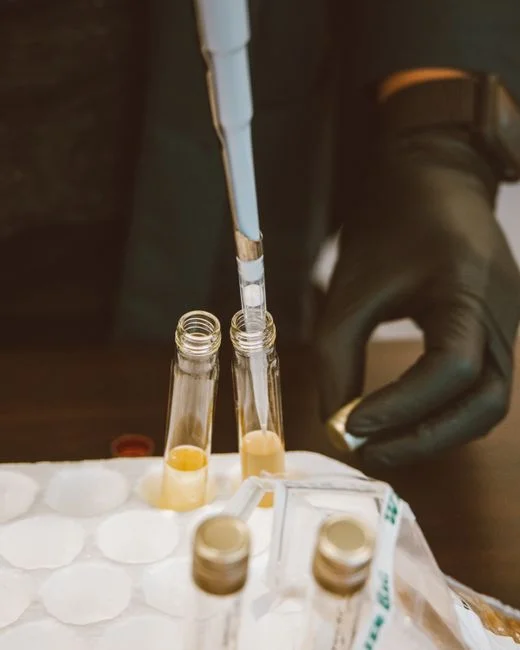
DWS evaluates metals compliance on statistics, not single readings, so the number in the table is never the number a site is judged against. Most WULs issued from 2018 onward specify 24-hour flow-weighted composite sampling by an accredited laboratory, with results reported as the 95th percentile of monthly measurements rather than as single grab values. A single elevated grab sample rarely triggers enforcement on its own; the standard "once-off exceedance" provision in most licences allows up to two exceedances per rolling 12-month period before the Inspectorate escalates.
Analytical method matters at the μg/L end of the table. ICP-MS following EPA Method 200.8 or ISO 17294 is the standard for sub-μg/L mercury and cadmium because detection limits sit at 0.00005–0.0001 mg/L, comfortably below the 0.001 mg/L Hg and 0.005 mg/L Cd General Limits. ICP-OES (EPA 200.7 / ISO 11885) handles the mg/L-range metals — Fe, Mn, Zn, total Cr — without dilution overhead. Mercury below 0.001 mg/L almost always requires cold-vapor atomic absorption (CVAAS, EPA 245.1) because ICP-OES detection limits for Hg are marginal.
The limit applies at the boundary of the site, not at the head of the works. On-site recycling of segregated clean streams (cooling-tower blowdown, RO reject from a polishing loop) is an allowed way to protect the discharge point from intermittent spikes. Operators who want a municipal benchmark for the same sampling logic can follow the plant-by-plant answer to how is wastewater treated in midrand south africa, and the composite-sampling parallels on the organics side are covered in the BOD Discharge Limit South Africa: 2026 Compliance & Treatment Guide.
Treatment Process Train to Hit the 2026 Limits
A six-stage train reliably meets the General column for all 11 metals and the Special column for the most common mining and metal-finishing envelopes. Each stage carries a measurable design target, and the boundaries between stages are where most licence exceedances originate.
- Equalisation and redox. Flow and pH equalisation over 12–24 hours; Cr(VI) reduction to Cr(III) using FeSO₄ at 2.5–3.0× stoichiometric dose or Na₂S₂O₅ at 1.5–2.0× stoichiometric dose. Hold at pH 2–3 with ORP < 250 mV for at least 30 minutes of residence time. This step is non-negotiable for any site with hexavalent chrome — the 0.05 mg/L Cr(VI) General Limit cannot be met by precipitation alone.
- Hydroxide precipitation. pH windows per metal: Cu and Fe precipitate at pH 8–9, Zn and Ni at 9–10, Cd at 10–11, and Mn above 10.5. Use an automatic chemical dosing system for pH and ORP control to hold ±0.2 pH units. Hydroxide alone cannot reliably hit Cd ≤ 0.005 mg/L or Hg ≤ 0.001 mg/L — those metals need Stage 3.
- Sulfide precipitation or DTPA chelation. Na₂S or NaHS at 1.2–1.5× stoichiometric dose drives Cd, Hg, and Pb residuals down to 0.01–0.05 mg/L in the clarified supernatant. Operate in a sealed reactor with an alkaline scrubber on the off-gas; H₂S at 10 ppm is the OSHA/NIOSH ceiling and South African hazardous-chemical incident thresholds are aligned to that value.
- Solids removal. A lamella clarifier for hydroxide-salt removal handles the bulk of the floc at loading rates of 2.5–4.0 m³/m²·h. For fine metal-sulfide flocs and FOG co-contamination at metal-finishing sites, a DAF system for metal-sulfide sludge thickening is the better choice — air-flotation carries the lower-density sulfide floc that settles poorly.
- Polishing. For Special-Limit sites, run a cation exchange resin (strong-acid gel type) for residual Zn/Ni/Cd with a published selectivity order that favours Ni²⁺ over Ca²⁺, plus a selective chelating resin for Hg (iminodiacetate or thiol-functionalised). For the tightest sites, add an industrial RO system for metal-polishing to Special Limits — brackish-water RO rejects divalent metals at > 99.5% in field data, and the permeate blend can be tuned against the discharge point.
- Sludge handling. Dewater the metal-bearing clarifier/DAF underflow with a plate-and-frame filter press for metal-bearing sludge to ≥ 35% dry solids. The resulting cake must meet Type 4 waste classification under GN R.982 for disposal to a Class B or Class C landfill.
| Stage | Equipment / Reagent | Design Target | Compliance Outcome |
|---|---|---|---|
| 1. Equalisation & redox | EQ tank, FeSO₄ or Na₂S₂O₅, ORP probe | ORP < 250 mV, 30-min residence | Cr(VI) → Cr(III), enables precipitation |
| 2. Hydroxide precipitation | NaOH / Ca(OH)₂, dosing skid | pH 9–10.5, ±0.2 unit | Cu, Zn, Ni to General Limit |
| 3. Sulfide precipitation | Na₂S / NaHS, sealed reactor | ORP -200 to -300 mV | Cd, Hg, Pb to General or Special |
| 4. Solids removal | Lamella clarifier or DAF | < 10 mg/L TSS overflow | Sludge < 0.5% of feed flow |
| 5. Polishing | Cation resin + RO | > 99% rejection divalent | Special Limit for Cd, Hg, Ni |
| 6. Sludge handling | Plate-and-frame filter press | ≥ 35% dry solids cake | Type 4 waste per GN R.982 |
For mines, the same train applies but with a higher upstream suspended-solids load; a parallel copper mining effluent treatment design article walks through the high-density-sludge thickening that precedes the chemistry. Sites that co-treat domestic sewage alongside metal-bearing flows size the biological stage per mbr wastewater treatment systems in south africa: 2026 engineering guide with costs, compliance & roi, which prices the membrane side of a combined plant.
Process Parameters That Decide Whether You Pass or Fail Compliance
Operational control points — pH tolerance, ORP setpoint, resin breakthrough curve, sludge residence — decide whether a system designed to 0.005 mg/L Cd actually discharges at 0.005 mg/L or drifts to 0.012 mg/L and breaches the WUL. Hold pH within ±0.2 units of the precipitation setpoint. A two-stage pH-correction setup (coagulation pH around 9.0–9.5, then polishing pH around 10.0–10.5 for the sulfide reactor) keeps Cd and Ni residuals in range while avoiding overdosing of NaOH, which raises sludge volume and disposal cost.
Cr(VI) reduction lives or dies on ORP control and residence. Set the ORP controller to 200–250 mV on a platinum-vs-Ag/AgCl probe with at least 30 minutes of residence margin; shorter residence at the same ORP will leave measurable Cr(VI) through to the discharge. Resin breakthrough follows a predictable curve: a strong-acid cation resin typically exhausts at 1.5–2.0 eq/L for Ni²⁺, and a 10% breakthrough trigger — measured on the outlet as 10% of inlet concentration — is the standard pre-failure alarm to schedule regeneration before a licence exceedance.
Sludge residence in the clarifier should be at least 4 hours for hydroxide floc and 6 hours for sulfide floc. Shorter residence allows fine floc carryover, which shows up as false-high dissolved readings on the ICP and triggers unnecessary 95th-percentile breaches. Continuous online monitoring of pH, ORP, and conductivity at the final discharge point is now a standard licence condition for new WULs; a BOD online monitoring system covers the organics side of the same monitoring panel.
Special Limits for Sensitive Catchment Mining Sites in South Africa
Special Limits for sensitive catchment mining sites in South Africa are the design case that separates a compliant plant from a future retrofit. The National Water Act's 2017 Authorisation Requirements trigger the tighter column for sensitive catchments, abstraction points, estuarine buffers, and World Heritage or Ramsar proximity. The receiving-water pressure is real: public overviews of South African water resources report that return flows out of mining areas, particularly from gold mining activities, are rapidly deteriorating, with highly acidic water decanting from abandoned and derelict mines (Wikipedia, Water supply and sanitation in South Africa). The regulatory climate has tightened in parallel — according to the same source, the Department of Water Affairs introduced in 2008 its Blue Drop incentive-based water quality regulation, and enforcement attention on industrial dischargers has grown since.
Designing a treatment train in 2026 against today's General Limit column is leaving margin on the table. The DWS 2023/24–2025/26 Strategic Plan explicitly targets an increase in compliance inspections at mines and metal-finishing facilities, and the Inspectorate's spot-sampling authority under the NWA has been used more aggressively against mid-tier industrial sites since 2024. Emerging pollutants — PFAS and microplastics — are not on the Special-Limit schedule yet, but the Department signalled in 2025 consultations that both are likely to be added by 2027, with PFAS already subject to drinking-water triggers under a revised SANS 241.
The National Contaminated Land Remediation Framework published in 2024 changes the closure-cost calculation for historical sites: remediation to background concentrations is now the default, and the residual liability sits with the licence holder regardless of when contamination occurred. For new designs, build in hydraulic and treatment-margin headroom — typically a 30–50% safety factor above the current Special Limit — so the same train can absorb the 2027–2028 schedule without a capital rework. The wider rulebook behind these triggers is mapped in the Wastewater Treatment Regulations South Africa: 2026 Compliance Guide.
Next Step: Design to the Special Column and Verify Before You Buy
Compliance-ready metals design in South Africa reduces to three moves: read the WUL schedule against both limit columns, design the train per-metal through all six stages, and verify with the same composite sampling and ICP methods the Inspectorate will use. Send the metals scan, the licence schedule, and the target limits for sizing — request a quote and the engineering team returns a staged train with expected per-metal effluent figures for the site.
Frequently Asked Questions
What is the General Limit for heavy metals in industrial effluent in South Africa?
The DWS 2017 General Authorisation limits, applied via GN R.982 of 2014, set the working baseline: Cr(VI) at 0.05 mg/L, Pb at 0.1 mg/L, Cd at 0.005 mg/L, Hg at 0.001 mg/L, Ni at 0.1 mg/L, and Zn at 5.0 mg/L. Your own WUL controls wherever it lists tighter values. Treat the General column as a design floor, not the final word.
When does a site get Special Limits instead of General Limits?
Special Limits apply for sensitive catchments, downstream drinking-water abstraction points, estuarine buffer zones, and proximity to World Heritage or Ramsar sites, per the 2017 DWS Authorisation Requirements. Mining and metal-finishing sites inside such catchments should design to the Special column from day one. Retrofitting later costs far more than the margin saved upfront.
Are SANS 241 drinking-water limits the same as effluent limits?
No. SANS 241:2015 sets drinking-water targets (Zn ≤ 5 mg/L, Ni ≤ 0.07 mg/L per Bakare 2022), but DWS applies them as triggers for Special-Limit effluent conditions where the receiving water is abstracted for potable use. A metals plant upstream of an abstraction point should expect the tighter column in its licence.
Can hydroxide precipitation alone meet the 2026 General Limits?
Not reliably. Hydroxide handles Cu, Zn, Ni, and Fe but cannot consistently hit Cd ≤ 0.005 mg/L or Hg ≤ 0.001 mg/L; those metals require sulfide precipitation plus ion-exchange or RO polishing (engineering consensus, 2026). Budgeting for hydroxide alone is the most common cause of failed commissioning tests on South African metal-finishing plants.
Where do the discharge limits physically apply?
At the boundary of the licensed site, not at the head of the works — this is the DWS licence convention. On-site recycling of segregated clean streams is an accepted way to protect the discharge point of compliance. Position the compliance sampling port exactly at that boundary, with autosampler access built in.
Related Equipment
- industrial RO system for metal-polishing to Special Limits — specifications, capacity range, and technical data