Why the Chromium Discharge Limit in South Africa Matters in 2026
Hexavalent chromium Cr(VI) is genotoxic and carcinogenic at low μg/L concentrations, a fact flagged in the comparative review by Vaiopoulou and Gikas (2020) that mapped discharge standards across the EU, USA, Australia, and South Africa. That toxicity is the reason the South African Department of Water and Sanitation (DWS) Special Limit of 0.05 mg/L Cr(VI) is roughly 20× stricter than the EU maximum of 1 mg/L Cr(VI). A treatment train designed to meet the EU ceiling will fail a South African audit by a wide margin, and the enforcement exposure is real: National Water Act 36 of 1998 (NWA) Section 151 creates criminal liability for unlawful water use, the administrative fine schedule allows up to R5,000,000 per occurrence, and a Section 19 incident remediation order can run into the tens of millions of Rand for cleanup of a contaminated watercourse. A single failed Cr(VI) sample, 1.2 mg/L against a 0.05 mg/L limit, is the kind of finding that triggers all three.
The Legal Framework: NWA, NEM:WA, and DWS Regulations
Three regulatory layers stack on top of each other, and a compliance manager needs to identify which one bites their site before designing a single tank. The base is the National Water Act 36 of 1998, which lists eleven Section 21 water-use activities requiring a Water Use Licence; for chromium discharges the relevant triggers are Section 21(c) impeding or diverting flow in a watercourse, 21(e) engaging in a controlled activity identified by notice, 21(f) discharging waste or water containing waste into a water resource, and 21(h) disposing of waste in a manner that may impact a water resource. On top of that sits the National Environmental Management: Waste Act 59 of 2008 (NEM:WA) and its waste-classification notices GN R635, R636, R637, and R638, which determine whether the chromium-bearing sludge your plant generates is Type 4 hazardous waste. The third layer is DWS Regulation GN 665 of 2013, which sets the General and Special Limits that any discharge to a water resource must meet.
For low-volume, low-risk discharges the department issues a General Authorisation under Section 39, but most electroplating, tanning, and mining operations exceed the thresholds and must lodge a full Water Use Licence Application (WULA) with a feasibility study, public participation, and technical sign-off from the regional DWS office. The 2024–2026 DWS Pricing Strategy revisions have also moved industrial effluent with heavy metals into a higher tariff band, so a plant that ignored water-use charges three years ago is now paying roughly 30–40% more per kilolitre of licensed discharge. That changes the OPEX calculus on any reuse or recovery option.
South Africa Chromium Discharge Limits in 2026 (Numbers)
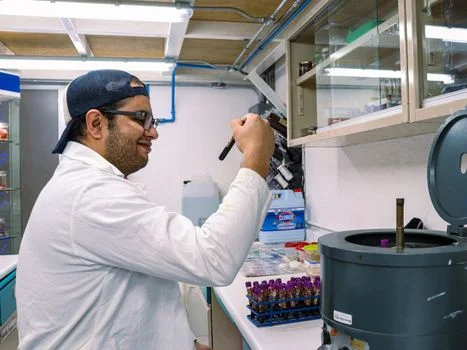
Two numbers define compliance for most South African plants. For discharge to a municipal sewer under an Industrial Effluent Bylaw, the DWS General Limit applies: 0.1 mg/L Cr(VI) and 1.0 mg/L total Cr, accepted only where the municipality's wastewater treatment works has the capacity to handle heavy metals. For direct discharge to a water resource, the DWS Special Limit applies: 0.05 mg/L Cr(VI) and 0.5 mg/L total Cr, and this is the most common binding number on industrial sites with their own outfall. Sector overlays tighten the picture further. Mining operations must also satisfy GN R704 under the Mineral and Petroleum Resources Development Act (MPRDA) for residue deposits and acid mine drainage. Electroplating facilities are guided by the dti industrial effluent guidelines. Leather tanneries typically run an influent of 5–20 mg/L total Cr in composite wastewater and must still hit the Special Limit at the discharge point.
| Authority / Standard | Cr(VI) limit | Total Cr limit | Discharge scenario |
|---|---|---|---|
| DWS General Limit (GN 665) | 0.1 mg/L | 1.0 mg/L | To municipal sewer, by acceptance |
| DWS Special Limit (GN 665) | 0.05 mg/L | 0.5 mg/L | To a water resource |
| EU maximum (various Member States) | 1.0 mg/L | 5.0 mg/L | To aquatic environment |
| US EPA Metal Finishing (40 CFR 433) | 0.11 mg/L | 0.77 mg/L | To POTW |
| South Africa Special Limit on mining/tanning | 0.05 mg/L | 0.5 mg/L | Sector overlay, no relaxation |
One nuance that trips up designers: the GN 665 number is read alongside the NWA's no-degradation principle. If the receiving water body is already at 0.04 mg/L total Cr, DWS can set a tighter site-specific limit through the licence conditions, and that is increasingly common in the Vaal and Olifants catchments.
How Industrial Sites Generate Chromium Wastewater
The chromium source on a site is rarely a single stream, and the concentration shape drives the treatment choice. Electroplating and decorative chrome plating generate rinse waters with 20–200 mg/L total Cr, of which 60–90% sits as Cr(VI) depending on bath chemistry, and the rinse is the volume driver even though bath dumps are far more concentrated. Leather tanning spent liquor from the chrome tanning step runs 1,000–4,000 mg/L total Cr, predominantly as Cr(III) at pH 3.5–4.0, and the design challenge there is hydroxide precipitation rather than reduction. Mining and ore processing generate tailings return water and slag runoff that carry Cr(VI) from chromite oxidation; concentrations can spike to 10–50 mg/L during heap-leach upset events, which is why equalisation and online monitoring matter. Cooling tower blowdown and flue-gas desulfurization overflow are low in concentration but persistent in volume, often setting the hydraulic design load even when the mass load is small.
Treatment Train for Cr(VI) Reduction and Total Cr Removal
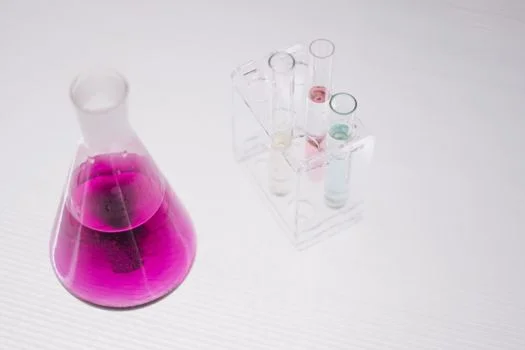
A defensible South African treatment train has six steps and starts with segregation, not chemistry. Step 1 is source separation: keep Cr(VI) rinse streams from plating segregated from Cr(III) tannery or pickling streams so the reduction reagent is not wasted on liquor that is already in the trivalent form. Step 2 is equalisation and pH adjustment, balancing flow and acidity, then acidifying the Cr(VI) stream to pH 2.0–2.5 for efficient reduction. Step 3 is the chemical reduction itself, dosing FeSO₄ (ferrous sulfate) at 2.5–3.0× the stoichiometric Cr(VI) mass, or Na₂S₂O₅ (sodium metabisulfite) at 1.5–2.0×, with a 15–30 minute reaction time; oxidation-reduction potential (ORP) held below +250 mV confirms Cr(VI) to Cr(III) conversion efficiencies above 99%. Step 4 is alkaline precipitation: raise pH to 8.5–9.5 with NaOH or lime, dose a polymer flocculant, and settle or float Cr(OH)₃. Step 5 is sludge handling: Cr(III) hydroxide sludge classifies as Type 4 waste under GN R635, requires lined containment, and is typically dewatered to 25–35% dry solids with a plate-and-frame filter press before disposal to a Class A hazardous landfill. Step 6 is polishing and online monitoring: a dual-channel online Cr(VI) analyser at the effluent manifold, using the 1,4-diphenylcarbazide colorimetric method (APHA 3500-Cr), with the trip setpoint at 0.04 mg/L, 20% below the regulatory limit, so the plant has time to react before a non-compliance event.
| Step | Process unit | Operating target | Verified outcome |
|---|---|---|---|
| 1. Source separation | Segregated collection sumps | Cr(VI) vs Cr(III) split | Lower reagent dose |
| 2. Equalisation + pH | Equalisation basin, acid dosing | pH 2.0–2.5 | Reduction kinetics |
| 3. Chemical reduction | automatic chemical dosing system with FeSO₄ or Na₂S₂O₅ | ORP < +250 mV, 15–30 min | >99% Cr(VI) to Cr(III) |
| 4. Alkaline precipitation | high-efficiency sedimentation tank (lamella) or DAF system | pH 8.5–9.5, polymer dose | Total Cr < 1 mg/L |
| 5. Sludge handling | plate-and-frame filter press, lined containment | 25–35% DS cake | GN R635 Type 4 disposal |
| 6. Polishing + online | Online Cr(VI) analyser, APHA 3500-Cr | Trip at 0.04 mg/L | Continuous compliance proof |
Designers often skip Step 1 and pay for it in OPEX for the next ten years; segregation typically cuts reagent cost by 25–35% on a mixed site. For a deeper dive on metal-finishing sludge economics, the filter press sludge dewatering pricing reference has current 2026 numbers, and the broader heavy metal removal technology guide is a useful cross-check on the precipitation step.
CAPEX, OPEX, and Validation Economics for 2026
A 50 m³/day mixed Cr(VI)/Cr(III) treatment plant in South Africa in 2026 lands between R 8 million and R 18 million in capital cost, with the spread driven mostly by automation tier (manual, semi-automatic, or full SCADA) and the sludge handling line (gravity thickener only versus full filter press with conveyor to a skip). Reagent is the dominant OPEX line: FeSO₄ accounts for roughly 60% of chemical OPEX, and a typical dosing scheme runs R 35–60 per cubic metre treated. Sludge disposal to a Class A hazardous landfill adds R 800–1,400 per dry tonne. Energy for the dosing pumps, lamella clarifier, and filter press typically sits at 1.8–2.5 kWh/m³; adding an MBR polishing step for tight reuse targets pushes that to 5.0–5.5 kWh/m³. These figures can be cross-checked against the Western Cape wastewater compliance guide for labour and electricity multipliers.
| Cost line | 2026 ZAR benchmark (50 m³/day) | Driver |
|---|---|---|
| CAPEX (civil + mechanical + electrical) | R 8,000,000 – R 18,000,000 | Automation tier, sludge line |
| Reagent OPEX (FeSO₄ + NaOH + flocculant) | R 35–60 / m³ | Influent Cr(VI) load |
| Sludge disposal (Class A hazardous) | R 800–1,400 / dry tonne | DS content, landfill gate fee |
| Energy (lamella + dosing + filter press) | 1.8–2.5 kWh/m³ | Tariff schedule, hours/d |
| Energy (with MBR polishing) | 5.0–5.5 kWh/m³ | Membrane aeration duty |
| Validation lab cost (28-day commissioning) | R 180,000 – R 320,000 | SANAS-accredited Cr(VI) + ICP-OES |
Validation follows a fixed 28-day commissioning trial: daily composite sampling by an SANAS-accredited lab, Cr(VI) by APHA 3500-Cr-D, total Cr by ICP-OES (APHA 3120-B), with a pass criterion of 90% of daily composites below the Special Limit. That protocol is what the procurement committee sees once, and what the DWS auditor sees on file for the next licence cycle.
Frequently Asked Questions
What is the legal chromium discharge limit in South Africa in 2026?
0.05 mg/L Cr(VI) and 0.5 mg/L total Cr for direct discharge to a water resource under DWS GN 665 Special Limits; 0.1 mg/L Cr(VI) and 1.0 mg/L total Cr for discharge to municipal sewer under the General Limit. Sector permits can impose tighter values.
Which South African regulation governs chromium discharge?
National Water Act 36 of 1998 Section 21(f) and 21(h), enforced through DWS Regulation GN 665 of 2013. Sludge is governed by NEM:WA 59 of 2008 and GN R635/636/637/638.
Do I need a Water Use Licence to discharge chromium wastewater?
Yes, unless your site falls under a Section 39 General Authorisation. Most electroplating, mining, and tanning operations exceed those thresholds and must lodge a full WULA with public participation and DWS technical sign-off.
What reagent is used to reduce Cr(VI) to Cr(III)?
Ferrous sulfate (FeSO₄) dosed at 2.5–3.0× the stoichiometric Cr(VI) mass, or sodium metabisulfite (Na₂S₂O₅) at 1.5–2.0×, at pH 2.0–2.5 with 15–30 minutes reaction time, achieving >99% conversion.
Is chromium treatment sludge hazardous waste in South Africa?
Yes. Cr(III) hydroxide sludge from the reduction–precipitation train is classified as Type 4 waste under GN R635 and must be disposed of at a Class A hazardous landfill with lined containment.
How much does a chromium treatment plant cost in South Africa?
CAPEX of R 8–18 million for a 50 m³/day plant in 2026, with OPEX of R 35–60 per cubic metre treated plus R 800–1,400 per dry tonne of sludge disposed.