Why Kazakhstan's Wastewater Rules Matter in 2026
Kazakhstan wastewater discharge regulations in 2026 are tightening around two parallel tracks: a strict per-pollutant permit regime and a national push toward water reuse. The country's industrial base is anchored in hydrocarbons, uranium, copper, and coal, and those operations generate streams loaded with oil products, salinity, suspended solids, ammonia, and sulfate (per the OECD review of Kazakhstan's environmental performance, 2024). In 2025 Kazakhstan approved ST RK ISO 4789:2025, a national standard for wastewater treatment and reuse in thermal power plants — the first codified signal that 2026 is a transition year toward water reuse and near-zero liquid discharge for heavy industry (per the Ministry of Ecology and Natural Resources notice, 2025-09). Under Article 222 of the Ecological Code, discharge of untreated sewage into surface or groundwater is prohibited; the only legal path is an environmental permit with a per-pollutant limit set at every outlet. For a plant manager in Atyrau, Pavlodar, or Aktau, the operational risk is concrete: permit revocation, fines, and forced operational suspension are realistic enforcement outcomes, not theoretical ones (per the Committee for Environmental Regulation and Control enforcement reports, 2025-Q3).
The Legal Stack: Ecological Code, Water Code, and Subsoil-Use Rules
Three overlapping instruments govern industrial discharge in Kazakhstan, requiring engineers to identify which regulation controls each specific parameter. Article 222 of the Ecological Code (No. 212-III, 2007, with amendments through 2024) is the umbrella: any discharge into natural surface or underground water bodies requires an environmental permit, and untreated discharge is prohibited outright. The Water Code of the Republic of Kazakhstan (No. 481-IV, 2003, with amendments) governs water use, water-protection zones, and special water-use permits that run in parallel to the environmental permit and cover the volume abstraction side of the equation. Where wastewater contains mining or oil-field brine — sulfite-laden, chloride-heavy, sometimes naturally radioactive — the Subsoil Code and the Committee of Geology rules under the Ministry of Ecology and Natural Resources layer in additional norms for injection wells, radionuclide screening, and brine-handling facilities. ST RK ISO 4789:2025 is technically a national standard rather than a statute, but inspectors treat it as the benchmark for power-sector discharges, and the committee increasingly references it when reviewing heavy-industry permits outside the power sector. A defensible 2026 compliance package cites all three instruments, plus the technical standard, in the same permit dossier.
2026 MAC Values: What the Permissible Discharge Standard Actually Says

Article 222.3 of the Ecological Code requires a discharge limit for each pollutant at each wastewater outlet, set so that downstream water quality at the monitoring section meets relevant standards. These limits account for the basic anthropogenic background and the type of receiving water body. The per-pollutant values below are indicative figures commonly applied to industrial discharge sites in Kazakhstan in 2026; the actual PDS values are negotiated outlet-by-outlet in the permit dossier and may be tightened for protected water bodies.
| Pollutant | Indicative 2026 MAC at outlet | Notes |
|---|---|---|
| Oil products | 0.05–0.3 mg/L | Tightened to 0.05 mg/L in fishery-water zones |
| Suspended solids (TSS) | ≤ 50 mg/L | Lower (≤ 25 mg/L) in sanitary-protection zones |
| BOD₅ | ≤ 30 mg/L | For municipal and process streams |
| COD | ≤ 80 mg/L | Rarely the binding limit; BOD₅ usually controls |
| Ammonia nitrogen (NH₃-N) | ≤ 2.0 mg/L | Drives nitrification stage sizing |
| Sulfates | ≤ 500 mg/L | Drives RO or ion-exchange selection |
| Chlorides | ≤ 350 mg/L | Tightened downstream of drinking-source intakes |
| Total dissolved solids (TDS) | ≤ 1,000 mg/L | Fishery waters; 1,500 mg/L common elsewhere |
| pH | 6.5–8.5 | Standard range at outlet |
For the thermal power sector, ST RK ISO 4789:2025 introduces reuse-quality criteria that drive effluent toward cooling-tower makeup or irrigation. A plant designing for 2026 inspection should assume the inspector will compare the proposed PDS values against both Article 222 limits and the reuse-quality criteria in the new standard.
The Environmental Permit Workflow: From Application to Inspection
The territorial department of the Committee for Environmental Regulation and Control (CERC) under the Ministry of Ecology and Natural Resources reviews the permit dossier. A complete submission is the difference between a 30-day administrative review and a six-month back-and-forth, so the engineering team should plan the package in five stages.
| Step | Owner | Typical duration | Key deliverable |
|---|---|---|---|
| 1. Site characterization | Process engineer + accredited lab | 2–4 weeks | Influent flow and pollutant load per outlet; receiving-water classification |
| 2. Technology justification | EPC / technology vendor | 2–6 weeks | Pilot data or mass-balance calculation proving train meets proposed PDS |
| 3. PDS calculation | Licensed environmental consultant | 1–3 weeks | Per-pollutant limit table using Ministry-approved methodology |
| 4. Submission and review | Plant owner / EHS lead | 30–90 days for complete dossier | Environmental permit decision from CERC |
| 5. Operating obligations | Plant EHS, in perpetuity | Continuous | On-line monitoring (pH, TSS, conductivity, NH₃-N), daily logs, quarterly reports |
Non-compliance with operating obligations triggers Article 222 enforcement: administrative fines starting from several hundred monthly calculated indices (MCIs), permit suspension, or, in repeated or willful cases, operational shutdown (per the Administrative Code of Kazakhstan, Articles 326–328, as updated 2024). For a foreign EPC, the technology-justification step requires the same rigor as equipment selection, as the dossier determines the permit outcome before any pipe is welded.
Translating the Rules into Equipment: Treatment Trains That Pass Inspection
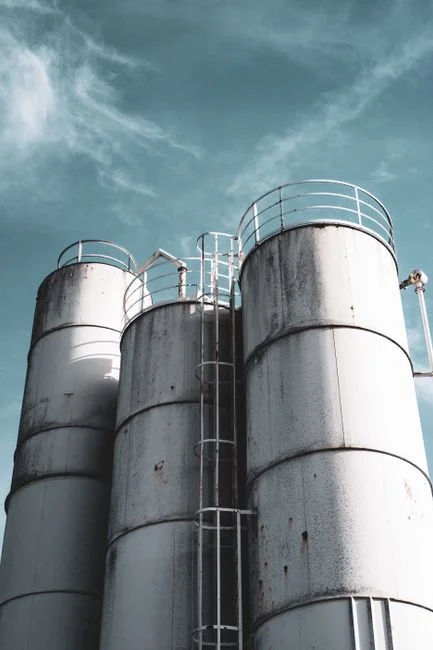
The following mapping aligns 2026 inspector expectations in the technology-justification chapter with specific equipment stages. Each row links a MAC-controlled pollutant to the equipment stage that delivers it.
| Pollutant family | Target at outlet | Primary equipment stage | Role in train |
|---|---|---|---|
| Free oil, emulsified hydrocarbons, TSS | Oil 0.05–0.3 mg/L; TSS ≤ 50 mg/L | Industrial DAF system for oil and suspended-solids removal with coagulant/polymer dosing | Primary stage; removes 90–95% of oil and floatable solids before biology |
| COD, BOD₅, NH₃-N | COD ≤ 80 mg/L; BOD₅ ≤ 30 mg/L; NH₃-N ≤ 2.0 mg/L | Submerged MBR membrane bioreactor with 0.1 μm PVDF membranes | Biological stage; nitrification/denitrification plus solid–liquid separation in one tank |
| Sulfates, chlorides, TDS | SO₄ ≤ 500 mg/L; Cl ≤ 350 mg/L; TDS ≤ 1,000 mg/L | Industrial RO polishing system with antiscalant dosing | Polishing or ZLD; required for reuse and for high-salinity oil-field or mining streams |
| Coagulant, flocculant, antiscalant, pH correction | Dose accuracy ±5% | PLC-controlled automatic chemical dosing skid with flow-paced control | Cross-cutting; expected in 2026 dossiers for DAF, MBR, and RO alike |
| Sludge from DAF float and MBR waste | Cake dryness ≥ 22% DS | Plate-and-frame sludge dewatering filter press | Closes the solids loop so the entire stream — water and sludge — is documented and compliant |
For an industrial DAF system sized to Kazakhstan's typical 50–500 m³/d refinery or food-processing flows, hydraulic retention time of 20–30 minutes and air-to-solids ratios of 0.02–0.05 are normal design points (per HydropureWater field data, 2026). MBR sizing should target mixed-liquor suspended solids of 8,000–12,000 mg/L and a membrane flux of 10–18 L/m²·h to keep nitrification stable at the 2.0 mg/L NH₃-N ceiling. For projects where reuse is the target — which is increasingly the inspector's expectation under ST RK ISO 4789:2025 — RO recovery of 65–75% with two-pass configuration is the typical envelope. On-line monitoring of pH, TSS, conductivity, and NH₃-N is now treated as a permit condition, and the chemical dosing skid should be PLC-controlled with flow-paced setpoints so the inspector can trace every kilogram of coagulant or antiscalant back to a flow signal.
Frequently Asked Questions
What does Article 222 of the Ecological Code actually require for wastewater discharge?
Article 222 prohibits the discharge of untreated sewage into natural surface or underground water bodies and requires an environmental permit with a per-pollutant limit (PDS) at every outlet. The PDS is set so that downstream water quality at the monitoring section meets the relevant standards (per Ecological Code Article 222.1, 222.2, 222.3).
How do Kazakhstan's MAC values compare with EU and Chinese discharge standards?
The indicative 2026 Kazakhstan MAC for oil products (0.05–0.3 mg/L) and ammonia nitrogen (≤ 2.0 mg/L) is broadly comparable to EU Directive 91/271/EEC and China's GB 18918-2002 Grade 1A thresholds. Sulfate (≤ 500 mg/L) and TDS (≤ 1,000 mg/L) ceilings in fishery-water zones are typically tighter than EU municipal standards but looser than China's GB/T 19923-2005 reuse criteria for cooling-tower makeup (HydropureWater field data, 2026).
What is ST RK ISO 4789:2025 and who does it apply to?
ST RK ISO 4789:2025 is the national standard for wastewater treatment and reuse in thermal power plants, approved in 2025. It applies directly to thermal power operations but is increasingly referenced as a technical benchmark for other