Why Airport Wastewater Is a Distinct Engineering Problem
Airports generate at least five discrete wastewater streams that differ enough in chemistry that a single municipal-style treatment train will fail on at least one of them. The dominant sanitary/terminal stream runs 400–800 mg/L COD and 150–300 mg/L BOD, but it is mixed in the same collection system with terminal F&B waste at ~1,000–2,000 mg/L COD with high FOG, aircraft wash water at ~300–600 mg/L COD laden with detergents, and — seasonally — concentrated de-icing/anti-icing glycol sidestreams at 25,000–80,000 mg/L COD with a BOD/COD ratio above 0.6. Oily runway and apron runoff adds 100–500 mg/L of petroleum hydrocarbons, and fire-training pads periodically discharge PFAS- and foam-laden wash-down water. Segregating these streams at the collection box, not blending them at the headworks, is the first engineering decision.
Diurnal passenger flows swing 3–4× between 04:00–08:00 morning banks and 17:00–21:00 evening banks, and in northern hubs the de-icing season can push glycol-derived COD to 60–70% of the total plant load for 8–12 weeks per year. The EPA airport industrial waste guidance (EPA-600/8-80-027 baseline, still cited) explicitly flags that activated sludge "is sensitive to heterogeneous or shock loads and toxic substances and requires careful operating controls" — which is why equalization and membrane bioreactors, not conventional aeration basins, dominate the 2026 airport duty cycle. A specialized mobile niche exists too: 5,000 L/h membrane skids have been integrated directly onto runway-cleaning vehicles (robotchemie project, 2023) to handle apron wash water at the source before it ever reaches the main plant.
| Stream | Typical COD (mg/L) | Typical BOD (mg/L) | Key contaminant | Segregation priority |
|---|---|---|---|---|
| Sanitary / terminal | 400–800 | 150–300 | Ammonia, pathogens | Main biotrain |
| Terminal F&B | 1,000–2,000 | 500–900 | FOG, food solids | DAF pre-treatment |
| Aircraft wash | 300–600 | 150–350 | Detergents, waxes | Equalize + reuse polish |
| De-icing glycol | 25,000–80,000 | 15,000–50,000 | Ethylene/propylene glycol | Anaerobic sidestream |
| Runway/apron runoff | 150–500 | 50–200 | Hydrocarbons, de-icers | Oily-water separator |
The Standard 2026 Process Train for Airport Terminal Wastewater
The seven-stage train below is the defensible 2026 baseline for the sanitary + F&B + aircraft-wash mix; the glycol and oily-runway streams branch off into the dedicated lanes described in the next sections.
- Screening. A GX series rotary bar screen with 3–6 mm openings removes rags, wipes, and F&B solids that would otherwise blind downstream MBR membranes. Install downstream of the grit chamber, not at the headworks, so fats and food solids are captured before they coat the bars.
- Grit removal and flow equalization. A 6–12 hour HRT equalization basin dampens the 3–4× diurnal passenger swings and is, per the EPA airport industrial waste document, "typically the first operation" for any heterogeneous airport influent. Sized at 25–35% of daily flow for hubs above 5,000 m³/day.
- DAF for FOG. A dissolved air flotation unit targeting 10–30 mg/L residual oil protects the MBR from grease fouling and reduces scum loadings on the membrane cassettes by 60–80%.
- Biological stage — MBR. An integrated MBR system with submerged PVDF flat-sheet membranes (0.1 µm pore size) operates at MLSS 8,000–12,000 mg/L, HRT 6–10 h, and SRT 20–30 days. The DF series flat-sheet MBR module delivers reuse-grade effluent (<5 mg/L TSS, <30 mg/L BOD) in roughly 60% of the footprint of conventional activated sludge — a decisive factor on airside sites where land is locked between taxiways.
- Tertiary filtration. Multi-media filtration polishing to <5 mg/L TSS protects the downstream reuse loop and keeps UV transmittance above 65%.
- Disinfection. A chlorine dioxide generator dosed at 0.5–1.5 mg/L residual with 30-minute contact time is the default for any line discharging to a reuse system that needs a residual. UV at 40 mJ/cm² is the alternative if the reuse loop is closed (HVAC make-up, cooling tower) and no residual is desired.
- Sludge handling. A plate-and-frame filter press dewaters wasted biological sludge to 22–25% dry solids for offsite disposal, cutting sludge volume for haul-out by 75–80% versus belt thickening.
MBR vs SBR vs MBBR: Choosing the Right Biology for an Airport Site
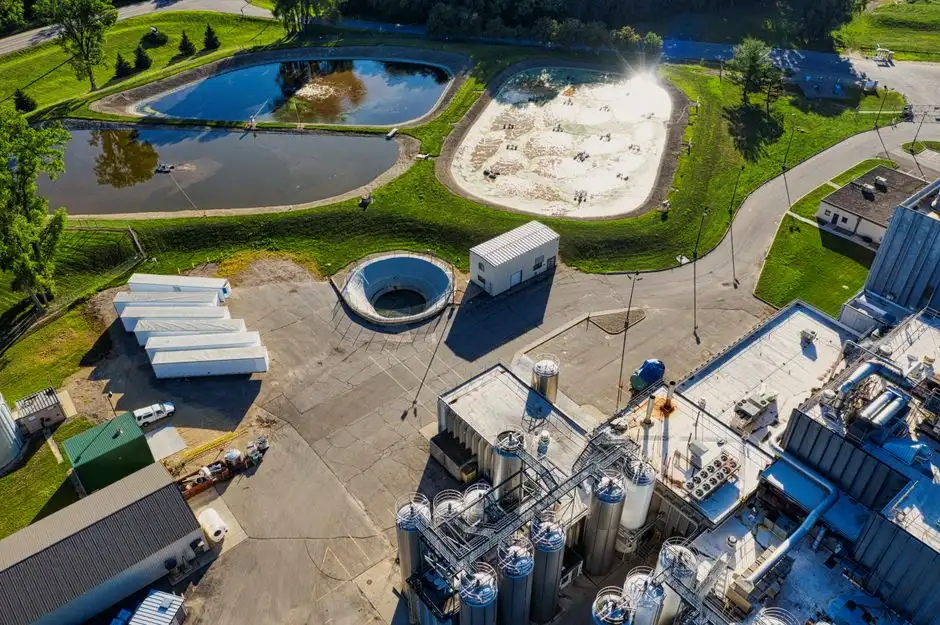
The biology choice is a site-specific trade-off between footprint, capital cost, hydraulic resilience, and whether the effluent will be reused. MBR is the default for 2026 greenfield airport projects above 2,000 m³/day, but SBR and MBBR each have defensible niches.
| Parameter | MBR | SBR | MBBR |
|---|---|---|---|
| Effluent TSS | < 5 mg/L | 10–20 mg/L | 20–30 mg/L |
| Effluent BOD | < 30 mg/L | 20–30 mg/L | 20–40 mg/L |
| Footprint vs CAS | ~40% (60% smaller) | ~70% | ~80% |
| Hydraulic resilience | High (membrane buffer) | Low (batch cycle) | High (attached growth) |
| Reuse-ready | Yes, direct | Needs tertiary | Needs tertiary |
| Membrane OPEX (USD/m³) | 0.04–0.08 | N/A | N/A |
| Skilled operator demand | High | Low–medium | Medium |
Decision rule of thumb: specify MBR when reuse is on the project scope or the airside parcel is under 0.5 ha; specify SBR when daily throughput stays below 2,000 m³/day and the capital ceiling is below USD 4 million; specify MBBR when the dominant operating headache is short-stay hydraulic surges and reuse is not required. Membrane replacement on MBR runs USD 0.04–0.08 per m³ treated and should be carried as an explicit line item in OPEX, not buried in maintenance.
De-Icing Glycol: The Winter Shock-Load Most Plants Underestimate
Concentrated Type I and Type IV de-icing fluid sidestreams run 25,000–80,000 mg/L COD and 15,000–50,000 mg/L BOD with a BOD/COD ratio above 0.6 — meaning the carbon is genuinely biodegradable, but the sheer mass overwhelms a conventional aeration basin in hours. Direct discharge of even 5% by volume of concentrated glycol to the main biotank drops dissolved oxygen below 0.5 mg/L within 30 minutes and sloughs biomass for 3–7 days afterward. In northern hubs this is the number-one cause of winter permit excursions.
The 2026 treatment lane is segregation, not blending. Route glycol runoff to a dedicated equalization basin at 12–24 hour HRT, then to a sidestream anaerobic reactor — UASB or EGSB operating at 30–37 °C — for 70–85% COD removal before the effluent polishes through the main MBR. Air stripping followed by activated carbon adsorption (technologies called out in the EPA airport industrial waste document for solvent and low-molecular-weight organic removal) handles the residual fraction that survives anaerobic + MBR. Two operational KPIs keep the main plant healthy during de-icing weeks: hold mixed-liquor DO above 2 mg/L in the MBR, and increase return-activated-sludge rate by 20–30% to defend SRT against the higher solids yield from glycol metabolism.
2026 Cost Benchmarks: CAPEX, OPEX and Reuse ROI
These ranges reflect 2026 turnkey pricing for an MBR-led airport plant treating 1,000–10,000 m³/day, including civil works, equipment, and 12 months of commissioning support.
| Cost line | 2026 benchmark | Notes |
|---|---|---|
| CAPEX — MBR greenfield | USD 280–520 per m³/day | Upper end with reuse loop |
| CAPEX — SBR greenfield | USD 180–340 per m³/day | Smaller regional airports |
| OPEX (energy + chemical + sludge) | USD 0.18–0.32 per m³ | MBR dominated by aeration |
| Membrane aeration energy | 0.25–0.40 kWh/m³ | 40–55% of plant electricity |
| Reuse savings | USD 0.40–0.70 per m³ reused | Offsets potable water OPEX |
| MBR reuse premium payback | 4–7 years | At 30–50% reuse rate |
Energy is the dominant OPEX line item, and membrane aeration alone typically consumes 0.25–0.40 kWh/m³ — 40–55% of total plant electricity. Reusing 30–50% of treated effluent for HVAC cooling make-up, toilet flushing, and landscape irrigation typically cuts potable water operating cost by USD 0.40–0.70 per cubic meter of reuse, which pays back the MBR reuse-loop premium in 4–7 years at most hubs. As the Salher sustainability analysis notes, opting for reuse "initially increases the budget for installing the airport's water treatment plant" but the long-term cost benefit shows up within the first major permit cycle. For broader market context, the 2026 industrial wastewater treatment market outlook tracks pricing pressure from membrane and energy costs.
Compliance, Reuse Standards and Odor Control
Discharge compliance in 2026 typically tracks COD below 50–125 mg/L, BOD below 30 mg/L, TSS below 30 mg/L, and total nitrogen in the 15–40 mg/L band depending on whether the receiving body is an EU IED site, a US EPA-pretreated POTW, or a local airport authority outfall. Reuse quality for aircraft wash and HVAC make-up water generally requires under 5 mg/L TSS, under 2 NTU turbidity, and non-detectable fecal coliforms — a bar only MBR plus ClO₂ or UV reliably clears.
Odor is the permit risk that has nothing to do with effluent numbers. Airport plants sit close to terminals, parking, and cargo facilities, and complaints about H₂S, mercaptans, and VOCs drive neighbor-relations problems faster than any discharge exceedance. Specify a dedicated chemical scrubber or biofilter stage ahead of the equalization basin vent and the DAF exhaust, and design the wet-scrubber chemistry along the same mass-transfer principles used in FGD scrubber designs — the gas-liquid contact logic transfers directly to odor control. For operators tracking self-monitoring obligations, the 2026 wastewater self-monitoring compliance guide lays out the sampling cadence regulators now expect.
Frequently Asked Questions
What is the best treatment for airport wastewater in 2026? MBR is the default choice for greenfield and major retrofit projects because it delivers reuse-grade effluent in roughly 60% of the footprint of conventional activated sludge and tolerates the heterogeneous loads an airport actually generates.
How do airports treat de-icing fluid? Segregated collection, 12–24 hour equalization, sidestream anaerobic pretreatment (UASB or EGSB) achieving 70–85% COD removal, then polishing through the main MBR with air stripping and activated carbon for residual solvents.
How much does an airport wastewater treatment plant cost in 2026? Turnkey CAPEX runs USD 280–520 per m³/day for an MBR plant, and OPEX runs USD 0.18–0.32 per m³ treated, dominated by membrane aeration energy at 0.25–0.40 kWh/m³.
Can airport wastewater be reused? Yes — sanitary and F&B streams are the most readily reusable for HVAC cooling make-up, toilet flushing, and landscape irrigation, with payback on the reuse-loop premium typically inside 4–7 years.
What is the most common cause of airport plant permit violations? Winter glycol shock loads overwhelming the biological stage when sidestream segregation is missing; the second is H₂S odor complaints triggering neighbor-relations enforcement.