Kentucky municipal sewage plants discharge under Kentucky Pollutant Discharge Elimination System (KPDES) permits issued by the Kentucky Division of Water. Baseline federal secondary treatment still requires 30-day average BOD5 and suspended solids (SS) of ≤ 30 mg/L each, with at least 85% removal, per 40 CFR 133.102. For a 1 MGD facility, 2026 CAPEX commonly falls in the $3.5M–$5.2M band, with OPEX near $0.45–$0.75/m³ treated. Process choices center on activated sludge (85–95% BOD removal), MBR (95–99% BOD removal, about 60% smaller footprint), and DAF (92–97% TSS removal as industrial pre-treatment).
Kentucky municipal sewage plants: compliance baseline in one view
Kentucky municipal sewage plants must hold a KPDES permit and meet EPA secondary floors of BOD5 and SS ≤ 30 mg/L (30-day averages) plus ≥ 85% removal under 40 CFR 133.102. Ohio River nutrient limits often add TP ≤ 1 mg/L and TN ≤ 3 mg/L. Typical 1 MGD CAPEX is $3.5M–$5.2M (2026), with OPEX near $0.45–$0.75/m³.
KPDES Permits, EPA Standards, and Kentucky Discharge Limits
KPDES permits from the Kentucky Division of Water (KDOW) set enforceable effluent limits for every municipal discharge to waters of the Commonwealth. Individual KPDES applications for publicly owned treatment works typically run 6 to 18 months under KDOW 2024 guidance, and operational permits renew on a five-year cycle. According to 40 CFR 133.102 (eCFR current text), secondary treatment also caps 7-day averages at 45 mg/L BOD5 and 45 mg/L SS, with effluent pH held between 6.0 and 9.0 unless the listed exceptions apply.
Beyond the federal floor, Ohio River basin and other nutrient-sensitive waters often require TP ≤ 1 mg/L and TN ≤ 3 mg/L under TN-1241-type conditions. Common permit violations in Kentucky, according to 2023 KDOW data, include 18% for BOD exceedances and 12% for TSS exceedances. Most plants we size for wet-weather peaks fail those limits when grit and screenings are undersized, not when the aeration basin alone is short. Grit channels designed for about 0.3 m/s velocity (EPA 2023 practice notes) and fine screens at 6 mm bar spacing cut rag and grit carryover before secondary biology is stressed. Louisville’s Morris Forman Water Quality Treatment Center’s $400M upgrade, projected for 2025 completion, targets those TN-1241 nutrient limits.
| Regulatory Aspect | Requirement/Standard | Applicability in Kentucky | Source/Notes |
|---|---|---|---|
| KPDES Permit | Individual/General | Mandatory for all municipal discharges | KDOW 2024 guidelines (6–18 month application) |
| EPA Secondary Treatment | BOD ≤ 30 mg/L, TSS ≤ 30 mg/L | Baseline for all Kentucky plants | 40 CFR Part 133 |
| Nutrient Limits (TN-1241) | TP ≤ 1 mg/L, TN ≤ 3 mg/L | Specific to Ohio River watershed & nutrient-sensitive areas | Kentucky Division of Water (KDOW) |
| Common Violations (2023) | 18% BOD exceedances, 12% TSS exceedances | Highlights need for robust treatment processes | KDOW data |
How Kentucky Plants Sequence Treatment to Meet Permits
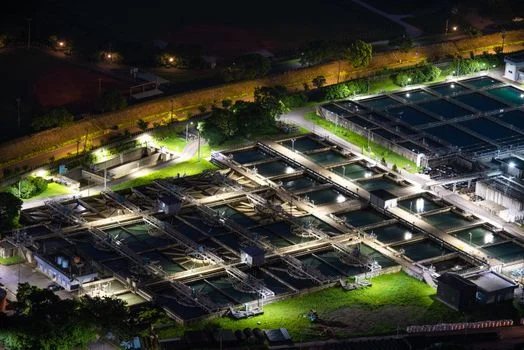
Municipal treatment trains in Kentucky remove grit and trash first, then settle solids, oxidize organics biologically, and finish with nutrient polishing or disinfection when the permit demands it. Each stage has a design number you can check on drawings before you buy steel.
Preliminary treatment protects pumps and clarifiers. Grit removal at about 0.3 m/s (per EPA 2023 guidelines) settles inorganic particles, while fine screening with 6 mm bar spacing—such as the GX Series Rotary Mechanical Bar Screen—pulls rags and plastics before they wrap impellers.
Primary clarification uses surface loading rates of 30–50 m³/m²/day (WEF MOP 8) for settleable and floatable solids. Plants short on land often specify High-Efficiency Sedimentation Tanks or lamella units that reach 90–95% TSS removal by raising effective settling area inside a smaller basin.
Secondary biology removes dissolved BOD and COD. Conventional activated sludge usually runs at an F/M of 0.2–0.5 with dissolved oxygen held near 1.5–2.0 mg/L. MBR systems hold MLSS at 8,000–12,000 mg/L behind 0.1 μm membranes. Lexington’s Town Branch Wastewater Treatment Plant’s 2024 MBR upgrade cut influent BOD of 250 mg/L to about 5 mg/L effluent under the reported operating window.
Tertiary steps add nutrient removal or pathogen kill when permits tighten. Biological nutrient removal or alum/ferric dosing handles phosphorus; chlorine, UV, or chlorine dioxide handle disinfection. ClO₂ Generators target 99.99% pathogen kill at a residual of 0.2–0.8 mg/L when dose and contact time are controlled.
| Treatment Stage | Key Parameters/Specs | Typical Removal Efficiency | Kentucky Relevance/Product Example |
|---|---|---|---|
| Preliminary (Grit Removal) | Velocity: 0.3 m/s | Removes >95% grit | Protects downstream equipment; EPA 2023 guidelines |
| Preliminary (Fine Screening) | Bar Spacing: 6 mm | Removes >90% rags/debris | GX Series Rotary Mechanical Bar Screen |
| Primary (Sedimentation) | Surface Loading: 30–50 m³/m²/day | TSS: 50–70%, BOD: 25–40% | High-Efficiency Sedimentation Tank (90–95% TSS) |
| Secondary (Activated Sludge) | F/M Ratio: 0.2–0.5, DO: 1.5–2.0 mg/L | BOD: 85–95%, TSS: 85–95% | Common in budget-conscious projects |
| Secondary (MBR) | MLSS: 8,000–12,000 mg/L, Pore Size: 0.1 μm | BOD: 95–99%, TSS: 98–99% | MBR systems for high effluent quality/small footprint |
| Tertiary (Disinfection) | ClO₂ Residual: 0.2–0.8 mg/L | Pathogen Kill: 99.99% | ClO₂ Generator for EPA compliance |
How should plants procure aeration equipment?
Aeration procurement for municipal plants should lock blower turndown, diffuser oxygen-transfer efficiency at the design MLSS and temperature, and spare-parts lead times before price is ranked. Kentucky winters push basin temperatures below 10°C, so bid sheets need verified SOTE or SAE at the cold-water case, not only the 20°C catalog point. Ask for factory witness tests, SCADA-ready controls, and a maintenance plan that states diffuser cleaning intervals in months, not vague “as needed” language.
MBR vs Activated Sludge vs DAF for Kentucky Plants
Technology selection for a Kentucky municipal plant turns on influent strength, land, permit tightness, and capital headroom. Kentucky municipal influent typically shows BOD of 200–300 mg/L and TSS of 250–350 mg/L (2023 KDOW data), with CSO spikes in Louisville and Lexington.
MBR systems hold BOD ≤ 5 mg/L and TSS ≤ 2 mg/L in many reuse or tight-limit cases, with footprints up to 60% smaller than conventional activated sludge. CAPEX for a 1 MGD MBR train often sits at $4.2M–$6.8M, with energy near 0.6–0.8 kWh/m³ for aeration and membrane scouring.
Activated sludge still wins when land is cheap and the permit only needs secondary floors. Effluent near BOD ≤ 20 mg/L and TSS ≤ 25 mg/L is routine; 1 MGD CAPEX is often $2.8M–$4.5M with energy about 0.3–0.5 kWh/m³. Most plants we size for standard KPDES secondary limits run at the lower end of that CAPEX band when civil work is straightforward.
DAF systems are not a standalone secondary process for domestic sewage, but they cut 92–97% of TSS from high-solids industrial contributions before the municipal headworks. At 1 MGD of industrial side-stream duty, DAF CAPEX near $1.2M–$2.5M and OPEX near $0.25–$0.40/m³ is a common planning band. For parallel regional benchmarks, see Tennessee’s municipal sewage treatment specs and cost benchmarks.
| Technology | Effluent Quality (BOD/TSS) | Footprint (Relative) | CAPEX (1 MGD) | OPEX (Energy kWh/m³) | Best Use Case for Kentucky |
|---|---|---|---|---|---|
| MBR Systems | ≤ 5 mg/L / ≤ 2 mg/L | 60% smaller | $4.2M–$6.8M | 0.6–0.8 | Tight spaces, water reuse, stringent nutrient limits |
| Activated Sludge | ≤ 20 mg/L / ≤ 25 mg/L | Largest | $2.8M–$4.5M | 0.3–0.5 | Budget-conscious projects, ample land, standard compliance |
| DAF Systems (Pre-treatment) | N/A (TSS removal: 92–97%) | Medium | $1.2M–$2.5M | 0.25–0.40 | Industrial pre-treatment for high-TSS influent |
What do disinfection system costs typically cover?
Disinfection budgets for piping, tanks, structures, and equipment usually cover chemical generation or UV reactors, contact tanks, residual analyzers, safety scrubbers, and commissioning, not only the generator skid price. ClO₂ packages that hold 0.2–0.8 mg/L residual still need dose control, leak detection, and operator training in the installed cost. When owners compare chlorine gas, hypochlorite, ClO₂, and UV, include power, chemical unit cost, and building ventilation—those line items often move OPEX more than the nameplate CAPEX delta.
CAPEX, OPEX, and Funding for Kentucky Municipal Plants

Capital cost for Kentucky municipal projects scales with flow and process intensity. Based on 2026 EPA Clean Watersheds Needs Survey data adjusted for Kentucky labor and materials, CAPEX spans $1.2M–$2.5M at 0.1 MGD, $3.5M–$5.2M at 1 MGD, and $8M–$14M at 10 MGD, covering civil works, equipment, installation, and engineering.
OPEX splits roughly as energy 30–40%, labor 20–25%, chemicals 15–20%, maintenance 10–15%, and sludge disposal 5–10% at many secondary plants. Aeration and pumping dominate the power bill. For another state cost model, compare Oregon’s wastewater treatment plant cost models and funding strategies.
Kentucky funding tools include CWSRF loans at about 1–2% interest with terms up to 20 years, USDA Rural Development aid for communities under 10,000 people, and EPA WIFIA loans for projects above roughly $20M. A planning case for a 1 MGD MBR plant at $5M CAPEX and $0.60/m³ OPEX showed a 20-year NPV near $3.2M with CWSRF support versus about $1.8M without that financing—useful for council briefings, not a guarantee for every town.
| Cost Category | Plant Size (MGD) | CAPEX Range (2026) | OPEX Range (per m³) | Key Funding Sources (Kentucky) |
|---|---|---|---|---|
| Capital Expenditure (CAPEX) | 0.1 MGD | $1.2M–$2.5M | N/A | CWSRF, USDA Rural Development |
| 1 MGD | $3.5M–$5.2M | N/A | CWSRF, USDA Rural Development, EPA WIFIA | |
| 10 MGD | $8M–$14M | N/A | CWSRF, EPA WIFIA | |
| Operational Expenditure (OPEX) | All Sizes | N/A | $0.45–$0.75 | N/A (covered by utility rates) |
How do you evaluate municipal equipment suppliers?
Municipal buyers should score suppliers on referenced KPDES-compliant installs, documented cold-weather performance, spare-parts logistics into Kentucky, and factory acceptance tests—not brochure horsepower alone. Ask for at least two operating references at similar MGD, written warranty terms in months, and a commissioning checklist tied to permit limits. A short vendor scorecard on footprint, energy (kWh/m³), and operator hours per week beats a pure low-bid ranking. For a broader supplier shortlist method, see how to evaluate sewage treatment equipment suppliers.
Cold Weather, CSOs, and Flood Resilience in Kentucky
Kentucky plant design must handle winter biology slowdowns, combined sewer peaks, and river flooding. Biological treatment efficiency can drop 30–50% when water falls below 10°C (2023 WEF study), which hits nitrification first. Insulated tanks, submerged aeration, and high-MLSS MBR trains reduce that risk; Lexington’s MBR plant held about 95% BOD removal during the 2021 polar vortex under the reported conditions.
CSOs in Louisville and Lexington still drive wet-weather violations when tunnels and real-time controls lag rainfall. Louisville’s $850M CSO program, projected for 2025 completion, includes storage above 100 MG with automated diversion to treatment or storage. Flow meters and actuated valves are part of the process guarantee, not optional SCADA cosmetics.
Flood resilience means NEMA 4X electrical elevation, submersible conveyance pumps, 50-year floodplain freeboard, and backup generators with about 72 hours of fuel. Paducah’s $22M flood-resilient upgrade, completed in 2024, maintained 100% uptime during record Ohio River flooding as reported for that project.
Who this is for and next step
This guide is for Kentucky city engineers, EPC designers, and procurement leads sizing or upgrading secondary and tertiary trains under KPDES limits. Look elsewhere if you only need septic package sizing for a single home, or if your permit is industrial categorical with no municipal headworks. Selection checklist: confirm KPDES limits and nutrient overlays; lock peak wet-weather flow; choose MBR vs activated sludge vs DAF pre-treatment against land and CAPEX; verify cold-weather aeration data; and map CWSRF/USDA/WIFIA eligibility before bid.
Towns under about 5,000 people often shortlist an Underground Package Sewage Treatment Plant (WSZ Series) for 1–80 m³/h packaged duty when operator coverage is thin. Share your influent BOD/TSS, permit sheet, and target MGD through our project inquiry form for a process and equipment match.
Frequently Asked Questions
What are the KPDES permit requirements for a new municipal sewage plant in Kentucky?
KPDES permits require effluent BOD ≤ 30 mg/L and TSS ≤ 30 mg/L as baseline secondary limits, with TP ≤ 1 mg/L and TN ≤ 3 mg/L common on Ohio River watershed discharges. According to 40 CFR 133.102, 30-day average percent removal must also reach at least 85% for BOD5 and SS unless a special consideration applies. Applications typically take 6–18 months under KDOW 2024 guidelines, and operational permits renew every five years.
How much does a 1 MGD sewage treatment plant cost in Kentucky?
CAPEX for a 1 MGD Kentucky plant typically ranges from $3.5M–$5.2M in 2026 planning figures, with OPEX near $0.45–$0.75/m³. MBR trains often sit 20–30% higher in upfront cost than conventional activated sludge but can shrink footprint by about 60% and reach BOD ≤ 5 mg/L when membranes and biology are operated inside design MLSS and flux.
What is the best treatment technology for a small Kentucky town under 5,000 people?
Compact package plants such as the WSZ underground series are often the practical fit for towns under 5,000 when operator staffing is limited. Those packaged units can cut CAPEX by up to 40% versus stick-built secondary trains in the same flow band, handle about 1–80 m³/h, and bury most of the process volume to reduce visual impact and freeze exposure.
How do Kentucky cold winters affect sewage treatment plant design?
Biological treatment efficiency can fall 30–50% below 10°C, so winter nitrification and BOD removal need explicit design margins. Insulated tanks, submerged aeration, and less temperature-sensitive high-MLSS MBR configurations are common mitigations. Lexington’s MBR installation maintained about 95% BOD removal during the 2021 polar vortex under the conditions reported for that plant.
What funding is available for Kentucky municipal sewage projects?
Kentucky municipalities commonly use CWSRF loans at about 1–2% interest, USDA Rural Development grants and loans for communities under 10,000 people, and EPA WIFIA loans for projects exceeding roughly $20M. Louisville’s $400M Morris Forman upgrade has been cited as combining CWSRF and WIFIA-type financing with local capital for nutrient-limit upgrades.