In Oregon, wastewater treatment plant costs vary dramatically—from $17.5M for small municipal projects like John Day’s to $2.1B for large-scale facilities like Portland’s Bull Run filtration plant. CAPEX depends on technology (e.g., $3–$8M per MGD for conventional systems vs. $5–$12M per MGD for MBR), while OPEX ranges from $0.50–$2.00 per 1,000 gallons treated. Oregon’s strict DEQ discharge limits (e.g., <10 mg/L TN, <1 mg/L TP) add 15–30% to compliance costs. This guide breaks down 2026 cost models, technology trade-offs, and funding strategies to help municipalities and industries avoid budget overruns and select the right system.
Why Wastewater Treatment Plant Costs in Oregon Are Spiraling: Lessons from Portland and John Day
Portland’s Bull Run filtration plant project saw its initial $500 million estimate balloon to a staggering $2.1 billion actual cost—a 4x overrun attributed to scope changes, complex permitting delays, and a 20% surge in regional labor costs (per 2024 city audit). This extreme case highlights the volatility of wastewater treatment plant cost in Oregon USA when projects are not anchored in realistic escalation models. While Portland represents the upper echelon of scale, small municipalities face similar proportional pressures. In John Day, a $17.5 million wastewater project is expected to see cost increases before ground is even broken, primarily due to inflation and mandatory Oregon Department of Environmental Quality (DEQ) nutrient removal upgrades (per East Oregonian 2024).
These financial pressures manifest directly in consumer utility bills. In Aumsville, residents faced a $36 per month utility bill increase to fund essential infrastructure, illustrating the public pushback municipalities must manage when costs spiral. The primary drivers for these overruns in the Pacific Northwest include DEQ permitting timelines, which currently range from 6 to 18 months, and a local labor shortage that has seen wages for specialized trades inflate by 15–20% since 2020. the cost of raw materials—specifically structural steel and specialized alloys—has remained 30% higher than 2021 benchmarks.
Technology selection is the most significant lever for controlling these costs. For small-to-midsize plants, moving away from massive civil-heavy conventional builds toward integrated systems can reduce CAPEX by 20–40%. By understanding how how Colorado’s nutrient limits compare to Oregon’s DEQ standards, engineers can better anticipate the tertiary treatment requirements that often drive the final 15% of project costs.
Wastewater Treatment Plant Cost Framework: CAPEX vs. OPEX Breakdown for Oregon Projects
Civil construction in Oregon currently averages $2–$5M per MGD, with regional labor costs adding a 15–20% premium compared to the national average. When budgeting for a 2026 project, stakeholders must separate Capital Expenditures (CAPEX) from Operational Expenditures (OPEX) to understand the Total Cost of Ownership (TCO). Engineering and permitting typically consume 10–15% of the total CAPEX, as DEQ reviews for new discharge permits often require $200K–$500K in specialized studies and modeling.
Operational costs are dominated by energy and chemicals. MBR systems, while highly effective, can use twice the energy of conventional activated sludge due to membrane scouring requirements. In Oregon, where industrial electricity rates hover around $0.07–$0.09 per kWh, energy can account for 30–50% of total OPEX. Chemical costs for phosphorus precipitation and disinfection add another $0.50–$1.50 per 1,000 gallons treated (HydropureWater field data, 2025). Additionally, seismic requirements in the Cascadia Subduction Zone add a mandatory 5–10% premium to all civil and structural costs to ensure facility resilience during a Richter 9.0 event.
| Cost Component | Estimated Cost (per MGD) | Oregon-Specific Factor |
|---|---|---|
| Civil Construction | $2.0M – $5.0M | High labor rates (+18% vs. National Avg) |
| Equipment (MBR/CAS) | $1.0M – $3.0M | Shipping/Logistics to PNW |
| Engineering & DEQ Permitting | $200K – $500K | Stricter 2026 nutrient modeling |
| Seismic & Floodplain Retrofits | 5% – 10% of CAPEX | Mandatory Cascadia Zone compliance |
| Annual Energy OPEX | $100K – $300K | Variable based on technology choice |
| Annual Chemical OPEX | $50K – $150K | Required for <1 mg/L TP limits |
Technology-Specific Cost Breakdown: MBR vs. Conventional vs. DAF vs. Lagoons vs. Package Plants
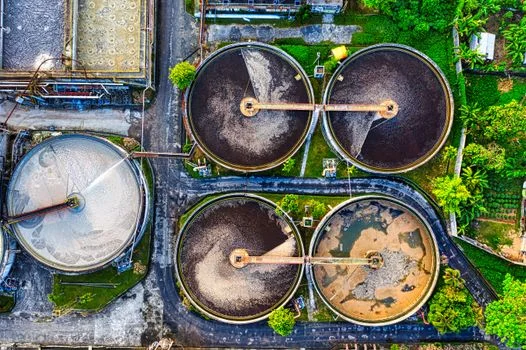
Conventional Activated Sludge (CAS) remains the baseline for many Oregon municipalities, with a CAPEX of $3–$6M per MGD, but it often fails to meet the state's <1 mg/L Total Phosphorus (TP) limit without expensive tertiary filter add-ons costing an additional $500K–$1M. In contrast, MBR systems for Oregon’s strict nutrient limits (TN <10 mg/L, TP <1 mg/L) carry a higher upfront CAPEX of $5–$12M per MGD but require 60% less land and produce effluent that meets the strictest standards without further treatment.
For industrial applications, particularly in the Willamette Valley’s food processing sector, DAF systems for Oregon food processing and industrial pretreatment are the preferred choice for FOG (Fats, Oils, and Grease) removal. While DAF systems have a lower CAPEX ($2–$5M per MGD), their OPEX is higher due to intensive chemical use. Small towns and remote developments are increasingly turning to compact underground sewage treatment systems for small Oregon towns, which offer a CAPEX of $1–$3M per MGD and significantly lower labor costs due to high levels of automation.
| Technology | CAPEX (per MGD) | OPEX (per 1k Gal) | Footprint | DEQ Compliance Ease |
|---|---|---|---|---|
| Conventional (CAS) | $3M – $6M | $0.50 – $1.00 | Large | Moderate (Needs Tertiary) |
| MBR | $5M – $12M | $1.00 – $2.00 | Small | High (Exceeds Limits) |
| DAF (Industrial) | $2M – $5M | $0.75 – $1.50 | Medium | High (Pretreatment only) |
| Aerated Lagoons | $1M – $3M | $0.25 – $0.75 | Very Large | Low (Nutrient Issues) |
| Package Plants | $1M – $3M | $0.80 – $1.50 | Compact | High (Standard Limits) |
Oregon DEQ Compliance Costs: How Nutrient Limits Impact Your Budget
Oregon’s DEQ limits for Total Nitrogen (TN <10 mg/L) and Total Phosphorus (TP <1 mg/L) are significantly more stringent than federal EPA baselines, which often allow TN up to 30 mg/L. Meeting these limits typically requires Biological Nutrient Removal (BNR) or tertiary filtration, which can add $1M–$3M per MGD to the initial project cost. For example, Portland’s Bull Run project allocated approximately $300 million specifically for tertiary treatment to ensure compliance with the <1 mg/L TP threshold.
Disinfection also represents a significant compliance cost. As DEQ moves toward stricter E. coli limits (<126 CFU/100mL), many plants are upgrading from chlorine gas to on-site chlorine dioxide generators for Oregon DEQ-compliant disinfection or UV systems. These upgrades range from $200K to $500K per MGD. For specialized facilities, such as hospitals or clinics, medical wastewater treatment solutions must be integrated to handle pharmaceutical residuals and pathogens that standard municipal systems may not be equipped to treat (per DEQ 2024 guidelines).
| Compliance Requirement | Typical Limit | CAPEX Impact | OPEX Impact |
|---|---|---|---|
| Total Phosphorus (TP) | <1 mg/L | +$500K – $2M | +$0.20/1k gal (Chemicals) |
| Total Nitrogen (TN) | <10 mg/L | +$1M – $3M | +30% Energy (Aeration) |
| E. coli Disinfection | <126 CFU/100mL | +$200K – $500K | +$0.10/1k gal (Consumables) |
| Lab Testing/Reporting | Weekly/Monthly | N/A | $50K – $150K per year |
Funding and Financing Options for Oregon Wastewater Treatment Plants
The Clean Water State Revolving Fund (CWSRF) is the primary vehicle for financing wastewater treatment plant cost in Oregon USA, offering low-interest loans typically 1–3% below market rates. Municipalities like Oregon, WI have successfully secured $23.6M in CWSRF loans to fund generational upgrades, demonstrating the viability of this path for large-scale capital projects. Eligibility extends to municipalities, tribal governments, and certain industrial dischargers who can demonstrate a direct impact on water quality improvement.
For smaller communities with populations under 10,000, USDA Rural Development loans provide 40-year terms with interest rates as low as 2.125%. John Day’s $17.5M project is a prime candidate for such funding, which often includes a grant component to offset the burden on low-income ratepayers. Additionally, how New Hampshire’s funding programs compare to Oregon’s CWSRF loans shows that while Oregon has higher compliance costs, its loan forgiveness programs for "disadvantaged communities" are among the most robust in the nation. Public-private partnerships (P3s) are also emerging as a way to manage risk, as seen in Portland’s use of Design-Build-Operate (DBO) contracts to fix long-term costs.
How to Select the Right Wastewater Treatment Technology for Your Oregon Project
Selecting a system begins with a rigorous analysis of influent quality and land constraints. If your facility handles high BOD or TSS—common in the food processing industry—DAF or MBR systems are necessary to prevent system upsets. Conversely, for small residential developments with less than 0.5 MGD flow, package plants offer the most cost-effective path to compliance. When land is a premium, such as in the Portland metro area, the 60% smaller footprint of an MBR system often justifies its higher CAPEX.
The final decision should be based on a 20-year Total Cost of Ownership (TCO) model. While CAS has a lower initial price tag, the chemical costs for phosphorus removal and the eventual need for sludge dewatering cost comparisons for Oregon WWTPs can make it more expensive than an MBR over two decades. DEQ offers free pre-design meetings; utilizing these early in the process can save over $100K in unnecessary engineering revisions and permitting delays.
| Selection Factor | If Your Condition Is... | Recommended Technology |
|---|---|---|
| Influent Quality | High FOG / Industrial | DAF Pretreatment |
| Land Availability | Limited (<2 Acres) | MBR or Package Plant |
| Discharge Limits | Ultra-strict (<0.1 mg/L TP) | MBR with BNR |
| Budget Priority | Lowest Initial CAPEX | CAS or Lagoon (if land permits) |
| Operational Skill | Minimal Staffing | Automated Package Plant |
Frequently Asked Questions
Q: How much does a 1 MGD wastewater treatment plant cost in Oregon in 2026?
A: CAPEX ranges from $3M for conventional activated sludge to $12M for MBR, plus $500K–$2M for DEQ-mandated nutrient removal. OPEX averages $0.50–$2.00 per 1,000 gallons treated. For example, a 1 MGD MBR plant in Portland would cost approximately $10M in CAPEX and $1.50/1,000 gallons in OPEX.
Q: What are the cheapest wastewater treatment options for small Oregon towns?
A: Package plants (e.g., WSZ series) cost $1–$3M per MGD and require minimal operator intervention. Aerated lagoons are cheaper initially ($1–$3M) but require 5–10 acres and often fail modern DEQ nutrient limits. A 0.2 MGD package plant in a town like John Day would cost roughly $1.5M CAPEX.
Q: How can Oregon municipalities reduce wastewater treatment plant costs?
A: Secure CWSRF loans for interest rates 1–3% below market, use pre-engineered package plants to slash permitting time, and implement energy-efficient MBR systems to lower long-term OPEX. Oregon, WI saved an estimated $2M in interest by using a CWSRF loan for its $23.6M upgrade.
Q: What are Oregon’s DEQ discharge limits for wastewater treatment plants?
A: Oregon DEQ’s 2026 limits are stricter than federal standards: TN <10 mg/L, TP <1 mg/L, and E. coli <126 CFU/100mL. Industrial dischargers may face additional heavy metal or pH restrictions. Portland’s Bull Run facility added $300M in treatment specifically to meet the TP <1 mg/L limit.
Q: How long does it take to build a wastewater treatment plant in Oregon?
A: The timeline is generally 2–5 years. This includes 6–18 months for DEQ permitting and 18–36 months for construction. MBR and package systems are typically faster to permit (12–18 months total) than custom-built conventional plants.