Why Georgia’s Municipal Sewage Treatment Plants Are Upgrading in 2026
Georgia’s municipal sewage treatment plants face tightening EPA nutrient limits and population growth pressures, with 2026 compliance deadlines looming. For example, Richmond Hill’s MBR plant achieves effluent COD ≤50 mg/L and TN ≤3 mg/L—meeting Ogeechee River Basin standards—while Port Wentworth’s Zero Ultimate Oxygen Demand (ZUOD) facility eliminates point-source pollution entirely. This guide provides 2026 engineering specs, CAPEX ranges ($1.2M–$14M), and a zero-risk equipment selection framework for MBR, oxidation ditch, and conventional systems to ensure compliance and scalability.
Georgia’s rapid population growth, which saw a 10.6% increase from 2010–2020 (US Census), is directly straining existing municipal sewage treatment plants across the state. This demographic shift necessitates significant infrastructure upgrades, exemplified by Cleveland’s plan to increase its Lemna pond facility capacity from 0.75 MGD to 1.15 MGD by 2025. Beyond capacity challenges, EPA’s 2026 nutrient limits for Georgia are set to enforce stricter effluent standards, specifically targeting Total Nitrogen (TN) at ≤3 mg/L and Total Phosphorus (TP) at ≤0.3 mg/L. These stringent limits are projected to impact approximately 30% of Georgia EPD wastewater standards currently non-compliant plants, according to a 2023 Georgia EPD report.
Local initiatives demonstrate proactive responses to these challenges. Richmond Hill’s advanced Membrane Bioreactor (MBR) plant, for instance, has successfully reduced Ogeechee River nutrient loads by an impressive 85% compared to its previous constructed wetland system, as reported by city council data. This case highlights the effectiveness of modernizing infrastructure to meet EPA nutrient limits Georgia 2026. Georgia’s ‘One Water’ initiative, launched in 2024, champions a comprehensive approach to water resource management, pushing for increased wastewater reuse Georgia through municipal plants. This initiative establishes ambitious reuse-quality effluent targets, including TSS ≤1 mg/L and BOD ≤5 mg/L, underscoring the state’s commitment to water conservation and sustainable practices.
2026 Engineering Specs for Georgia Municipal Sewage Treatment Plants
Meeting Georgia EPD’s 2026 effluent targets requires precise engineering specifications, including defined influent parameters, tailored hydraulic loading rates, and advanced treatment processes to ensure compliance and environmental protection.
Municipal sewage treatment plants in Georgia typically receive influent with average parameter values derived from EPA NPDES permits. These include Biochemical Oxygen Demand (BOD) ranging from 200–350 mg/L, Total Suspended Solids (TSS) between 250–400 mg/L, Total Nitrogen (TN) from 30–50 mg/L, and Total Phosphorus (TP) at 5–10 mg/L, with a pH usually between 6.5–8.5. However, the 2026 effluent targets for Georgia EPD wastewater standards are significantly more stringent: BOD ≤5 mg/L, TSS ≤1 mg/L (for MBR systems) or ≤10 mg/L (for conventional systems), TN ≤3 mg/L, and TP ≤0.3 mg/L (Georgia EPD 2024 draft). These targets necessitate advanced treatment technologies.
Hydraulic loading rates, critical for plant design, vary by technology. MBR systems typically operate at 0.5–1.0 m³/m²/day, oxidation ditches at 0.2–0.4 m³/m²/day, and conventional activated sludge systems at 0.3–0.6 m³/m²/day (per WEF MOP 8). Each process flow offers distinct advantages for nutrient removal. MBR systems integrate anoxic and aerobic tanks for biological nutrient removal, followed by submerged membrane filtration, which provides a physical barrier for superior solids separation and effluent quality. Oxidation ditches, characterized by their carrousel design, offer extended aeration and anoxic zones for efficient nitrification and denitrification, often followed by tertiary filters for enhanced solids removal. Conventional activated sludge systems rely on primary clarifiers to settle large solids, followed by an activated sludge aeration basin for biological treatment, and then secondary clarifiers for biomass separation. Achieving the stringent TP limits often requires tertiary treatment for phosphorus removal, such as chemical dosing or Dissolved Air Flotation (DAF) systems, following secondary treatment.
Emerging PFAS regulations in Georgia EPD's 2026 draft propose limits of 10 ppt for PFOA/PFOS, which has significant implications for municipal plants. Meeting these limits may require implementing advanced tertiary treatment options like advanced oxidation processes (e.g., UV/H₂O₂) or Granular Activated Carbon (GAC) systems. These technologies, while effective, introduce trade-offs in terms of footprint requirements and increased energy consumption for municipal sewage treatment plant in Georgia USA.
| Parameter | Typical Influent (Georgia) | 2026 Effluent Target (Georgia EPD) |
|---|---|---|
| BOD₅ | 200–350 mg/L | ≤5 mg/L |
| TSS | 250–400 mg/L | ≤1 mg/L (MBR), ≤10 mg/L (Conventional) |
| Total Nitrogen (TN) | 30–50 mg/L | ≤3 mg/L |
| Total Phosphorus (TP) | 5–10 mg/L | ≤0.3 mg/L |
| pH | 6.5–8.5 | 6.0–9.0 (typical NPDES range) |
MBR vs. Oxidation Ditch vs. Conventional: Georgia-Specific Cost and Performance Comparison

Comparing Membrane Bioreactor (MBR), oxidation ditch, and conventional activated sludge systems reveals distinct differences in CAPEX, OPEX, footprint, and compliance capabilities crucial for Georgia’s municipal wastewater treatment plant upgrades.
Capital Expenditure (CAPEX) for municipal sewage treatment plant in Georgia USA (1–5 MGD capacity, 2026 data) shows significant variation across technologies. MBR systems for Georgia’s nutrient limits typically range from $3.5M–$14M, while oxidation ditches are more economical at $1.2M–$4.5M. Conventional activated sludge systems fall within $1.5M–$5M. These figures include civil works, equipment, and permitting costs. Operational Expenditure (OPEX) also differs substantially: MBR systems incur $120K–$180K per MGD/year, primarily due to membrane replacement and energy consumption. Oxidation ditches have an OPEX of $80K–$120K per MGD/year, and conventional systems average $90K–$130K per MGD/year (per AWWA 2024 benchmarks).
Footprint is a critical factor, especially for land-constrained sites. MBR systems require the smallest footprint, typically 0.1–0.2 acres/MGD. Oxidation ditches need 0.3–0.5 acres/MGD, while conventional systems demand the largest space at 0.4–0.7 acres/MGD. This consideration was vital for Port Wentworth’s 2.0 MGD plant, which was built on a compact 1.5 acres. Compliance trade-offs further distinguish these technologies: MBR systems consistently meet stringent wastewater reuse Georgia standards (TSS ≤1 mg/L) but require 2–3× more energy compared to conventional systems due to the energy-intensive membrane filtration and aeration. Oxidation ditches excel in Total Nitrogen (TN) removal, often achieving ≤3 mg/L, but may struggle to meet low Total Phosphorus (TP) limits (e.g., ≤0.5 mg/L) without additional chemical dosing or a DAF for tertiary phosphorus removal in Georgia plants. Georgia EPD permitting timelines also vary: MBR systems typically require 12–18 months for approval, oxidation ditches 9–12 months, and conventional systems 6–9 months (per 2024 agency data), impacting project schedules for any Georgia NPDES permitting timeline.
| Feature | MBR | Oxidation Ditch | Conventional Activated Sludge |
|---|---|---|---|
| CAPEX (1-5 MGD, 2026) | $3.5M–$14M | $1.2M–$4.5M | $1.5M–$5M |
| OPEX (per MGD/year) | $120K–$180K | $80K–$120K | $90K–$130K |
| Footprint (acres/MGD) | 0.1–0.2 | 0.3–0.5 | 0.4–0.7 |
| Effluent TSS | ≤1 mg/L | ≤10 mg/L (with tertiary) | ≤10 mg/L |
| Effluent TN | ≤3 mg/L | ≤3 mg/L | 5–10 mg/L (w/o BNR) |
| Effluent TP | ≤0.1 mg/L (w/ chem) | ≤0.5 mg/L (w/ chem) | 1–5 mg/L (w/o chem) |
| Energy Consumption | High (2-3x conventional) | Moderate | Moderate |
| Permitting Timeline (GA EPD) | 12–18 months | 9–12 months | 6–9 months |
Zero-Risk Equipment Selection for Georgia Municipal Plants: A 2026 Decision Framework
A structured, five-step decision framework ensures Georgia municipal plants select wastewater treatment equipment that achieves zero-risk compliance with 2026 regulations while optimizing budgetary and site constraints.
The first step in equipment selection is to Define Effluent Targets and Site Constraints. Municipalities must determine if the goal is discharge into a receiving body or if wastewater reuse Georgia is a priority. Site constraints such as available footprint, energy costs, and labor availability are equally crucial. Port Wentworth’s ZUOD plant, for example, prioritized a compact 1.5-acre footprint to co-locate with a wildlife refuge and achieve stringent reuse-quality effluent.
Next, Match Technology to Georgia EPD’s 2026 Limits. MBR systems are ideal for achieving the lowest TSS and meeting reuse standards, while oxidation ditches are highly effective for Total Nitrogen (TN) removal to meet the ≤3 mg/L target. Conventional systems, often augmented with technologies like Dissolved Air Flotation (DAF) for tertiary phosphorus removal in Georgia plants, can be cost-effective for less stringent Total Phosphorus (TP) limits, but often require chemical dosing to reach the ≤0.3 mg/L target.
The third step involves Validate CAPEX/OPEX Against Budget. The significant difference in Georgia sewage treatment plant CAPEX, where MBR systems can cost $3.5M/MGD compared to an oxidation ditch at $1.2M/MGD, might necessitate phased implementation strategies or exploring specific financing options to align with municipal budgets.
Fourth, Assess PFAS Compliance Needs. With PFAS regulations Georgia municipal plants becoming stricter, plants serving populations greater than 10,000 may need to budget for Granular Activated Carbon (GAC) systems ($500K–$2M) or advanced oxidation processes ($800K–$3M) by 2026 to meet the anticipated 10 ppt limits for PFOA/PFOS.
Finally, a comprehensive Georgia EPD Permitting Checklist is essential. This includes a complete NPDES application, a detailed nutrient management plan outlining strategies to meet EPA nutrient limits Georgia 2026, a PFAS testing protocol if applicable, and adherence to the public comment period, which typically lasts 30–60 days. This structured approach minimizes risks and ensures successful project implementation for municipal sewage treatment plant in Georgia USA.
| Requirement | Description | Compliance Status/Notes |
|---|---|---|
| NPDES Application | Complete and accurate submission for discharge permit. | Mandatory for all municipal wastewater discharges in Georgia. |
| Nutrient Management Plan | Details strategies for meeting TN ≤3 mg/L and TP ≤0.3 mg/L. | Required for plants discharging into nutrient-sensitive waters. |
| PFAS Testing Protocol | Plan for monitoring PFOA/PFOS (if serving >10,000 people). | Anticipated requirement by 2026 for specific plant sizes/locations. |
| Public Comment Period | Allowance for public review and feedback on permit applications. | Standard 30–60 day period before permit finalization. |
| Design Engineering Report | Detailed plans and specifications for proposed upgrades/new builds. | Critical for Georgia EPD technical review and approval. |
Case Study: How Port Wentworth’s ZUOD Plant Eliminated Pollution in the Savannah River
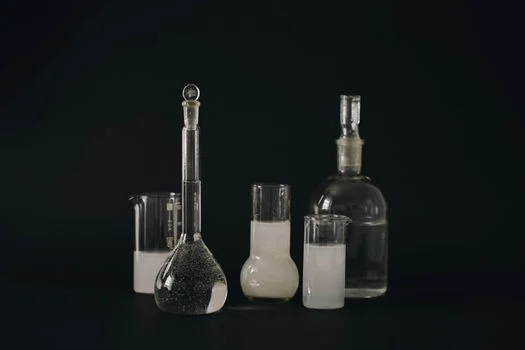
Port Wentworth’s Zero Ultimate Oxygen Demand (ZUOD) facility stands as a testament to advanced wastewater treatment, successfully transforming a non-compliant discharge into an environmental asset for the Savannah River.
The problem faced by Port Wentworth was significant: its 2018 plant operated as a non-compliant point source for the Savannah River, violating EPA BOD and nutrient limits. This posed a serious environmental threat to the river’s ecosystem and necessitated immediate action to meet stringent Georgia EPD wastewater standards.
The solution implemented was a state-of-the-art 2.0 MGD ZUOD facility, designed for future expansion to 4.0 MGD. This advanced system incorporated advanced oxidation processes, membrane filtration, and precise chemical dosing for highly effective Total Phosphorus (TP) removal. The ZUOD approach ensures that no ultimate oxygen demand is exerted on the receiving waters.
The results have been transformative: the plant now consistently achieves effluent BOD ≤2 mg/L, TN ≤1.5 mg/L, and TP ≤0.1 mg/L (2024 data). This exceptional performance has eliminated point-source pollution, leading to a measurable improvement in Savannah River water quality, as confirmed by a 2023 Georgia EPD report. The ZUOD facility also contributes to wastewater reuse Georgia initiatives by producing high-quality effluent suitable for various non-potable applications.
Key lessons learned from the Port Wentworth project include the ZUOD system’s compact 1.5-acre footprint, which enabled its co-location with a wildlife refuge, demonstrating efficient land utilization. its modular design allowed for phased expansion to 4.0 MGD, ensuring the plant can adapt to future population growth without extensive overhauls. The project incurred an $8.5M CAPEX in 2020, with an ongoing OPEX of approximately $150K/year, primarily covering energy consumption and membrane replacement.
Frequently Asked Questions
Municipal engineers and procurement managers often seek clear answers on Georgia’s evolving wastewater regulations, technology costs, and permitting processes to inform critical infrastructure decisions for municipal sewage treatment plant in Georgia USA.
What are Georgia’s 2026 nutrient limits for municipal sewage treatment plants?
Georgia’s 2026 nutrient limits, as drafted by the EPD, target Total Nitrogen (TN) at ≤3 mg/L and Total Phosphorus (TP) at ≤0.3 mg/L for municipal sewage treatment plants, particularly those discharging into nutrient-sensitive receiving waters. These EPA nutrient limits Georgia 2026 aim to reduce eutrophication and protect aquatic ecosystems.
How much does an MBR system cost for a 2 MGD plant in Georgia?
For a 2 MGD plant in Georgia, the Capital Expenditure (CAPEX) for an MBR system typically ranges from $7M to $10M in 2026, including civil works, equipment, and permitting. Operational Expenditure (OPEX) is generally between $240K and $360K per year for a 2 MGD facility, largely due to membrane replacement and energy consumption. This aligns with overall Georgia sewage treatment plant CAPEX benchmarks.
What’s the difference between an oxidation ditch and a conventional activated sludge system for TN removal?
An oxidation ditch system typically provides superior Total Nitrogen (TN) removal compared to a conventional activated sludge system due to its extended aeration period and integrated anoxic zones that facilitate both nitrification and denitrification within a single basin. Conventional systems often require separate anoxic tanks or specific operational adjustments to achieve comparable TN removal efficiency, as detailed in MBR vs oxidation ditch cost comparison analyses.
Does Georgia EPD require PFAS testing for municipal plants in 2026?
Yes, Georgia EPD's draft 2026 regulations are expected to mandate PFAS testing for municipal wastewater treatment plants, particularly those serving populations greater than 10,000. The proposed limits are 10 ppt for PFOA/PFOS, necessitating monitoring and potentially advanced treatment if detected above thresholds. These PFAS regulations Georgia municipal plants are a key compliance concern.
What’s the permitting timeline for a new wastewater treatment plant in Georgia?
The permitting timeline for a new wastewater treatment plant in Georgia varies by technology. Conventional activated sludge systems typically require 6–9 months for Georgia EPD approval, while oxidation ditches usually take 9–12 months. More complex technologies like MBR systems, due to their advanced nature and often stricter discharge requirements, can extend the timeline to 12–18 months for Georgia NPDES permitting timeline.
Related Equipment
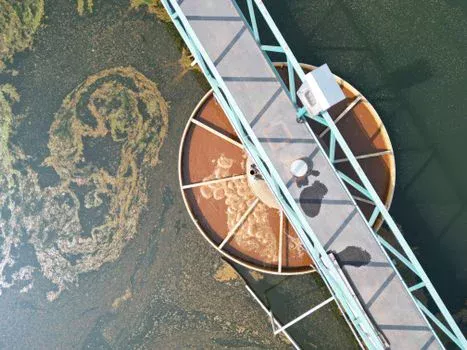
The following HydropureWater products are engineered for the wastewater challenges discussed above:
- Georgia-compliant disinfection for municipal effluent — view specifications, capacity range, and technical data
Need a customized solution? Request a free quote with your specific flow rate and pollutant parameters.