What Counts as a 'Wastewater Treatment Plant Supplier' in Malaysia
A wastewater treatment plant supplier in Malaysia is typically a fabricator or EPC integrator who designs, builds, and commissions biological-physical-chemical treatment trains (often MBR, SBR, or DAF + bio) to meet DOE Industrial Effluent Regulations 2009 standards. For 2026, packaged industrial MBR systems in the 10–500 m³/day range typically run MYR 350,000–1,800,000 in CAPEX, with OPEX of MYR 0.60–1.20 per m³ treated. Malaysian buyers should shortlist suppliers with proven local references, MS/ISO 9001 fabrication certification, and documented DOE commissioning experience.
The term "supplier" covers three distinct tiers, and conflating them is the most common mistake Malaysian buyers make when sourcing. Tier (a) is a trading company or local agent — they resell equipment but have no fabrication floor, no process engineers, and no in-house PLC capability. They can supply a packaged MBR wastewater treatment system but cannot sign off a DOE Commissioning Report. Tier (b) is an OEM equipment manufacturer with their own fabrication facility, typically exporting skid-mounted units such as a DAF system for FOG and suspended solids removal, membrane cassettes, or filter presses, and providing engineered drawings, P&ID, and electrical schematics. Tier (c) is a turnkey EPC integrator with design-build-commissioning capability and a Competent Person (CePIEPCP / CePSOEP) on payroll or contract.
For any project requiring DOE submission under the Environmental Quality Act 1974, only Tier (b) and Tier (c) suppliers can produce the engineered documentation and a Commissioning Report that DOE will accept. Many Malaysian buyers source Chinese OEM equipment because landed cost runs 25–40% below European equivalents for comparable membrane and DAF specifications (HydropureWater field data, 2026), then engage a local Tier (c) integrator for the civil, installation, and commissioning scope.
Malaysian Regulatory Framework: DOE Standards You Must Meet
Industrial discharge in Malaysia is governed by the Environmental Quality Act 1974 and the Industrial Effluent Regulations 2009 [P.U.(A) 434], which set Standards A and B for 30+ parameters including BOD₅, COD, TSS, O&G, ammoniacal nitrogen, and color. The applicable standard depends on the receiving water body — Standard B (e.g., BOD₅ 50 mg/L, COD 100 mg/L, TSS 100 mg/L, O&G 10 mg/L) applies to most inland waterways, while Standard A (BOD₅ 20 mg/L, COD 50 mg/L, TSS 50 mg/L, O&G 5 mg/L) applies upstream of water intake points (per DOE Industrial Effluent Regulations 2009).
Prescribed premises thresholds under the EQ (Regulated Activities) Order 2015 determine whether a facility requires a Written Approval or EIA submission. For a typical 50–500 m³/day industrial discharge, Written Approval with engineered WWTP drawings and a Commissioning Report signed by a CePIEPCP is mandatory. Scheduled waste (SW) codes apply to the sludge generated — SW 204 covers sludge from industrial effluent treatment, and SW 305 covers sludge from chemical/physico-chemical treatment; both must be disposed via a DOE-licensed contractor, which is why the dewatering equipment specification directly affects compliance cost.
Since 2022, DOE has tightened enforcement with continuous effluent monitoring requirements for discharges above 100 m³/day or at prescribed premises, including online TSS, COD, and pH probes with data logging (DOE enforcement notices 2022–2025). This is the single biggest reason new builds in 2026 should specify a PLC-controlled treatment train rather than a manually operated system — automated data logging satisfies DOE audit requirements without adding operator headcount.
| Parameter | Standard A (upstream of intake) | Standard B (other inland waters) | Measurement basis |
|---|---|---|---|
| BOD₅ | 20 mg/L | 50 mg/L | 3-day, 27°C |
| COD | 50 mg/L | 100 mg/L | Dichromate |
| TSS | 50 mg/L | 100 mg/L | 103–105°C dried |
| O&G | 5 mg/L | 10 mg/L | n-Hexane extract |
| Ammoniacal N | 10 mg/L | 20 mg/L | Distillation + titration |
| pH | 6.0–9.0 | 5.5–9.0 | Electrometric |
Malaysian Industry Effluent Profiles and Matching Treatment Trains
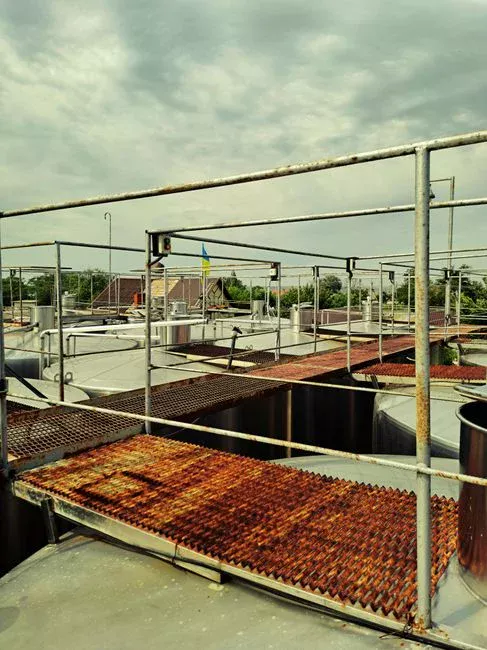
Palm oil mill effluent (POME) is the highest-strength mainstream industrial wastewater in Malaysia, with COD 25,000–50,000 mg/L, BOD 12,500–25,000 mg/L, temperature 60–80°C, and a BOD/COD ratio of approximately 0.4 that makes it amenable to anaerobic digestion. The standard train is a closed anaerobic lagoon or CSTR for biogas recovery, followed by aerobic polishing — and increasingly an MBR polish for plants that need water reuse in the mill. A MBR design for palm oil mill effluent typically targets residual COD below 250 mg/L on the polished stream.
Food processing (dairy, beverage, snack, slaughterhouse) generates BOD 1,000–4,000 mg/L with high FOG and variable pH; the standard train is screening → DAF for FOG and suspended solids → biological treatment → MBR if water reuse is required. Electronics and semiconductor fabs in Penang and Kulim produce low-volume, high-purity wastewater with fluoride, heavy metals, and acidic/alkaline streams typically handled by physico-chemical treatment (a PLC-controlled chemical dosing skid feeding a lamella clarifier at 20–40 m/h surface loading) followed by RO for recovery. Textile and dyeing effluent carries COD 800–3,000 mg/L, high color, and variable pH — equalization + chemical dosing + biological + filtration is the typical train.
For sludge generated by any of the above trains, a plate and frame filter press for sludge dewatering at 1–500 m² filter area brings cake dryness to 30–45% DS, which is the range DOE-licensed contractors will accept for SW 204 / SW 305 disposal.
| Industry | Typical influent (COD mg/L) | FOG / special concern | Standard treatment train | Key equipment block |
|---|---|---|---|---|
| Palm oil mill (POME) | 25,000–50,000 | High temp 60–80°C | Anaerobic + aerobic + optional MBR | Packaged MBR for polish |
| Food / dairy / beverage | 1,000–4,000 | High FOG, variable pH | DAF + bio (+ MBR for reuse) | DAF system |
| Electronics / semiconductor | 200–1,500 | Fluoride, heavy metals | Physico-chemical + RO | Dosing skid |
| Textile / dyeing | 800–3,000 | High color, variable pH | Equalization + dosing + bio + filtration | Filter press for sludge |
Technology Comparison: MBR vs SBR vs DAF + Activated Sludge for Malaysian Conditions
MBR (Membrane Bioreactor) uses submerged PVDF membranes with pore size typically under 1 μm (often 0.1–0.4 μm), producing a footprint roughly 60% smaller than conventional activated sludge for the same loading and delivering effluent TSS below 5 mg/L without a secondary clarifier. For Malaysian conditions — high ambient temperature 28–33°C year-round that aids biological kinetics but also accelerates membrane fouling if aeration is not properly designed — MBR is the default choice for space-constrained Klang Valley and Penang sites where land cost is high. Energy draw is the main OPEX driver, typically 0.6–1.2 kWh/m³.
SBR (Sequencing Batch Reactor) runs batch cycles of fill-react-settle-decant in a single tank, has lower CAPEX than MBR, but requires more operator attention and a larger footprint. It suits sites with stable flows above 100 m³/day and available land — common in Johor and Sarawak industrial parks. DAF + Conventional Activated Sludge is the lowest-CAPEX option for high-FOG streams (palm oil, slaughterhouse, food), with DAF removing 60–90% of FOG and TSS upstream of the aeration basin; the trade-off is a secondary clarifier, more sludge, and higher operator skill demand.
For an apples-to-apples RFQ, request the same throughput (e.g., 100 m³/day) from each supplier so CAPEX and footprint comparisons are valid. A useful sizing reference: PVDF flat-sheet membrane cassettes of 80–225 m² per unit, with 0.1 μm nominal pore, consume 10–20× less energy than hollow-fiber cross-flow modules (HydropureWater DF series module specifications, 2026). For sites without civil tankage, a WSZ series packaged sewage treatment plant rated 1–80 m³/h ships pre-assembled and buried with minimal site work.
| Parameter | MBR (submerged PVDF) | SBR | DAF + Conv. Activated Sludge |
|---|---|---|---|
| CAPEX (MYR per m³/day, packaged) | 3,500–7,000 | 2,500–4,500 | 1,800–3,500 |
| Footprint (m² per m³/day) | 0.15–0.30 | 0.40–0.70 | 0.50–0.80 |
| Effluent BOD₅ (mg/L) | <5 | <20 | <30 |
| Effluent TSS (mg/L) | <5 | <30 | <50 |
| Operator skill required | Medium (membrane care) | Medium (cycle tuning) | High (FOG, clarifier) |
| Sludge yield | Low (0.2–0.4 kg/kg BOD) | Medium (0.4–0.6) | High (0.5–0.8) |
| Energy (kWh/m³) | 0.6–1.2 | 0.4–0.8 | 0.5–0.9 |
2026 CAPEX and OPEX Benchmarks for Industrial WWTPs in Malaysia
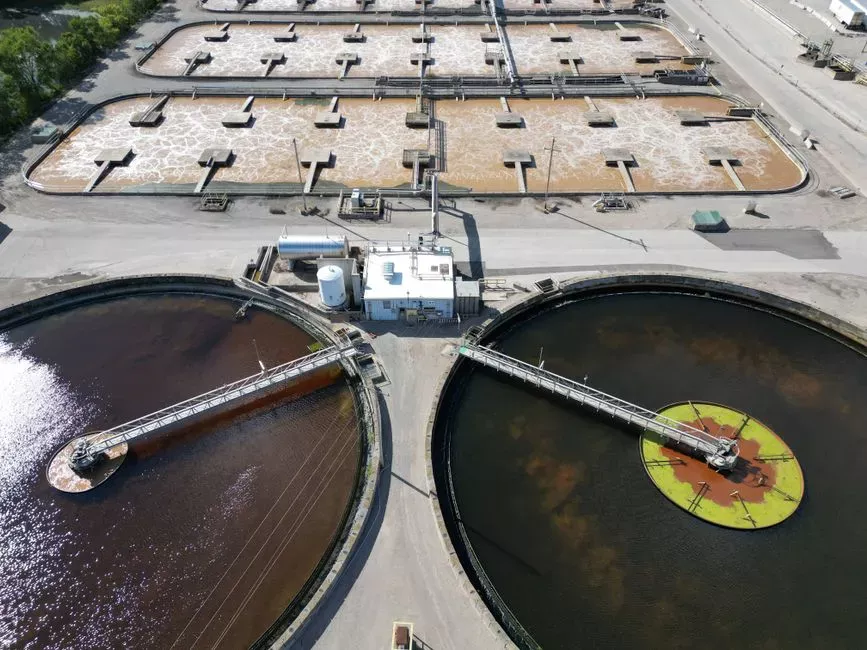
For 2026, packaged industrial WWTPs in Malaysia land at the following CAPEX ranges (HydropureWater regional project data, 2026, and supplier survey cross-check): small packaged units under 50 m³/day run MYR 200,000–600,000; mid-size 50–500 m³/day systems run MYR 350,000–1,800,000; large custom-engineered plants above 500 m³/day start at MYR 2M and scale with influent strength. OPEX typically lands at MYR 0.60–1.20 per m³ treated, broken down as energy 35–45%, chemicals 15–20%, sludge hauling and disposal 15–25%, and labor 10–20%.
Sludge dewatering is the most under-scoped line item. A plate and frame filter press for sludge dewatering at 1–500 m² filter area should be a standalone CAPEX line, typically 12–18% of total project CAPEX, because retrofitting after biological treatment is online is far more expensive. Chemical dosing, often a PLC-controlled chemical dosing skid, adds another 5–8% but pays back in tighter effluent compliance and lower sludge volume.
Import duties on treatment equipment into Malaysia are typically 0–5% under HS 8421 (filtering/purifying machinery) or HS 8479 (machines with individual functions), depending on classification. CIF vs EXW pricing changes total landed cost by 8–15% once insurance, freight, and local clearance are added. Commissioning, DOE submission fees, and the first-year operator training program commonly add 8–12% to CAPEX — and DOE will not issue the Written Approval without a CePIEPCP-signed Commissioning Report, so this line is not optional.
| Capacity band | CAPEX range (MYR, 2026) | OPEX (MYR/m³) | Typical industries |
|---|---|---|---|
| <50 m³/day (packaged skid) | 200,000–600,000 | 0.80–1.20 | Electronics, small food |
| 50–500 m³/day (mid-size) | 350,000–1,800,000 | 0.60–1.00 | Food, textile, small POME |
| >500 m³/day (custom EPC) | 2,000,000+ | 0.50–0.90 | Palm oil, petrochemical |
10-Point Supplier Evaluation Checklist
Score each shortlisted supplier on the following ten criteria, with weighting adjusted to project risk: fabrication depth, process engineering, local references, after-sales presence, and DOE compliance support typically carry the highest weights. A supplier scoring below 60% on this rubric is a red flag regardless of price (HydropureWater field data, 2026).
| # | Criterion | What to verify | Weight (suggested) |
|---|---|---|---|
| 1 | Fabrication certification | MS/ISO 9001 audited factory floor, not a trading office | 15% |
| 2 | Process engineering capability | In-house P&ID, electrical, and PLC programming team | 15% |
| 3 | Local references | Minimum 2 Malaysian installations with DOE commissioning certificates | 15% |
| 4 | After-sales presence | Service engineer in Malaysia, spare parts warehouse, 48-hour response commitment | 12% |
| 5 | Equipment origin | Clarify what is fabricated in China vs assembled locally | 8% |
| 6 | Warranty terms | 12–24 months on equipment, performance warranty on effluent quality | 8% |
| 7 | Documentation | English/Bahasa Malaysia O&M manuals, as-built drawings, calibration certificates | 7% |
| 8 | Compliance support | Supplier's experience preparing DOE dossiers (Borang EIA, CePIEPCP signoff) | 10% |
| 9 | Financial stability | Company history, parent company backing, bank references | 5% |
| 10 | Sludge & chemical handling | Does supplier offer a service contract or just equipment | 5% |
For a reusable framework that transfers across geographies, the same structure underpins any wastewater treatment plant supplier selection framework — adjust the regulatory column, keep the scoring weights.
Common Pitfalls When Sourcing a WWTP from Overseas
Underestimating sludge handling is the most expensive mistake. Specifying biological treatment without a filter press creates compliance and odor issues within 6 months of startup — and the retrofit cost typically runs 1.5–2× the price of including dewatering in the original scope. Ignoring monsoon-season hydraulic surges is the second; Malaysian rainfall events can push flows to 2–3× design, so the equalization tank must be sized for peak wet-weather flow, not average dry-weather flow. Choosing equipment purely on CAPEX is the third — cheap MBR modules with membrane life under 3 years cost more over a 10-year horizon than premium modules rated 8–10 years, once membrane replacement labor and downtime are added.
Skipping the site Factory Acceptance Test (FAT) in China is the fourth common pitfall; buyers who skip FAT report 30–40% more punch-list items at site commissioning, which translates to 4–8 extra weeks of delay (HydropureWater commissioning data, 2026). Finally, not budgeting for a CePIEPCP-certified supervisor during commissioning means the Commissioning Report will be rejected by DOE, and the plant cannot legally operate. The same principle that drives total nitrogen discharge limits by jurisdiction — know the regulator before you buy — applies to commissioning sign-off.
Frequently Asked Questions
How much does a wastewater treatment plant cost in Malaysia in 2026? Packaged industrial MBR systems in the 10–500 m³/day range run MYR 350,000–1,800,000 in CAPEX; large custom plants above 500 m³/day start at MYR 2,000,000. OPEX typically lands at MYR 0.60–1.20 per m³ treated.
Which DOE standard applies to industrial discharge in Malaysia? The Industrial Effluent Regulations 2009 [P.U.(A) 434] under the Environmental Quality Act 1974 set Standards A and B for parameters including BOD₅ (20–50 mg/L), COD (50–100 mg/L), TSS (50–100 mg/L), and O&G (5–10 mg/L), with the applicable standard determined by the receiving water body.
How long does it take to install an industrial WWTP? From purchase order to commissioned operation, expect 4–9 months for a packaged skid (engineering, fabrication, shipping, civil, installation, commissioning) and 9–18 months for a custom-engineered plant above 500 m³/day.
Can I import a packaged WWTP from China into Malaysia? Yes — Malaysian import duties on treatment equipment are typically 0–5% under HS 8421 / 8479, and most packaged skids are not subject to SIRIM/ST certification. You will still need a CePIEPCP-signed Commissioning Report for DOE Written Approval.
What is the best treatment for palm oil mill effluent in 2026? Anaerobic digestion (closed lagoon or CSTR) for COD reduction and biogas capture, followed by aerobic polishing, with an MBR polish on the recycled stream for mills targeting water reuse — typically bringing residual COD below 250 mg/L.
Related Equipment
- WSZ series packaged sewage treatment plant — specifications, capacity range, and technical data