Start with the sewer route, not the plant catalogue
The best fit for a Berlin housing development is determined by sewer availability, discharge route, future occupancy and approval conditions—not the number of homes alone. A buried WSZ package plant suits compact, landscaped sites at 1–80 m³/h; an MBR is appropriate when the required effluent quality is stringent or reuse is intended, with HydropureWater systems spanning 10–2,000 m³/day. A phased modular arrangement is preferable when occupancy grows gradually. Sizing should use population equivalent, flow, BOD, SS and COD, while the design must address morning and evening peak flows, odour, maintenance access, effluent monitoring and the route for obtaining Berlin and sewer-authority approval.
Begin with four separate questions about the public sewer: Is a connection physically available? Is it hydraulically and organically capable? Can the sewer operator enter a connection agreement covering the intended development phases? Will the connection be operational when the first homes are occupied?
Those answers separate four routes:
- Direct municipal connection: each phase is served by the public sewer, with the developer proving the available capacity and the required connection conditions.
- Temporary municipal pretreatment: the sewer is legally available, but the downstream treatment works cannot accept the development’s additional organic load during the initial occupation period.
- Permanent onsite treatment: no suitable municipal route is available at the required stage, or the development needs a controlled discharge or reuse destination.
- Reuse-oriented treatment: the receiving destination is designed for non-potable reuse, adding solids separation, disinfection and possibly further polishing to the brief.
The Butler Arklow housing case illustrates the temporary-pre-treatment route. Butler Manufacturing Services’ 2026 case study states that the municipal wastewater treatment plant was organically overloaded and could not accept additional organic load, while the local authority permitted connection only if the estate sewage was pretreated to an adequate standard. The temporary system was installed in three phases and intended for removal after the municipal plant upgrade.
That case is evidence of a technical and approval concept, not a Berlin approval precedent. Berlin still requires a project-specific answer from the sewer operator and relevant authorities. The same Butler source notes that municipal treatment-plant extensions can take years because of budget constraints. A temporary modular installation may therefore bridge the gap while permanent infrastructure is delivered, but only after confirming the legal discharge point, pretreatment duty and future municipal tie-in.
For a compact below-ground option, review the buried WSZ integrated sewage treatment plant. Do not let its compact installation displace the sewer-capacity and discharge-route review: if the municipal connection is already available and hydraulically acceptable, pretreatment may require less site area than permanent onsite treatment.
Build the design flow and pollution load from development phasing
A housing development is one shared wastewater site, so population equivalent must cover homes, apartments, communal facilities and future phases. Tricel’s 2026 housing-development guidance says sizing should follow the full residential load, project phasing, expected PE, discharge route and site conditions rather than dwelling count alone.
The Butler housing case provides a transparent calculation method. Its design basis defines 1 PE as 60 g BOD per person per day, 60 g SS per person per day, 180 g COD per person per day and 200 L of flow per person per day. The phase calculations and installed-module arrangement were:
| Construction phase | Design PE | Calculated flow | Installed arrangement |
|---|---|---|---|
| Phase 1 | 136 PE | 27,200 L/day | 1 BMS BL2000 unit |
| Phase 2 | 240 PE | 48,000 L/day | 2 BMS BL2000 units |
| Phase 3 | 788 PE | 157,600 L/day | 4 BMS BL2000 units |
Source: Butler Manufacturing Services, 2026 case study, Temporary Sewage Treatment System for Housing Estate. The phase values and unit counts describe the Arklow project and are not Berlin design values.
Use the method to establish current and ultimate loads, not to adopt Arklow’s capacities. For each construction phase, record:
- Design PE and the occupancy assumptions supporting it.
- Average daily flow and calculated BOD, SS and COD loads.
- Peak flow and the applicable peak-factor method.
- Treatment objectives and the applicable discharge or sewer requirement.
- Installed and future hydraulic and biological reserves.
Average flow is insufficient for hydraulic selection. Biocell Water’s 2026 housing-development guidance states that residential peak flow typically occurs in the mornings, late afternoons and evenings, while ammonia and COD can be high. It identifies disinfectants, cleaning products and houses without grease traps as contributing factors. The designer should therefore request the project’s peak-flow method and residential wastewater characteristic data rather than apply a generic factor without justification.
Keep three datasets separate: the first occupied phase, the current average and peak condition, and ultimate build-out. Expansion should follow the rising load without replacing the plant type. The broader packaged sewage treatment plant selection for a European housing development provides a useful selection framework, but the project calculation must remain traceable to Berlin occupancy, site data and the agreed discharge route.
Compare the package-plant architectures for a Berlin site
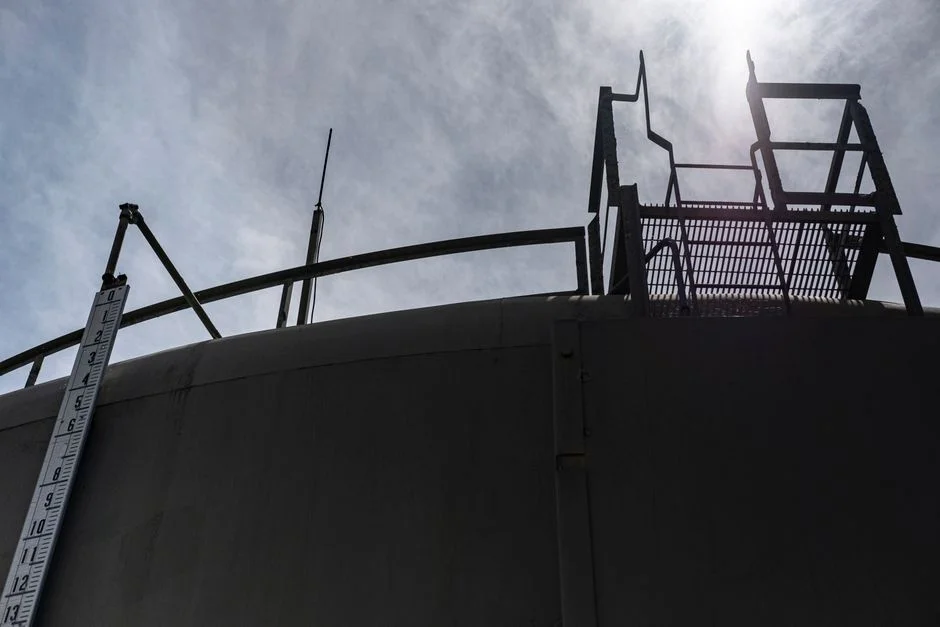
The appropriate architecture follows the discharge duty and development sequence: a buried biological package suits constrained sites; MBR is the stronger candidate where very low solids separation or reuse is required; modular parallel units support phased expansion; and temporary pretreatment serves as a bridge where the sewer connection exists but downstream organic capacity does not.
| Route | Suitable project condition | Evidence and decision boundary |
|---|---|---|
| Buried WSZ | Compact site; landscaping above the treatment package | The product description states 1–80 m³/h capacity, anoxic and aerobic contact oxidation, sedimentation and disinfection in one automated buried package. It states that no operator is required. |
| Integrated MBR | Stringent solids separation or reuse-oriented treatment | The product description states 10–2,000 m³/day capacity, activated sludge with submerged PVDF membranes and effluent described as below 1 μm. Verify project-specific effluent performance. |
| Phased modular units | Occupancy and treatment demand increase in stages | Butler’s 2026 case used identical units in parallel: one for phase 1, two for phase 2 and four for phase 3, with gravity flow splitting. |
| Temporary pretreatment | Legal sewer connection exists, but downstream organic capacity is temporarily unavailable | The Butler case targeted BOD 20 mg/L, SS 30 mg/L and COD 125 mg/L before municipal discharge. These are Arklow project values, not Berlin limits. |
| MBBR or SBR modules | Modular or containerized treatment with site-specific process selection | Biocell Water’s 2026 guidance identifies MBBR and SBR as typical below-ground technologies and MBBR, SBR or MBR for above-ground modular systems, with selection based on effluent requirements and budget. |
The buried WSZ integrated sewage treatment plant can be installed below grade with landscaping above or mounted on a trailer for mobile deployment. That flexibility is relevant where a conventional concrete tank would occupy valuable development land, but groundwater, soil, excavation and access still require site-specific design.
For a reuse-oriented duty, the integrated MBR wastewater treatment system adds membrane solids separation to the activated-sludge process. The stated below-1-μm effluent description is a product characteristic, not proof that a Berlin discharge route or reuse specification will be met. The supplier must demonstrate the relevant project parameters and treatment train.
The phased Butler arrangement shows why repeat units can reduce mechanical complexity. Its inlet works were designed to split flow equally by gravity into four paths, allowing additional units to operate in parallel. This does not transfer automatically to Berlin: the developer must confirm gravity routes, equal distribution, peak capacity and future connections.
Ultimately, package selection is not a shortcut around process design. Final decisions require the applicable effluent standard, peak flow, groundwater and soil conditions, available footprint, pumping route, discharge contract and approval pathway. The decentralized sewage treatment engineering guide illustrates the need to separate collection, treatment and disposal decisions, but its jurisdiction-specific evidence cannot replace a Berlin approval review.
Design for peaks, odour, access and phased commissioning
Package capacity must cover residential peaks and remain serviceable during them. Biocell Water’s 2026 guidance identifies morning, late-afternoon and evening peaks, so the supplier brief should require the peak-flow calculation, equalization provisions where needed, and evidence that the selected process retains treatment performance at peak hydraulic and organic loading.
Odour and noise are interface risks, not just equipment criteria. Use covered or buried treatment where appropriate, design vents deliberately, and position the plant away from homes, play areas and sensitive boundaries. The Butler 2026 case selected its covered package for quiet operation and minimal odour. That is project evidence, not a guaranteed Berlin noise result; the developer should set a site-specific noise limit and require the supplier to address it.
Provide dependable access for inspection, sludge removal, sampling and service vehicles. Burial reduces surface-space conflicts, but it must not make routine maintenance dependent on excavation. The supplier should show lifting or removal arrangements, hatch and access dimensions, drainage around the installation and a safe sampling point.
Review power, controls, alarms and notification as part of the operating concept. The Butler case used a flashing beacon and could be fitted with GSM dial-out. Biocell Water’s 2026 offering describes alarms, GSM alert modules and optional SCADA monitoring. Specify the required response sequence, fail-safe conditions, data outputs, power-failure strategy and who receives alarms.
Plan future civil works before the first phase. In the Butler project, the inlet arrangement and four unit slabs were prepared for subsequent installation. For Berlin, require the supplier and civil contractor to reserve connection points, power, controls, flow balancing and module positions. The commissioning sequence should cover incoming testing, hydraulic split verification, process start-up, sampling, operator handover and acceptance of every future connection point.
Use the WSZ installation and maintenance information as the starting point for technical clarification, not as a substitute for site design. A supplier should be able to state exactly how each phase connects, how modules are balanced and how the installation is accessed.
Verify German approvals and supplier evidence before ordering
A defensible Berlin procurement starts with identified authorities and an evidenced discharge route. The supplied research does not establish a Berlin permit pathway, sewer entitlement or numerical effluent limit, so those matters must be obtained from the responsible project authorities rather than inferred from product literature.
Require the supplier to identify and respond to the following:
- The exact discharge point and receiving system or water body.
- Whether discharge is direct, indirect through the sewer, or directed to a reuse destination.
- The Berlin approval pathway relevant to the proposed treatment and discharge arrangement.
- The sewer-connection agreement and any downstream pretreatment obligation.
- Applicable permit or sewer conditions, including the required sampling and compliance regime.
Ask for a signed process basis. It should identify design PE, average flow, peak flow, BOD, SS and COD, process assumptions, hydraulic retention or loading parameters, expected effluent performance, treatment-stage duties and the exact requirement against which performance is proposed. A general statement that a package can meet an “applicable standard” is not a design basis.
Request German or EU project references, installation and operating documentation, test certificates, warranty terms, spare-parts support, proposed operating regime, local service arrangements and evidence of the proposed treatment train at the design loads. Confirm that the reference projects have comparable wastewater characteristics, discharge duties and operating conditions.
For a temporary installation, make relocation, decommissioning, residual-sludge handling, site restoration and the eventual switch to municipal treatment contractual deliverables. The Butler 2026 case describes a temporary system intended for phased installation, removal and potential redeployment. It therefore provides a useful drafting model, while the legal basis and downstream requirements for a Berlin scheme remain project-specific.
Use the German AbwV and WHG wastewater treatment considerations to structure questions for the local legal and environmental review. Do not treat that general guide as proof that a particular Berlin plant is approved.
Prepare a supplier brief that produces comparable proposals
A comparable Berlin proposal starts with a common attachment. Include the development programme, current and ultimate dwelling mix, design PE, average and peak flow, pollutant loads, discharge route, required effluent values, site drawings, groundwater level, soil conditions, available footprint, power availability, noise limits and maintenance-access requirements.
Require every bidder to state:
- Process type, treatment stages, number of modules and proposed treatment train.
- Design PE, average flow, peak flow and calculated pollutant loads.
- Civil-work, pipework, power, controls and commissioning boundaries.
- Monitoring, alarms, sampling, sludge-management route and operating tasks.
- Energy inputs, replacement items, exclusions and performance guarantees.
Request itemized capital cost, installation, commissioning, annual operation and maintenance, energy, sampling, sludge removal, monitoring, replacement and decommissioning. The supplied research contains no defensible price range for a Berlin housing-development package plant, so an unsourced budget figure would not be a sound comparison.
For phased development, require the expansion philosophy, hydraulic and biological reserves, parallel-flow balance, future connection details and municipal tie-in sequence. State explicitly whether reuse is required now or whether the plant is only being future-proofed for it. That distinction changes the treatment scope and therefore the price.
Use the integrated MBR wastewater treatment system as one reference response for reuse-sensitive proposals, while asking each bidder to demonstrate its own process basis and project boundary.
Frequently Asked Questions
How much does a packaged sewage treatment plant cost for a housing development in Berlin?
The supplied research does not support a defensible Berlin price range. Request itemized capital cost, civil works, installation, energy, operation and maintenance, monitoring, sludge handling, phased expansion and temporary-system decommissioning against the same design basis. Include the sewer-connection and pretreatment scope so that a permanent onsite plant is not compared with a temporary bridge plant as if they were equivalent.
Is WSZ or MBR better for a Berlin housing development?
WSZ is the relevant candidate where a compact, buried biological treatment package is required: the product description gives a capacity of 1–80 m³/h. MBR is the stronger candidate for stringent solids separation or reuse-oriented treatment, with a stated capacity of 10–2,000 m³/day. The final choice still depends on the Berlin discharge requirement, peak flow, groundwater, footprint and approval route.
How many housing units can one packaged sewage treatment plant serve?
There is no defensible unit count without the project calculation. The Butler 2026 case used 1 PE equal to 60 g BOD, 60 g SS and 180 g COD per person per day, plus 200 L of flow per person per day. Its phases covered 136, 240 and 788 PE, with flows of 27,200, 48,000 and 157,600 L/day respectively. A Berlin supplier must recalculate these inputs for the actual dwelling mix, occupancy, future phases and peak flows.
Can a temporary package plant be used until Berlin’s sewer capacity is available?
It can be technically appropriate when the sewer connection and downstream pretreatment conditions are approved and the temporary duty is explicitly defined. Butler’s 2026 Arklow case used a phased temporary package plant while the municipal plant lacked organic capacity, but that does not establish Berlin approval. The developer must obtain the Berlin discharge route, required pretreatment performance, connection agreement and future tie-in terms.
What should a developer request from a wastewater plant supplier?
Request the signed process basis, peak-flow calculation, performance guarantee, civil-work boundary, installation and commissioning plan, monitoring regime, alarms, operating and maintenance plan, sludge route, energy data, warranty, references and any decommissioning plan. For a phased or temporary system, also require the expansion sequence, flow-balancing method, residual-sludge handling, relocation obligations and the interface with municipal treatment.