
Why Lyon housing schemes look at packaged plants, not Saint-Fons
Greater Lyon's centralized wastewater infrastructure is engineered for metropolitan catchments, not for a single housing estate. Veolia operates the Saint-Fons wastewater treatment plant under a 6-year contract worth 100 million euros announced by Greater Lyon, treating wastewater equivalent to about one million inhabitants from the left bank of the Rhône and regional industrial loads, with modernization focused on biological compliance, asset condition, and heavy-rainfall management (Veolia press release, 2024). Stereau's Pierre-Bénite plant, described as the largest urban sanitation unit in southern France, uses free-culture biological treatment and a sludge train that reduces disposal volume by a factor of 400 versus upstream raw sludge—a configuration sized for a city, not a developer (Stereau project page, undated). Both references confirm the scale gap: a 100–500 dwelling estate sits three orders of magnitude below the design envelope of these plants.
For a new housing scheme that cannot connect to the Greater Lyon network immediately, or for a site that requires self-contained treatment with a controlled discharge point, a packaged (factory-built, modular) sewage treatment plant is the established route in France—applied to residential communities, hotels, hospitals, and small rural agglomerations. The flow envelope is decisive: domestic wastewater generation in French residential developments typically lands in the range of a few tens to a few hundred cubic metres per day, which falls squarely inside the WSZ underground A/O package plant flow range. Sizing then depends on dwelling count, average occupancy, and the discharge objective required by the permitting authority.
The French and EU compliance frame for a residential STP
Every packaged plant quoted for a Lyon housing development must clear a defined regulatory frame before the engineer can defend the choice to the developer and to the Préfecture / DDT. The EU Urban Waste Water Directive 91/271/EEC sets the overarching collection and treatment obligations, with stricter monitoring and reporting thresholds for agglomerations above 2,000 p.e. and defined but lighter obligations below that threshold—most Lyon housing schemes sit under that line. In France, small WWTPs below 2,000 p.e. are governed by the Arrêté du 21 juillet 2015, which fixes design, performance, and self-monitoring requirements (BOD, COD, TSS, NH4) for packaged and small municipal plants.
Local permitting for a packaged residential STP in the Lyon metropolitan area is handled by the Préfecture / DDT and, where the discharge goes to a watercourse, the Police de l'eau. A site-specific hydraulic and pollution-load study is a mandatory input before any capacity is committed. If the developer intends to reuse the effluent for irrigation, toilet flushing, or washwater, the packaged plant's effluent must also satisfy the French reuse decree (arrêté du 2 août 2010 and updates)—that objective often decides between a conventional A/O train and a membrane bioreactor.
| Instrument | Scope | Key obligation for a Lyon housing STP |
|---|---|---|
| EU UWWTD 91/271/EEC | All agglomerations | Adequate collection and treatment; stricter monitoring above 2,000 p.e. |
| Arrêté du 21 juillet 2015 | Small WWTPs < 2,000 p.e. | Design, performance, self-monitoring (BOD, COD, TSS, NH4) |
| Préfecture / DDT permit | Site-specific | Hydraulic and pollution-load study; discharge point agreement |
| Arrêté du 2 août 2010 (and updates) | Effluent reuse | Microbiological and physicochemical quality for intended reuse |
A/O contact oxidation vs MBR: which packaged architecture fits a Lyon housing scheme
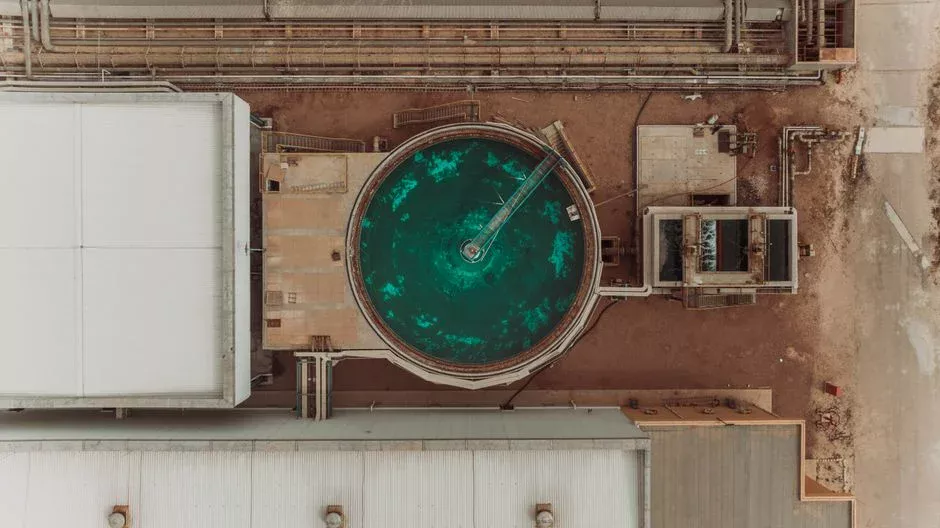
For residential flows in the packaged envelope, the choice is between A/O contact oxidation and an integrated membrane bioreactor (MBR). A/O combines anoxic and aerobic biological stages with sedimentation and disinfection inside one buried unit, with full automation and no on-site operator required—the WSZ series covers 1–80 m³/h and is the standard reference for residential communities, hotels, hospitals, and rural areas. MBR combines activated sludge with submerged PVDF membrane filtration to produce near-reuse effluent at under 1 μm nominal pore size, in a footprint smaller than conventional activated sludge, across a 10–2,000 m³/day capacity range.
The choice is driven by three questions: is reuse required, how tight is the site, and what is the discharge-quality target. A/O is the lower-CAPEX, simpler-O&M route when the discharge target is a stream or sewer at standard small-WWTP quality. MBR is the right answer when the developer wants reuse-grade polish, faces a tight site footprint, or has strict ammonia / suspended-solids limits. For phased housing delivery—common in Lyon-area developments built in tranches—the MBR architecture can be scaled by adding modular cassettes, with the DF series flat-sheet MBR membrane modules at 0.1 μm nominal and 32–135 m³/day per module as a representative benchmark for replaceable element sizing.
| Parameter | A/O contact oxidation (WSZ) | Integrated MBR |
|---|---|---|
| Capacity envelope | 1–80 m³/h | 10–2,000 m³/day |
| Filtration / clarification | Sedimentation | Submerged PVDF membrane, < 1 μm |
| Footprint vs conventional activated sludge | Compact (buried package) | About 60% smaller footprint |
| Typical reuse suitability | Standard small-WWTP discharge | Near-reuse-grade polish |
| Automation | Full automation, no on-site operator | PLC / SCADA with membrane air-scour control |
| Modular scaling | Parallel units or stage replacement | Individually replaceable membrane cassettes |
Two pitfalls exist for the developer: A/O packages are simpler but the effluent polish is set by the sedimentation stage, so ammonia and TSS targets at the upper end of the Arrêté du 21 juillet 2015 envelope may need polishing. MBR is not free at the OPEX line—air-scour blowers run continuously, and membrane cleaning chemicals and replacement intervals must be priced in. The right architecture matches the discharge objective rather than the lowest quoted price.
Sizing a packaged plant for a Lyon housing development
Sizing logic is consistent regardless of architecture; only the unit-capacity envelope changes. Step 1: fix the population equivalent. Multiply the number of dwellings by the average occupancy—for French social and mixed housing, qualitative benchmarks sit in the 2.3–2.5 occupants per dwelling range—and by the unit wastewater flow, which for domestic use sits in the 100–150 L/person/day band. Step 2: apply a peaking factor for morning and evening peaks, in the 2.0–2.5× range for small residential catchments, plus a safety margin for inflow and infiltration during storm events. Step 3: translate the daily and peak flows to a package unit capacity.
For a 200-dwelling scheme, the result lands in the tens of m³/h range—inside the WSZ 1–80 m³/h envelope, and compatible with the MBR 10–2,000 m³/day envelope. Step 4: confirm downstream sizing for disinfection—a UV sterilizer is often preferred for residential buffer zones because it is chemical-free—or a chlorine dioxide generator where a residual is required. For MBR, also confirm the membrane air-scour blower duty and the cleaning-chemical dosing system. The engineering study must confirm every factor used in the calculation; these numbers are starting points, not substitutes for site-specific measurement.
CAPEX/OPEX orientation and supplier selection in the French market
Cost orientation matters, and packaged residential STPs in this flow range are priced per m³/day of nominal capacity and per effluent-quality target—exact figures must be obtained via site-specific RFQ. OPEX is dominated by energy (blowers, pumps, and MBR air scour), sludge haulage, and consumables (UV lamps, membrane cleaning chemicals, disinfectant). OPEX per m³ treated must be quoted for the specific duty cycle; the supplier's reference list for comparable French residential sites is the most defensible benchmark.
For supplier evaluation in the Lyon market, the engineer should verify: CE / EN 12566-3 conformity for small packaged plants; Arrêté du 21 juillet 2015 compliance with the conformity file and self-monitoring protocol supplied; automation level (PLC / SCADA, remote monitoring); membrane warranty terms; and the availability of local service in Auvergne-Rhône-Alpes. Confirm whether the supplier provides commissioning, regulatory self-monitoring files, and operator training. Adjacent equipment—automatic chemical dosing, a plate-frame filter press for sludge dewatering, and a rotary mechanical bar screen for preliminary treatment—should be specified against the same conformity and service criteria.
Frequently Asked Questions
What packaged STP capacity do I need for 200 dwellings in Lyon?
Translate dwellings × average occupancy × L/person/day, apply a peaking factor for morning and evening peaks, and add a margin for inflow and infiltration. The result typically lands in the tens of m³/h for a 200-dwelling scheme, which sits inside both the WSZ 1–80 m³/h and MBR 10–2,000 m³/day envelopes. Sizing must be confirmed by a site-specific hydraulic and pollution-load study before any unit is specified.
Is a packaged plant compliant with French regulations for housing?
Yes, provided it meets the Arrêté du 21 juillet 2015 for small WWTPs below 2,000 p.e. and the EU Urban Waste Water Directive 91/271/EEC. The supplier must provide the conformity file and the self-monitoring protocol, and the discharge point must be agreed with the Préfecture / DDT and, where applicable, the Police de l'eau. Ask the supplier to confirm both instruments in writing as part of the RFQ.
A/O buried package vs MBR for a Lyon housing development — which is cheaper to run?
A/O has lower membrane-related OPEX but a larger footprint and a lower effluent polish; MBR has higher CAPEX and continuous air-scour energy use, but a smaller footprint and reuse-grade effluent. The right answer depends on whether reuse is intended, the site footprint, and the discharge-quality target. Request OPEX per m³ treated for the specific duty cycle from both architectures before deciding.
Can a packaged plant be expanded as the development phases in?
Yes, but the mechanism differs by architecture. Modular MBR trains—flat-sheet cassettes in the 32–135 m³/day per module band—are designed for phased capacity addition by adding or swapping cassettes. A/O packages typically require parallel units or replacement of the biological stage to scale. Confirm the supplier's documented expansion path for the specific unit before committing to a phased delivery schedule.
Related Equipment
- integrated MBR membrane bioreactor — specifications, capacity range, and technical data