
DAF or Full ETP: Which Treatment Train Does the Factory Need?
A factory in Lyon needs a dissolved air flotation system when its wastewater contains recoverable oil, grease, suspended solids or colloidal material that must be removed before biological treatment or reuse. It needs a full industrial effluent treatment plant when primary treatment, biological treatment and final polishing are all required. DAF alone is normally a process stage, not a complete plant. HydropureWater DAF systems cover 4–300 m³/h across 13 standard models. Final selection depends on representative wastewater analysis, peak flow, pollutants, discharge or reuse targets, available space and the required pretreatment and sludge-handling scope.
The category distinction matters because a flotation unit cannot substitute for a treatment train that must also remove biodegradable organic matter or meet a defined final-water specification. Dissolved air flotation is a physico-chemical separation process: very small air bubbles attach to solid or oily particles, increase their ascent rate and carry them to the surface for skimming. The published explanation of how DAF removes industrial wastewater contaminants describes micro-bubbles attaching to suspended solids and tiny oil droplets, reducing their effective specific gravity and floating them rapidly for collection.
An industrial effluent treatment plant can combine primary physical and chemical treatment, secondary aerobic or anaerobic biological wastewater treatment, and tertiary treatment before environmental release, as described in the Quora treatment-structure source dated July 15. A full ETP is therefore appropriate when the objective extends beyond solids and oil separation. A DAF unit is appropriate when flotation can meet the required separation and compatible downstream treatment completes the disposal or reuse route.
The refinery example provides a useful sequence, although it is not a universal Lyon-factory design. An API separator first removes large free-floating oil and heavy sediment by gravity; DAF then captures residual emulsified oil and fine solids before biological treatment. Chemical coagulation and flocculation may condition the feed before flotation. This arrangement protects downstream biological treatment from emulsified oil that could coat microbial populations and impair oxygen transfer, according to the same July 15 source.
| Decision | Indicative treatment scope | What must be confirmed |
|---|---|---|
| DAF only | Flotation separation of oil, grease, floatables, suspended solids or colloids | Whether the separated water meets its final destination after any required downstream treatment |
| DAF within an ETP | Primary flotation followed by biological and/or tertiary stages | Feed characteristics, biological compatibility, final targets and sludge route |
| Full ETP | Physical, chemical, biological and final treatment stages | Each stage’s duty, hydraulic profile, controls, utilities and residuals |
| Combined pretreatment | Equalization, free-oil removal, screening, grit control, conditioning and DAF | Batch discharges, contaminants that could overload or inhibit the selected equipment |
The 2026 DAF unit engineering specs and decision framework provides the appropriate technical baseline for comparing proposals. It should not be confused with a French regulatory approval or a universal factory treatment prescription.
Identify the Factory's Wastewater Profile
A defensible preliminary selection starts with representative wastewater data, because flow rate and contaminant load do not describe an industrial effluent by themselves. Obtain samples across normal production, cleaning, batch dumping and upset conditions rather than relying on one spot sample. A sample that excludes a periodic high-strength discharge can produce a DAF or ETP selection that is technically unsuitable for the factory’s actual operating pattern.
Record average flow, peak hourly flow, the production schedule, the persistence of each peak, temperature and pH. The analysis should cover suspended solids, oil and grease and process-specific contaminants. For oily wastewater, distinguish free oil, emulsified oil and dissolved constituents: free-floating oil may be suitable for gravity separation, emulsified oil requires different conditioning and flotation performance, and dissolved constituents may need biological or other downstream treatment. The July 15 Quora source distinguishes the DAF role in refinery treatment from gravity separation and biological polishing.
Also identify the final destination before selecting equipment. Direct environmental discharge, municipal sewer discharge, internal reuse, cooling-water reuse and another process application impose different treatment objectives. A flotation unit may provide effective wastewater reuse pretreatment, but it does not by itself establish reuse suitability. The required final treatment depends on the receiving process and the applicable water-quality specification.
Check materials that may interfere with flotation or downstream biology. These include fibrous residuals, grit, high suspended-solids concentrations, surfactants and temperature extremes. The practical sequence is:
- Sample each materially different production and cleaning condition.
- Quantify average and peak flow and calculate the associated pollutant loads.
- Classify oil by physical form and identify process-specific contaminants.
- Define the discharge, sewer or reuse destination and its water-quality requirements.
- Record space, utility and installation constraints before requesting equipment proposals.
| Information to obtain | Why it affects selection | Evidence a supplier should provide |
|---|---|---|
| Representative analyses and sampling conditions | Defines the wastewater rather than an assumed industrial profile | Process calculations based on the stated analyses and identified worst conditions |
| Average and peak flow | Sets hydraulic and equalization duties | Design-flow calculation and operating envelope |
| Suspended solids, oil and grease | Determines separation and chemical-conditioning duties | Stage-by-stage removal basis and skimming strategy |
| pH, temperature and surfactants | May alter coagulation, flotation and biological treatment | Operating limits and chemical-control assumptions |
| Final destination | Defines the required final treatment scope | Complete train from inlet to compliant or reusable outlet |
Do not ask for a model number before this dataset is assembled. A representative analysis is also the basis for credible performance testing and guarantees; without it, a supplier can quote a treatment objective that may not correspond to the factory’s wastewater.
Match the Process to the Factory's Main Pollutants

The correct treatment sequence follows the dominant pollutant and its final destination, rather than the available equipment catalogue. For oil, grease and floatables, the practical train is source control, equalization, physical free-oil separation where appropriate, chemical conditioning, dissolved air flotation and management of oil-bearing sludge. A DAF unit is effective when emulsified oil and fine solids require rapid separation that sedimentation may not provide. Its micro-bubbles attach to suspended solids and tiny oil droplets, reducing their effective specific gravity so the surface froth can be skimmed.
For suspended solids and colloids, compare DAF with sedimentation or clarification on the required solids characteristics, settling behavior, loading and downstream objective. DAF is particularly relevant where buoyant flocs, oils or fine material must be separated rapidly. Chemical coagulation and flocculation may be needed to bring particles together and make flotation practical; the correct chemical and dose cannot be selected without wastewater testing and jar trials.
For biodegradable organic loads, DAF belongs upstream when oil or solids would impair biological treatment. Biological wastewater treatment is then included where the final objective requires organic removal beyond flotation performance. The July 15 Quora source describes primary physical and chemical treatment, secondary aerobic or anaerobic biological treatment and tertiary treatment as distinct ETP levels. It also explains why emulsified oil should be removed before biological reactors.
For tank-bottom, floor-wash or high-solids cleaning water, do not dilute the sizing problem by relying on diluted average flow. Use the relevant peak hourly flow and the associated oil and solids loading. The method for DAF sizing method for high-strength tank-bottom water is relevant to this duty, but supplier calculations must still use the factory’s measured flow and loading data.
For reuse, treat flotation as pretreatment unless the specified reuse quality can be demonstrated by the selected stages. Additional filtration or membrane treatment may be required. The treatment objective should be expressed as an agreed final-water specification with a defined test method, not simply as “DAF for reuse.”
| Dominant wastewater condition | Indicative process sequence | Key engineering check |
|---|---|---|
| Free oil and floatables | Source control, equalization, gravity or API-type separation, conditioning, DAF | Free-oil capture before flotation and route for recovered oil |
| Emulsified oil and fine solids | Equalization, chemical conditioning, DAF, downstream treatment as required | Emulsion response, floc stability and skimming performance |
| Biodegradable organic load with oily solids | DAF as pretreatment, then biological treatment and final polishing | Compatibility of residual oil and chemicals with biology |
| High-solids cleaning discharge | Controlled batch reception, equalization, pretreatment, DAF and sludge removal | Peak hourly flow, pollutant load and batch-storage duty |
| Internal or cooling-water reuse | DAF pretreatment plus filtration, membrane or other required polishing | Final reuse specification and application-specific treatment |
This mapping prevents two common errors: buying flotation where a complete biological treatment train is required, and buying a full ETP where a well-defined separation duty can be followed by an existing compliant treatment route.
Size the DAF and ETP from Peak Demand
Size the installation around sustained peak hydraulic demand and verify that batch discharges, cleaning cycles and equalization storage prevent those peaks from reaching the treatment units untreated. A model selected from average daily flow can be hydraulically adequate on paper yet overloaded during the condition that determines sludge loading, chemical demand or oil carryover.
For DAF, establish the preliminary duty from the target wastewater flow and the required solids, oil or contaminant loading. Do not select by average flow alone. Confirm the selected flotation duty against the proposed chemical-conditioning method, recycle arrangement, skimming capacity and feed characteristics. The industrial DAF system for suspended solids, FOG and colloidal removal should be evaluated against that project-specific duty.
HydropureWater’s confirmed catalogue range is 4–300 m³/h across 13 standard models. That range provides a preliminary screening boundary, not a model selection. The final model must be checked against the selected process duty; flow alone does not describe oil removal, solids capture, hydraulic residence behaviour or chemical demand.
For an ETP, first confirm the design flow for each unit, then allocate physical, chemical, biological and tertiary stages according to the treatment objective. A typical sequence may include equalization, primary separation, chemical conditioning, DAF where appropriate, biological treatment, polishing and sludge handling. The actual sequence must follow the factory profile and final destination rather than this list mechanically.
The preliminary concept should also define equalization, duty and standby philosophy, bypass controls, utilities, access, installation constraints and maintenance provisions. An engineered bypass must not be a route for uncontrolled untreated discharge; its logic and permissions should be agreed with the operator and relevant compliance professionals.
| Sizing step | Required input | Decision output |
|---|---|---|
| Hydraulic basis | Average flow, sustained peak flow, batch and cleaning schedule | Design flow and equalization requirement |
| Pollutant basis | Representative analyses and mass-loading calculations | Separation, biological and polishing duties |
| Equipment check | Process calculations for each stage | Equipment configuration and operating envelope |
| Integrity check | Skimming, sludge removal, controls, utilities and bypass philosophy | Complete preliminary plant concept |
| Commercial check | Installation, service and commissioning requirements | Comparable supplier proposal |
A guaranteed performance proposal requires representative wastewater testing and manufacturer process calculations. A product-list selection alone provides neither the wastewater basis nor a defensible performance commitment.
Add Pretreatment, Chemical Dosing and Sludge Handling
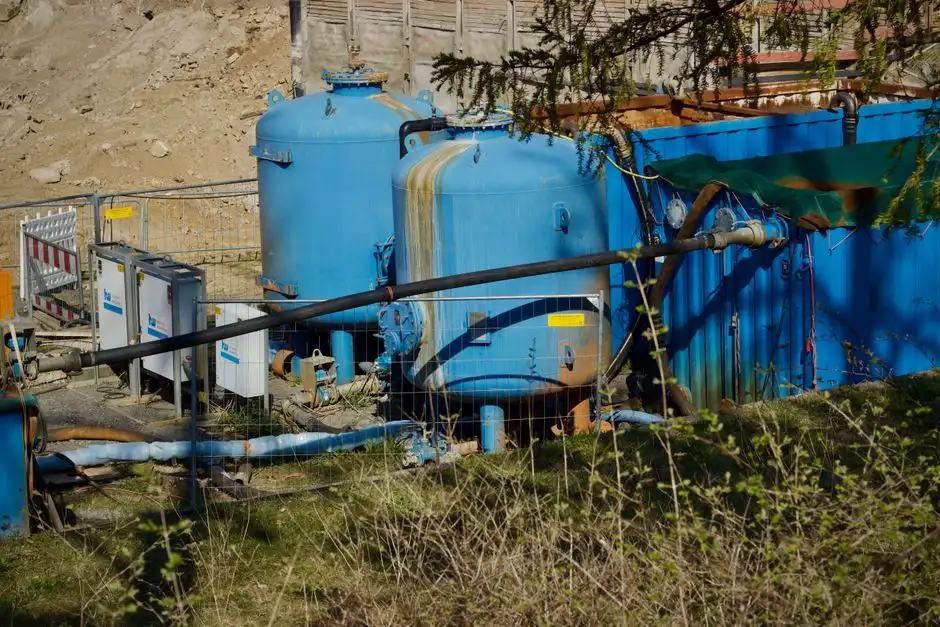
A treatment plant is not complete when the flotation tank has been supplied, because auxiliary systems determine feed consistency, treatment performance and operability. Include automatic chemical dosing where the train requires coagulants, flocculants, pH adjustment or specialty chemicals. HydropureWater offers skid-mounted, pre-wired, PLC-controlled dosing systems, including an automatic chemical dosing package for automatic chemical feed control.
Evaluate screening, grit control, equalization and free-oil removal as pretreatment where they protect the DAF and improve feed consistency. Fibrous material, grit and surfactants can affect feed quality, condition formation or downstream operation. Chemical selection and dosage should follow representative testing rather than a standard recipe; the same chemical may perform differently as wastewater composition changes.
Define where DAF float is discharged, how it is stored, dewatered and disposed of. Oil-bearing float is not simply a side stream. The plate-and-frame filter press is one available dewatering configuration, but the appropriate route depends on the physical properties of the float, available logistics and the permitted disposal or recovery route.
For sludge systems, account for dewatered and sticky sludge, fibrous residuals, enclosed transfer, horizontal or inclined conveying, controlled feeding and discharge, and maintenance access. The Dynemix India Instagram post dated August 27 identifies these as relevant sludge-conveying requirements for wastewater treatment plants, ETPs and industrial applications in France, including Lyon. It is a commercial source and supports the scope of the equipment discussion, not performance guarantees.
| Auxiliary scope | Procurement requirement | Reason to define it before ordering |
|---|---|---|
| Pretreatment | Screening, grit control, equalization and free-oil removal where justified | Protects feed quality and downstream process units |
| Chemical dosing | Duty, controls, chemical compatibility, storage and safety provisions | Supports consistent conditioning and pH control |
| DAF float | Skimming, transfer, containment, dewatering and final route | Prevents untreated oil-bearing residues from becoming an uncontrolled waste stream |
| Sludge handling | Property-specific collection, conveying, controlled feeding and discharge | Matches sticky and fibrous residues to the selected mechanism |
| Maintenance | Access, isolation, cleaning, spares and inspection provisions | Supports plant availability and safe operation |
Select sludge handling from actual physical properties and the final route. A generic “sludge package” attached to a DAF quotation may omit the equipment needed to move viscous, sticky or fibrous material reliably.
Build a French Project Brief and Supplier Comparison
A comparable French project brief must contain the factory profile, process wastewater analyses, flow data, treatment objective, utility requirements, installation constraints and required documentation. Without this package, quotations will describe different scopes and cannot be compared on treatment performance, capital cost or operating burden.
Require every supplier to identify the proposed treatment train and the duty assigned to each stage. Ask for the DAF or ETP sizing basis, feed assumptions, chemical-conditioning approach, skimming arrangement, sludge route, control philosophy and commissioning tests. The 2026 DAF unit engineering specs and decision framework is a useful baseline for those questions. It should remain a technical reference rather than a substitute for project-specific design data.
Also request proposed performance targets, test methods and guarantees, utility consumption, maintenance requirements, spare parts, warranty terms, operator training and a clear after-sales support plan. A performance target without a defined sampling point, analytical method and acceptance procedure is not commercially useful.
For a Lyon factory, confirm the applicable French discharge, sewer-discharge, reuse and local-equipment obligations with qualified French environmental and wastewater professionals. The supplied research does not provide a universal numeric limit for the factory, so the brief should not insert an assumed French discharge standard. The receiving route, water use, site conditions and applicable authorisations determine the requirements.
The linked Lyon housing package-treatment material should be treated only as a related regional example, not evidence for industrial-factory design. Local execution still requires French commissioning arrangements, operator training, maintenance documentation, service coverage and coordination with the applicable local authorities and waste contractors.
| Supplier submission | Question the buyer should ask | Evidence to request |
|---|---|---|
| Process basis | Which wastewater analyses and operating conditions were used? | Inputs, assumptions and stage calculations |
| Equipment scope | Which pretreatment, DAF, biological, polishing and sludge systems are included? | Process flow, equipment schedule and battery limits |
| Performance | What is guaranteed, where and by which test method? | Performance guarantee and commissioning protocol |
| Operation | What utilities, chemicals, labour and maintenance are required? | Consumption estimates and maintenance plan |
| Local execution | Who handles installation, training, commissioning and service in Lyon? | Named responsibilities, schedule and support commitments |
| Compliance | Which site-specific discharge, sewer or reuse requirements were assessed? | Permit basis and confirmation by qualified French professionals |
The commercial comparison should separate equipment price, installed scope, civil works, utilities, controls, chemical supply, commissioning, service, performance risk and sludge-disposal obligations. A low equipment quotation that excludes pretreatment, controls or residual handling may not be the lowest whole-plant cost.
Frequently Asked Questions
Does a Lyon factory need DAF, a full ETP, or a combined treatment train?
Choose DAF when the required objective is separation of oil, grease, floatables, suspended solids or colloids and compatible downstream treatment can meet the final destination. Choose a full ETP when the objective includes organic removal and the necessary biological and polishing stages. Use DAF as part of an ETP when oily or fine solids must be removed before biology or reuse pretreatment. The decision follows the wastewater profile and final water-quality requirement, not a universal equipment rule.
How much does an industrial DAF or ETP cost?
There is no defensible price from the supplied research. Total cost depends on representative wastewater analysis, peak flow, pollutant loads, treatment objectives, pretreatment, chemical dosing, utilities, controls, sludge handling, installation and local execution. Request itemized quotations that state the design flow, complete process scope, utilities, civil works, commissioning, guarantees, spares, warranty and exclusions. Use the DAF cost and price factors guide to structure that comparison, but do not turn its general factors into an unsupported quotation for the factory.
What should a buyer check when selecting a wastewater-treatment supplier?
Ask the supplier to demonstrate sizing calculations tied to the submitted wastewater data, the proposed process train, performance targets with test methods, control philosophy, chemical and utility demands, sludge route, maintenance access, commissioning tests and local support. A model name alone does not demonstrate process suitability. Obtain the actual proposed duty, boundaries and test protocol in writing, and check whether any performance commitment depends on wastewater characteristics outside the stated operating envelope.
What information is needed before ordering a DAF or ETP?
Provide representative wastewater analyses from normal production, cleaning and batch conditions; average and peak flow data; pollutant-load calculations; the final discharge, sewer or reuse destination; available space; utility and access constraints; and the intended route for DAF float and other sludge. Also identify temperature, pH, surfactants, grit, fibrous material and process-specific contaminants. These inputs are needed to calculate stage duties, select pretreatment, size equalization and verify that the proposed treatment train meets its actual operating duty.