What Defines a Qualified WWTP Supplier in Kazakhstan
A qualified WWTP supplier in Kazakhstan is a legal entity with in-country VAT registration, ST-KZ or EAEU EAC certification on delivered equipment, a documented reference list of operating plants, and a resident installation/commissioning crew — not a one-off trading company that ships a container from a foreign port and disappears. Local EPC-OEMs such as Zavod Tehmash / TOO STEM Engineering (95% localization, 125 employees, 8 years on market, Astana HQ at Asan Kaigy 8 NP16) anchor the "qualified" end of the spectrum, while Chinese packaged-plant exporters and European skid builders sit further from the buyer once the purchase order is signed.
Four supplier archetypes compete for 2026 Kazakhstan projects: (1) local EPC-OEMs with own manufacturing, bilingual commissioning, and product lines such as BioLOS local treatment plants, BioKOS sewage treatment plants, and SPS pumping stations; (2) Chinese packaged-plant OEMs exporting CE-certified containerized skids in the 50–500 m³/day range; (3) European skid builders (Fraccaroli & Balzan FB/1500-40-class units, Huber, ATB) for high-spec industrial effluent; and (4) engineering consultants who integrate imported equipment without owning a fabrication shop. Local manufacturing matters because Kazakhstan's public-procurement tenders typically require a minimum local-content percentage, the EAEU customs union removes the 5–15% import-duty layer on locally assembled skids, and spare-parts logistics from Almaty or Astana to a remote oilfield run in days rather than the 6–10 weeks a Shanghai or Milan shipment needs. The buyer's verification checklist: VAT-payer status in Kazakhstan, valid ST-KZ certificate on the specific equipment model, three or more operating reference plants visitable inside the country, in-house installation/commissioning team, and a written after-sales SLA with response-time targets in Russian and Kazakh. Underground packaged units such as the WSZ underground packaged sewage treatment plant are typically the only category where a Chinese OEM can match a local EPC on Kazakhstan content, because the vessel is often a local civil-build component.
Kazakhstan Discharge Compliance: SanPiN, MPC, and the Water Code
Kazakhstan's compliance regime operates on two tracks, and a supplier that designs to only one of them will fail the permitting step. Track one is the sanitary-epidemiological rules (SanPiN) and fishery-water Maximum Permissible Concentrations (MPC): for discharge to fishery water bodies the typical MPC ceilings sit near BOD₅ ~3 mg/L, COD ~15 mg/L, suspended solids ~10 mg/L, ammonium-nitrogen ~0.5 mg/L, and phosphate ~0.2 mg/L (SanPiN 2.1.5.980-00 family, applied by the Committee on Water Resources). Track two is the standard municipal/industrial discharge allowance under the Water Code (No. 481-IV, 2003, with 2024–2026 amendments) for surface-water and irrigation reuse, which permits a less stringent envelope (typical BOD₅ 25–50 mg/L, COD 80–125 mg/L) depending on receiving-water category.
The Committee on Water Resources under the Ministry of Ecology, Geology and Natural Resources (KazEcologiya) issues discharge permits and has been tightening limits each cycle since 2024 toward an EU-style effluent norm. A compliant supplier will deliver three documents with the proposal: an influent/effluent characterization report, a mass-balance guarantee covering COD, BOD₅, TSS, NH₄-N, total-P, and oil/grease where relevant, and a third-party sampling protocol aligned to GOST 31861-2012 and ISO 5667-10. The single most common buyer mistake is accepting a vendor's effluent guarantee without appending the testing method — COD by dichromate (HACH 8000, ~150 mg/L reading) is not the same number as COD by permanganate (Russian-standard method, typically one third of the dichromate value), and BOD₅ is not interchangeable with BOD₇. A supplier who refuses to name the test method in the contract is telling you the guarantee is not real.
Cold-Climate Engineering: The Non-Negotiable Design Package
Winter air temperatures of −30 °C to −35 °C in Astana, Karaganda, Pavlodar, and the north Caspian oilfield belt are the single largest design driver for any Kazakhstan WWTP, and any vendor who does not open the proposal with a freeze-protection narrative should be deprioritized. Nitrification rates effectively collapse below 8 °C in conventional activated sludge — specific nitrification rates at 5 °C drop to roughly 25% of the 20 °C value (per standard Metcalf & Eddy kinetics), so a 10 °C swing halves the permissible loading on the aeration tank. Operators respond with one of three strategies: (a) heated/enclosed bioreactors, (b) buried vessels that sit below the 1.2–1.8 m frost line and draw ground warmth (~5–10 °C year-round), or (c) SBR/MBR with extended HRT to compensate for low-temperature kinetics — typically 1.5–2× the warm-weather HRT at 5 °C mixed liquor.
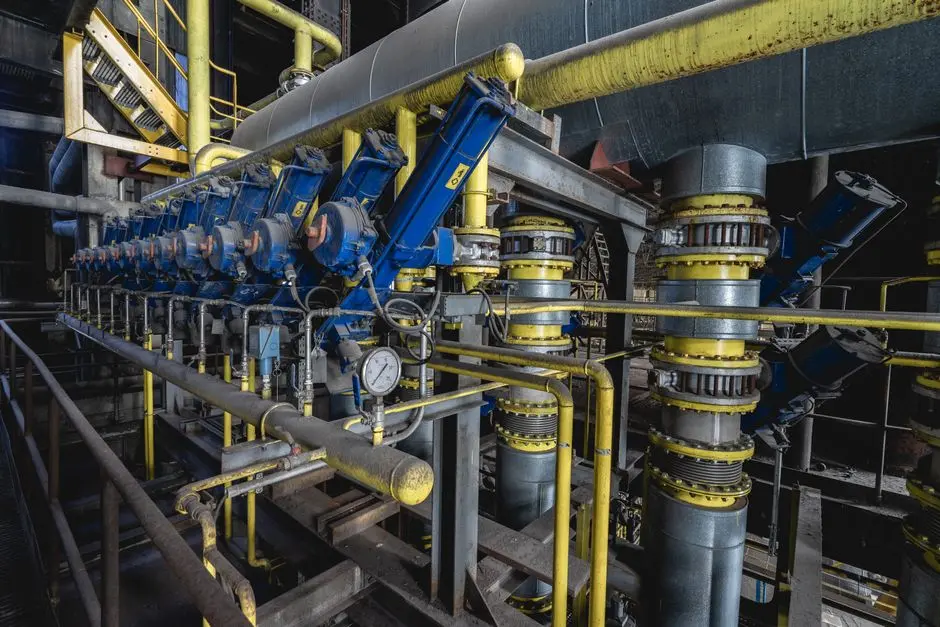
Beyond the biology, pipework and instruments need heat-traced sludge lines, insulated chemical dosing skids, and blower-room ventilation with anti-icing provisions sized for the design ambient. Civil works must follow the Kazakhstan SNiP equivalents for snow load (typically 100–180 kg/m² ground snow pressure in the northern oblasts) and reinforced-concrete tanks need frost-protection skirts or insulation boards on the external face. Packaged underground plants sidestep most of the above because the vessel sits below the frost line, which is why the WSZ underground packaged sewage treatment plant range (1–80 m³/h) is widely specified for small communities, rest stops along the Astana–Karaganda corridor, and remote mining camps. For larger capacities the same logic pushes designers toward buried concrete bioreactors or MBR halls with positive-pressure ventilation and trace heating on the permeate and backwash lines.
Supplier Comparison: Local EPC vs. Chinese OEM vs. European Skid
| Criterion | Local EPC-OEM (Tehmash profile) | Chinese OEM (packaged skid) | European skid builder |
|---|---|---|---|
| Typical capacity range | 50–10,000 m³/day (BioLOS / BioKOS lines) | 50–500 m³/day (containerized skids) | 200–5,000 m³/day (FB/1500-40-class modules) |
| CAPEX envelope (USD/m³/day, ex civil) | 280–550 | 180–350 | 600–1,200 |
| Delivery lead time | 10–20 weeks ex-works Astana | 8–14 weeks ex-works China + 4–6 weeks transit | 16–28 weeks ex-works EU + 4–8 weeks transit |
| Kazakhstan compliance engineering | ST-KZ in scope; SanPiN/MPC designed-in | CE base certificate; ST-KZ typically via local partner | CE + EAC; engineering review by buyer |
| Cold-climate readiness | Buried/enclosed design native | Cold-climate usually an adder (10–20% CAPEX) | Insulation/heating usually priced as option |
| After-sales support | Resident bilingual crew, 24–72 h SLA | Remote or via local agent, 1–3 week SLA | Remote diagnostics + fly-out, 1–2 week SLA |
| Indicative 5-yr OPEX (USD/m³) | 0.10–0.22 | 0.12–0.28 (membrane replacement adder) | 0.10–0.20 (premium automation offsets energy) |
Use this matrix as a triage tool, not a buying decision on its own. The rule of thumb for a 2026 Kazakhstan project: a local EPC-OEM wins municipal and oil-and-gas EPC contracts above 1,000 m³/day where ST-KZ localization, Kazakh/Russian commissioning, and a 24–72 h SLA are tendered as hard requirements; a Chinese OEM wins cost-driven 50–500 m³/day industrial and small-community projects where the buyer is willing to invest in a local integrator for cold-climate wrapping and certification; a European skid builder wins pharmaceutical, semiconductor, and reuse-grade effluent (COD <50 mg/L, BOD <10 mg/L) where tighter process guarantees justify a 2–3× CAPEX premium. For pre-treatment on industrial lines, a dissolved air flotation system in the 4–300 m³/h range is the common front-end across all three archetypes, and pairs naturally with the integrated MBR membrane bioreactor system for polishing.
Process Selection: Choosing the Right Treatment Train
| Influent profile | Recommended train | Target effluent |
|---|---|---|
| Domestic sewage 100–1,000 m³/day, MPC-tier discharge | A²/O + chemical P removal, or MBR | BOD₅ ≤ 5 mg/L, COD ≤ 30 mg/L, NH₄-N ≤ 1 mg/L |
| Domestic sewage 500–5,000 m³/day, cost-driven | SBR with extended low-temp HRT | BOD₅ ≤ 15 mg/L, COD ≤ 60 mg/L |
| Food / dairy / slaughterhouse, high FOG and TSS | DAF pre-treatment + A²/O or MBR | BOD₅ ≤ 20 mg/L, oil/grease ≤ 5 mg/L |
| Refinery / petrochemical produced water | DAF + MBBR, or DAF + MBR; oil guard to <5 mg/L | COD ≤ 100 mg/L, oil ≤ 3 mg/L |
| Reuse / ZLD, any feed | MBR + RO polishing + chemical dosing | TDS ≤ 50 mg/L, conductivity ≤ 100 µS/cm |
For domestic sewage below 1,000 m³/day where the discharge envelope is tight (MPC-tier fishery water), specify A²/O with chemical phosphorus precipitation or a sidestream MBR; the MBR membrane bioreactor module delivers a stable BOD₅ ≤ 5 mg/L even at mixed-liquor temperatures of 8–12 °C typical of buried Kazakh reactors. For higher flows at 500–5,000 m³/day the SBR cuts CAPEX by roughly 15–25% versus MBR and remains operationally simple, but it loses footprint advantage on tight sites. Industrial lines with high fats, oils, and grease — food, dairy, slaughterhouse — put a dissolved air flotation system in front as the standard pre-treatment to knock TSS to 30–50 mg/L and recover floatable solids before biological polishing. Refinery and petrochemical produced water needs DAF + MBBR or DAF + MBR to push residual oil below 5 mg/L, and any reuse or ZLD scope adds an industrial RO polishing system with a PLC-controlled chemical dosing skid for antiscalant, pH correction, and CIP. The wider MBR market context for Central Asia and the CIS is covered in the MBR market growth 2026 outlook.
CAPEX, OPEX, and ROI Benchmarks for 2026
Translated to budget numbers a procurement manager can defend internally, 2026 EPC CAPEX for Kazakhstan WWTPs excluding major civil works runs at USD 280–450/m³/day for conventional activated sludge, USD 320–520 for SBR, USD 450–900 for MBR, and USD 180–350 for packaged skids from Chinese OEMs (HydropureWater field data, 2026, indexed to Central Asia logistics and 2026 steel/PVC pricing). Civil works — piling, frost-protected tankage, access roads — typically add 25–45% on top of the process CAPEX for greenfield sites. OPEX, dominated by aeration energy at 60–70% of the variable cost, sits at USD 0.08–0.18/m³ for conventional activated sludge, USD 0.10–0.22/m³ for SBR, and USD 0.12–0.25/m³ for MBR; the MBR premium is membrane replacement (typically 8–12-year life) and finer-bubble aeration energy. Sludge hauling and polymer dosing each add roughly 10–15% on top of energy.
Aeration is the largest controllable OPEX line and the most defensible target for a 20–30% reduction through DO control, blower VFDs, and diffuser selection — the engineering math is in the aeration energy cost optimization guide. For oil-and-gas and mining clients, the typical payback frame against tanker-haulage or off-site disposal at USD 3–8/m³ is 4–7 years; the auto-manufacturing analogue is laid out in the 2026 auto-manufacturing wastewater cost benchmark. Sensitivity to consider before signing: a 10% rise in imported equipment FX cost and a 5% rise in field-labour cost together move total installed CAPEX by roughly 3–5% on a turnkey basis.
Frequently Asked Questions
Who is the largest wastewater treatment plant supplier in Kazakhstan? Zavod Tehmash / TOO STEM Engineering is one of the largest by domestic scope, with 95% localization, 125 employees, 8 years on the market, BioLOS / BioKOS product lines, and an Astana headquarters (Asan Kaigy 8 NP16) supplying municipal, oil-and-gas, and agricultural projects across Kazakhstan and Central Asia.
How much does a WWTP cost in Kazakhstan in 2026? Turnkey process CAPEX runs USD 280–900/m³/day depending on technology (CAS/SBR low end, MBR high end) and USD 180–350/m³/day for packaged Chinese OEM skids, before civil works, which add 25–45% on greenfield sites (HydropureWater field data, 2026).
Which WWTP technology works best in −30 °C Kazakhstan winters? Buried packaged units such as the WSZ series, or enclosed MBR halls with heat-traced pipework and insulated dosing skids, are the standard; nitrification below 8 °C is restored by ground-warmth burial, biological-heating enclosures, or 1.5–2× extended HRT in SBR/MBR mode.
Can Chinese packaged WWTPs meet Kazakhstan discharge limits? Yes, with the right integrator: a CE base plus an ST-KZ certificate on the specific skid, plus cold-climate adders (10–20% CAPEX) for enclosure, heat-tracing, and buried installation typically brings the system into SanPiN/MPC compliance for flow ≤ 500 m³/day.