Vietnam PFAS Discharge Limit 2026 Treatment Guide: What the Rules Say
Does Vietnam Have a PFAS Discharge Limit in 2026?
Vietnam has no numeric PFAS discharge limit in 2026: QCVN 40:2011 and QCVN 14:2008 list no value, MONRE's 2023 roadmap targets 2025–2027, and the defensible treatment target for exporters is below 10 ng/L PFOA/PFOS. This guide maps the standards and the train.
Vietnam has no legally binding numeric PFAS column in QCVN 40:2011/BTNMT (industrial wastewater) or QCVN 14:2008/BTNMT (municipal/domestic wastewater) as of 2026 — neither PFOA, PFOS, PFHxS, nor GenX appears with a numerical ceiling value. What does exist is MONRE Decision 2257/QD-BTNMT (2023), the formal PFAS management roadmap that commits the Ministry of Natural Resources and Environment to a 2025–2027 trajectory toward numeric effluent limits. That roadmap is harmonised with the Stockholm Convention listings for PFOS (2009), PFOA (2019), and PFHxS (2022). According to Wikipedia's PFAS overview, PFOS and PFOA were listed in the Stockholm Convention on Persistent Organic Pollutants in 2009 and 2019, respectively.
The practical effect on a plant in Binh Duong, Hai Phong, or Ho Chi Minh City is asymmetric. Provincial Departments of Natural Resources and Environment (DONREs) can already require PFAS monitoring in Environmental Impact Assessment (EIA) approvals for textile, paper, and plating projects, even though the national standard carries no number. Several DONREs in 2024–2025 have issued site-specific permit conditions referencing EPA Method 533 or 537.1 for influent characterisation — a soft but enforceable expectation.
Layered on top is brand-buyer pressure that often moves faster than MONRE. ZDHC (Zero Discharge of Hazardous Chemicals), bluesign, and EU/US parent-company supplier codes typically require compliance with EPA's 4.0 ng/L MCL for PFOA and PFOS. Others reference the EU Drinking Water Directive's 100 ng/L sum-of-20 PFAS parameter, which the European Commission describes as an update to the 1998 directive that explicitly tackles PFAS as an emerging contaminant. Either way, Vietnamese law's silence does not protect an exporter.
Two EPA updates matter for anyone benchmarking to the US rule. EPA announced the final NPDWR for six PFAS on April 10, 2024, establishing legally enforceable MCLs. In May 2025 EPA confirmed the PFOA and PFOS limits stay, while proposing to let water systems request two additional years — to 2031 — to comply, and a parallel proposal would rescind the limits for PFHxS, PFNA, and GenX. Design decisions should therefore anchor on PFOA/PFOS.
What PFAS Limit Will Vietnam Likely Adopt by 2027?
Vietnam's most probable path is a QCVN 40:2011 amendment inserting 4–10 ng/L individual limits for PFOA, PFOS, and PFHxS, with a 100 ng/L aggregate PFAS-20 parameter mirroring the EU Drinking Water Directive. The Vietnam Environment Administration (VEA) under MONRE has historically run 18–24 month revision cycles on QCVN technical standards. The 2023 roadmap signals a 2026–2027 amendment window.
The table below maps today's actual numbers against the most likely 2026–2027 values an export plant should design to.
| Standard / Reference | Parameter | Numeric Limit | Status (2026) |
|---|---|---|---|
| QCVN 40:2011/BTNMT (Vietnam industrial) | PFOA, PFOS, PFHxS | Not listed | Current — no number |
| QCVN 14:2008/BTNMT (Vietnam municipal) | PFOA, PFOS, PFHxS | Not listed | Current — no number |
| MOH QCVN 6-1:2010/BYT (drinking water, 2024 revision) | PFOA / PFOS | Not yet numeric; monitoring recommended | Advisory |
| EPA Final MCL (April 2024) | PFOA, PFOS (individual) | 4.0 ng/L (4 ppt) | Enforceable in USA |
| EU Drinking Water Directive 2020/2184 | Sum-of-20 PFAS | 0.10 µg/L (100 ng/L) | Enforceable in EU |
| WHO Draft Guideline (2022) | PFOA | 0.1 µg/L (100 ng/L) | Advisory |
| Stockholm Convention listings | PFOS, PFOA, PFHxS | Production/use restrictions | Vietnam signatory |
| Working engineering target (recommended) | PFOA + PFOS, individual | < 10 ng/L | Defensible for export plants |
The Stockholm Convention legal anchor is the key driver. Vietnam ratified the Convention and is expected to translate listing obligations into enforceable QCVN numbers rather than maintain a parallel national regime. For a procurement decision taken in 2026, designing to < 10 ng/L PFOA/PFOS with a safety margin against both EPA's 4 ng/L and any future MONRE number is the lowest-regret choice. Wikipedia also notes that the EPA's 4 parts-per-trillion limits sit at the edge of what targeted methods can measure, so lab capability belongs in the compliance plan. Baseline, likely numbers, sector loads, treatment trains, and costs — that sequence is what this Vietnam PFAS discharge limit 2026 treatment guide maps for a 2026 procurement decision.
Which Vietnamese Industries Discharge PFAS and How Much?

Not every Vietnamese factory carries a PFAS problem — influent concentration varies by more than three orders of magnitude between sectors. A plating shop's rinse water can run 100–500 µg/L total PFAS from PFOS-based fume suppressants, while a knitting mill finishing line sits at 0.5–5 µg/L from durable water-repellent (DWR) chemistries. The table below gives a defensible influent map for screening.
| Sector | Typical PFAS Use | Influent Range (µg/L total) | Key Compounds |
|---|---|---|---|
| Textile & apparel (finishing) | DWR finishes, water/oil repellents | 0.5 – 50 | PFOA legacy, short-chain replacements |
| Paper & packaging | Grease-resistant coatings, recycled fibre | 0.1 – 10 | PFOA, PFOS (historical), 6:2 FTOH |
| Metal plating | PFOS fume suppressants, wetting agents | 10 – 500 (concentrated rinse) | PFOS dominant |
| Electronics / PCB | Photolithography, etchant surfactants | 1 – 50 | PFOS, GenX in some lines |
| Semiconductor (fabs) | Etch baths, photoresist additives | 0.001 – 0.1 (low volume) | PFOA, PFOS, HFPO-DA (GenX) |
PFOS Fume Suppressant Plating Wastewater Vietnam Loadings
PFOS fume suppressant plating wastewater in Vietnam carries the sector's highest raw concentrations, 100–500 µg/L total PFAS in concentrated rinse streams from Dong Nai and Binh Duong shops. That loading creates the strongest regulatory exposure when effluent enters a river-of-record used for downstream water supply. Semiconductor fabs in Ho Chi Minh City, Bac Ninh, and Da Nang discharge small volumes but require < 1 ng/L to protect ultrapure-water reuse loops — a driver of high-end RO and IX demand.
PFAS Treatment Technologies That Work in Vietnamese Plants
The four technology families proven at full scale for PFAS destruction or removal are granular activated carbon (GAC), ion exchange (IX), reverse osmosis/nanofiltration (RO/NF), and emerging pre-concentration options like foam fractionation. Each has a defined performance envelope against long-chain PFAS (PFOA, PFOS, PFHxS). Each also has a defined waste-handling problem that has to be designed for, not discovered after commissioning.
| Technology | Removal Efficiency (PFOA/PFOS) | Operating Window | Vietnam-Specific Constraint |
|---|---|---|---|
| GAC (coal or coconut shell) | 90 – 99% | EBCT 10 – 20 min | Reactivation logistics limited; spent carbon hauled off-site for incineration |
| Ion exchange (e.g. Purolite PFA694E) | > 99% to < 10 ng/L | 1,000 – 5,000 BV/cycle | Brine/concentrate requires destruction |
| RO / NF | > 99% rejection (long chain) | 200 – 400 psi, 10 – 25 LMH | 15 – 25% concentrate volume needs hazardous-waste disposal |
| Foam fractionation / MIEX | 60 – 90% (pre-concentration) | Best on high-TOC, low-TDS streams | Useful upstream of destruction; not a stand-alone solution |
| Destruction (SCWO, plasma, electrochemical oxidation) | > 99.99% mineralisation | Concentrate & spent media only | Not viable for bulk wastewater; energy-intensive |
GAC Ion Exchange PFAS Removal Vietnam Factory Configuration
GAC ion exchange PFAS removal for a Vietnam factory works best as lead-lag carbon contactors followed by a polishing resin vessel, sized to hold < 10 ng/L at the discharge point. For a typical Vietnamese export plant the realistic train is GAC in lead-lag configuration followed by polishing IX, with an industrial RO system added only if water reuse is part of the business case.
Automatic chemical dosing ahead of DAF keeps the carbon bed from blinding with oil and grease, and a mechanical bar screen upstream removes fibres and hair that physically plug carbon. For streams where oil and grease dominate the fouling budget, the how to treat oily wastewater engineering guide is the relevant companion read.
Recommended Treatment Train for a Vietnam Textile or Plating Plant
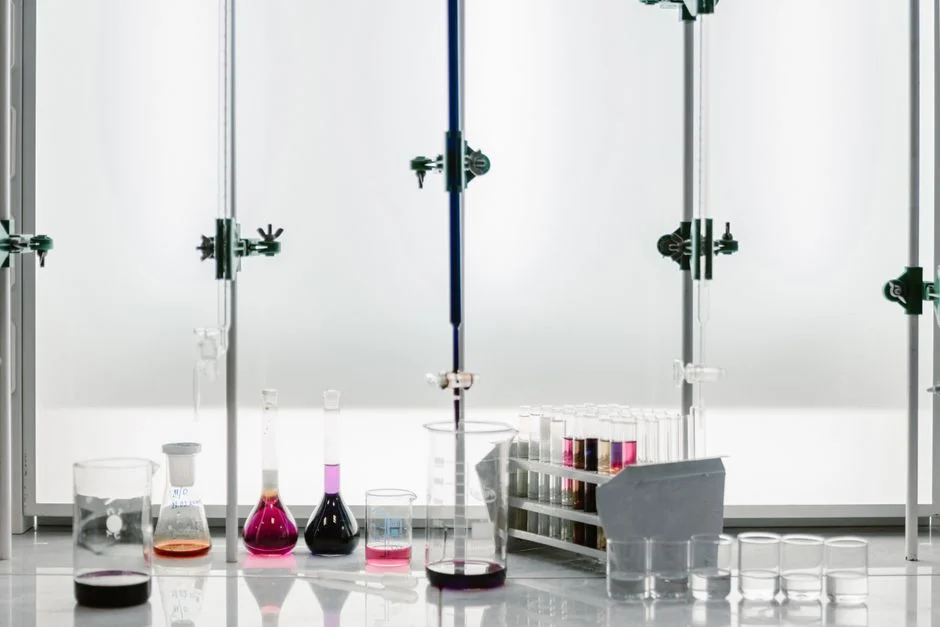
The train below assumes a 200–1,000 m³/day flow, an influent of 1–50 µg/L total PFAS, and a discharge target of < 10 ng/L PFOA/PFOS to river or industrial park sewer. It can be adapted to a smaller plating line by scaling equalisation and carbon contactors.
- Stage 1 — Equalisation and screening: flow buffering plus a bar screen to remove fibres, hair, and grit. Without this, downstream carbon fouls in weeks instead of months.
- Stage 2 — Coagulation and DAF pre-treatment: removes suspended solids, oil, and grease that would otherwise occupy adsorption sites on the carbon.
- Stage 3 — Multi-media filtration: sand/anthracite polishing to drop TSS below 5 mg/L and protect the carbon bed from physical blinding.
- Stage 4 — GAC contactors (lead-lag): two vessels in series, 10–20 min EBCT, with online sampling between vessels so breakthrough is detected before the polishing stage is overloaded.
- Stage 5 — Polishing ion exchange: single-vessel resin polisher to catch any PFOA/PFOS slip-through and hold < 10 ng/L at the discharge point.
- Stage 6 — Optional RO for reuse: brackish-water RO at 200–400 psi, only justified where the recovered water has a downstream use (dye-house rinse, boiler feed, cooling-tower make-up).
For a semiconductor fab, swap Stage 4 for a double-pass RO with mixed-bed IX polishers, since the discharge target drops to < 1 ng/L and the influent is already low-volume and low-TDS. Most textile plants we size for export compliance settle on Stages 1–5 first and defer Stage 6 until a reuse business case exists.
CAPEX and OPEX Order of Magnitude for PFAS Compliance in Vietnam
PFAS Treatment Textile Plant Vietnam Capex: The 500 m³/day Envelope
PFAS treatment textile plant Vietnam capex for a 500 m³/day flow targeting < 10 ng/L PFOA/PFOS spans USD 250,000–600,000 for a GAC + IX train, or USD 600,000–1.2M with RO reuse. Numbers are HydropureWater field-data ranges from 2024–2025 Vietnam installations. Treat them as scoping-grade, not tender-grade.
| Cost Line | GAC + IX Train | GAC + IX + RO Reuse Train |
|---|---|---|
| CAPEX (equipment + installation) | USD 250,000 – 600,000 | USD 600,000 – 1,200,000 |
| GAC media replacement | Every 6 – 12 months | Every 6 – 12 months |
| IX resin replacement | Every 12 – 24 months | Every 12 – 24 months |
| RO energy | N/A | 0.4 – 1.2 kWh/m³ treated |
| Spent-media disposal (per ton) | USD 200 – 500 | USD 200 – 500 |
| Concentrate disposal | Minimal | Significant — line item |
The GAC + IX train is the lowest OPEX option for any plant discharging to a river, and it has the smallest waste-handling headache because the IX brine is small-volume. RO only pays back when the recovered water displaces a metered freshwater purchase or a discharge fee. Either way, line-item the spent-carbon and spent-resin disposal through a licensed hazardous-waste contractor (Sonadezi, VWS, or equivalent) — that line is where Vietnamese projects most often overrun.
PFAS Compliance Checklist for Vietnam Industrial Plants in 2026
- Map PFAS use and waste streams: inventory all fluorinated surfactants, DWR finishes, fume suppressants, and photoresist additives; identify waste routes. Use EPA Methods 533, 537.1, or 8327 for influent and effluent sampling, run by QUATEST or SGS Vietnam.
- Benchmark against the strictest external limit: compare your effluent data to EPA 4.0 ng/L and the EU 100 ng/L sum-of-20 PFAS. Set an internal action level at 50% of the strictest number so you have a working alarm before breach.
- Pilot before you procure: run a 30-day GAC and IX column pilot on actual plant water. Confirm < 10 ng/L effluent and measure media life under real fouling conditions before committing CAPEX.
- Update the EIA: disclose PFAS handling, storage, and treatment in the Environmental Impact Assessment and the Environmental Management Plan submitted to MONRE/DONRE. Failure to disclose is now a documented enforcement risk in 2024–2025 EIA reviews.
- Contract the waste route first: lock in a licensed hazardous-waste hauler (Class 02-03 per QCVN 07:2009) for spent carbon, spent resin, and any RO concentrate before commissioning. An automatic chemical dosing system on the pretreatment line keeps waste volumes consistent and contractually predictable.
Regional Context and Next Step
Regional context matters because PFAS rules in neighboring ASEAN markets are moving on different clocks, and Vietnam exporters usually face the strictest external limit first. For plant-level engineering beyond PFAS, the Industrial Wastewater Treatment in Vietnam 2026: Specs, Costs & Compliance guide covers specs and costs for Vietnamese industrial sites, and the Package Wastewater Treatment Plants in Vietnam: 2026 Engineering Guide details package-plant options with supplier checklists.
For QCVN 40:2025 industrial wastewater investment Vietnam planning — the MBR route most Vietnamese factories are pricing this cycle — the MBR systems guide is the practical reference. For context on how Vietnam compares regionally, see our microplastics discharge limit in Malaysia reference and the industrial effluent limits in Bangladesh compliance guide.
Next step for PFAS-specific scoping: send influent PFAS data, design flow, and the target limit through the request-a-quote desk for a train-level budget check and a media-life estimate against your actual fouling load.
Frequently Asked Questions
Is PFAS regulated in Vietnam today?
No numeric limit exists in QCVN 40:2011/BTNMT or QCVN 14:2008/BTNMT as of 2026. MONRE Decision 2257/QD-BTNMT (2023) sets the 2025–2027 roadmap toward numeric limits, and provincial DONREs can already require PFAS monitoring in EIA permits. Brand-buyer codes fill the gap with EPA and EU benchmarks in the meantime.
What is the EPA PFOA limit Vietnam exporters should follow?
4.0 ng/L (4 ppt) for PFOA and PFOS individually, finalised in the EPA MCL rule of April 2024. EPA confirmed in May 2025 that these two limits stay, while proposing to extend water-system compliance deadlines to 2031 and to rescind the PFHxS, PFNA, and GenX limits. This remains the de facto compliance benchmark for any plant shipping into US supply chains.
Can activated carbon alone meet PFAS limits in Vietnam?
GAC alone can deliver < 10 ng/L for most textile and paper applications. Polishing IX is the standard insurance for plating and electronics plants, where breakthrough events have direct compliance consequences. The lead-lag contactor layout is what makes carbon economics work at full scale.
How is PFAS measured in Vietnamese labs?
LC-MS/MS using EPA Method 533, 537.1, or 8327, available at QUATEST (Vietnam), SGS Vietnam, and Eurofins Vietnam. Typical reporting limit is 1–5 ng/L, which is adequate for a < 10 ng/L compliance target. Specify the same method your DONRE permit names to keep results comparable.
Does PFAS change the hazardous-waste classification of sludge in Vietnam?
Yes. Spent GAC and exhausted IX resin from PFAS service are classified as hazardous waste under QCVN 07:2009, typically Class 02-03. They must be handled by a licensed contractor with a tracking manifest, and the disposal line is a common budget overrun on Vietnamese PFAS projects.
When does the QCVN 40 PFAS amendment 2027 textile effluent limit take effect?
The QCVN 40 PFAS amendment 2027 textile effluent numbers are most likely to land in the 2026–2027 window, given the VEA's 18–24 month QCVN revision cycles and MONRE's 2023 roadmap. Expect 4–10 ng/L individual limits for PFOA, PFOS, and PFHxS plus a 100 ng/L aggregate parameter. Designing to below 10 ng/L now avoids a retrofit later.