Why Biopharmaceutical Wastewater Needs Carbon Polishing
Activated carbon filter systems for biopharmaceutical wastewater cost between $8,000 and $180,000 in 2026 CAPEX depending on flow rate (1–50 m³/h), media type, and pressure-vessel material. Operating cost runs $0.04–$0.22 per m³ treated, dominated by media replacement every 6–24 months. Granular activated carbon (GAC) is the default polishing stage after MBR; powdered activated carbon (PAC) suits batch CIP streams; activated carbon fibre (ACF) handles trace antibiotic and solvent residuals at 3–5× higher media cost but 2–3× longer bed life.
Typical biopharma effluent carries COD of 800–8,000 mg/L, BOD₅/COD ratios of 0.25–0.45 (a hallmark of partially biodegradable API matrices), antibiotic traces of 0.5–50 mg/L, persistent color bodies, and pH swings between 5.5 and 8.5 depending on CIP neutralization cycles (industry-typical range, per peer-reviewed API wastewater characterization studies). A well-run MBR downstream typically leaves 80–200 mg/L of residual COD — and that residual is the non-biodegradable soluble fraction the biological train cannot touch. Under GB 21904-2008 the bio-discharge ceiling sits at 60 mg/L COD; under the EU BAT-AEL for API manufacturing, COD in the receiving water body must be consistent with the local environmental quality standard after mixing. Both bars are missed without a polish.
Carbon polishing specifically targets non-biodegradable soluble COD, color bodies, trace APIs, and chlorination by-product precursors — functions biological treatment cannot deliver regardless of SRT or MLSS. Residual COD and color are the #1 reason biopharma plants miss reuse or discharge permits, not BOD or TSS, because the soluble recalcitrant fraction passes straight through biological reactors and shows up as false-color TOC in the final compliance sample. Sizing a carbon stage against post-MBR bench data (rather than raw influent) is the difference between a defensible capex line and a $50K mistake. Engineers calibrating to a biological train should review the MBR effluent quality benchmark data before specifying carbon.
GAC, PAC, and ACF: Choosing the Right Media for Biopharma Streams
The three carbon formats are not interchangeable. GAC, PAC, and ACF each solve a different problem in a biopharma wastewater train, and the wrong choice inflates both CAPEX and OPEX while still missing the compliance bar.
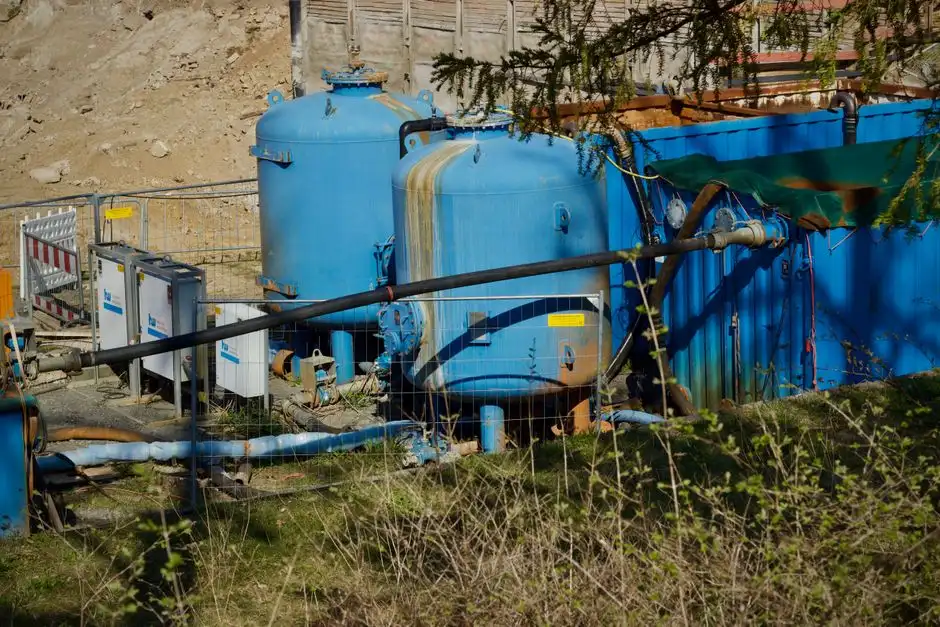
Granular activated carbon (GAC) runs in fixed-bed pressure vessels, typically 4×8 or 8×16 mesh coal- or coconut-based media with iodine number 900–1,100 mg/g. It is the standard polishing stage for continuous post-MBR effluent, and a 10 m³/h duplex skid lands at $35,000–$75,000 in 2026 dollars (HydropureWater field data, 2026). GAC tolerates flow variation, regenerates thermally, and integrates cleanly with backwash and rinse sequences.
Powdered activated carbon (PAC) is dosed at 20–200 mg/L directly into a clarifier, DAF, or equalization basin at 100–325 mesh. No separate pressure vessel is required, which makes PAC ideal for batch CIP surges and fermentation washwater where flow and load swing hour-to-hour. Operating cost runs $0.02–$0.05/m³, but PAC cannot be regenerated economically and produces a hazardous sludge stream that must be hauled. An automatic PAC dosing skid for batch biopharma streams typically adds $6,000–$18,000 to a capex request.
Activated carbon fibre (ACF) delivers 10–100× faster adsorption kinetics than GAC, with BET surface area of 1,000–1,800 m²/g, and is the only format that reliably strips antibiotic residuals below 0.1 mg/L. Media cost runs 3–5× higher per kg, and vessels cost 2–3× the equivalent GAC at the same flow rate because of higher media mass per cubic meter — but bed life extends 2–3× longer, often netting lower 5-year OPEX on high-strength streams.
Decision rule: continuous post-MBR polishing → GAC; batch or variable-strength streams → PAC; trace-API regulatory requirement below 0.1 mg/L → ACF. A multi-media filter for pre-carbon suspended-solids polishing upstream of any of the three reduces TSS loading to under 5 mg/L and extends carbon bed life by 30–50%.
| Parameter | GAC (granular) | PAC (powdered) | ACF (fibre) |
|---|---|---|---|
| Form | 4×8 / 8×16 mesh bed | 100–325 mesh slurry | Felt / cartridge |
| Iodine number (mg/g) | 900–1,100 | 800–1,000 | 1,100–1,500 |
| BET surface (m²/g) | 800–1,200 | 600–1,000 | 1,000–1,800 |
| Typical dose / EBCT | EBCT 20–30 min | 20–200 mg/L | EBCT 3–10 min |
| Media cost relative | 1× baseline | 0.3–0.5× | 3–5× |
| Best-fit biopharma stream | Continuous post-MBR | Batch CIP, fermentation wash | Trace APIs, antibiotics, solvents |
| Regenerable | Yes (thermal) | No | Yes (thermal, lower energy) |
2026 CAPEX Benchmarks for Biopharma Activated Carbon Systems
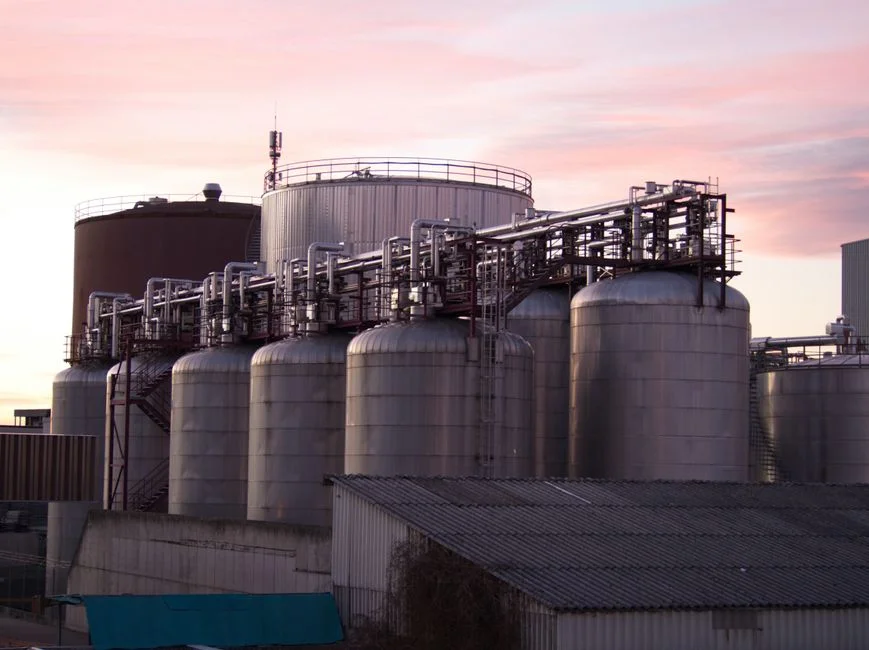
2026 pricing for FOB-China supply of biopharma-grade carbon skids breaks out by flow rate and material of construction. A 1–5 m³/h single-vessel system in carbon-steel rubber-lined construction lands at $8,000–$22,000. A 5–20 m³/h dual-vessel automated skid with lead-lag valving runs $25,000–$75,000. A 20–50 m³/h multi-vessel train with PLC, differential-pressure breakthrough triggers, and CIP-in-place piping reaches $80,000–$180,000.
Material of construction moves the number quickly. Carbon-steel rubber-lined is the baseline. 304 stainless adds 15–25%. 316L stainless — the biopharma purity default — adds 30–45% and is non-negotiable for vessels contacting post-API process water. Instrumentation drives a separate adder: manual butterfly valving is essentially free; a PLC package with differential-pressure transmitters, outlet COD/TOC analyzers, and automated lead-lag switching adds $4,000–$12,000 but pays back inside 18 months through media savings on most biopharma loads.
For plants planning a full reuse train, an RO unit for biopharma water reuse downstream of carbon polishing typically adds $40,000–$120,000 to the capex line, but it converts a disposal cost into a recovered-water credit.
| Flow rate (m³/h) | Configuration | Vessel MOC | 2026 CAPEX (USD, FOB China) |
|---|---|---|---|
| 1–5 | Single vessel, manual | CS rubber-lined | $8,000–$22,000 |
| 5–20 | Dual vessel, lead-lag | 304 SS | $25,000–$75,000 |
| 5–20 | Dual vessel, lead-lag | 316L SS | $35,000–$95,000 |
| 20–50 | Multi-vessel, PLC, CIP | 304 SS | $80,000–$140,000 |
| 20–50 | Multi-vessel, PLC, CIP | 316L SS | $110,000–$180,000 |
| 1–5 | ACF cartridge skid | 316L SS | $20,000–$45,000 |
| 5–20 | ACF pressure vessel | 316L SS | $60,000–$160,000 |
HydropureWater-supplied system pricing tends to sit 10–20% below EU/US equivalents for equivalent ASME BPE / CE-PED builds, driven by vessel fabrication labor and shorter supply chains on instrumentation (HydropureWater field data, 2026). ACF vessels cost 2–3× the equivalent GAC vessel at the same flow rate due to higher media mass per cubic meter, so ACF should only be specified where the trace-API regulatory requirement actually exists.
Worked Sizing Example: 15 m³/h API Plant Polishing Train
Given: post-MBR flow 15 m³/h, inlet COD 180 mg/L, target outlet 50 mg/L to meet reuse, EBCT 20–30 min for GAC biopharma service (industry-typical EBCT range, per AWWA B604 and vendor design guides). The 130 mg/L delta is well within GAC's working range; no need for ACF or AOP on this stream.
Calculate vessel geometry: at 20 min EBCT, required carbon volume = (15 m³/h × 0.333 h) = 5.0 m³; at 30 min EBCT, 7.5 m³. Select a duplex arrangement with two vessels, each holding 3.0–4.0 m³. Vessel diameter works out to 1.6–1.8 m at a typical 1.5–1.8 m straight-shell height. Media mass per vessel at 500 kg/m³ bulk density is 2,500–3,750 kg of 8×16 coal-based GAC at $2.20–$3.50/kg — a media line of $5,500–$13,000 per vessel, so $11,000–$26,000 for the duplex pair at first fill.
Hydraulic constraints: keep surface loading ≤12 m/h to avoid channeling and media fines generation. At 15 m³/h and 2 vessels online, loading is 15 / (2 × π/4 × 1.7²) ≈ 3.3 m/h per vessel — well under the limit, with headroom for a 30% flow turn-up.
Backwash schedule: every 24–72 h using filtrate plus air scour, consuming 5–10% of throughput as washwater routed back to the equalization basin.
Breakthrough: 6–18 months to 50% capacity exhaustion, signaled by ΔP rise across the bed or outlet COD creep above 60 mg/L. Plan media swap at the first signal, not at theoretical saturation.
Process flow:
- Post-MBR feed → bag filter (5 µm) → GAC vessel #1 (duty) → GAC vessel #2 (polish) → outlet TOC/COD analyzer → reuse or discharge
- Backwash line: filtrate + air scour → equalization basin
- Spent carbon discharge → hazardous-waste hauler, manifested per local code
OPEX Drivers: Media Life, Regeneration, and Spent-Carbon Disposal
For a 15 m³/h GAC polishing train, OPEX breaks down as follows. Media replacement is the dominant line at $0.04–$0.08/m³ treated, assuming a 12-month average bed life and $2.80/kg media cost. Steam regeneration, if an in-house kiln or contract regeneration service is available, runs $0.02–$0.06/m³ and is the single biggest OPEX lever — every regeneration cycle defers one media replacement. Backwash water consumes 5–10% of throughput but is non-potable reuse so carries only pumping cost. Energy for feed pumping and instrumentation sits at $0.005–$0.015/m³. Total OPEX for GAC biopharma polishing lands at $0.08–$0.22/m³ across most 2026 operating scenarios (HydropureWater field data, 2026).
Spent carbon disposal is the line item most capex requests forget. Classified as hazardous waste under most jurisdictions because of adsorbed API residues, spent GAC hauling runs $200–$450/ton in the EU and $80–$180/ton in China (2026 market rates). A 15 m³/h plant replacing 5,000 kg/year of GAC carries $400–$2,250/year in EU disposal, $400–$900/year in China — small per m³ but real on a 5-year lifecycle. Sludge handling cost from PAC dosing adds $0.02–$0.04/m³ for hauling and incineration, and is reviewed in detail in the hybrid DAF-RO-MBR cost breakdown for biopharma trains.
ACF lifecycle economics: media cost is 3–5× higher per kg but bed life is 2–3× longer, and thermal regeneration is simpler (lower energy, lower mass loss per cycle), often netting lower 5-year OPEX for high-strength streams where trace-API breakthrough is the design constraint. PAC OPEX is dominated by dose rate (0.05–0.20 kg/m³ × PAC cost at $1.20–$2.50/kg) and sludge hauling — generally $0.05–$0.12/m³ all-in.
Carbon Polishing vs Ozone and AOPs: When Not to Buy Activated Carbon
Activated carbon is one tool, not a default. For recalcitrant APIs and decolorization, ozonation ($0.06–$0.18/m³) and UV/H₂O₂ advanced oxidation ($0.15–$0.40/m³) often outperform GAC on mass-removal basis — but both produce transformation products (TPs) that require downstream polishing, and ozonation on bromide-bearing streams can form bromate, which carbon strips effectively.
Decision rule: if the compliance target is bulk COD reduction, GAC wins on CAPEX and simplicity. If the target is trace API destruction to below 10 ng/L plus color removal, an AOP train with GAC as the final polish for bromate and TP control is the 2026 default. Plants without ozone generation infrastructure should default to carbon polishing — it is the lowest-CAPEX, lowest-skill floor option and avoids the electrical and safety review overhead of an ozone skid. For biopharma reuse permits requiring 95% COD removal, ozone-GAC trains are now the engineering default, not standalone carbon. See the RO vs NF cost comparison for biopharma reuse for the reuse-side economics that often tip the choice.
Frequently Asked Questions
What does a 2026 GAC system cost for 10 m³/h biopharma polishing?
A 10 m³/h duplex GAC skid in 304 SS runs $35,000–$65,000 in 2026 (FOB China); in 316L SS for biopharma purity, $50,000–$90,000. Add $4,000–$12,000 for a PLC with differential-pressure breakthrough triggers.
How long does GAC media last in biopharma service?
6–18 months to 50% capacity exhaustion on post-MBR effluent with inlet COD 120–250 mg/L. Plan media swap at the first ΔP rise or outlet COD creep above 60 mg/L, not at theoretical saturation.
Is ACF worth the 3–5× media premium?
Yes, if the regulatory driver is trace antibiotic or solvent residual below 0.1 mg/L. ACF bed life is 2–3× longer than GAC, and lower thermal-regeneration mass loss often nets lower 5-year OPEX on high-strength streams.
What is the disposal cost for spent activated carbon?
$200–$450/ton in the EU and $80–$180/ton in China for hazardous-waste hauling, 2026 rates. A 15 m³/h plant replacing 5,000 kg/year carries $400–$2,250/year in EU disposal cost.
Can carbon polishing meet China GB 21904 alone, without biological pretreatment?
No. GB 21904-2008 caps bio-discharge COD at 60 mg/L, and carbon polishing raw API effluent at 800–8,000 mg/L COD would exhaust beds in days, not months. MBR or equivalent biological pretreatment upstream is mandatory; carbon then handles the residual soluble COD, color, and trace APIs.