
Why Pharmaceutical COD Is Harder Than Municipal COD
Pharmaceutical manufacturing effluent presents a distinct challenge compared to municipal wastewater because the influent envelope is wider, the load is dominated by solvents and active pharmaceutical ingredients (APIs), and a meaningful fraction of the COD is non-biodegradable. Veolia's 50-plant survey of API, biological, and finished-product sites recorded influent COD from 400 to 62,000 mg/L, with one plant observed at 300,000 mg/L (Veolia, 2020). Daily flows span 30–600 m³/d, and most production is campaign-based rather than continuous; the same pipe can deliver a solvent-rich batch at 8 a.m. and a fermentation CIP peak at 2 p.m. More than 30 solvents are in routine use—ethanol, methanol, acetone, isopropanol, acetic acid—and these drive the bulk of the COD while also inhibiting biomass (Veolia, 2020).
The COD/BOD5 ratio remains the standard metric for biodegradability, but it requires careful interpretation in pharmaceutical contexts. Veolia classifies COD/BOD5 <2 as easily biodegradable, 2–3 as biodegradable, and >3 as potentially non-biodegradable, reporting pharmaceutical ratios from 1 to 15 across the 50-plant dataset (Veolia, 2020). Refractory COD—also called hard, ultimate, persistent, or inert COD—is the non-biodegradable fraction that sets the lower limit on what biological treatment alone can achieve (Veolia, 2020). A global survey cited in an RSC review of advanced oxidation detected pharmaceutical residues on every continent, with 25% of sampling sites exceeding safe ecological thresholds; meeting a discharge consent is no longer the sole design target (RSC Adv, 2025). For a deeper cross-technology comparison, see the broader COD/BOD technology comparison.
Step 1 — Segregate Before You Treat
Segregation is the highest-leverage decision in any pharmaceutical treatment-train design, as downstream units perform better when processing only the specific fractions they were designed to remove. Veolia identifies scrubber blowdown, equipment and floor cleaning, and laboratory wastewater as streams carrying solvent vapors, acid/base spikes, detergent foam, and API traces that destabilize biomass if combined with the bulk flow (Veolia, 2020). CondorChem recommends splitting the plant into a biodegradable bulk stream, sent to biology, and a segregated set of saline, toxic, inhibitory, and poorly biodegradable streams routed to vacuum evaporation, distillation, or a dedicated advanced oxidation step (CondorChem, 2025).
Vacuum evaporation concentrates saline and refractory streams into a small reject, leaving a cleaner distillate and reducing the load sent downstream, but it is not a destruction step; APIs and refractory organics concentrate in the reject and require a downstream AOP, crystallizer, or off-site disposal (CondorChem, 2025). Veolia notes that low-boiling-point solvents such as acetone and methanol report to the distillate rather than the concentrate, so stream routing and volatility must be verified before evapoconcentration is specified (Veolia, 2020). Where a stream is rich in a single high-value solvent—THF, methanol, ethyl acetate, or DMSO—dedicated distillation can turn the waste COD load into a recovered raw material, which is the most economically attractive outcome when solvent concentration justifies the capital cost (CondorChem, 2025). Practical guidance on selecting between these options is set out in the solvent wastewater treatment guide.
Step 2 — Biological Treatment Sized for the Biodegradable Fraction
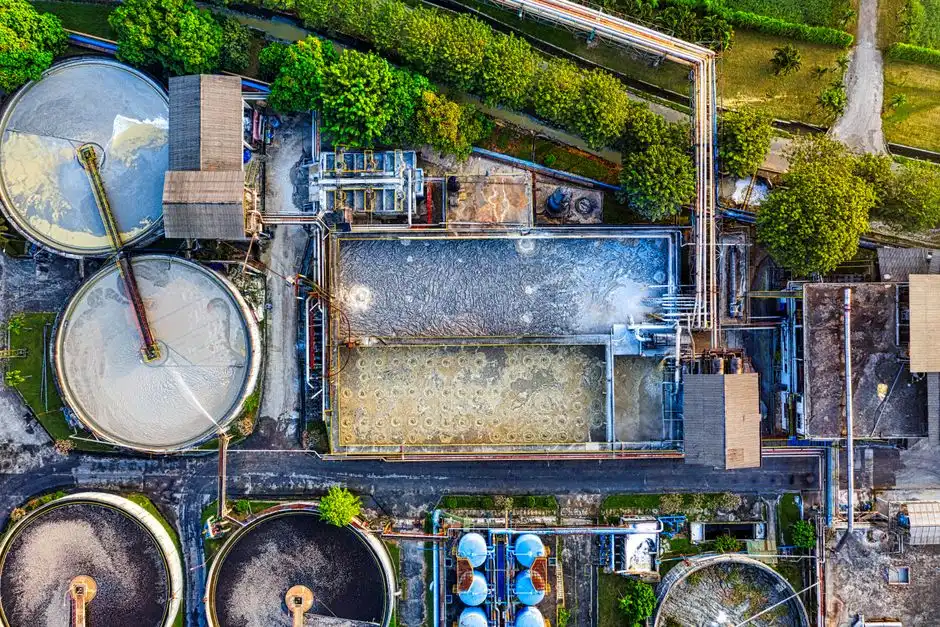
Biological treatment systems are sized specifically for the soluble biodegradable fraction of the influent. Veolia's reference treatment lines for pharmaceutical plants include MBBR plus DAF, MBBR plus activated carbon plus sand filtration, and anaerobic followed by MBR, with technology choice driven by COD/BOD5 bands and flow variability (Veolia, 2020). For COD/BOD5 <2, a single-stage MBBR or activated sludge train is usually cost-effective, but for the 2–3 band, the train must be designed for partial removal plus a downstream polishing stage, as the refractory fraction will not be consumed by biology (Veolia, 2020).
For higher-load API streams, integrated MBR systems for pharmaceutical effluent combine activated sludge with submerged PVDF membrane filtration below 1 μm, lifting effluent quality toward reuse without a separate clarifier. Flat-sheet MBR modules for retrofit and modular pharma plants at 0.1 μm with integrated aeration scouring are individually replaceable and consume less energy than external cross-flow membrane designs. Anaerobic reactors upstream of MBR (Veolia Example E) are suited to high-COD API streams where methane recovery offsets aeration costs, but they are sensitive to solvent and heavy-metal toxicity and require segregation to protect them (Veolia, 2020). Once the COD/BOD5 ratio exceeds 3, biological optimization cannot hit a low-COD discharge limit on its own, as refractory COD will pass through, signaling the need for a polishing step (Veolia, 2020).
Step 3 — Map Each Unit Process to the COD Fraction It Actually Removes
Engineers must understand which unit process removes which fraction of the COD to justify each stage of a treatment train. The table below synthesizes Veolia's process descriptions, the RSC review's AOP evidence, and CondorChem's segregation logic. Equalization and neutralization smooth load and pH but do not remove COD. Primary separation (DAF, lamella) targets particulate and colloidal COD plus FOG; DAF pretreatment for colloidal and FOG-bound COD is widely used in pharmaceutical lines for this purpose. MBBR and activated sludge target soluble biodegradable COD; MBR adds a physical barrier at roughly 0.1–1 μm that retains biomass and most colloidal COD. Fenton, ozone-Fenton, and photoelectrocatalytic AOPs target soluble refractory COD and API traces. GAC and multi-media filtration as RO pretreatment after biological polishing adsorb residual organics and low-level APIs, while evapoconcentration is a volume-reduction step that concentrates salts, APIs, and refractory COD into a small reject (Veolia, 2020; Condorchem, 2025; RSC Adv, 2025).
| Unit process | Primary COD fraction targeted | What it does not do | Evidence base |
|---|---|---|---|
| Equalization / neutralization | None (load and pH smoothing only) | No COD destruction | Veolia, 2020 |
| Primary separation (DAF, lamella) | Particulate COD, colloidal COD, FOG | Does not remove soluble biodegradable or refractory COD | Veolia, 2020 |
| MBBR / activated sludge | Soluble biodegradable COD | Does not remove refractory COD; effluent biodegradable COD still in tens to low hundreds of mg/L before polishing | Veolia, 2020 |
| MBR (submerged PVDF <1 μm or 0.1 μm flat-sheet) | Soluble biodegradable COD plus colloidal COD retained on the membrane | Does not destroy refractory COD; raises quality vs. CAS but does not mineralise | Veolia, 2020 |
| Anaerobic (upstream of MBR) | Soluble biodegradable COD, with methane recovery | Sensitive to solvent and heavy-metal toxicity; needs segregation | Veolia, 2020 |
| Fenton / ozone-Fenton / photoelectrocatalytic AOP | Soluble refractory COD and API traces | ~41% COD reduction on a real four-drug pilot mixture; not full mineralisation at scale | RSC Adv, 2025; CondorChem, 2025 |
| GAC / multi-media filtration | Residual organics, low-level APIs (adsorption) | Saturates; needs replacement or regeneration; not a destruction step | Veolia, 2020 |
| Evapoconcentration | None (volume reduction only) | Does not destroy APIs or refractory COD — concentrates them in the reject | Veolia, 2020; CondorChem, 2025 |
Step 4 — Polishing Refractory COD and API Traces With AOPs
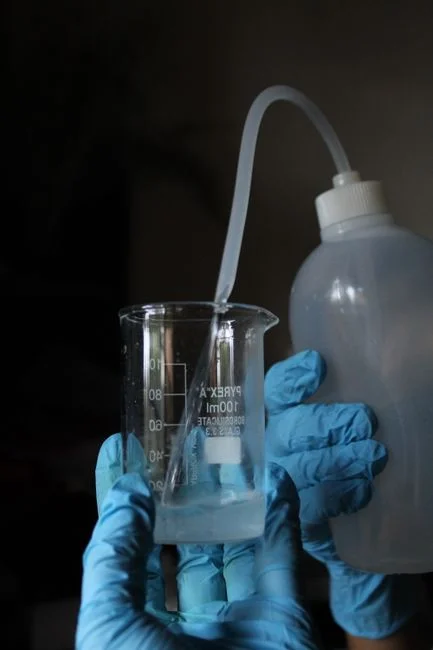
Advanced oxidation processes target the refractory fraction of wastewater. The RSC review reports 75–100% pharmaceutical removal across hybrid photoelectrocatalytic systems: 98% sulfamethoxazole in 90 min with PEC/PMS, 100% norfloxacin in 25 min, 91.3% tetracycline in 30 min, and bisphenol A degradation rising from 65.0% to 85.9% in 60 min with PDS (RSC Adv, 2025). Ozone-assisted PEC has reached 96% cefadroxil removal with 57.6% TOC reduction, and a pilot solar photoelectro-Fenton/ozone system achieved 60% pharmaceutical degradation and 41% COD removal on a real four-drug mixture (RSC Adv, 2025). Bio-PEC hybrids have demonstrated 95–99.04% API removal with up to 93% lower energy consumption than standalone AOPs (RSC Adv, 2025).
AOPs act as a biodegradability-uplift step rather than a full-mineralization step, breaking refractory molecules into forms a downstream biological stage can process to reduce reagent and energy use (CondorChem, 2025). The RSC review highlights unresolved challenges—catalyst deactivation, oxidant consumption, mass-transfer limits, incomplete mineralization, transformation-product toxicity, and energy demand—and calls for standardized energy, toxicity, mineralization, and long-term stability data on real water before full-scale AOPs are specified (RSC Adv, 2025). Practical implications for site selection and compliance are covered in the regional pharmaceutical wastewater guide.
Building a 2026 Treatment Train: Decision Framework
The design of a treatment train depends on COD concentration and the COD/BOD5 ratio. If COD/BOD5 < 2 and COD is below 5,000 mg/L, a single-stage MBBR or MBR plus DAF is usually sufficient for discharge to a biological sewer (Veolia, 2020). If COD/BOD5 is 2–3 or COD exceeds 10,000 mg/L, add an anaerobic pre-step or an MBR and plan AOP polishing of the effluent (Veolia, 2020; CondorChem, 2025). If COD/BOD5 > 3 or the plant handles antibiotics, hormones, or solvents, segregate API and solvent streams first, then specify a dedicated AOP on the segregated stream plus a polishing biological or MBR on the bulk flow (RSC Adv, 2025; CondorChem, 2025).
Confirm pilot-scale AOP performance on the actual effluent, as literature results are often based on controlled studies and require validation of energy, toxicity, and stability before scale-up (RSC Adv, 2025). For reuse targets, finish the train with GAC and RO; for zero-liquid-discharge targets, add evapoconcentration or crystallization on the reject (Veolia, 2020; CondorChem, 2025). The cross-technology options at each stage are compared in the broader COD/BOD technology comparison.
Frequently Asked Questions
What does a
Frequently Asked Questions
What is a realistic COD removal percentage I can expect from a pharmaceutical wastewater treatment plant in 2026?
In 2026, a well-optimized multi-stage treatment train typically achieves total COD removal efficiencies between 92% and 98%. While biological processes alone may plateau at 75-85% for complex pharmaceutical matrices, the integration of tertiary polishing—such as ozonation or activated carbon adsorption—is required to reach the sub-100 mg/L effluent concentrations mandated by tightening global discharge standards.
How do I choose between MBBR, MBR and anaerobic treatment for a high-COD API effluent?
Selection depends primarily on the COD concentration and biodegradability (BOD/COD ratio). Anaerobic treatment is the preferred first stage for high-strength streams exceeding 5,000 mg/L COD, offering energy recovery via biogas. MBR is chosen when high-quality permeate is required for water reuse or to meet stringent TSS and nitrogen limits, whereas MBBR is utilized for system upgrades where footprint is constrained and high biomass concentration is needed without the membrane fouling risks associated with MBR.
When is advanced oxidation (Fenton, ozone or PEC) actually worth the cost on pharmaceutical wastewater?
Advanced Oxidation Processes (AOPs) become economically viable when the wastewater contains recalcitrant, non-biodegradable, or toxic compounds that inhibit downstream biological treatment. They are specifically justified when the BOD/COD ratio is below 0.2, indicating that biological methods will fail, or as a post-treatment step to achieve final compliance with stringent toxicity and micropollutant discharge limits that conventional secondary treatment cannot meet.
How long does it take to design, pilot and build a pharmaceutical wastewater treatment train, and what affects the budget?
A typical project lifecycle from initial design to commissioning ranges from 18 to 30 months, with pilot testing accounting for 3 to 6 months of that duration. The budget is primarily driven by the complexity of the chemical matrix, the required level of automation, and the material selection—such as the use of high-grade stainless steel or specialized coatings—required to withstand the aggressive and corrosive nature of active pharmaceutical ingredient (API) solvents and reagents.
What influent data should I have ready before requesting quotes from pharmaceutical wastewater equipment suppliers?
To receive accurate proposals, you must provide a comprehensive characterization including the COD, BOD5, TOC, and TSS ranges, along with specific concentrations of nitrogen, phosphorus, and heavy metals. Additionally, suppliers require a detailed list of solvents, active pharmaceutical ingredients (APIs), pH fluctuations, flow rate variability (peak vs. average), and any inhibitory thresholds or toxicity data (IC50) to ensure the proposed technology is sized correctly for your specific influent profile.