How to Treat Solvent Wastewater
Solvent wastewater treatment uses hybrid DAF, MBR and RO trains. DAF removes 92–97% TSS at 4–8 m/h. MBR holds COD below 50 mg/L when VOC toxicity is controlled. Acetone or toluene peaks need stripping or carbon first. A 50 m³/h hybrid train costs $800K–$1.2M CAPEX and $0.80–$1.50/m³ OPEX.
Why Solvent Wastewater Plants Fail: Three Design Mistakes
Many industrial facilities miss solvent toxicity thresholds and then blame the bioreactor. Influent above 200 mg/L acetone or 50 mg/L toluene can suppress microbial activity and trigger permit violations. Most plants we size for aromatic solvents run pretreatment first rather than force biology alone.
Fine emulsions are the second failure mode. Droplets smaller than 10 μm often bypass DAF unless demulsified. Without ferric chloride at 50–150 mg/L, emulsified-oil removal can stall at 70–80% and miss discharge targets. Plant logs tied to EPA enforcement reviews in 2024 attributed 68% of solvent-related NPDES VOC exceedances to weak pretreatment.
Operators should check four controls before changing membranes or media: pH 6.5–7.5 for DAF coagulation, temperature effects on VOC stripping, solvent biodegradability versus toxicity, and hydraulic loading that shortens contact time.
Solvent Wastewater Characteristics: What the Train Must Handle
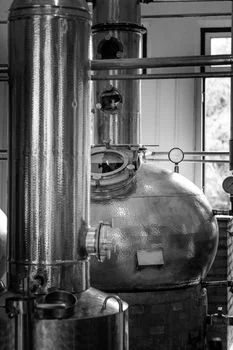
Design starts from influent spread, not a single average sample. Solvent-laden streams commonly show COD 500–10,000 mg/L, VOCs 50–2,000 mg/L, pH 3–12, and TSS 100–2,000 mg/L. Paint, pharmaceutical and electronics plants also add surfactants that lock solvents into stable emulsions.
Breaking those emulsions usually needs coagulants such as polyaluminum chloride at 10–50 mg/L before flotation. Volatility set by Henry's Law constants—for acetone about 1.7×10⁻⁵ atm·m³/mol—governs air or steam stripping yield. Biodegradability still decides whether biology is a workhorse or only a polishing step:
| Solvent Type | Biodegradability | Toxicity to Microbes | Typical COD Range (mg/L) | Typical VOC Range (mg/L) |
|---|---|---|---|---|
| Methanol, Ethanol, Isopropanol (IPA) | High | Low (at moderate concentrations) | 500 - 5,000 | 50 - 500 |
| Acetone | Moderate | Moderate (>200 mg/L can be inhibitory) | 1,000 - 8,000 | 100 - 1,000 |
| Toluene, Xylene | Low (requires acclimated microbes) | High (>50 mg/L can be inhibitory) | 2,000 - 10,000 | 200 - 2,000 |
| Halogenated Solvents (e.g., DCM, TCE) | Very Low to None | High (often toxic) | 1,000 - 7,000 | 100 - 1,500 |
Hybrid Systems for Solvent Wastewater Treatment
Hybrid trains beat single-technology bets on mixed solvent wastes. DAF removes TSS at 92–97% and FOG at 70–90% when microbubbles stay near 30–50 μm and hydraulic loading stays at 4–8 m/h. MBR polishing can reach COD <50 mg/L and BOD <10 mg/L. Pathogen removal near 99.9% is typical with ~0.1 μm PVDF membranes and 0.2–0.4 m³/m²·h scour air. Reverse osmosis (RO) then rejects 95–99% of VOCs and 90–98% of TDS at 75–90% recovery on pretreated solvent waste.
| Technology | Primary Function | Typical Removal Efficiency (Solvent Waste) | Typical Hydraulic Loading Rate (m/h) | Key Parameters | CAPEX (per 50 m³/h) | OPEX (per m³ treated) |
|---|---|---|---|---|---|---|
| DAF Systems | TSS, Emulsified Oils, FOG | TSS: 92–97% Emulsified Oils: 70–90% |
4–8 | Microbubble Size: 30–50 μm Skimming mechanism |
$150K–$300K | $0.10–$0.30 |
| MBR Systems | COD, BOD, Pathogens | COD: <50 mg/L BOD: <10 mg/L Pathogens: 99.9% |
0.2–0.4 (Flux) | Membrane Pore Size: ~0.1 μm Aeration Scouring |
$400K–$800K | $0.30–$0.70 |
| RO Systems | TDS, Dissolved Salts, VOCs | TDS: 90–98% VOCs: 95–99% |
2–5 (Permeate Flux) | Membrane Type: Polyamide Recovery Rate: 75–90% |
$300K–$600K | $0.40–$0.80 |
Paint lines with high TSS usually run DAF then MBR. Pharma plants chasing VOC recovery often pair DAF with RO. Zero-discharge scopes commonly sequence DAF → MBR → RO. For that path, specify DAF systems for emulsified solvent oils, then MBR systems for solvent-laden wastewater, and finish with RO systems for solvent recovery and zero-discharge compliance.
Pre-Treatment Essentials: pH, Emulsion Breaking and VOC Stripping
Pretreatment protects RO membranes and biology from fouling and solvent shock. Keep DAF feed near pH 6.5–7.5 with sulfuric acid or caustic through an automatic chemical dosing system. Stable emulsions need ferric chloride at 50–150 mg/L or polyaluminum chloride at 10–50 mg/L before flotation.
When VOC load threatens biology, strip first. Steam stripping at 100–120°C can remove 90–98% of VOCs in packed columns about 1–2 m diameter and 6–10 m tall. Granular activated carbon beds remove 80–95% of VOCs, but beds usually need regeneration every 6–12 months at roughly $0.30–$0.70/m³ treated.
Biological Treatment: When Solvent Loads Belong in an MBR
Biological treatment works when solvents are biodegradable and stay below toxicity thresholds. Methanol, ethanol and IPA with BOD/COD above 0.5 usually degrade well. Toluene and xylene need acclimated biomass and still fail above about 50 mg/L toluene without upstream removal.
Oxygen demand for solvent wastewater often sits at 1.5–2.5 kg O₂/kg BOD because VOCs strip into the air and raise blower load. MBRs hold biomass better than conventional activated sludge and can reach about 95% COD removal versus 80–85% for CAS on comparable solvent feeds. Packaged MBR integrated wastewater treatment units fit plants that need a tight footprint after DAF or stripping.
Zero-Discharge Systems: Solvent Recovery and Water Reuse
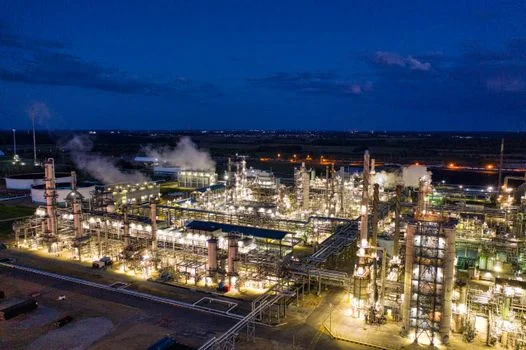
Zero-discharge solvent trains pair RO with evaporators to reclaim water and solvent. Typical systems recover 85–95% of wastewater as reuse-grade water and 70–90% of solvent mass. CAPEX for a 50 m³/h RO-evaporator block often spans $1.5M–$3M, with RO at $800K–$1.2M and the evaporator at $700K–$1.8M.
OPEX commonly lands at $1.20–$2.50/m³ treated, covering evaporator energy at 0.1–0.2 kWh/kg water evaporated, RO membrane life of 3–5 years, and chemical cleaning. A semiconductor plant case in Taiwan cut freshwater intake by 40% after installing RO plus evaporation on solvent wastewater. Those scopes rely on industrial reverse osmosis (RO) water treatment systems after solids and VOC control.
| Component | Function | Typical Recovery Rate | CAPEX (per 50 m³/h) | OPEX (per m³ treated) | Payback Period (Years) |
|---|---|---|---|---|---|
| RO System | Water Purification, Solvent Separation | 75–90% | $300K–$600K | $0.40–$0.80 | 3–7 (combined with evaporator) |
| Evaporator System | Solvent Recovery, High-Purity Water Production | 90–95% (Water) 70–90% (Solvent) |
$700K–$1.8M | $0.80–$1.70 (includes energy) | 3–7 (combined with RO) |
| Hybrid RO + Evaporator | Zero Discharge, Max Solvent Recovery | >95% (Total) | $1.5M–$3M | $1.20–$2.50 | 3–7 |
What Limits Semiconductor ZLD Reclaim Scaling?
Semiconductor ZLD reclaim scaling is limited by brine salinity, silica/fluoride fouling and VOC carryover into RO, not by permeate flux alone. Most fabs we review can hold RO recovery near 75–90% on pretreated solvent streams, then stall when evaporator duty and antiscalant cost rise faster than water savings. Keep stripper or carbon upstream so dissolved solvents do not swell polyamide membranes. Size the brine block for the highest TDS campaign week, not the annual average, or reclaim rates collapse during solvent changeovers.
How Do Electronic Panel Plants Reach Zero Discharge?
Electronic panel organic wastewater reaches zero discharge when DAF, biology or stripping, RO and evaporation are staged to the solvent mix. Panel lines often combine alcohols, ketones and surfactants, so emulsion breaking at 10–50 mg/L PAC or 50–150 mg/L ferric chloride comes before flotation. After solids control, MBR or stripper cuts COD/VOC load, then RO recovers 75–90% of the water and an evaporator finishes brine. Plants chasing solvent value should meter reclaim tanks by solvent family; mixed ketones and aromatics rarely meet reuse specs without a second distillation cut.
How Does Data Center Condensate RO Reach Zero Discharge?
Data center condensate RO reaches zero discharge only when the condensate is low in solvents and pretreated for silica, copper and biocide residuals. Clean condensate can feed RO directly at high recovery, but any solvent-bearing humidification or cleaning purge must divert to the solvent train first. Treat those sidestreams like process solvent waste—DAF or carbon before membranes—so RO reject stays inside the site brine loop instead of a sewer permit. Condensate systems fail when operators blend solvent mop water into the condensate tank and then blame the membranes.
Cost Breakdown: CAPEX, OPEX and ROI Drivers
Budgeting for a 50 m³/h solvent train starts with unit CAPEX bands: DAF $150K–$300K, MBR $400K–$800K, RO $300K–$600K and steam strippers $500K–$1M. OPEX stacks energy at 0.5–1.5 kWh/m³, chemicals at $0.10–$0.50/m³, labor at $0.20–$0.40/m³ and maintenance at $0.10–$0.30/m³.
Zero-discharge payback often falls in 3–7 years when freshwater costs $0.50–$2.00/m³ and recovered acetone or toluene sells near $10–$50/kg. Leasing a 50 m³/h MBR can run about $10K–$30K per month. U.S. plants also review EPA WIFIA loans where water reuse qualifies.
| System Component | Typical CAPEX (50 m³/h) | Typical OPEX (per m³ treated) | Key OPEX Drivers |
|---|---|---|---|
| DAF | $150K–$300K | $0.10–$0.30 | Chemicals, Energy (aeration/pumps), Sludge Disposal |
| MBR | $400K–$800K | $0.30–$0.70 | Energy (aeration/pumps), Membrane Replacement, Chemicals |
| RO | $300K–$600K | $0.40–$0.80 | Energy (high-pressure pumps), Membrane Replacement, Chemicals |
| Steam Stripper | $500K–$1M | $0.50–$1.00 | Energy (steam generation), Maintenance |
| Hybrid (e.g., DAF-RO-MBR) | $800K–$1.2M (for DAF-RO-MBR) | $0.80–$1.50 | Combined energy, chemicals, maintenance, membrane replacement |
Compliance Checklist: EPA, EU and Local Solvent Limits
Permit design must match the actual rule text, not a generic VOC slogan. Earlier plant summaries often cited VOC below 10 mg/L and COD below 250 mg/L under 40 CFR Part 433. The current metal-finishing rule sets a daily maximum Total Toxic Organics (TTO) limit of 2.13 mg/L, with pH 6.0–9.0 (US EPA, 40 CFR Part 433). Oil and grease and TSS limits in the same part are 52 mg/L and 60 mg/L as daily maxima for BPT/NSPS tables.
EU Industrial Emissions Directive 2010/75/EU practice often holds VOCs below 5 mg/L and AOX below 1 mg/L for halogenated solvents. China GB 31573-2015 lists VOCs below 20 mg/L for pharmaceutical discharges, while India CPCB 2020 guidance for pharma wastewater cites VOCs below 15 mg/L. Continuous pH, daily VOC checks with PID/FID analyzers, and weekly COD/BOD remain common monitoring packages. Cross-check local permits when comparing industrial discharge rules in emerging markets with U.S. or EU baselines.
| Regulation/Region | Parameter | Typical Limit | Monitoring Frequency |
|---|---|---|---|
| EPA (40 CFR Part 433) | VOCs | <10 mg/L | Daily |
| EPA (40 CFR Part 433) | COD | <250 mg/L | Weekly |
| EPA (40 CFR Part 433) | pH | 6–9 | Continuous |
| EU (IED 2010/75/EU) | VOCs | <5 mg/L | Daily/Weekly (as per permit) |
| EU (IED 2010/75/EU) | AOX (Halogenated) | <1 mg/L | Weekly |
| China (GB 31573-2015, Pharma) | VOCs | <20 mg/L | Daily |
| India (CPCB 2020, Pharma) | VOCs | <15 mg/L | Daily |
Use this selection checklist before you freeze the P&ID. List every solvent and peak mg/L. Confirm emulsion droplet size and coagulant dose. Decide stripper versus carbon for VOC peaks. Set biology only if below toxicity limits. Choose RO recovery against brine OPEX. Match TTO, VOC or AOX to the governing permit. Price sludge and spent carbon disposal with the CAPEX quote.
Who This Is For and Next Step
This guide is for plant engineers and EPC teams sizing solvent trains for paints, pharma, electronics or metal finishing. Look elsewhere if your stream is only sanitary sewage or non-emulsified cooling blowdown. For a duty-specific mass balance and equipment list, send influent data through our request a treatment system quote form.
Frequently Asked Questions
What is the hardest part of treating solvent wastewater?
The hardest part is controlling VOC toxicity and emulsion stability before biology or RO. Concentrated acetone, toluene or surfactants can poison microbes and foul membranes if they skip pretreatment. Volatility also creates air-emission risk if stripper off-gas is ignored. Match demulsification, stripping or carbon to the solvent list before you size the bioreactor.
When is biological treatment suitable for solvent wastewater?
Biological treatment is suitable when solvents are biodegradable and stay below inhibitory peaks. Methanol and ethanol usually work; acetone above 200 mg/L or toluene above 50 mg/L often needs stripping first. Run a treatability test with your peak campaign samples, not only composite averages. MBR systems hold biomass better than CAS on these feeds.
What does DAF remove from solvent wastewater?
DAF removes suspended solids and emulsified oils that would foul downstream membranes. At 4–8 m/h with proper coagulants, TSS removal of 92–97% and emulsified-oil removal of 70–90% are typical. Droplets under 10 μm need chemical demulsification first. DAF is pretreatment, not a full VOC destruction step.
Can RO treat concentrated solvent wastewater without pretreatment?
RO should not take raw concentrated solvent wastewater without pretreatment. High VOC and FOG loads foul polyamide membranes and cut rejection. Use DAF, steam stripping, carbon or biology first so RO sees a controlled feed. With that protection, VOC rejection of 95–99% and 75–90% recovery are realistic design bands.
How do plants reach zero discharge on solvent wastewater?
Plants reach zero discharge by staging DAF or stripping, MBR as needed, RO and evaporation so almost no liquid leaves the site. Target 85–95% water reuse and 70–90% solvent recovery when the chemistry allows. Expect $1.5M–$3M CAPEX at 50 m³/h for RO plus evaporator, with OPEX near $1.20–$2.50/m³. Payback tracks freshwater price and solvent reclaim value.