How to Treat Rinse Wastewater: 2026 Engineering Specs, Hybrid Systems & Zero-Discharge ROI
A plating facility recently faced a $150,000 EPA fine for exceeding COD limits in its rinse water discharge, highlighting the critical need for advanced treatment solutions. Rinse wastewater treatment in 2026 requires hybrid systems combining dissolved air flotation (DAF), reverse osmosis (RO), and membrane bioreactors (MBR) to achieve 95%+ water recovery and consistently meet stringent EPA/EU discharge limits (e.g., COD <125 mg/L, TSS <30 mg/L). For metal finishing operations, capital expenditure (CAPEX) ranges from $80,000 for small chemical dosing units (5–20 m³/h) to $2.5 million for large MBR systems (100–500 m³/h), with operational expenditure (OPEX) averaging $0.50–$2.00/m³. Key cost drivers include membrane replacement ($15–$30/m²/year) and chemical dosing ($0.10–$0.30/m³). Emerging technologies like electrocoagulation and forward osmosis are further reducing reliance on traditional chemical treatments, offering pathways to zero-discharge and enhanced sustainability.
Why Rinse Wastewater Treatment Costs More Than Process Wastewater (And How to Cut It)
Rinse wastewater treatment often incurs higher per-cubic-meter operational costs compared to process wastewater due to its high volume and low contaminant load. Unlike highly concentrated process wastewater streams, rinse water is characterized by its exceptionally high volume, typically ranging from 50 to 1,000 m³/h in large manufacturing plants, paired with relatively low levels of total suspended solids (TSS <500 mg/L). This disparity makes conventional treatment methods, such as activated sludge, economically inefficient due to the high energy input required for aeration and the excessive chemical dosage needed for minimal contaminant removal (HydropureWater field data, 2025).
Energy costs for aeration in activated sludge systems treating rinse water can exceed $0.80/m³, whereas for more concentrated process wastewater, these costs might be closer to $0.30/m³ because the biological oxygen demand (BOD) is lower relative to the hydraulic load. For example, a 500 m³/h rinse stream with 100 mg/L BOD requires similar aeration energy to a 100 m³/h process stream with 500 mg/L BOD, but the per-cubic-meter cost for the rinse water is five times higher. This highlights the inefficiency of applying high-energy biological processes to dilute streams.
Water reuse strategies can reduce freshwater intake by 80–90%, significantly cutting disposal costs and mitigating regulatory fees (per EPA 2024 water reuse guidelines). This approach also minimizes the volume of wastewater requiring discharge permits, which can range from $5,000 to $50,000 annually, depending on discharge volume and pollutant load. Beyond direct savings, water reuse enhances a facility's environmental profile and can offer resilience against water scarcity.
Automated rinse tank controllers, which utilize conductivity sensors to adjust freshwater flow only when contamination levels exceed a set point, can reduce water consumption by 30–50%. For instance, maintaining a conductivity set point of 500 µS/cm ensures optimal rinsing efficiency while preventing excessive water use, directly impacting operational expenditure by conserving water and reducing the volume requiring treatment.
Hybrid System Design: How DAF, RO, and MBR Work Together for Rinse Wastewater
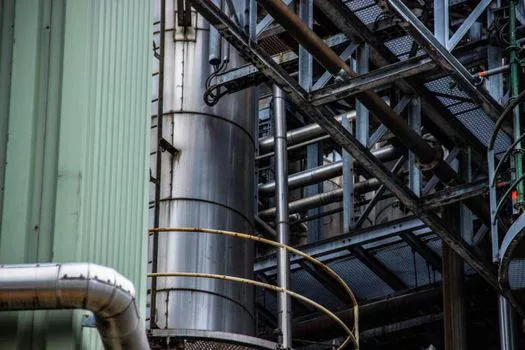
Hybrid wastewater treatment systems integrate dissolved air flotation (DAF), reverse osmosis (RO), and membrane bioreactors (MBR) to achieve comprehensive contaminant removal and high-purity water recovery from industrial rinse streams. This multi-stage approach leverages the strengths of each technology to address the diverse contaminant profiles found in rinse wastewater.
- DAF stage: DAF systems for high-efficiency TSS and FOG removal utilize micro-bubbles (30–50 μm diameter) generated under 4–6 bar pressure to achieve 80–90% removal of total suspended solids (TSS) and fats, oils, and grease (FOG) at typical surface loading rates of 4–6 m/h (HydropureWater engineering specifications). This pretreatment step is crucial for protecting downstream membrane systems from gross particulate and oil fouling, extending their operational life and reducing cleaning frequency.
- RO stage: Following DAF and often a secondary filtration (e.g., multimedia filter), 95% salt rejection RO systems for rinse water purification employ polyamide thin-film composite membranes operating at a flux rate of 15–25 L/m²/h. To prevent scaling from sparingly soluble salts like calcium carbonate or silica, antiscalant chemicals are dosed at 3–5 mg/L upstream of the RO membranes. This stage is crucial for reducing dissolved solids to meet stringent water reuse specifications, often achieving conductivity levels below 10 µS/cm.
- MBR stage: Integrated MBR systems for COD and TSS removal incorporate submerged polyvinylidene fluoride (PVDF) membranes with 0.1 μm pore sizes, operating at 10–20 LMH (liters per square meter per hour) flux rates. Continuous aeration scouring, typically 0.5–1.0 Nm³/h per m² of membrane area, is vital to prevent fouling and maintain flux. Membrane replacement intervals for MBR systems typically range from 5–10 years under optimized operating conditions, making them a robust choice for biological treatment.
Process Flow Diagram Description: A typical 3-stage hybrid system for rinse wastewater begins with influent entering a DAF unit for preliminary solids and oil removal. The clarified effluent then proceeds to an MBR for biological degradation of organics and further suspended solids removal. The MBR permeate, with significantly reduced COD and TSS, is then polished by an RO system to remove dissolved salts and achieve high-purity water suitable for reuse. Influent COD of 500 mg/L can be reduced to less than 50 mg/L after MBR, and further to below 10 mg/L after RO, achieving a 98% overall reduction in organic load and dissolved solids.
| Parameter | Influent (Typical) | Effluent (DAF) | Removal Efficiency |
|---|---|---|---|
| TSS | 200-500 mg/L | 20-80 mg/L | 80-90% |
| FOG | 50-150 mg/L | 5-15 mg/L | 90-95% |
| COD | 300-800 mg/L | 100-300 mg/L | 50-70% |
| Surface Loading Rate | N/A | 4-6 m/h | N/A |
Engineering Specs: Sizing Your Rinse Wastewater Treatment System
Proper sizing of a rinse wastewater treatment system relies on accurate characterization of flow rates, contaminant loads, and precise calculations for membrane area and chemical dosing. Undersizing can lead to non-compliance and operational bottlenecks, while oversizing results in unnecessary capital expenditure.
- Flow rate sizing: Systems must be designed to handle peak rinse flows, which can reach 100 m³/h for a medium-sized plating line with multiple rinse tanks operating simultaneously. To calculate peak flow, sum the maximum flow rates of all active rinse tanks, considering tank volume and typical rinse cycles. For example, a 5 m³ tank with 10 turnovers per hour equals a flow of 50 m³/h. It is critical to account for simultaneous operation and future expansion plans.
- Contaminant load: Most rinse waters exhibit TSS below 500 mg/L and COD below 1,000 mg/L, although specific contaminants like heavy metals, cyanides, or ammonia-nitrogen require specialized removal strategies. For detailed guidance on specific contaminants, refer to our articles on heavy metal wastewater treatment strategies for plating operations or ammonia removal techniques for electronics and pharmaceutical rinse waters.
- Membrane area calculations: Reverse osmosis (RO) systems typically require 1 m² of membrane area per 15–25 L/h of permeate, depending on feed water quality and operating pressure. For a 100 m³/h (100,000 L/h) RO system, approximately 4,000–6,667 m² of membrane area would be needed. Similarly, MBR systems need 1 m² of submerged membrane area per 10–20 L/h of permeate (HydropureWater engineering guidelines), with specific requirements varying based on membrane type and wastewater characteristics.
- Chemical dosing: PLC-controlled chemical dosing for pH adjustment and coagulation is critical for optimal system performance. Coagulants such as polyaluminum chloride (PAC) are typically dosed at 20–50 mg/L for DAF pretreatment, followed by flocculants like polyacrylamide (PAM) at 1–3 mg/L to enhance solids aggregation. pH adjustment to a range of 6.5–8.5 is often required for optimal DAF performance and subsequent biological treatment, while RO systems may require pH adjustment to prevent scaling.
| Parameter | Metal Finishing/Plating | Electronics Manufacturing | Pharmaceutical Rinsing |
|---|---|---|---|
| Flow Rate (m³/h) | 50-500 | 20-200 | 10-100 |
| TSS (mg/L) | 100-500 | 50-250 | <50 |
| COD (mg/L) | 300-1000 | 100-500 | <200 |
| Heavy Metals | Present (Cu, Ni, Cr, Zn) | Trace (Cu, Sn, Pb) | Absent |
| pH | 3-11 (variable) | 5-9 | 6-8 |
Cost Breakdown: CAPEX, OPEX, and ROI for Rinse Water Reuse vs. Discharge
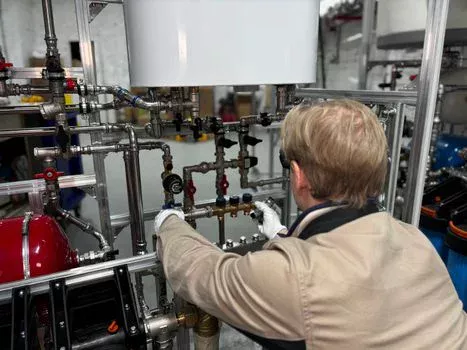
Implementing rinse water treatment systems involves significant capital and operational expenditures, but water reuse strategies often yield a positive return on investment within 2–4 years through reduced costs and regulatory savings. Understanding this financial framework is crucial for justifying investment.
- CAPEX ranges: Capital expenditure for rinse wastewater treatment systems varies widely, from $80,000 for basic chemical dosing units (5–20 m³/h) to over $2.5 million for large-scale hybrid MBR + RO systems capable of treating 100–500 m³/h. Factors influencing CAPEX include system complexity, automation level, and the extent of water recovery. For smaller to medium-sized operations, skid-mounted rinse wastewater treatment systems for rapid deployment can offer cost efficiencies.
- OPEX drivers: Operational expenditure is primarily driven by membrane replacement, costing $15–$30/m²/year for RO and MBR membranes (HydropureWater field data, 2025). Energy consumption, including pumping, aeration, and heating, typically ranges from $0.10–$0.30/m³, while chemical dosing (coagulants, antiscalants, pH adjusters) adds another $0.10–$0.30/m³. Labor requirements for operating and maintaining 100+ m³/h systems are generally 1–2 full-time equivalents (FTEs), covering monitoring, maintenance, and chemical handling.
- ROI calculation: Water reuse systems can achieve payback periods of 2–4 years for facilities facing combined freshwater and discharge costs exceeding $5/m³. For example, a 100 m³/h system achieving 90% water recovery can save a facility with $6/m³ combined water costs approximately $200,000 annually after accounting for OPEX, leading to a rapid return on investment. This calculation considers avoided freshwater purchase, reduced discharge fees, and potential surcharges.
- Regulatory savings: Implementing zero liquid discharge (ZLD) systems eliminates the need for EPA National Pollutant Discharge Elimination System (NPDES) permit fees, which can range from $5,000 to $50,000 annually depending on discharge volume and pollutant load. these systems prevent costly fines for non-compliance, with common violations including exceeding limits for heavy metals, COD, and TSS, often resulting in penalties upwards of $100,000 per incident, in addition to reputational damage.
| Flow Rate (m³/h) | Technology | CAPEX (USD) | OPEX (USD/m³) |
|---|---|---|---|
| 5-20 | Chemical Dosing + Clarifier | $80,000 - $250,000 | $0.50 - $1.00 |
| 20-50 | DAF + Sand Filtration | $200,000 - $600,000 | $0.80 - $1.50 |
| 50-100 | DAF + MBR | $500,000 - $1,200,000 | $1.00 - $1.80 |
| 100-500 | DAF + MBR + RO (Hybrid) | $1,500,000 - $2,500,000+ | $1.50 - $2.00+ |
Emerging Technologies: Electrocoagulation and Forward Osmosis for Rinse Wastewater
Emerging wastewater treatment technologies like electrocoagulation and forward osmosis offer innovative alternatives to conventional systems, providing enhanced efficiency and reduced chemical reliance for rinse wastewater applications. These advancements are critical for meeting future environmental demands and achieving higher sustainability goals.
- Electrocoagulation (EC): This process uses sacrificial anodes (typically aluminum or iron) to generate coagulants in-situ through an electrochemical reaction, reducing the need for traditional chemical coagulants by 50–70% (HydropureWater pilot data, 2024). Optimal performance is typically achieved with voltage parameters ranging from 5–20 V and current densities of 20–100 A/m². EC is particularly effective for removing heavy metals, emulsified oils, and some organic compounds, often producing a denser, more easily dewatered sludge.
- Forward Osmosis (FO): FO utilizes a draw solution (e.g., concentrated NaCl or ammonia-carbon dioxide) to osmotically pull water through a semi-permeable membrane at flux rates of 5–10 LMH, operating at significantly lower pressures than RO. This process can reduce energy consumption by up to 30% compared to conventional RO, making it attractive for high-salinity or difficult-to-treat rinse waters, though draw solution regeneration is a key operational consideration (pilot studies, 2025).
- Hybrid electrocoagulation-MBR systems: Combining electrocoagulation as a pretreatment step with MBR can achieve 99% TSS removal and up to 20% lower CAPEX compared to traditional DAF-RO systems for certain applications. For instance, in the semiconductor industry, this hybrid approach effectively treats rinse waters containing low concentrations of heavy metals and organics, demonstrating robust performance with reduced chemical sludge volume and a smaller footprint.
- Limitations: While promising, electrocoagulation produces a sludge that often requires dewatering using equipment such as a plate and frame filter press, adding to the overall system cost and complexity. Forward osmosis, while energy-efficient, necessitates a cost-effective method for regenerating the draw solution, which can add complexity and operational cost, particularly for large-scale industrial applications.
How to Select the Right Rinse Wastewater Treatment System: A Decision Framework
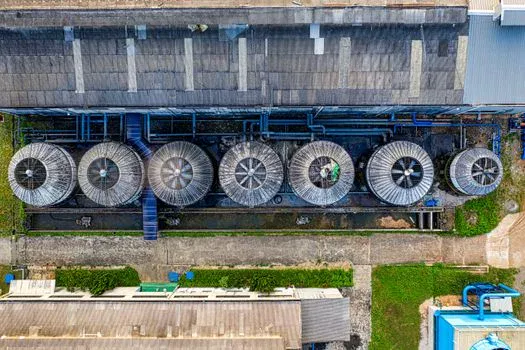
Selecting the optimal rinse wastewater treatment system requires a systematic evaluation of influent characteristics, desired effluent quality, and a comprehensive cost-benefit analysis. This structured approach ensures that the chosen technology aligns with a facility’s operational and financial objectives.
- Step 1: Characterize wastewater. Begin by conducting a thorough analysis of your rinse wastewater, including average and peak flow rates, total suspended solids (TSS), chemical oxygen demand (COD), pH, and specific contaminants such as heavy metals, oils, or organic solvents. This data forms the foundation for technology selection.
- Step 2: Define goals. Clearly establish your treatment objectives. Are you aiming for basic discharge compliance with local environmental regulations, achieving high-purity water for reuse within your facility, or implementing a zero liquid discharge (ZLD) system to eliminate all wastewater discharge? Your goals will dictate the required treatment stringency.
- Step 3: Match technology to goals. Based on your wastewater profile and goals, identify suitable technologies. For example, DAF systems are highly effective for removing FOG and suspended solids, RO is essential for salt and dissolved solids removal for water reuse, and MBR is ideal for robust organic removal and producing high-quality effluent for further polishing.
- Step 4: Evaluate CAPEX/OPEX trade-offs. Compare the capital expenditure (CAPEX) and operational expenditure (OPEX) of different technological combinations. For low-TSS waters, a compact electrocoagulation system might offer a lower CAPEX and chemical cost compared to a larger DAF unit, but consider the associated sludge handling requirements and energy consumption.
- Step 5: Pilot test. Before committing to a full-scale installation, conduct a 3-month pilot test of the selected technology or hybrid system. This allows for real-world performance validation, optimization of operating parameters, and confirmation of effluent quality benchmarks under your specific facility conditions, mitigating risks and ensuring performance guarantees.
Decision Tree Diagram (description):
A decision tree for rinse wastewater treatment typically starts with the primary question: "What are your primary goals (Discharge Compliance / Water Reuse / ZLD)?"
- If Discharge Compliance:
- If high TSS/FOG > 100 mg/L: Consider DAF + Chemical Coagulation/Flocculation.
- If high COD/BOD > 200 mg/L: Consider MBR or other biological treatment.
- If heavy metals present: Consider Chemical Precipitation + Clarification.
- If Water Reuse / ZLD:
- Requires high-purity water: Pretreatment (DAF/MBR) + RO.
- If high salinity: Consider RO + Evaporator for ZLD.
- If complex organics/recalcitrants: Explore Advanced Oxidation Processes (AOPs) or emerging technologies like Forward Osmosis.
- Additional Considerations:
- Budget (CAPEX/OPEX): Influences technology choice (e.g., EC vs. DAF).
- Footprint: Compact systems (e.g., skid-mounted units) for space-constrained facilities.
- Sludge Handling: Factor in dewatering requirements and disposal costs.
Frequently Asked Questions
Understanding common questions about rinse wastewater treatment systems helps facilities make informed decisions regarding compliance, cost, and operational efficiency.
- What are the EPA limits for rinse wastewater discharge? EPA 40 CFR Part 433 limits COD to 125 mg/L and TSS to 30 mg/L for metal finishing operations, with specific limits for heavy metals also applicable depending on the industry.
- How much water can be recovered from rinse wastewater? Advanced hybrid systems combining DAF, MBR, and RO can typically achieve 90–95%+ water recovery for reuse, significantly reducing freshwater consumption.
- What is the typical payback period for a water reuse system? For facilities with high water costs and discharge fees, a rinse water reuse system can typically pay back its CAPEX in 2–4 years, yielding long-term savings.
- Are skid-mounted systems suitable for rinse wastewater? Yes, skid-mounted rinse wastewater treatment systems are ideal for smaller to medium flow rates (5-50 m³/h) or for facilities needing rapid deployment and modularity.
- What are the main advantages of electrocoagulation over DAF? Electrocoagulation can reduce chemical consumption by 50-70% and often handles a wider range of contaminants like heavy metals and emulsified oils more effectively than DAF alone.
- What is the typical lifespan of RO membranes in rinse water applications? With proper pretreatment and maintenance, RO membranes can last 3–5 years in rinse wastewater treatment before requiring replacement, depending on feed water quality and operating conditions.