PCB CMP wastewater is one of the most complex industrial streams, containing silica abrasives, copper (50–500 mg/L), nickel (10–100 mg/L), and chelating agents like EDTA that disrupt traditional hydroxide precipitation. In 2025, advanced systems combine dissolved air flotation (DAF) for TSS removal (95%+ efficiency) with membrane bioreactors (MBR) or reverse osmosis (RO) to achieve 99.9% heavy metal recovery and zero liquid discharge (ZLD). CAPEX for a 100 m³/h ZLD system ranges from $1.2M–$2.5M, with OPEX of $0.80–$1.50/m³, depending on pretreatment needs and membrane lifespan.
Why PCB CMP Wastewater Demands Specialized Treatment
Chemical Mechanical Planarization (CMP) processes generate sub-micron silica particles and complexed metals that bypass standard 10-micron filtration and conventional clarifiers. Unlike standard etching rinse water, CMP effluent is characterized by a high concentration of nano-sized abrasives (100–500 mg/L silica) and high-stability metal complexes. During the polishing and cleaning steps, copper and nickel are stripped from the board surface and immediately sequestered by chelating agents such as EDTA and ammonia, which are added to the slurry to prevent metal re-deposition. (HydropureWater field data, 2025).
Traditional hydroxide precipitation fails in these environments because chelating agents form soluble complexes with metal ions, effectively shielding them from reacting with calcium hydroxide or sodium hydroxide. This prevents the formation of settleable flocs, leaving metal concentrations far above regulatory limits. For instance, while standard precipitation might reduce copper to 5–10 mg/L, global standards like the EPA 40 CFR Part 469 and EU Industrial Emissions Directive 2010/75/EU often mandate limits as low as 0.5 mg/L for copper and 1.0 mg/L for nickel. (per EPA guidelines).
The economic stakes of inadequate treatment are high. Facilities failing to meet local discharge standards are forced to haul wastewater to hazardous waste treatment centers at costs ranging from $0.50 to $2.00 per gallon. In contrast, an on-site ZLD system for electronics wastewater typically yields a return on investment (ROI) within 2 to 5 years by eliminating hauling fees and recovering high-purity water for reuse in the cooling towers or primary rinse stages.
| Contaminant Type | Concentration Range | Treatment Difficulty | Impact on System |
|---|---|---|---|
| Silica Abrasives | 100–500 mg/L | High (Colloidal) | Membrane fouling and scaling |
| Copper (Cu2+) | 50–500 mg/L | Moderate-High | Toxic to bio-systems; strictly regulated |
| Nickel (Ni2+) | 10–100 mg/L | Moderate-High | Regulated at <1.0 mg/L in most regions |
| EDTA/Ammonia | 20–200 mg/L | Very High | Prevents chemical precipitation |
| COD | 500–2,000 mg/L | Moderate | Requires biological or oxidative treatment |
Engineering Specs: PCB CMP Wastewater Contaminant Profile and Treatment Targets
Silica abrasives in CMP slurries typically range from 0.1 to 1.0 µm in size, creating a colloidal suspension that requires chemical destabilization before membrane processing. These particles carry a negative surface charge (zeta potential), which keeps them suspended indefinitely in the wastewater stream. Without specialized pretreatment, these particles accumulate on the surface of Reverse Osmosis (RO) membranes, forming a dense, glass-like cake layer that is nearly impossible to remove with standard Clean-in-Place (CIP) protocols. (HydropureWater field data, 2025).
CMP slurries contain organic surfactants, such as glycol ethers and polyacrylates, which serve as dispersants. These organics contribute to a chemical oxygen demand (COD) that often exceeds 1,000 mg/L. The BOD/COD ratio in these streams typically sits between 0.3 and 0.5, suggesting that while the wastewater is partially biodegradable, it requires a robust MBR system for 99% copper and COD removal to ensure the effluent is suitable for downstream RO membranes or environmental discharge.
To achieve 99.9% metal recovery and ZLD compliance, engineering targets must be aggressive. A high-efficiency DAF system for silica and TSS removal must achieve at least 95% efficiency in the pretreatment stage. This reduces the particle load on the MBR or RO units, extending membrane life from 6 months to over 3 years. The final effluent targets for a compliant system are summarized below based on global standards.
| Parameter | Typical Influent | EPA/EU Limit | ZLD Target (Permeate) |
|---|---|---|---|
| Total Suspended Solids (TSS) | 200–800 mg/L | 30–50 mg/L | <1 mg/L |
| Copper (Cu) | 50–500 mg/L | 0.5 mg/L | <0.05 mg/L |
| Nickel (Ni) | 10–100 mg/L | 1.0 mg/L | <0.1 mg/L |
| Silica (SiO2) | 100–500 mg/L | N/A (Process limit) | <5 mg/L |
| COD | 500–2,000 mg/L | 125 mg/L | <10 mg/L |
| pH | 2.0–11.0 | 6.0–9.0 | 7.0 (Neutral) |
Step-by-Step Treatment Process: From Pretreatment to Zero Liquid Discharge
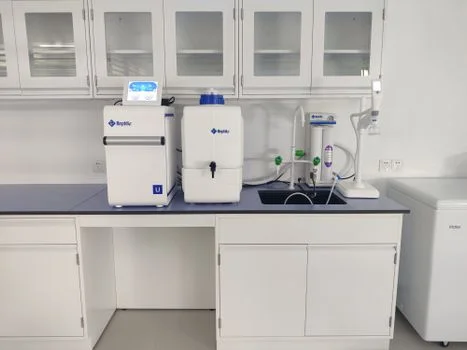
Effective CMP wastewater treatment follows a sequential logic of physical separation, chemical de-complexation, and membrane-based concentration to achieve ZLD. The process begins in an equalization (EQ) tank designed with an 8–12 hour hydraulic retention time (HRT). Continuous mixing is required here to prevent the settling of silica abrasives and to buffer the pH fluctuations common in PCB manufacturing. (HydropureWater field data, 2025).
The primary treatment stage utilizes Dissolved Air Flotation (DAF). By injecting micro-bubbles (20–50 µm) and dosing specific polymers (0.5–2 mg/L), the colloidal silica is flocculated and floated to the surface for removal. Engineering specs for DAF in CMP applications require a surface loading rate of 20–40 m/h and a recycle ratio of 10–30% to handle the high solids load. Following DAF, the water undergoes pH adjustment to break metal-EDTA complexes. This often involves lowering the pH to 2.0–3.0 to liberate metal ions, followed by the addition of organosulfur precipitants that have a higher affinity for metals than EDTA.
The secondary stage involves membrane separation. An MBR system is employed for biological COD removal, ensuring the effluent COD is consistently below 50 mg/L. This is followed by a RO system for 99.9% metal recovery and ZLD compliance. The RO permeate is high-quality water suitable for reuse, while the concentrate—containing the recovered metals—is sent to a filter press for 25–35% dry solids sludge dewatering. The final step for ZLD involves an evaporator and crystallizer to convert the remaining brine into solid salts, leaving zero liquid waste.
- Equalization: Buffers flow and pH; prevents silica settling via mechanical agitation.
- DAF Pretreatment: Removes 95%+ of TSS and silica to protect downstream membranes.
- Chemical De-complexation: Breaks EDTA-metal bonds using pH swing and specialized precipitants.
- MBR/RO Filtration: Achieves 99.9% metal recovery and removes organic surfactants.
- Sludge Management: Plate-and-frame presses achieve 35% cake dryness for cost-effective disposal.
- Thermal Concentration: Evaporators and crystallizers complete the ZLD loop.
Technology Comparison: MBR vs. RO vs. Chemical Precipitation for PCB CMP Wastewater
Hybrid MBR-RO systems achieve a 99.9% metal recovery rate while reducing the physical footprint by 60% compared to traditional multi-stage clarifiers. While chemical precipitation is the lowest CAPEX option, it is increasingly viewed as obsolete for CMP wastewater due to its inability to handle chelated metals and the massive volume of hazardous sludge it generates (often 3–5% of the total influent flow). (HydropureWater field data, 2025).
MBR technology offers a distinct advantage in PCB plants by combining biological treatment with ultrafiltration. This results in an effluent with a Total Organic Carbon (TOC) of less than 3 mg/L, which is critical for protecting downstream RO membranes from biofouling. RO systems, while sensitive to silica, are the only reliable method for achieving the 99.9% metal recovery required for ZLD. However, the success of RO is entirely dependent on the efficiency of the DAF pretreatment stage. (HydropureWater field data, 2025).
| Technology | CAPEX ($/m³/h) | OPEX ($/m³) | Effluent Quality (Cu) | Footprint | Primary Limitation |
|---|---|---|---|---|---|
| Chemical Precipitation | $5,000–$8,000 | $1.50–$2.50 | 2.0–5.0 mg/L | Large | Fails with EDTA; high sludge |
| MBR (Membrane Bio) | $12,000–$18,000 | $0.60–$0.90 | <0.5 mg/L | Compact | Requires COD for biology |
| RO (Reverse Osmosis) | $15,000–$25,000 | $0.80–$1.20 | <0.05 mg/L | Moderate | Susceptible to silica fouling |
| Hybrid (DAF+MBR+RO) | $30,000–$45,000 | $1.20–$1.80 | Non-detectable | Optimized | Higher initial investment |
Zero Liquid Discharge (ZLD) for PCB CMP Wastewater: Engineering Blueprint and Cost Breakdown
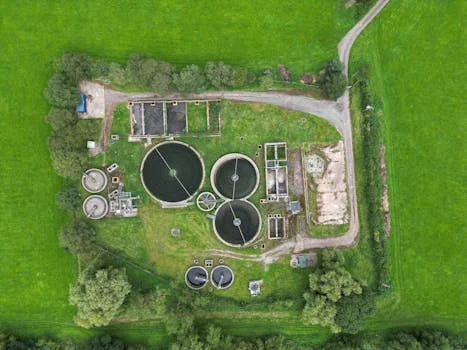
A 100 m³/h ZLD system for PCB manufacturing requires a capital investment of $1.2M–$2.5M, offset by the recovery of high-purity process water and the elimination of hazardous waste hauling fees. The blueprint for a modern ZLD system integrates an engineering blueprint for copper recovery in PCB wastewater with thermal evaporation technologies. This ensures that the only output from the facility is clean water for reuse and a small volume of dry, solid waste. (HydropureWater field data, 2025).
The OPEX for such a system typically ranges from $0.80 to $1.50 per cubic meter of treated water. Energy consumption is the largest contributor, particularly for the evaporation and crystallization stages, though modern Mechanical Vapor Recompression (MVR) evaporators have reduced energy needs by up to 40% compared to traditional multi-effect evaporators. For high-salinity streams, engineers should also refer to high-salinity wastewater treatment for microelectronics to optimize salt rejection rates.
| System Component | Estimated CAPEX (100 m³/h) | Estimated OPEX (per m³) | Recovery Contribution |
|---|---|---|---|
| DAF Pretreatment | $150,000 | $0.15 | 95% TSS Removal |
| MBR Biological Unit | $500,000 | $0.25 | 90% COD Removal |
| RO Membrane Unit | $400,000 | $0.35 | 99.9% Metal Recovery |
| MVR Evaporator | $300,000 | $0.40 | 98% Water Recovery |
| Crystallizer & Automation | $350,000 | $0.20 | Final Solidification |
| Total ZLD System | $1.7M Average | $1.35 Average | 100% ZLD |
How to Select the Right PCB CMP Wastewater Treatment Equipment: A Decision Framework
Equipment selection for CMP wastewater is dictated by the mass balance of colloidal silica and the concentration of chelating agents, which together determine the required pretreatment intensity and membrane flux rates. Procurement teams must first establish a baseline of their contaminant load. If silica concentrations exceed 200 mg/L, a standard clarifier will likely fail, necessitating a DAF unit. If chelating agents like EDTA are present above 50 mg/L, advanced oxidation or specialized pH-swing precipitation must be integrated into the automatic chemical dosing for precise pH and polymer control.
When evaluating vendors, prioritize those with ISO 14001 certification and a proven track record in the microelectronics sector. A critical "red flag" is any vendor offering a system without a comprehensive pilot testing protocol. A 4–6 week pilot phase is essential for CMP wastewater to analyze membrane fouling rates and validate chemical consumption. ensure that all membrane systems carry a 3–5 year performance warranty and are compatible with modern PLC/SCADA automation for real-time monitoring of permeate quality.
- Step 1: Characterize influent (Silica, Cu, Ni, EDTA, COD).
- Step 2: Determine compliance goal (Sewer discharge vs. 100% ZLD).
- Step 3: Evaluate pretreatment needs; DAF is mandatory for high-silica CMP streams.
- Step 4: Conduct a 4–6 week pilot test to establish real-world OPEX and flux rates.
- Step 5: Verify vendor automation compatibility for remote monitoring and compliance logging.
Frequently Asked Questions
What is the biggest challenge in treating PCB CMP wastewater?
The primary challenge is the presence of colloidal silica abrasives and chelating agents like EDTA. Silica causes rapid, irreversible membrane fouling, while chelating agents keep heavy metals in a soluble state, preventing traditional chemical precipitation from meeting discharge limits of <0.5 mg/L.
How much does a PCB CMP wastewater treatment system cost?
For a 100 m³/h capacity system designed for Zero Liquid Discharge, CAPEX ranges from $1.2M to $2.5M. The OPEX typically falls between $0.80 and $1.50 per cubic meter, depending on the chemical dosing requirements and local energy costs.
What are the discharge limits for copper and nickel in PCB wastewater?
Under EPA 40 CFR Part 469, copper is generally limited to 0.5 mg/L and nickel to 1.0 mg/L. EU standards under the Industrial Emissions Directive can be even stricter, sometimes requiring copper levels below 0.2 mg/L for direct environmental discharge.
Can MBR systems handle high silica loads in CMP wastewater?
MBR systems can handle residual silica, but high loads (above 100 mg/L) will lead to membrane scaling and reduced flux. Effective pretreatment via DAF or sedimentation is required to reduce silica levels before the wastewater reaches the MBR unit.
What is the ROI for a ZLD system in PCB manufacturing?
The ROI typically ranges from 2 to 5 years. This is achieved by eliminating the high costs of hazardous waste hauling ($0.50–$2.00/gallon) and reducing fresh water procurement costs through the reuse of high-purity permeate.