Why Microelectronics Developer Wastewater Demands Specialized Treatment
Microelectronics developer wastewater requires specialized treatment to remove contaminants like TMAH (50–200 mg/L) and fluoride (10–100 mg/L) to below 1 mg/L for compliance and reuse. Hybrid systems combining chemical precipitation (95%+ TMAH removal), ceramic ultrafiltration (99.5% fluoride reduction), and zero liquid discharge (ZLD) achieve >90% water recovery while meeting EPA and EU standards. This guide provides 2025 engineering specs, cost data, and a step-by-step process design for semiconductor fabs.
The unique qualitative contaminant profile of microelectronics developer wastewater, featuring substances like TMAH (50–200 mg/L), fluoride (10–100 mg/L), arsenic (0.1–5 mg/L), silica (50–300 mg/L), and ammonium, presents significant challenges for conventional industrial treatment systems. These contaminants, though often present in low concentrations (1–500 mg/L), carry high toxicity risks. For instance, TMAH is lethal to aquatic life at concentrations as low as 10 mg/L (EPA 2024), and fluoride exposure can lead to skeletal fluorosis at 1.5 mg/L (WHO). Failure to adequately treat this wastewater incurs substantial regulatory risks, with EPA limits for TMAH at <1 mg/L, fluoride at <4 mg/L, and arsenic at <0.1 mg/L. China's GB 31573-2015 standard also sets strict limits for semiconductor wastewater. Generic treatment systems, such as conventional activated sludge, typically achieve less than 30% TMAH removal, proving wholly inadequate. While chemical precipitation alone can achieve up to 95% TMAH removal, it is largely ineffective for fluoride treatment, necessitating a more sophisticated, multi-stage approach.
Step-by-Step Treatment Process: From Contaminant to Compliance
Designing an effective microelectronics wastewater treatment system involves a meticulous, multi-stage process to address the complex contaminant profile. Each stage is engineered with specific parameters to ensure optimal removal efficiency and compliance with stringent discharge regulations. This step-by-step approach, detailed below with key engineering specifications, provides a roadmap for selecting and sizing appropriate equipment.
Stage 1: Pretreatment
The initial phase focuses on equalization and preliminary contaminant removal. Equalization tanks with a hydraulic retention time (HRT) of 4–8 hours are crucial for buffering flow and concentration variations. pH adjustment to a target range of 6–8 is vital for subsequent chemical precipitation. Coarse screening, utilizing equipment like the GX Series Rotary Mechanical Bar Screen with 3 mm spacing, removes larger suspended solids to protect downstream equipment.
Stage 2: Chemical Precipitation
This stage targets the removal of dissolved contaminants, primarily TMAH. Calcium hydroxide dosing, typically between 100–300 mg/L of Ca(OH)₂, is employed to raise the pH to 10–11. A reaction time of 30–60 minutes facilitates the precipitation of TMAH and other cations. This process generates sludge at a rate of 0.5–1.2 kg/m³ of treated wastewater, with a settling velocity of 0.5–1 m/h, requiring efficient sludge management.
Stage 3: Membrane Filtration
Membrane technologies are essential for removing finer particles and dissolved salts. Ceramic ultrafiltration (UF) membranes, with pore sizes of 0.1 μm and operating at a flux of 120–150 LMH, offer superior resistance to harsh chemical environments and achieve over 99.5% fluoride removal. While polymeric membranes are also an option, ceramic membranes generally exhibit better fouling resistance in abrasive developer wastewater streams. Nanostone data indicates their ceramic UF systems are well-suited for these applications.
Stage 4: Polishing & Disinfection
Reverse osmosis (RO) is employed as a polishing step to remove residual dissolved solids and achieve high water recovery rates, typically over 95% at pressures of 15–25 bar. Following RO, disinfection is necessary. UV disinfection at a dose of 254 nm and 30 mJ/cm² is effective, or alternatively, chlorine dioxide (ClO₂) can be used at a dosage of 0.5–1 mg/L for residual disinfection.
Stage 5: ZLD Integration
For Zero Liquid Discharge (ZLD) systems, evaporation and crystallization are used to concentrate the remaining brine to solid salts. This typically operates at temperatures of 60–80°C, with an energy consumption of 0.1–0.3 kWh/kg of water evaporated. Sludge dewatering, often performed with a plate-and-frame filter press, achieves 30–40% dry solids content, minimizing the volume of solid waste for disposal.
| Treatment Stage | Key Parameters | Typical Equipment | Primary Contaminant Target |
|---|---|---|---|
| Pretreatment | HRT: 4-8 h, pH: 6-8 | Equalization Tank, Rotary Mechanical Bar Screen (GX Series) | Flow/Concentration Buffering, Large Solids |
| Chemical Precipitation | Ca(OH)₂: 100-300 mg/L, pH: 10-11, Reaction Time: 30-60 min | Chemical Dosing System, Reactor/Clarifier | TMAH, Heavy Metals |
| Membrane Filtration | Pore Size: 0.1 μm, Flux: 120-150 LMH | Ceramic Ultrafiltration (UF) | Fluoride, Fine Particulates |
| Polishing | Pressure: 15-25 bar, Recovery: >95% | Reverse Osmosis (RO) | Dissolved Salts, Residual Contaminants |
| Disinfection | UV Dose: 30 mJ/cm², ClO₂ Dose: 0.5-1 mg/L | UV Disinfection Unit, Chlorine Dioxide Generator | Microbial Inactivation |
| ZLD | Temp: 60-80°C, Energy: 0.1-0.3 kWh/kg | Evaporator, Crystallizer, Plate and Frame Filter Press | Salt Concentration, Sludge Dewatering |
Hybrid System Design: Combining Chemical, Membrane, and ZLD Technologies
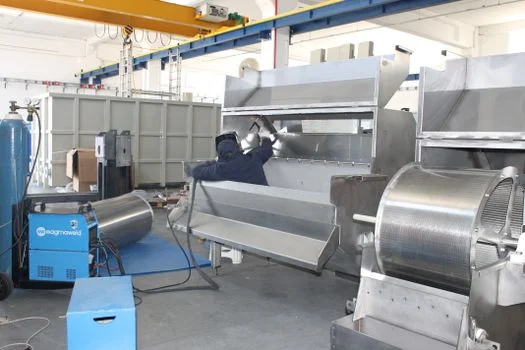
The optimal approach to microelectronics developer wastewater treatment lies in the intelligent integration of chemical, membrane, and ZLD technologies. A robust hybrid system design ensures not only high contaminant removal rates but also operational reliability, redundancy, and efficient automation. Understanding common failure modes and implementing proactive mitigation strategies are critical for long-term performance. Hybrid systems, in 2025, typically require 20–30% more space than standalone chemical treatment units due to the inclusion of multiple process stages.
Several hybrid configurations can be employed. One common design includes chemical precipitation followed by ceramic UF, then RO, and finally evaporation for ZLD. Another effective approach involves Membrane Bioreactors (MBR) integrated with RO and crystallization. Dissolved Air Flotation (DAF) can also be a valuable pretreatment step in a DAF + Chemical + UF + ZLD configuration. Redundancy is paramount; this includes dual chemical dosing pumps each capable of 50% capacity, standby UF trains providing 100% redundancy, and emergency storage tanks with at least 24 hours of capacity. Automation, through PLC-controlled systems, ensures precise pH adjustment to within ±0.2 units, real-time monitoring of TSS (0–10,000 mg/L range), and flow-proportional chemical dosing for efficiency. For example, an automatic chemical dosing system ensures precise delivery of treatment chemicals.
Common operational challenges include UF membrane fouling, which can be mitigated by backwashing every 30 minutes and performing clean-in-place (CIP) every 7 days. RO scaling is managed through antiscalant dosing at 2–5 mg/L. ZLD crystallizer scaling is prevented by maintaining pH control between 6.5–7.5. For advanced wastewater treatment, MBR systems offer compact footprints and high effluent quality. Similarly, DAF machines can effectively pre-treat wastewater by removing suspended solids and oils. For final disinfection in ZLD systems, on-site chlorine dioxide generation provides a robust solution.
Treatment Technology Comparison: Removal Rates, Costs, and Footprint
Selecting the appropriate treatment technologies for microelectronics developer wastewater involves balancing contaminant removal efficiency, capital and operational expenditures, and physical footprint. The following comparison table provides a detailed overview of common technologies, highlighting their performance metrics and economic implications as of 2025 benchmarks.
| Technology | TMAH Removal (%) | Fluoride Removal (%) | CAPEX ($/m³) | OPEX ($/m³) | Footprint (m²/100 m³/h) | Sludge Production (kg/m³) | Water Recovery (%) |
|---|---|---|---|---|---|---|---|
| Chemical Precipitation | 95% | 30% | $0.8–$1.5 | $0.3–$0.5 | 50 | 0.8 | 80% |
| Ceramic UF | 90% | 99.5% | $1.2–$2.0 | $0.4–$0.7 | 30 | 0.2 | 90% |
| MBR | 99% | 95% | $1.5–$2.5 | $0.5–$0.8 | 20 | 0.3 | 95% |
| RO | 99% | 99.9% | $2.0–$3.0 | $0.6–$1.0 | 15 | 0.1 | 75% |
| ZLD (Evaporation + Crystallization) | 99.9% | 99.9% | $3.0–$8.0 | $1.5–$3.0 | 100 | 0.05 | 95%+ |
Chemical precipitation offers a low-cost entry point for TMAH removal but produces significant sludge and is insufficient for fluoride. Ceramic UF excels in fluoride removal and offers good TMAH reduction, with a moderate footprint. MBR systems provide a compact and highly effective solution for both TMAH and fluoride. RO achieves near-complete removal of dissolved contaminants but typically has lower water recovery rates and higher energy demands than UF. ZLD systems, while achieving the highest water recovery and complete contaminant removal, represent the highest CAPEX and OPEX due to the energy-intensive nature of evaporation and crystallization. The trade-offs are clear: lower initial investment often means higher ongoing costs and lower recovery, while ZLD maximizes resource recovery at a premium.
2025 Cost Breakdown: CAPEX, OPEX, and ROI for Microelectronics Wastewater Treatment
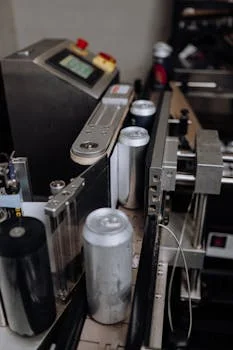
Accurate budgeting and financial justification for microelectronics wastewater treatment systems hinge on detailed cost data for both capital expenditure (CAPEX) and operational expenditure (OPEX). As of 2025, the investment in advanced treatment, particularly ZLD systems, can be significant, but the return on investment (ROI) through water reuse is increasingly compelling. This section provides a comprehensive breakdown to aid in financial planning and decision-making.
For a typical 100 m³/h treatment system, the CAPEX breakdown is as follows: pretreatment (equalization, screening, pH adjustment) ranges from $200K–$400K. Chemical precipitation units, including reactors and clarifiers, along with sludge handling, cost $500K–$800K. Membrane filtration (UF/RO) and associated pumps and CIP systems represent an investment of $800K–$1.2M. A ZLD system, comprising evaporation, crystallization, and dewatering equipment, is the most substantial component, costing $1.5M–$2.5M. Automation and control systems add another $300K–$500K. Therefore, the total CAPEX for a comprehensive hybrid ZLD system can range from $3.3M to $5.4M.
OPEX per cubic meter is also a critical factor. Chemicals (Ca(OH)₂, antiscalants, ClO₂) contribute $0.3–$0.6/m³. Energy consumption for pumping and evaporation is a major driver, accounting for $0.5–$1.2/m³. Membrane replacement (UF/RO) adds $0.2–$0.4/m³. Labor for 24/7 operation (approximately 1 FTE) is estimated at $0.3–$0.5/m³. Sludge disposal costs range from $0.1–$0.3/m³. The total OPEX for a ZLD system typically falls between $1.4–$3/m³.
The ROI calculation for water reuse is increasingly favorable. With water costs ranging from $1.5–$3/m³, the operational savings from ZLD systems can offset their OPEX, leading to payback periods of 3–5 years for ZLD systems, based on 2025 benchmarks. Implementing advanced treatment not only ensures compliance but also provides significant economic benefits through reduced freshwater consumption.
| Cost Component | Typical Range (100 m³/h System, 2025 Data) | Notes |
|---|---|---|
| CAPEX | ||
| Pretreatment | $200,000 – $400,000 | Equalization, Screening, pH Adjustment |
| Chemical Precipitation | $500,000 – $800,000 | Reactors, Clarifiers, Sludge Handling |
| Membrane Filtration (UF/RO) | $800,000 – $1,200,000 | Membrane Skids, Pumps, CIP Systems |
| ZLD (Evaporation/Crystallization) | $1,500,000 – $2,500,000 | Evaporators, Crystallizers, Dewatering |
| Automation & Controls | $300,000 – $500,000 | PLC, Sensors, SCADA |
| Total CAPEX | $3,300,000 – $5,400,000 | |
| OPEX ($/m³) | ||
| Chemicals | $0.3 – $0.6 | Ca(OH)₂, Antiscalant, ClO₂ |
| Energy | $0.5 – $1.2 | Pumps, Evaporation |
| Membrane Replacement | $0.2 – $0.4 | UF/RO Membranes |
| Labor (1 FTE, 24/7) | $0.3 – $0.5 | Operator Costs |
| Sludge Disposal | $0.1 – $0.3 | Transportation and landfill/treatment |
| Total OPEX | $1.4 – $3.0 |
Case Study: 2025 Semiconductor Fab Deployment in Suzhou, China
A recent deployment in a 200 mm wafer production semiconductor fab in Suzhou, China, showcases the efficacy of a comprehensive hybrid wastewater treatment system designed to meet stringent local regulations and achieve significant water reuse. The fab generated approximately 150 m³/h of developer wastewater characterized by high concentrations of TMAH (180 mg/L), fluoride (80 mg/L), and arsenic (3 mg/L).
The implemented treatment system comprised a multi-stage process: chemical precipitation for TMAH removal, ceramic ultrafiltration for fluoride reduction, reverse osmosis for arsenic and dissolved solids removal, and a ZLD unit for complete water recovery. The chemical precipitation stage achieved 96% TMAH removal. Subsequently, the ceramic UF membranes provided 99.7% fluoride removal, exceeding target levels. The RO stage ensured 99.9% arsenic removal and further reduced dissolved contaminants. The integrated ZLD system achieved an overall water recovery rate of 95%.
Performance data confirmed the system's success. Influent levels of TMAH (180 mg/L), fluoride (80 mg/L), and arsenic (3 mg/L) were reduced to effluent concentrations of TMAH <0.5 mg/L, fluoride <1 mg/L, and arsenic <0.05 mg/L, comfortably meeting China's GB 31573-2015 semiconductor wastewater discharge standards. Sludge production averaged 0.7 kg/m³, with dewatering achieving 35% dry solids. The system enabled the reuse of 140 m³/h of treated water, resulting in annual water cost savings of approximately $2.1 million. The total CAPEX for this system was $4.2 million, with OPEX at $1.8/m³. The calculated payback period for the ZLD system, factoring in water reuse savings, was 4.2 years.
Frequently Asked Questions
Q: What is the best treatment technology for TMAH removal?
A: Chemical precipitation with calcium hydroxide is highly effective, achieving 95%+ TMAH removal at pH 10–11. For higher efficiency (99%+), it is best combined with advanced technologies like ceramic ultrafiltration or MBR systems, as recommended by 2025 treatment benchmarks.
Q: How much does a microelectronics wastewater treatment system cost per m³?
A: CAPEX can range from $0.8–$8/m³, depending on the chosen technology. Chemical precipitation systems are at the lower end ($0.8–$1.5/m³), while comprehensive ZLD systems are at the higher end ($3–$8/m³). OPEX typically falls between $1.4–$3/m³, with ZLD systems incurring higher costs primarily due to energy consumption for evaporation, according to 2025 data.
Q: What are the discharge limits for fluoride in semiconductor wastewater?
A: Discharge limits vary by region. The EPA sets a limit of 4 mg/L for fluoride, while China's GB 31573-2015 standard specifies 10 mg/L, and the EU Industrial Emissions Directive allows up to 15 mg/L. Advanced hybrid systems, such as those combining UF and RO, can achieve effluent concentrations below 1 mg/L, enabling water reuse, as demonstrated in top-performing systems.
Q: How do I prevent membrane fouling in ceramic UF systems?
A: To prevent membrane fouling in ceramic UF systems, regular backwashing every 30 minutes with permeate is essential. Performing clean-in-place (CIP) every 7 days using 2% citric acid (pH 2) or 0.5% sodium hydroxide (pH 12) is recommended. Dosing antiscalant at 2–5 mg/L can also prevent silica scaling, a common issue in microelectronics wastewater, based on Nanostone's operational data.
Q: Can microelectronics wastewater be reused in the fab?
A: Yes, microelectronics wastewater can be effectively reused in fabs. Hybrid systems, particularly those incorporating MBR, RO, and ZLD technologies, can achieve over 90% water recovery. The reclaimed water meets stringent semiconductor-grade standards suitable for applications such as cooling towers and scrubbers, significantly reducing the fab's freshwater demand by 30–50%, as confirmed by numerous 2025 case studies.
Related Equipment
- High-efficiency sludge dewatering for chemical precipitation byproducts — view specifications, capacity range, and technical data
Need a customized solution? Request a free quote with your specific flow rate and pollutant parameters.