What the Malaysian DOE Actually Allows for Zinc in 2026
Under Malaysia's Environmental Quality (Industrial Effluent) Regulations 2009, the zinc discharge limit is 0.10 mg/L for Standard A effluents and 1.0 mg/L for Standard B effluents, measured as total zinc. The limits sit in the Fifth Schedule of the 2009 Regulations made under Section 21 of the Environmental Quality Act 1974, and apply to all metal-finishing, electroplating, and galvanizing operations discharging to inland or coastal waters. Both values are unchanged from the 2009 promulgation; no DOE amendment gazetted through 2026 has revised the zinc row of the Fifth Schedule.
Standard A is the tighter of the two and applies when the discharge point sits within 200 m upstream of any raw-water intake, or anywhere inside a designated protected catchment such as the Langat, Selangor, or Sembrong catchments. Standard B is the default ceiling for every other inland and coastal outfall, including most free-industrial-zone sewer connections. A third threshold matters even before treatment is considered: under Regulation 8 of the same 2009 instrument, no industrial effluent may contain more than 2.0 mg/L of total metals without prior treatment, and any exceedance is an offence under Section 25 of the EQA 1974 (fine up to MYR 100,000 and/or five years' imprisonment for individuals; higher tiers for continuing offences).
The precipitate sludge from any zinc-removal step carries its own regulatory burden. Hydroxide and sulfide sludges generated during treatment fall under scheduled-waste code SW204 ("metal hydroxide sludge") on the Department of Environment's scheduled-waste list and must be consigned to a licensed disposer; the generator remains liable until the disposal consignment note (Form B3/B4) is closed.
| Parameter | Standard A | Standard B | Reg. 8 (untreated ceiling) | Legal reference |
|---|---|---|---|---|
| Total zinc (max) | 0.10 mg/L | 1.0 mg/L | 2.0 mg/L | Fifth Schedule, P.U.(A) 434 / Reg. 8, EQR 2009 |
| Applies to | Upstream of intakes; protected catchments | All other inland/coastal discharges | Any untreated industrial effluent | Reg. 3, EQR 2009 |
| Offence level | Section 25, EQA 1974 | Section 25, EQA 1974 | Section 25, EQA 1974 | EQA 1974 (Act 127) |
| Sample type | 24-h composite | 24-h composite | Grab or composite | Reg. 5, EQR 2009 |
| Sludge class | SW204 | SW204 | — | DOE SW Code List |
Which Industries in Malaysia Are Most Exposed to Zinc Limits
Zinc electroplating and hot-dip galvanizing lines produce the highest-strength wastewater in the metal-finishing sector: drag-out from rack or barrel cells routinely carries rinse-water Zn in the 50–500 mg/L range, and uncontrolled drag-out spikes above 1,000 mg/L during part withdrawal. Die-casting and zinc die-cast finishing operations generate 20–200 mg/L streams, often co-mingled with aluminium and magnesium. Battery manufacturing for nickel-zinc and zinc-air chemistries contributes 30–150 mg/L zinc with high sulfate (3,000–8,000 mg/L SO₄²⁻) that complicates downstream precipitation. Pigment, paint, and rubber-vulcanization accelerator plants carry lower concentrations — typically 5–50 mg/L — but at much higher flow rates because of wash-water volumes.
The practical consequence of these numbers is that even a well-run hydroxide precipitation plant achieving 99% removal on a 200 mg/L stream still discharges 2.0 mg/L — right at the Regulation 8 ceiling and well above either Standard A or Standard B. The realistic engineering target for any new plant in 2026 is therefore 99.5% removal minimum, and 99.9% if the site falls under Standard A. Anything less means specifying a polishing step from day one, not retrofitting it after the first DOE inspection.
| Industry | Typical influent Zn | Key co-contaminants | Flow profile | Risk tier |
|---|---|---|---|---|
| Zinc electroplating (rack/barrel) | 50–500 mg/L (drag-out >1,000) | CN⁻, Ni, Cr, acids | Batch spikes | High |
| Hot-dip galvanizing | 80–400 mg/L | Fe, NH₃, flux residues | Continuous + quench spikes | High |
| Zinc die-cast finishing | 20–200 mg/L | Al, Mg, oils | Continuous | Medium |
| Battery (Ni-Zn, Zn-air) | 30–150 mg/L | SO₄²⁻ 3,000–8,000 mg/L, K, Mn | Batch | Medium-High |
| Pigments, paint, rubber accelerators | 5–50 mg/L | Organics, color, suspended solids | High volume, dilute | Medium |
The Treatment Train That Hits the Malaysian Limit
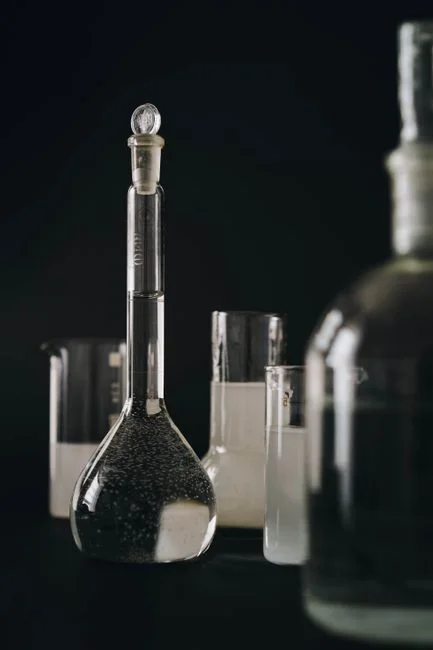
A train that consistently delivers under 0.10 mg/L Zn has four mandatory blocks and one optional polishing block. The first three blocks are the same whether the site is Standard A or Standard B; only the polishing step differs.
- Equalization. A flow-and-pH equalization tank with 8–24 h hydraulic retention time buffers the chrome, acid, and alkaline pulses typical of plating lines. Without equalization, downstream pH probes chase setpoint and zinc slip-through climbs by an order of magnitude.
- pH adjustment and hydroxide precipitation. Raise the stream to pH 8.5–9.5 using NaOH or hydrated lime. The chemistry is Zn²⁺ + 2OH⁻ → Zn(OH)₂, with Ksp ≈ 3×10⁻¹⁷, which gives a theoretical minimum soluble zinc around 0.05 mg/L at pH 9.0. Most plants in 2026 specify NaOH (32% or 50% liquid) despite the per-kg cost being roughly 2.5× higher than lime, because lime generates 3–4× more sludge and causes calcium-sulfate (gypsum) scaling on streams with more than 500 mg/L chloride or 2,000 mg/L sulfate. Dosing is handled by an automatic chemical dosing system with pH-PID feedback to keep the setpoint within ±0.2 units.
- Solids separation. A high-efficiency sedimentation tank (lamella clarifier) operating at 20–40 m/h surface loading, or a dissolved air flotation (DAF) system at 5–25 m/h, takes the overflow to 0.5–2.0 mg/L Zn. That is comfortably inside Standard B but borderline for Standard A, which is why a polishing step is non-negotiable for protected-catchment sites.
- Polishing (Standard A and/or >99.5% target). Three options are in commercial use: sulfide precipitation with NaHS or FeS to around 0.05 mg/L; strong-acid-cation ion exchange to <0.1 mg/L; or reverse osmosis, which delivers <0.05 mg/L but at the cost of a concentrate stream that recirculates back to equalization. For most Malaysian sites in 2026, ion exchange is the price-performance sweet spot unless the site already has an RO loop for water reuse.
| Polishing option | Effluent Zn achievable | Reagent/energy cost | Sludge/resin waste | Footprint |
|---|---|---|---|---|
| Sulfide precipitation | ~0.05 mg/L | NaHS ~USD 0.30/m³ | ZnS cake, low volume | Small |
| Ion exchange (SAC) | <0.10 mg/L | NaCl regen + resin wear | Spent brine, recoverable | Medium |
| Reverse osmosis | <0.05 mg/L | USD 0.50–1.00/m³ energy | Concentrate recycle | Large |
| Multimedia filter (final guard) | Not a polishing step; backup for upsets | Backwash water | — | Compact |
The multi-media filter slot in the train is best treated as a guard filter ahead of ion exchange or RO, removing residual TSS that would otherwise foul the polishing media; it does not by itself deliver any meaningful zinc removal.
Reagent Dosing and Sludge Management for 2026
At pH 9.0 the stoichiometric NaOH demand is roughly 1.3 kg per kg of zinc precipitated, allowing for 10% excess to overcome hydroxide complexing by chlorides and ammoniacal species. Hydrated lime runs about 1.0 kg Ca(OH)₂ per kg Zn but produces 3–4× the dry-cake mass and risks gypsum scaling once stream chloride exceeds ~500 mg/L. A automatic chemical dosing system with online pH and ORP probes typically keeps reagent consumption within ±5% of the stoichiometric target, which on a 20 m³/d Standard B plant translates to MYR 4,000–7,000 per month in NaOH alone.
Sludge yield from hydroxide precipitation is 4–6 kg of dry cake per kg of zinc removed, with moisture after a plate and frame filter press running 60–70%. That cake is SW204 scheduled waste and must be consigned to a licensed disposer; 2026 disposal cost is running MYR 1,200–2,500 per tonne of dry cake depending on the contractor and the metal content (zinc-rich cake attracts the higher end). For a 20 m³/d plant removing 4 kg Zn/d, monthly disposal cost lands in the MYR 5,800–14,500 band — typically the second-largest OPEX line after labour.
Cost Benchmarks and CAPEX Ranges for a Compliant Plant in 2026
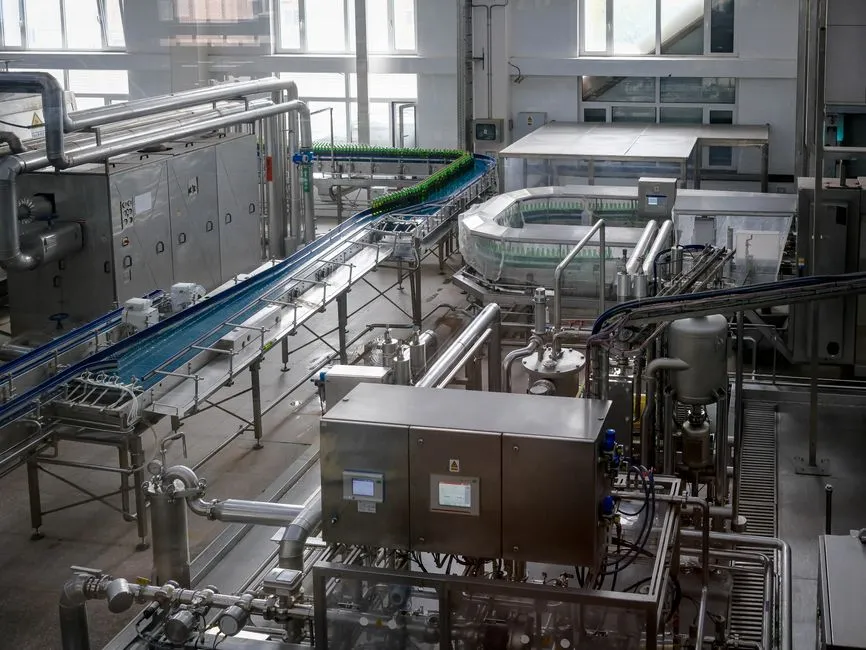
Capital cost scales with flow and target standard, not with influent strength, because the chemistry is set by the discharge ceiling. A turnkey hydroxide + lamella line sized for 5–20 m³/day from a small electroplating shop, targeting Standard B only, runs USD 80,000–160,000 in 2026. Adding ion-exchange polishing to meet Standard A at 20–50 m³/day pushes the budget to USD 200,000–450,000 depending on resin volume, automation, and whether the unit is skid-mounted or field-erected. For sites that also want water reuse, an MBR-integrated biological polishing step and an industrial reverse osmosis (RO) system bring the full reuse-grade plant into the USD 400,000–900,000 band.
OPEX is dominated by two lines: NaOH at roughly USD 0.15–0.25 per cubic metre treated (lime about half that, but with the disposal penalty above) and sludge disposal at USD 0.40–0.80 per cubic metre. Energy on a well-designed hydroxide plant is small — typically under USD 0.05 per cubic metre — because the major pumps are intermittent and mixer duty is low.
Decision rule for a 2026 specification: if the discharge point is Standard B and the influent Zn is below 100 mg/L, hydroxide precipitation plus a lamella clarifier is sufficient and the polishing step can be deferred. If the site is Standard A, or if influent routinely exceeds 200 mg/L, budget for ion-exchange or RO polishing from day one; retrofit costs run 1.4–1.8× the greenfield cost because of civil-work rework.
| Plant class | Flow (m³/day) | Target | Major unit ops | CAPEX 2026 (USD) | OPEX (USD/m³) |
|---|---|---|---|---|---|
| Small electroplating shop | 5–20 | Standard B | EQ + NaOH + lamella | 80,000–160,000 | 0.60–1.10 |
| Mid-size finisher (Standard A) | 20–50 | 0.10 mg/L | + ion-exchange polish | 200,000–450,000 | 0.80–1.40 |
| Battery / galvanizing (high SO₄) | 30–80 | Standard A + reuse | + RO, MBR polishing | 400,000–900,000 | 1.00–1.80 |
| Greenfield + reuse (zero-liquid-discharge lite) | 50+ | Standard A + >80% reuse | Full train + RO | 600,000–1,200,000 | 1.20–2.20 |
Frequently Asked Questions
Q1. What is the exact legal citation for the Malaysian zinc discharge limit in 2026?
Fifth Schedule of the Environmental Quality (Industrial Effluent) Regulations 2009 [P.U.(A) 434], made under Section 21 of the Environmental Quality Act 1974 [Act 127]. The values — 0.10 mg/L Standard A and 1.0 mg/L Standard B — are unchanged from 2009.
Q2. How often must a Malaysian metal-finishing plant sample for zinc?
Once the plant is issued an approval under the EQR 2009, monthly 24-hour composite sampling by a DOE-registered sampler is the minimum; parameters can be tightened to weekly or continuous on-line monitoring for high-risk sites.
Q3. How does a plant determine whether Standard A or Standard B applies?
Standard A applies if the discharge point is within 200 m upstream of any water intake or inside a DOE-declared protected catchment. Every other inland or coastal outfall defaults to Standard B. The status is set by the site and confirmed in the written approval from DOE.
Q4. Can hydroxide precipitation alone meet the 0.10 mg/L Standard A limit?
Rarely in steady state. Hydroxide at pH 9.0 typically delivers 0.5–2.0 mg/L in the clarifier overflow; only sulfide precipitation, ion exchange, or RO reliably reaches 0.10 mg/L. A polishing step is therefore mandatory for Standard A compliance.
Q5. How is the zinc-bearing sludge disposed of legally?
As scheduled waste SW204 through a DOE-licensed contractor, with a fully closed B3/B4 consignment note. Generator liability persists until the note is closed by the licensed disposer.